10 Marketing Workflow Hacks That Actually Work (Unlike the Other 47 You've Tried)

9 minutes

TL;DR
🔪 Kill your tool stack - Every integration is a failure point; consolidate to platforms that actually work together
🤖 Automate the boring, not the important - Let AI handle routine tasks while humans focus on strategy and creativity
📝 Build modular content systems - Create once, use forever; stop treating every campaign like a unique snowflake
⚡ Collaborate in real-time or don't collaborate - Email chains are productivity death; use tools built for actual teamwork
📊 Measure revenue metrics, not vanity metrics - Track what drives business growth, not what looks impressive on dashboards
🎯 Focus on high-impact work - Use scoring systems to prioritize what actually moves the needle

Zach Chmael
CMO, Averi
"We built Averi around the exact workflow we've used to scale our web traffic over 6000% in the last 6 months."
Your content should be working harder.
Averi's content engine builds Google entity authority, drives AI citations, and scales your visibility so you can get more customers.
10 Marketing Workflow Hacks That Actually Work (Unlike the Other 47 You've Tried)
Let's be brutally honest: your marketing workflow isn't broken because you haven't found the right productivity hack.
It's broken because you've tried too many of them.
You've color-coded your project management boards. You've automated your automations. You've integrated tools that integrate with other tools that integrate with spreadsheets that nobody looks at.
And somehow, you're still drowning in process while your competitors are shipping campaigns.
Here's the uncomfortable reality: 68% of marketers say they're expected to deliver more campaigns, content, and results with fewer resources than last year. But the problem isn't resource scarcity. It's workflow obesity.
The best marketing teams aren't optimizing their chaos. They're eliminating it altogether.
The Workflow Paradox That's Killing Your Output
Every productivity article tells you to add more systems. More automation. More tools to manage your tools.
But here's what actually happens:
You spend more time managing workflows than doing the work
Your team becomes experts at process, not marketing
Every "efficiency" hack adds another layer of complexity
You optimize for busy work, not meaningful outcomes
Meanwhile, the marketing teams that are actually getting sh*t done? They've stopped trying to perfect their workflows and started eliminating the need for them entirely.

The 10 Hacks That Actually Move the Needle
1. Kill Your Tool Stack (Seriously)
The old way: Integrate 47 different tools and pray they talk to each other.
The better way: Use one platform that does everything you actually need.
Every tool in your stack is a potential failure point. Every integration is a place where things break. Every login is cognitive overhead that keeps you from doing real work.
Smart teams are moving to all-in-one marketing platforms that centralize strategy, content creation, and campaign deployment. Not because they're lazy, but because they're focused on results, not process.
Reality check: If you can't explain what each tool in your stack does for your bottom line, cut it.
2. Automate the Boring Stuff, Not the Important Stuff
The mistake: Automating everything because you can.
The hack: Automate only the tasks that don't require human judgment.
Teams that automate routine tasks see up to 30% higher productivity, but automation without strategy is just organized chaos.
Automate these:
Lead scoring and basic qualification
Follow-up email sequences for known triggers
Report generation and data compilation
Social post scheduling for evergreen content
Don't automate these:
Creative strategy and messaging
Customer relationship management
Crisis response and real-time engagement
Anything that affects brand voice or customer experience
The goal isn't to remove humans from marketing. It's to remove humans from the parts of marketing that waste their talent.
3. Build Once, Use Forever (The Modular Content Revolution)
The old way: Create every piece of content from scratch because "this campaign is different."
The smart way: Build modular content systems that let you remix, not recreate.
Stop treating every campaign like a unique snowflake. Most marketing content follows predictable patterns. The magic isn't in starting from zero—it's in having systems that let you execute fast without sacrificing quality.
Modular content that works:
Email templates with variable sections
Social media frameworks with swappable content blocks
Landing page structures with customizable messaging
Ad creative templates with consistent brand elements
The payoff: Teams using modular approaches launch campaigns 10x faster while maintaining brand consistency.
4. Collaborate in Real-Time or Don't Collaborate at All
The problem: Email chains that go 47 messages deep about a simple copy change.
The solution: Real-time collaboration tools that eliminate the feedback loop nightmare.
If your team is still collaborating via email, you're working like it's 2003. Teams using real-time collaboration tools launch campaigns 25% faster because they eliminate the endless ping-pong of "What did you think of version 7?"
Non-negotiable collaboration features:
Live document editing with version control
Comment threads that actually get resolved
Clear approval workflows with real accountability
Shared calendars that reflect actual reality
5. Personalize Smart, Not Hard
The wrong approach: Manually segment every audience and create custom everything.
The right approach: Use AI-powered segmentation to deliver relevant content without the manual labor.
Personalization doesn't mean custom-building every experience. It means understanding your audience well enough to deliver the right message at the right time, at scale.
AI-driven personalization can boost conversion rates by up to 20%, but only when it's based on actual behavior patterns, not demographic guesswork.
Smart personalization tactics:
Behavioral triggers based on actual user actions
Dynamic content that adapts to engagement history
Segmentation based on demonstrated interest, not assumptions
Testing that reveals what actually drives conversions
6. Clean Your Data Like Your Business Depends on It (Because It Does)
The reality: Dirty data leads to wasted ad spend, missed opportunities, and campaigns that target the wrong people.
The fix: Ruthless data hygiene that becomes as routine as checking your email.
Bad data isn't just an inconvenience—it's expensive. Every duplicate contact, outdated email, or incorrect segmentation costs you money and credibility.
Data hygiene that works:
Monthly audits to remove duplicates and update contact information
Automated validation rules that catch errors before they spread
Regular cleaning sprints that treat data quality as a competitive advantage
Clear data entry standards that prevent problems before they start
The payoff: Teams with clean data see 15% higher email open rates and significantly better campaign ROI.
7. Integrate Everything or Integrate Nothing
The half-measure approach: Connect some tools sometimes and hope it works.
The winning approach: Full integration across all platforms or a single platform that eliminates the need for integration.
Partial integration is worse than no integration. Either your tools talk to each other seamlessly, or you're constantly playing data telephone between platforms.
Integration reality check:
Your CRM should automatically update based on marketing actions
Campaign performance should flow directly into reporting dashboards
Lead scoring should trigger sales actions without manual handoffs
Customer data should be consistent across every touchpoint
If your integration requires manual work to function, it's not really integration—it's elaborate copy-pasting.
8. Score Everything That Matters, Ignore Everything That Doesn't
The common mistake: Tracking everything because data feels important.
The smart approach: Use scoring systems to focus on metrics that directly impact business outcomes.
Not all leads are created equal. Not all content performs the same. Not all campaigns deserve the same attention. Smart teams use scoring to prioritize what actually moves the needle.
Scoring systems that work:
Lead scoring based on actual conversion probability
Content scoring based on engagement and business impact
Campaign scoring based on ROI and strategic alignment
Priority scoring that helps teams focus on high-impact work
Teams using smart scoring increase their sales-qualified leads by 40% because they stop wasting time on prospects that won't convert.
9. Build Playbooks That Actually Get Used
The problem: Most marketing playbooks are 47-page documents that nobody reads.
The solution: Simple, actionable playbooks that make launching campaigns faster, not more complicated.
Your playbook shouldn't be a novel. It should be a checklist that helps your team ship consistently without reinventing the process every time.
Playbooks that work:
One-page campaign launch checklists
Clear approval processes with real deadlines
Asset libraries that are actually organized
Post-mortem templates that capture what matters
The goal: New team members should be able to launch a campaign using your playbook without asking 47 questions.
10. Measure What Drives Revenue, Not What Looks Impressive
The vanity metric trap: Tracking clicks, opens, and engagement without connecting them to business outcomes.
The revenue focus: Measuring only the metrics that directly correlate with business growth.
If your marketing dashboard looks like a Christmas tree of green numbers but your revenue isn't growing, you're measuring the wrong things.
Metrics that matter:
Conversion rates at every funnel stage
Customer acquisition cost and lifetime value
Revenue attribution across all channels
Time from lead to customer
Teams that measure and act on the right metrics improve campaign ROI by up to 35%. Everyone else just has impressive dashboards.
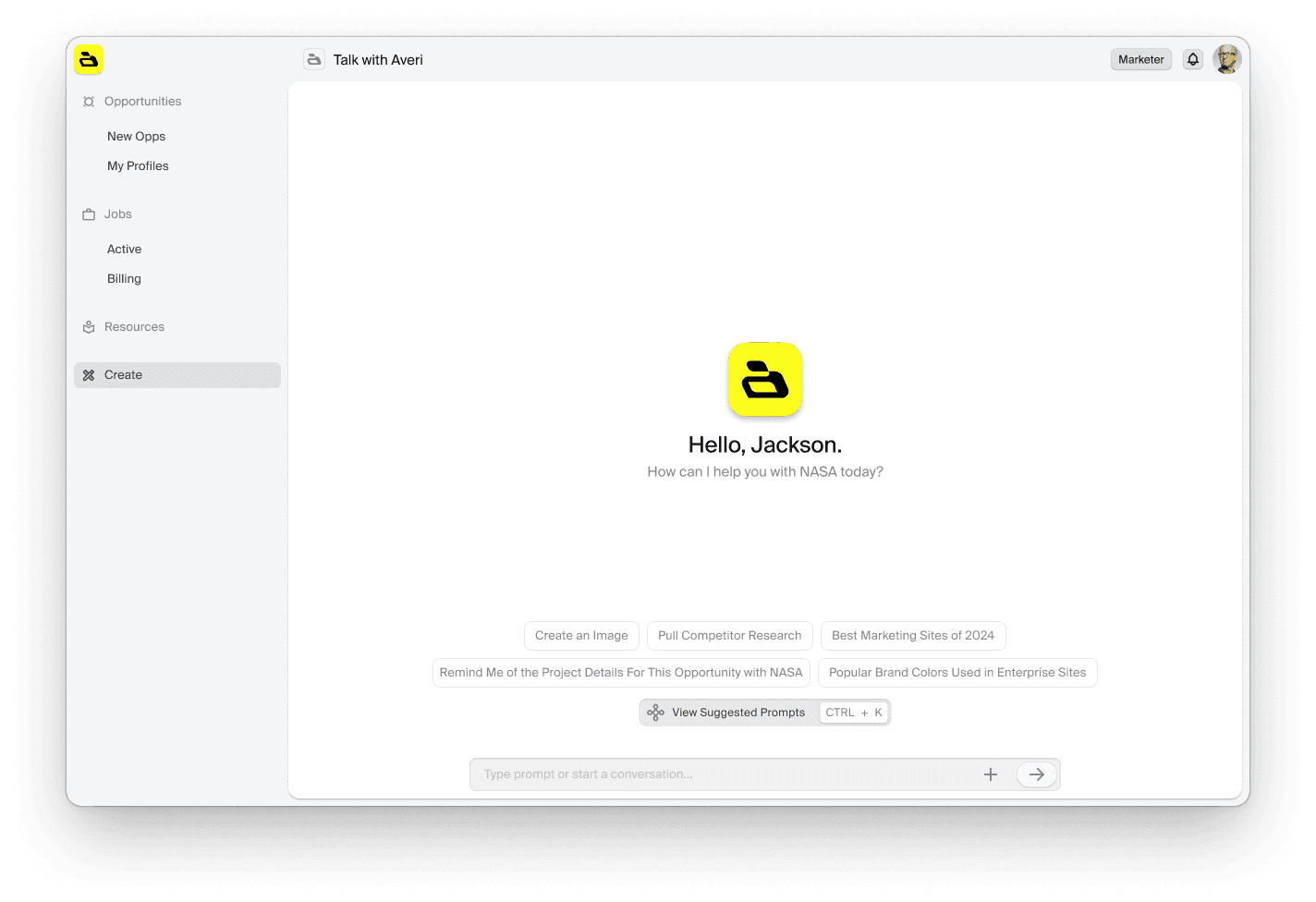
The Platform vs. Stack Reality Check
Criteria | All-in-One Platform (like Averi) | Disconnected Tool Stack |
|---|---|---|
Setup Time | <1 day | 1-2 weeks |
Collaboration | Centralized, real-time | Fragmented, slow |
Data Consistency | Unified | Prone to errors |
Campaign Speed | Fast (days) | Slow (weeks) |
Maintenance | Low | High |
Learning Curve | Single system | Multiple systems |
Integration Headaches | None | Constant |
Stop Optimizing. Start Eliminating.
The smartest marketing teams have realized something the productivity hackers won't tell you: the best workflow is the one you don't need.
Instead of optimizing their chaos, they've eliminated it. Instead of perfecting their processes, they've simplified them. Instead of adding more tools, they've consolidated to fewer, better ones.
Platforms like Averi AI make this possible by bringing strategy, content, and execution into one calm, clear workspace. Not because we're against productivity—but because we're against productivity theater.
The real workflow hack? Do fewer things better, with tools that actually work together, on campaigns that actually matter.
Ready to eliminate the chaos and build marketing that actually scales?
See how Averi brings strategy, content, and execution together in one platform that works the way you think.