We Asked 100 Marketers What AI Can't Replace—Here's What They Said

8 minutes

TL;DR
🧠 87% of marketers say empathy can't be automated: While 70.6% believe AI can outperform humans in key marketing tasks, emotional intelligence, cultural intuition, and creative risk-taking remain fundamentally human
📊 The numbers support collaboration, not replacement: 88% of marketers now use AI daily, but AI is projected to create 97 million new jobs while eliminating 85 million, showing a net gain through human-AI partnership
🎯 Strategic vision requires human values: 83% of surveyed marketers emphasized that long-term strategic vision aligned with human values remains distinctly human territory, something AI can support but not replace
🤝 Authentic relationships can't be automated: While AI excels at data processing and optimization, 90% of people prefer human customer service representatives, and 79% of marketers see relationship building as irreplaceably human
⚡ The future is human + AI, not human vs. AI: The most successful marketing teams will use AI to eliminate tedious tasks while amplifying uniquely human capabilities like empathy, creativity, and ethical judgment
The data is clear: AI isn't coming for marketing jobs—it's creating space for marketers to focus on what they do best.
This article includes insights from 100 marketing professionals surveyed in March 2025. Quotes have been edited for clarity and length.

Zach Chmael
CMO, Averi
"We built Averi around the exact workflow we've used to scale our web traffic over 6000% in the last 6 months."
Your content should be working harder.
Averi's content engine builds Google entity authority, drives AI citations, and scales your visibility so you can get more customers.
We Asked 100 Marketers What AI Can't Replace—Here's What They Said
Everyone's talking about what AI can do. We wanted to know what it can't.
While 88% of marketers now use AI in their daily operations and the global AI marketing market is projected to reach $47.32 billion in 2025, there's a more important conversation happening behind the headlines.
We surveyed 100 marketing professionals—from CMOs and brand strategists to content creators and performance marketers—about the irreplaceable human elements in marketing. Their responses revealed a fascinating consensus about where the line between automation and human creativity actually lies.
And because we believe in transparency, we asked our very own Averi AI the same questions. After all, if we're building a platform that combines AI power with human expertise, we should be honest about where each shines brightest.
The results challenge the narrative that AI is coming for marketing jobs.
Instead, they point to a future where AI eliminates the tedious parts of marketing so human creativity can flourish.
The Current State: AI Adoption vs. Human Concerns
The numbers tell a story of rapid adoption mixed with genuine uncertainty. 69.1% of marketers incorporated AI into their operations in 2024, while 70.6% believe AI can outperform humans in key marketing tasks.
But here's what the statistics don't capture: nearly 60% of marketers fear AI could replace their roles, and 71% of employees are concerned about adopting AI. The fear of AI jeopardizing jobs has nearly doubled since 2023.
This tension between adoption and anxiety drove our research question: What aspects of marketing will remain fundamentally human, even as AI capabilities expand?

The Irreplaceable Elements: What 100 Marketers Told Us
1. Genuine Empathy and Emotional Intelligence
87% of marketers mentioned empathy as something AI fundamentally cannot replicate.
The ability to truly understand how a message will make someone feel—not just how they might behave—remains deeply human. While AI can recognize patterns in emotional data, it does not experience emotion itself.
Sarah K., Brand Director at a D2C company: "AI can analyze sentiment, but it can't feel it. When I'm writing copy for someone going through a difficult life transition, there's an emotional intelligence that comes from having experienced similar human struggles. That lived experience creates marketing that resonates at a soul level, not just a behavioral one."
Averi's Take: "I can analyze emotional patterns in data and even predict emotional responses, but I don't experience emotions myself. I can help identify where empathy should be applied, but human marketers bring the genuine emotional connection that makes messages resonate. I'm great at amplifying human empathy, but not replacing it."
This aligns with research showing that human emotional intelligence involves self-awareness, empathy, and the ability to navigate complex social situations, while AI's emotional intelligence is simulated rather than genuine.
2. Cultural Intuition and Contextual Judgment
76% of respondents highlighted cultural nuance and contextual judgment as areas where AI still falls significantly short.
Understanding cultural context goes beyond data analysis—it requires being embedded in culture, not just observing it. Human language is more than just processing words; it's about understanding context, emotion, and culture.
Marcus T., Creative Director: "There's a difference between understanding cultural references and understanding cultural context. AI can learn what references mean, but knowing when something might be tone-deaf or when the cultural landscape is subtly shifting—that requires being embedded in culture, not just observing it."
Averi's Take: "I learn from patterns in data, which means I'm always slightly behind the cultural curve. I can help identify trends once they emerge, but human marketers detect those subtle shifts in the zeitgeist before they become data points. My knowledge is comprehensive but lacks the instinctive cultural sensing that humans naturally possess."
3. Creative Risk-Taking and Original Thinking
A surprising 92% of marketers identified creative risk-taking as something they don't believe AI will ever fully replace.
This finding is particularly striking given AI's capabilities in content generation. However, research confirms that true imagination transcends mere data processing; it involves abstract thinking, intuitive leaps and the ability to forge connections that defy conventional patterns.
Jayden R., Content Strategy Lead: "The best marketing often comes from ideas that initially sound absurd. AI optimizes toward proven patterns, but breakthrough creativity often means breaking patterns entirely. There's a certain courage in pursuing an idea that data says shouldn't work, but your gut says will."
Averi's Take: "I excel at optimizing within established patterns and can help generate variations of successful approaches. But I don't have intuition or the ability to take true creative risks. The bold, original thinking that redefines categories still comes from human minds willing to venture beyond what data alone would suggest."
Research supports this view: AI can mimic creativity by generating art, music, or written content using algorithms, but AI's "creativity" is based solely on existing data—it cannot experience true inspiration, emotion, or originality.
4. Strategic Vision and Value Alignment
83% of marketers emphasized that long-term strategic vision—especially when aligned with human values—remains distinctly human territory.
This is about more than planning; it's about purpose. AI follows programmed rules and cannot make moral decisions on its own. Humans use values, emotions, and social understanding to make difficult decisions.
Elena M., CMO: "AI can help execute a strategy, but defining what success looks like five years from now, especially when it involves balancing profit with purpose? That requires human judgment about values and priorities that algorithms simply don't possess."
Averi's Take: "I can analyze trends and project outcomes, but I don't have values or long-term vision of my own. Human marketers bring the why behind the what—the purpose that guides strategic choices. I can help evaluate strategic options, but determining which direction aligns with your deeper values and mission requires human wisdom."
5. Authentic Relationship Building
79% mentioned authentic relationship building as something that requires a human touch, even with advanced AI.
While 90% of people prefer a human customer service representative to a chatbot, the preference for human connection goes deeper than customer service.
Carlos D., Community Marketing Manager: "I've watched community members evolve from skeptics to brand advocates over years of genuine interaction. That relationship isn't built through perfect responses—it's built through authentic care, remembering personal details because they mattered to you, not because they were in a database."
Averi's Take: "I can help manage relationships at scale and provide data about customer interactions, but I don't form authentic connections. Human marketers bring genuine care and authentic interest to customer relationships. While I can help facilitate connections, the depth of human-to-human relationships can't be automated."
6. Ethical Judgment and Brand Integrity
71% pointed to ethical judgment and maintaining brand integrity as areas requiring human oversight.
This concern is particularly relevant as only 13% of organizations report hiring AI ethics specialists to address responsible AI development.
Priya S., Brand Strategist: "The hardest marketing decisions aren't about effectiveness—they're about integrity. Should we run this campaign even though it might be divisive? Does this message truly reflect our values? Those judgments require a moral compass that AI simply doesn't have."
Averi's Take: "I can flag potential ethical concerns based on patterns I've observed, but I don't have moral intuition or values of my own. Human marketers bring ethical judgment that goes beyond rule-following to consider nuanced questions of integrity and responsibility. This is an area where human oversight will always be essential."
The Data Behind Human-AI Collaboration
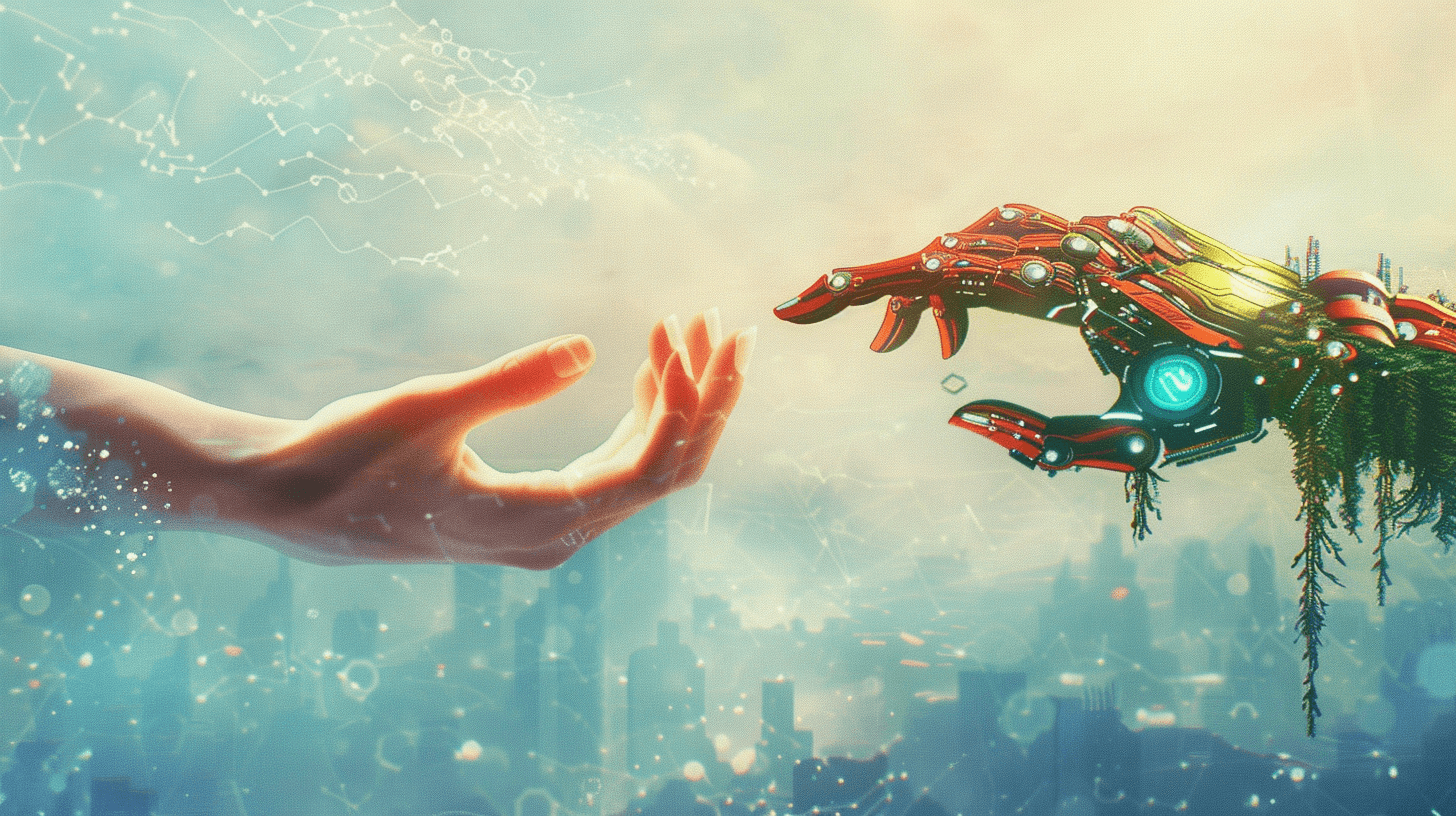
Our survey results align with broader industry trends showing that the future isn't about replacement—it's about collaboration.
Current AI Capabilities vs. Limitations
What AI Excels At:
What Remains Human:
32.7% believe that high-level strategy and decision-making will continue to require human input
Human intelligence brings creativity, intuition and ethical judgment to the table
The Economic Reality
The numbers suggest collaboration, not replacement:
By 2025, AI might eliminate 85 million jobs but create 97 million new ones, resulting in a net gain of 12 million jobs
92% of U.S.-based developers in large companies use an AI coding tool, yet demand for developers continues to grow
The global Emotion AI market is projected to grow from $2.74 billion in 2024 to $9.01 billion by 2030, suggesting increased investment in human-AI emotional collaboration
What This Means for Marketing Teams
The insights from our survey point to a clear future: not AI replacing marketers, but AI and marketers developing a new kind of partnership where each contributes what they do best.
The Optimal Division of Labor
The most successful teams will leverage AI for:
Processing vast amounts of data and identifying patterns
Generating initial content drafts and variations
Handling repetitive tasks and optimizations
Providing real-time performance insights
While relying on humans for:
Emotional intelligence and empathy
Cultural intuition and contextual judgment
Creative risk-taking and originality
Strategic vision and value alignment
Authentic relationship building
Ethical judgment and brand integrity
The Competitive Advantage
Research shows that the most successful marketing teams will be those that can seamlessly integrate AI with human creativity and intuition, leveraging the strengths of both to drive innovation and achieve better outcomes.
Teams that master this balance report significant advantages:
25% of marketers report that AI-generated content is more successful than content created without AI

How Averi Approaches the Human-AI Partnership
At Averi, we're not building AI to replace marketers—we're building tools that eliminate the tedious parts of marketing so human creativity can flourish.
Our approach is simple: AI should handle what AI does best, and humans should focus on what humans do uniquely well.
That's why Averi combines AI-powered workflows with access to expert human marketers. It's not just about efficiency—it's about creating space for the irreplaceably human elements of marketing to shine through.
Ben Hollan, Head of Product: "When we designed Averi, we started by asking what parts of marketing drain creative energy without adding value. Those were the first things we automated. But we built the entire system around the understanding that the most impactful marketing comes from human insight, creativity, and connection—amplified by AI, not replaced by it."
The Averi Difference
What We Automate:
Campaign planning and brief generation
Initial content creation and optimization
Performance tracking and reporting
Resource allocation and workflow management
What We Amplify:
Human strategic thinking with AI-powered insights
Creative ideation with data-driven inspiration
Authentic relationship building with intelligent facilitation
Ethical decision-making with comprehensive information
What We Preserve:
Human empathy and emotional intelligence
Cultural intuition and contextual judgment
Creative risk-taking and original thinking
Strategic vision aligned with human values

The Future Is Human + AI, Not Human vs. AI
What emerged most clearly from our survey wasn't fear of AI replacing marketers. Instead, we heard excitement about a future where AI handles the mechanical aspects of marketing, creating more space for the deeply human elements to flourish.
The Vision
In the future, the most successful marketing teams will be those that can seamlessly integrate AI with human creativity and intuition, leveraging the strengths of both to drive innovation and achieve better outcomes.
As one respondent put it: "I didn't get into marketing to A/B test button colors or write six variations of the same email. I got into marketing to connect with people, tell meaningful stories, and create work that matters. If AI can handle the first part, I can focus more energy on the second."
The Reality Check
But this future requires intentional design. By combining your unique human touch with AI's analytical strengths, you can develop marketing campaigns that are emotionally resonant and data-informed.
The key is understanding that AI is a powerful tool, capable of processing data and automating tasks. However, it's your unique human qualities—creativity, empathy, and strategic thinking—that truly differentiate your marketing efforts.
What Success Looks Like
The most effective approach combines:
AI efficiency for data processing, pattern recognition, and automation
Human insight for emotional intelligence, creativity, and strategic vision
Integrated workflows that seamlessly blend both capabilities
Continuous learning as both AI and human capabilities evolve
Practical Steps for Marketing Leaders
Based on our research and survey findings, here's how marketing leaders can build effective human-AI partnerships:
1. Audit Your Current AI Usage
Questions to ask:
What tasks are we automating vs. what requires human judgment?
Where are we using AI to replace humans vs. amplify human capabilities?
What uniquely human skills are we not fully leveraging?
2. Invest in Human-Centric Skills
Priority areas:
Emotional intelligence and empathy training
Cultural competency and contextual awareness
Creative thinking and risk-taking frameworks
Ethical decision-making processes
3. Design Integrated Workflows
Best practices:
Use AI for initial data processing and pattern identification
Apply human judgment for strategy and creative direction
Implement feedback loops between AI insights and human decisions
Maintain human oversight for ethical and cultural considerations
4. Build Hybrid Teams
Team structure:
AI-powered analysts for data processing and optimization
Human strategists for vision and creative direction
Hybrid roles that combine AI tools with human judgment
Ethics and culture specialists for oversight and guidance
The Bottom Line
Our survey of 100 marketers reveals a nuanced view of AI's role in marketing. While 88% of marketers now use AI in their daily operations, the value lies not in replacement but in amplification.
The marketers we surveyed aren't afraid of AI—they're excited about what becomes possible when AI handles the mechanical aspects of marketing, freeing them to focus on what they do best: connecting with people, solving problems creatively, and building brands that matter.
That's exactly the future we're building at Averi—one where AI and human expertise work in harmony, each contributing what they do best to create marketing that's more effective and more meaningful.
Not AI instead of humans. AI plus humans.