The Rise of the Creative Operator: Why Tomorrow's Marketers Look Like Today's Filmmakers
7 minutes

TL;DR
🎬 Marketing is becoming filmmaking: The most effective marketing teams now operate like film crews—project-based, specialist-driven, and orchestrated around specific creative objectives rather than permanent hierarchical structures
🎭 Creative Operators replace campaign managers: Tomorrow's marketing leaders think like directors/producers, focusing on talent orchestration, strategic briefing, and creative vision rather than task management and administrative coordination
🤖 AI becomes the ultimate crew member: Smart teams use AI for pre-production research and post-production optimization while keeping humans in creative director roles for strategic vision, brand judgment, and client relationships
⚡ Modular teams deliver competitive advantage: Organizations implementing Creative Operator principles report 40-75% time savings, 70% fewer defects, and 32% higher revenue growth compared to traditional permanent-staff models
🎯 The skills that matter are changing: Strategic briefing, talent evaluation, technology integration, and quality curation are becoming more valuable than traditional marketing specializations—creative leadership competencies that transfer across industries

Zach Chmael
CMO, Averi
"We built Averi around the exact workflow we've used to scale our web traffic over 6000% in the last 6 months."
Your content should be working harder.
Averi's content engine builds Google entity authority, drives AI citations, and scales your visibility so you can get more customers.
The Rise of the Creative Operator: Why Tomorrow's Marketers Look Like Today's Filmmakers
The best marketing teams I know don't look like marketing teams anymore.
They look eerily reminiscent of film crews.
A creative director who thinks like a producer. Strategic but scrappy. Someone who can develop the vision and then figure out how to execute it with whatever resources they have—whether that's AI, freelancers, or a skeleton crew.
A project manager who operates like an assistant director. Coordinating talent, managing timelines, and making sure everyone knows what they're shooting and why.
Specialists who come and go based on what the "scene" requires. A colorist for this project. A sound engineer for that one. The right expert at the right moment, not another full-time hire collecting benefits.
This isn't an accident.
The future of work is modular, and marketing, like filmmaking, has always been a project-based creative discipline that requires orchestrating diverse talent around specific outcomes.
The difference now?
AI has become your most reliable crew member.

From Campaign Managers to Creative Operators
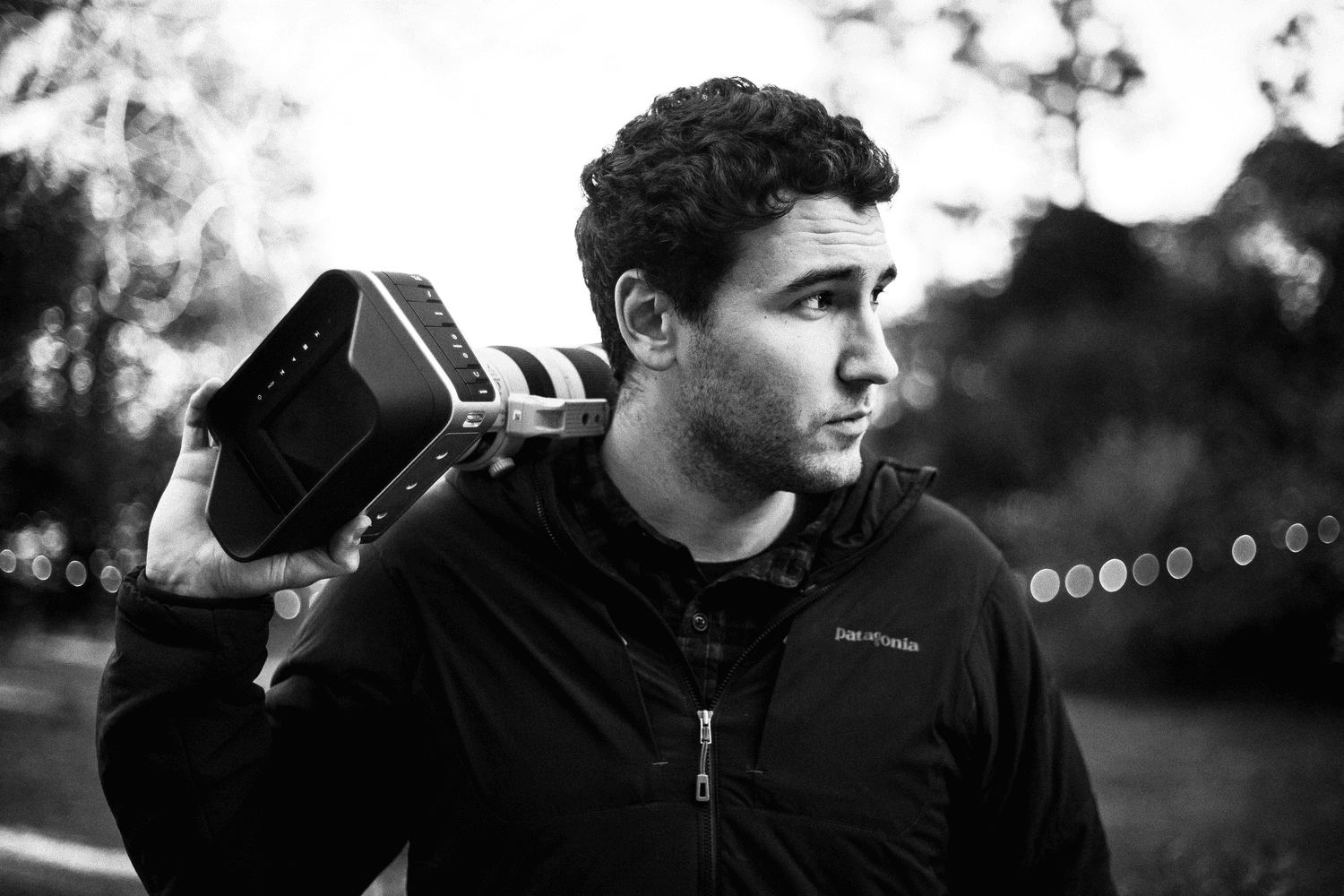
I started my marketing career in 2015, coming from a background in filmmaking.
The transition felt natural because both industries revolve around the same fundamental challenge: How do you coordinate creative talent, technology, and resources to tell compelling stories that move people?
But somewhere along the way, marketing forgot it was a creative discipline.
We started hiring like we were building factories instead of studios. Permanent roles for every conceivable function. Org charts that looked more like corporate hierarchies than creative collaboratives.
The average marketing team now manages 130+ applications while struggling to produce work that feels remotely human.
Meanwhile, the film industry—one of the most complex creative operations on the planet—has perfected the art of modular team building. Every project assembles the exact talent needed, for exactly as long as it's needed, with clear roles and shared creative vision.
Sound familiar?
It should. That's exactly where marketing is heading.

The Creative Operator Playbook
The most effective marketers I work with today operate less like traditional marketing managers and more like creative directors running lean production companies.
They've developed what I call the "Creative Operator" mindset:
1. Think in Projects, Not Campaigns
Traditional marketing thinks in campaigns—discrete promotional pushes with clear start and end dates. Creative Operators think in projects—bodies of work that require specific expertise, have defined deliverables, and contribute to larger strategic objectives.
This shift changes everything:
Instead of "Q4 Holiday Campaign," you have "Brand Refresh Project" with specific phases and specialist requirements
Instead of permanent team members juggling multiple initiatives, you assemble project-specific teams with clear roles
Instead of generic "marketing coordinator" roles, you develop specialists who excel in their domains
High-performing marketing teams are 8.8x more likely to have adopted project-based customer journey strategies, treating each touchpoint as a distinct creative challenge requiring specific expertise.
2. Master the Art of Talent Orchestration
Film directors don't need to be the best cinematographer, sound engineer, or editor on set. They need to be exceptional at identifying what talent is required and orchestrating their collaboration toward a shared vision.
The same applies to Creative Operators:
You don't need to be the best copywriter. You need to know great copy when you see it and how to brief writers effectively.
You don't need to be a paid media expert. You need to understand strategy well enough to guide specialists and integrate their work with your broader objectives.
You don't need to master every AI tool. You need to understand which tools enhance human creativity and which ones just create more noise.
Companies using integrated talent platforms report 32% higher revenue growth, according to McKinsey research, because they can deploy exactly the right expertise at exactly the right moment.
3. Use AI Like a Producer Uses Technology
In film, technology serves the story… not the other way around. A great producer knows when to use practical effects versus CGI, when to shoot on location versus in-studio, when to rely on in-camera techniques versus post-production magic.
Creative Operators apply the same strategic thinking to AI:
Use AI for pre-production. Research, competitive analysis, initial ideation, and workflow planning—the behind-the-scenes work that enables better creative decisions.
Use AI for post-production. Optimization, performance analysis, content adaptation, and distribution—the technical work that amplifies human creativity.
Keep humans in the director's chair. Strategic vision, creative judgment, brand voice, and client relationships—the irreplaceable human elements that make work memorable.
68% of businesses report increased content marketing ROI from AI implementation, but only when AI enhances rather than replaces human creative direction.
4. Build Systems, Not Bureaucracy
Film productions run on systems—pre-production checklists, shooting schedules, post-production workflows—that enable creative freedom within structured processes. The system serves the creativity, not the other way around.
Creative Operators build similar frameworks:
Modular team structures that can be reconfigured based on project requirements, not rigid org charts.
Standardized processes for briefing, collaboration, and delivery that work regardless of who's on the team.
Quality frameworks that ensure consistency while allowing for creative exploration.
Technology stacks that integrate seamlessly rather than creating additional complexity.
The goal isn't to systematize creativity out of existence—it's to create reliable frameworks that let creative talent focus on what they do best.
The Competitive Advantage is Already Emerging
Organizations that master Creative Operator principles are pulling ahead dramatically:
Companies implementing modular marketing approaches report 40-75% time savings in sourcing and onboarding, with 70% reductions in project defects and 25% improvements in project completion rates.
Faster execution cycles. When you can assemble exactly the right team for each project, you eliminate the bottlenecks of waiting for overburdened permanent staff or settling for "good enough" generalists.
Higher quality outcomes. Specialists produce better work than generalists trying to cover too many bases. Expert networks like Toptal accept only the top 3% of applicants, while specialized platforms achieve 75% first-candidate acceptance rates through AI-powered matching.
Better resource utilization. Instead of paying for full-time expertise you only need occasionally, you access world-class talent exactly when it creates value.
Enhanced creative capabilities. When AI handles routine tasks and specialists handle complex ones, your internal team can focus on strategic creative direction and client relationships.

The Skills That Matter Now
The transition to Creative Operator requires developing new competencies:
Strategic Briefing
Like a director working with department heads, you need to communicate creative vision clearly enough that specialists can execute autonomously while staying aligned with objectives.
Talent Evaluation
You need to quickly assess whether someone can deliver quality work in your specific context, even if you're not an expert in their domain.
Technology Integration
Understanding how different tools, platforms, and AI capabilities can enhance rather than complicate your creative processes.
Project Architecture
Designing workflows that enable seamless collaboration between permanent team members, contractors, and AI systems.
Quality Curation
Knowing good work when you see it and having frameworks for providing actionable feedback that improves outcomes.
These aren't traditional marketing skills—they're creative leadership competencies that transfer across industries and technologies.
Why This Matters More Than You Think
Here's what I learned from my years in film that applies directly to modern marketing: The best creative work happens when you combine clear vision with operational excellence.
You can have the most brilliant creative concept in the world, but if you can't orchestrate the talent and resources to execute it properly, it remains just that… an idea.
Conversely, you can have the most efficient operational machine, but without creative vision, you're just producing expensive mediocrity at scale.
The Creative Operator bridges that gap.
They're equally comfortable in the strategic war room and the tactical production meeting. They can speak the language of creativity and the language of business results.
Most importantly, they understand that in a world where AI can handle increasingly complex tasks, the human superpower isn't competing with machines—it's orchestrating the collaboration between human creativity and artificial intelligence.
The Transition Playbook
If you're ready to evolve from campaign manager to Creative Operator, here's where to start:
Week 1-2: Audit Your Current State
Map out your current team structure and capabilities
Identify which tasks actually require full-time staff versus project-based expertise
Assess your current tech stack for unnecessary complexity
Month 1: Start Thinking in Projects
Choose one upcoming initiative and structure it as a project with defined phases
Experiment with bringing in one specialist for a specific deliverable
Document what works and what doesn't
Month 2-3: Develop Your Operator Skills
Practice strategic briefing with your current team
Learn to evaluate specialist work in domains you're not an expert in
Start experimenting with AI tools for pre and post-production tasks
Month 4-6: Build Your Network
Identify high-quality specialists in key areas (copy, design, performance, strategy)
Develop relationships with vetted expert platforms
Create standardized processes for onboarding and managing external talent
The goal isn't to replace your entire team overnight.
It's to gradually shift toward more strategic, project-based thinking that leverages both human expertise and AI capabilities more effectively.
The Future Belongs to Creative Operators
In the next three to five years, successful CMOs will act as both integrators and innovators—blending data, automation and human creativity, according to marketing technology research.
This evolution represents more than operational efficiency—it's a return to marketing's creative roots, enhanced by modern technology and talent access.
The brands that win will be the ones that think like studios, not factories. They'll assemble world-class creative teams around specific projects, use AI to enhance rather than replace human insight, and operate with the speed and flexibility that modern markets demand.
The marketers who thrive will be the ones who think like creative directors, not campaign managers. They'll develop taste, build systems that enable creativity, and master the art of orchestrating diverse talent toward unified vision.
We've all become prompters in the age of AI.
But the real opportunity isn't just getting better at talking to machines—it's becoming better at directing the collaboration between human creativity and artificial intelligence.
The future of marketing looks a lot like the golden age of Hollywood: visionary leaders orchestrating world-class talent and cutting-edge technology to create work that moves people.
It's time to embrace it.
Ready to evolve from campaign manager to Creative Operator?
See how Averi enables the future of modular marketing teams →