How to Do Marketing as a Solo Founder Without Burning Out

9 minutes

TL;DR
🎯 The Core Challenge: Solo founders have roughly one hour daily for marketing while managing every aspect of their business. 45% experience burnout, and 41% cite time management as their biggest challenge.
💡 The Solution Framework: Ruthless prioritization (email first, content that compounds second), content batching to reduce context switching, AI as a force multiplier (not a replacement), strategic delegation to fractional experts.
🤖 The AI Advantage: Marketing teams using AI report 44% higher productivity and save 11+ hours weekly. Use AI for research, first drafts, repurposing, and optimization while you own strategy and brand voice.
📚 Build Your Second Brain: Consolidate brand documentation, archive successful content, capture customer language, and track competitive intelligence in one accessible system. Context compounds when it is organized.
🔧 Averi for Solo Founders: An AI marketing workspace that combines brand-trained AI, content creation tools, and access to vetted experts in one unified environment. Strategy, creation, and execution without the tool-switching chaos.
⚡ The Sustainable Path: Start with foundations, build systems, optimize based on data. The goal is not doing more marketing; it is doing marketing that actually works without destroying you in the process.

Zach Chmael
CMO, Averi
"We built Averi around the exact workflow we've used to scale our web traffic over 6000% in the last 6 months."
Your content should be working harder.
Averi's content engine builds Google entity authority, drives AI citations, and scales your visibility so you can get more customers.
How to Do Marketing as a Solo Founder Without Burning Out
Published: December 2025
There is a peculiar kind of exhaustion that only solo founders understand.
It is not the tiredness that comes from a long meeting or a difficult project. It is the bone-deep fatigue of being everything to everyone, all the time, while simultaneously trying to build something that matters.
You are the strategist and the executor, the creative director and the content writer, the data analyst and the social media manager. And somewhere between all of this, you are supposed to actually run your business.
The numbers tell a story that is both inspiring and sobering.
More than four out of five small businesses in the United States have no employees, representing the backbone of American entrepreneurship. There are 29.8 million solopreneurs contributing $1.7 trillion to the economy, a figure that continues to climb as more people pursue the dream of building something of their own. And yet, the reality of marketing as a one-person operation remains brutally demanding.
Forty-one percent of solopreneurs cite time management as their major challenge. Forty-five percent experience burnout due to workload and lack of work-life balance. The typical solopreneur workweek averages 46 hours, and much of that time is spent on client acquisition and marketing activities rather than the actual work that generates revenue.
This is not a sustainable way to build a business.
But it does not have to be this way.

Why Traditional Marketing Advice Fails Solo Founders
Most marketing guidance is written for teams.
It assumes you have a content strategist and a copywriter and a social media coordinator and a paid media specialist.
It assumes someone else is handling the creative briefs while you focus on strategy.
It assumes you can afford to specialize.
Solo founders do not have this luxury.
When 78% of marketers say they have a small marketing team of between one and three people, the reality is that many of those "teams" are just one person wearing multiple hats.
The advice to "create a content calendar" or "develop a multi-channel strategy" rings hollow when you are also responsible for product development, customer support, sales, finance, and operations.
The fundamental problem is not a lack of tactics. Solo founders know they should be posting on LinkedIn and sending email newsletters and optimizing for search. The problem is that there are only so many hours in a day, and every hour spent on marketing is an hour not spent on the hundred other things demanding your attention.
The typical solopreneur spends approximately 64% of their time on client acquisition and marketing activities. That is an extraordinary amount of time, and yet many still feel like they are barely keeping up.
Something needs to change.

The One Hour Marketing Principle
Here is a reality we all know all too well, yet rarely gets discussed… most solo founders only have about one hour per day for marketing.
Sometimes less.
Between client work, product development, administrative tasks, and the basic requirements of running a business, that is what remains.
The question is not how to find more time. The question is how to make that one hour count.
This requires a fundamental shift in how you think about marketing. Not as a series of tasks to complete, but as a system that produces results with minimal ongoing intervention.
Not as something you do when you have spare time, but as an integrated part of how you operate your business.
The goal is not to do more marketing. The goal is to do marketing that actually works, in a way that does not destroy you in the process.

The Solo Founder Marketing Framework
What follows is not another list of tactics. It is a framework for thinking about marketing when you are the only one responsible for everything.
1. Ruthless Prioritization: The One Thing That Matters
Entrepreneurs working without clear goals or priorities experience 40% higher burnout rates. The antidote is not better productivity systems or more efficient workflows.
It is ruthless prioritization.
The Eisenhower Matrix divides tasks into four quadrants: urgent and important, important but not urgent, urgent but not important, and neither urgent nor important.
For solo founders, the critical insight is that most marketing activities fall into the third quadrant: they feel urgent but are not actually important.
Posting on social media every day feels urgent. But if that channel is not driving meaningful business results, it is not important.
Responding to every comment and message feels urgent. But if those interactions are not converting to customers, they are not important.
What actually matters varies by business, but for most solo founders, the hierarchy looks something like this:
First priority: The channel that converts. Email marketing generates $36 for every $1 spent, making it one of the highest-ROI activities available. 81% of small businesses rely on email as their primary customer acquisition channel, and 80% for retention.
If you can only do one thing, this should probably be it.
Second priority: Content that compounds. A single blog post that ranks well can drive traffic for years. A comprehensive guide that answers your customers' questions becomes a sales asset.
Unlike social media posts that disappear into the void, long-form content creates lasting value.
Third priority: Relationship building. Strategic partnerships, referral relationships, and direct outreach to high-value prospects.
These activities scale poorly but convert exceptionally well.
Everything else is optional until you have these foundations in place.
2. Content Batching: Work in Blocks, Not Dribbles
The greatest enemy of solo founder productivity is context switching.
Every time you shift from product work to marketing to customer support and back again, you lose momentum. The creative energy required to write compelling content cannot survive being interrupted every fifteen minutes.
Content batching solves this by concentrating similar tasks into dedicated time blocks.
Instead of writing one social post per day, you write a month of posts in one session. Instead of crafting emails ad hoc, you develop an entire sequence at once.
The time savings are substantial.
By reducing task-switching, batching allows you to produce more content in less time while maintaining consistent quality. One founder reported creating 12 social media videos in a single day, representing months worth of content.
The practical implementation looks like this:
Monthly: Strategy and planning. Set aside two to three hours at the start of each month to plan your content themes, identify key dates and launches, and outline what you need to create.
This is high-leverage time that makes everything else more efficient.
Weekly: Creation blocks. Dedicate one or two focused sessions to content creation. Write all your blog posts in one block. Create all your social content in another.
The key is staying in the same creative mode rather than constantly shifting.
Daily: Distribution and engagement. The only marketing tasks that should happen daily are brief: scheduling posts that are already created, responding to high-priority messages, and monitoring results.
This should take no more than 15 to 30 minutes.
3. The AI Productivity Multiplier
We have entered an era where a single founder can accomplish what once required a team.
Marketing teams using AI report 44% higher productivity, saving an average of 11 hours per week. AI reduces content production timelines by 80%, transforming what once took days into tasks measured in hours.
But there is a catch.
The solo founders who are thriving with AI are not using it to replace their thinking. They are using it to extend their capabilities.
This is a critical distinction. Feeds and content hubs across the internet are filled with the same post with interchangeable names while the raw, human feeling of the web is washing away. AI that simply generates content without strategic direction produces mediocre results that blend into the noise.
The winning approach treats AI as a force multiplier for your ideas, not a replacement for them.
You bring the strategy, the brand voice, the customer understanding, and the creative direction. AI helps you execute faster and at greater scale.
This means:
Using AI for research and synthesis. Let AI compile competitor analysis, summarize industry trends, and identify content opportunities. This saves hours of manual research while ensuring you have the information needed to make strategic decisions.
Using AI for first drafts and iterations. 93% of marketers use AI to generate content faster. Start with AI-generated drafts, then apply your expertise and voice to create something distinctly yours.
Using AI for repurposing and adaptation. Turn one piece of content into multiple formats. Transform a blog post into social content, email sequences, and video scripts. This creates a content engine from a single core idea.
Using AI for optimization and analysis. Let AI identify what is working, suggest improvements, and automate routine optimization tasks. 83% of marketers using AI report increased productivity, largely through these kinds of efficiency gains.
4. Strategic Delegation: Building Your Extended Team
Solopreneurs often choose the solo path for autonomy and flexibility, not because they want to do everything themselves forever. The question is how to get help without the overhead, complexity, and cost of traditional hiring.
The fractional model has transformed what is possible.
Search interest in "fractional CMO" grew 600% from 2018 to 2022 as founders discovered they could access executive-level marketing expertise without executive-level costs.
For solo founders, the options include:
Freelancers for execution. Good freelance marketing specialists run $700 to $1,500 monthly for ongoing support. They handle specific tasks like social media management, graphic design, or copywriting while you maintain strategic direction.
Fractional CMOs for strategy. When you need high-level marketing leadership but cannot justify a full-time hire, fractional CMOs provide strategic guidance at a fraction of the cost. Most fractional CMOs charge $200 to $350 per hour, making them accessible for businesses with annual marketing budgets starting around $50,000.
Agencies for specialized capabilities. SEO, paid advertising, and technical marketing often require specialized expertise that is inefficient to develop in-house. Agencies can handle these functions while you focus on core business activities.
The key insight is that delegation is not about offloading everything.
It is about identifying where your time is best spent and getting appropriate help for everything else.
You should own strategy and brand voice. You can delegate execution and optimization.
5. Building Your Marketing Second Brain
The greatest leverage a solo founder can create is a system that learns and improves over time.
Every piece of content you create, every campaign you run, every customer conversation you have contains information that can make future marketing more effective.
The challenge is capturing and organizing this information so it remains accessible and useful.
Most founders have brand guidelines scattered across documents, past campaigns saved in random folders, customer insights trapped in email threads, and competitive intelligence that exists only in their heads.
This is where the concept of a marketing second brain becomes transformative. A centralized system that stores your marketing assets, captures institutional knowledge, and makes everything instantly accessible when you need it.
Practically, this means:
Consolidating brand documentation. Voice guidelines, visual standards, messaging frameworks, and positioning documents should live in one accessible place. When you work with freelancers or AI tools, this documentation ensures consistent output.
Archiving successful content. What worked becomes a template for what you create next. Save high-performing posts, emails, and campaigns with notes on why they succeeded.
Documenting customer language. The words your customers use to describe their problems are marketing gold. Capture testimonials, support conversations, and sales calls in a searchable format.
Tracking competitive intelligence. What are competitors doing? What messaging are they using? What gaps exist in the market? This information compounds in value when it is organized and maintained.
The goal is creating a system where context never dies.
When you batch create content next month, everything you need is already at your fingertips.
When you bring on a freelancer, they can access the information they need without constant back-and-forth.
When AI assists with content creation, it draws from your actual brand knowledge rather than generic patterns.
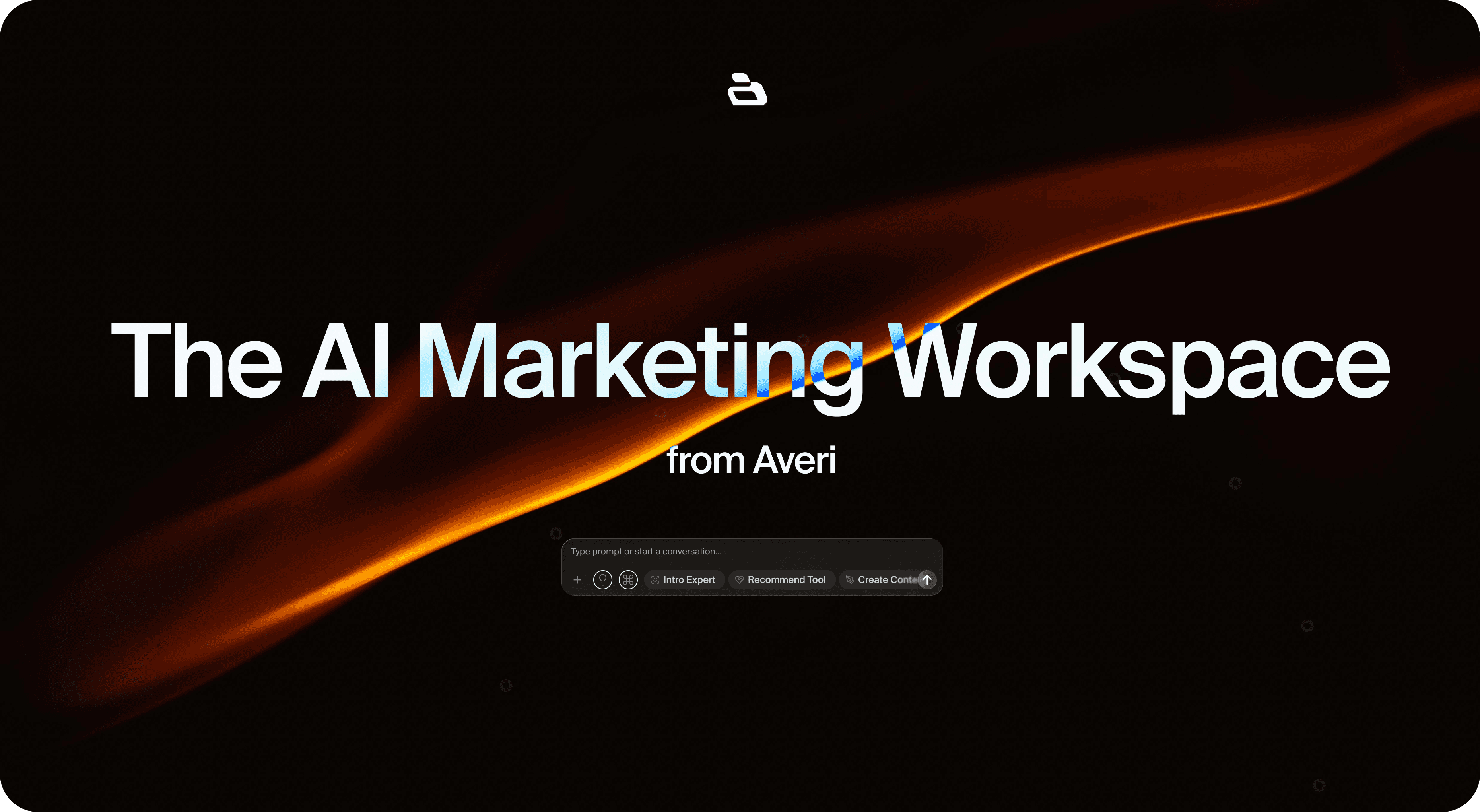
Your AI-Powered Marketing Workspace
This is where the philosophy becomes practical.
What solo founders need is not another tool to add to their stack, but a workspace that brings everything together: AI capabilities, brand knowledge, expert access, and content creation in one unified environment.
Averi was built for exactly this purpose.
The Library function creates that marketing second brain, allowing you to store assets, train the AI on your specific brand, and ensure that every piece of content starts from genuine understanding rather than generic prompts.
Brand Core captures your positioning, voice guidelines, ICPs, and product information in one place.
/create Mode transforms AI content generation from a blank-page problem into a collaborative process where the AI already knows your brand.
But perhaps most importantly for solo founders, Averi includes access to a marketplace of vetted marketing experts.
When you reach the limits of what you can accomplish alone, you can activate specialists: strategists for pressure-testing your approach, copywriters for polished final drafts, paid media experts for campaign execution, social media managers for ongoing presence.
The context flows seamlessly.
Experts see your strategy, your past work, your brand guidelines. No re-briefing required. No sending files back and forth. No explaining your business from scratch every time you bring someone new into a project.
This is what marketing in flow looks like for a one-person operation: AI that actually knows your brand, experts available when you need them, and everything organized in a way that compounds over time rather than disappearing into scattered documents and forgotten folders.
The Sustainable Marketing Playbook
Everything in this article points toward a single goal: building a marketing function that produces results without consuming your life.
Here is what that looks like in practice:
Month 1: Foundation. Set up your marketing second brain. Document your brand voice, positioning, and customer profiles. Identify your one or two highest-leverage marketing channels based on where your customers actually are and what converts.
Month 2: Systems. Establish your batching rhythm. Create templates for recurring content types. Set up measurement so you know what is working. Build the workflows that will make ongoing marketing sustainable.
Month 3 and beyond: Optimization. Double down on what works. Delegate what you can. Continuously improve your systems based on data. Add channels only when you have mastered your current ones.
The temptation will be to do everything at once.
To launch on every platform, pursue every opportunity, respond to every trend. Resist this temptation. Chronic stress impairs working memory, narrows cognitive focus, and reduces the mental flexibility required for strategic leadership.
You cannot build a lasting business from a state of constant overwhelm.
Start small. Build systematically. Invest in systems that scale. And remember that the goal is not to do more marketing, but to do marketing that actually works.

The Long Game
77% of solopreneurs report profitability in their first year, well above employer businesses.
Solopreneurs on average increase their revenues by 15% annually during their first five years. 5.6 million independent workers reported earning more than $100,000 annually, a number that increased 19% over the prior year.
The solo founder path is not just viable; it is increasingly attractive.
The tools available today allow a single person to accomplish what once required teams.
AI multiplies capability.
Fractional talent provides expertise on demand.
Integrated workspaces reduce the friction of moving between strategy and execution.
But none of this matters if you burn out before you reach your potential.
The founders who win the long game are not the ones who grind hardest. They are the ones who build sustainable systems, protect their energy, and invest in leverage that compounds over time.
They understand that marketing is not about doing more; it is about doing what matters, consistently, for long enough that it adds up.
We stand at a peculiar moment in the history of entrepreneurship. The barriers to starting a business have never been lower. The tools available have never been more powerful. And yet, the challenge of building something meaningful remains as difficult as ever.
The path forward is not through exhaustion. It is through clarity, prioritization, and systems that work for you rather than against you.
It is through embracing the incredible tools at your disposal while maintaining the human judgment that makes them effective. It is through building something sustainable.
You did not start a business to work yourself into the ground. You started it to create something that matters, on your own terms, in your own way.
Marketing should serve that vision, not undermine it.
Let Averi help you achieve that ambition →
Additional Resources:
The Rise of the 10x Marketer: How One Person Can Now Do the Work of Ten
Building a Lean Marketing Team with AI: A Guide for Startups
How to Build a Content Engine That Does Not Burn Out Your Team
Building an AI-Driven Marketing Strategy: A Step-by-Step Guide
What Is an AI-Powered Marketing Workspace (And Why Your Team Needs One)
FAQs
How much time should solo founders spend on marketing each day?
Most solo founders realistically have about one hour per day for marketing activities. The key is making that time count by focusing on high-leverage activities like email marketing and content that compounds, while using content batching to maximize efficiency during dedicated creation blocks.
What is the most effective marketing channel for solo founders?
Email marketing consistently delivers the highest ROI for small businesses, generating approximately $36 for every $1 spent. 81% of small businesses rely on email as their primary customer acquisition channel. For solo founders, email combines high effectiveness with manageable time requirements.
How can AI help solo founders with marketing?
AI can reduce content production timelines by up to 80% and help marketers save an average of 11 hours per week. Solo founders can use AI for research and synthesis, first drafts and iterations, content repurposing, and routine optimization. The key is using AI to extend your capabilities rather than replace your strategic thinking.
When should solo founders consider delegating marketing tasks?
Consider delegation when specific marketing activities require specialized expertise you do not have, when certain tasks consume disproportionate time relative to their value, or when you have reached capacity on your highest-leverage activities. Options range from freelancers at $700-$1,500 monthly to fractional CMOs for strategic guidance.
What is a marketing second brain and why does it matter?
A marketing second brain is a centralized system that stores your brand documentation, successful content, customer language, and competitive intelligence in one accessible place. It matters because context compounds over time, making future marketing more efficient and ensuring consistency across all your efforts.
How do you prevent burnout while marketing a solo business?
Build sustainable systems rather than relying on constant hustle. Use content batching to reduce context switching. Leverage AI to multiply your capabilities. Delegate what you can. Ruthlessly prioritize activities that actually drive results. And protect dedicated time for strategic work rather than getting pulled into reactive tasks.