The 10-Tool B2B SaaS Marketing Stack for 2026

6 minutes

TL;DR
🎯 The Problem: 14,000+ martech tools available, but only 49% utilization—most B2B SaaS companies have tool sprawl, not marketing systems
📝 Content Engine (Averi): Built from a workflow that drove 6,000% SEO/GEO visibility improvement—strategy → research → draft → edit → publish → analyze in one platform
🔍 SEO Intelligence (Semrush): Track both Google rankings and AI citations across ChatGPT, Perplexity, and AI Overviews
📊 The Full Stack: HubSpot (CRM), ActiveCampaign (email), Mixpanel (analytics), Gong (conversation intelligence), Buffer (social), Loom (video), Webflow (landing pages), Looker Studio (reporting)
🔗 Integration Over Features: Choose tools that connect with each other—isolated platforms create data silos that kill marketing effectiveness
⚡ The Compound Effect: Start with content that ranks and gets cited by AI; everything else supports that foundation

Zach Chmael
CMO, Averi
"We built Averi around the exact workflow we've used to scale our web traffic over 6000% in the last 6 months."
Your content should be working harder.
Averi's content engine builds Google entity authority, drives AI citations, and scales your visibility so you can get more customers.
Top 10 Marketing Tools Every B2B SaaS Company Needs in 2026
Here's the dirty secret the martech industry doesn't want you to know…
You probably have too many tools and not enough marketing.
As we enter 2026, there are 14,106 unique martech solutions available, a 27.8% increase over the previous year. The average B2B organization now operates with 12-20 marketing technology tools, and two-thirds of marketers use 16 or more tools for overlapping functions.
Yet here's the punchline: martech utilization has dropped to just 49%, meaning half your stack is collecting digital dust.
The problem isn't a lack of options. It's a lack of integration, intentionality, and honest assessment of what actually moves the needle.
This isn't another listicle of "30 tools you might want to try." meant to generate backlinks and optimize for SEO.
This is a curated stack (ten categories, ten tools) built for B2B SaaS companies that need marketing that works, not marketing that looks impressive on a vendor slide deck.
We're prioritizing integration over features, execution over promises, and platforms that solve actual problems rather than creating new ones.
Let's build a stack that compounds.
1. Content Marketing Engine: Averi
Why This Category Matters Most
Here's the strategic reality facing B2B SaaS in 2026, content marketing costs 62% less than traditional marketing while generating 3x the leads. Companies that blog regularly generate 67% more leads per month. B2B companies see 748% ROI from SEO-driven content strategies.
The math is undeniable.
But here's the problem nobody talks about, content marketing only works if you actually do it consistently, strategically, and at scale.
Most B2B SaaS companies know they should be creating content. They have a blog that gets updated sporadically. They've tried ChatGPT for drafts that sound generic. They've hired freelancers who needed endless context and still missed the mark.
Most are left with tool sprawl meets execution chaos.
A CMS over here, a writing tool over there, SEO software in another tab, analytics somewhere else, and somehow the blog still hasn't been updated in three weeks.
What a Content Marketing Engine Actually Solves
A content marketing engine isn't just another AI writing tool.
It's the complete workflow: strategy → research → creation → optimization → publication → analytics → iteration.
All in one place. All connected.
This is precisely what Averi was built to solve, and we built it because we faced the same problem ourselves.
The Origin Story: 6,000% Visibility Improvement
Averi's content engine wasn't designed in a vacuum. We built it by solving our own content marketing problem first.
The workflow we developed for our own company led to a 6,000% increase in SEO and GEO visibility.
Not a typo. Six thousand percent.
When we saw those results, we realized two things: first, this workflow actually works; second, most B2B SaaS companies don't have the time, expertise, or integrated tools to execute it.
So we built that exact workflow into Averi… and made it even better.
The Complete Averi Workflow
Here's how it actually works:
Phase 1: Strategy (Automated Foundation)
AI scrapes your website to learn your brand, products, positioning, and voice automatically
Suggests ideal customer profiles based on analysis, you confirm and refine
Analyzes competitor content, positioning, and gaps
Generates a complete content marketing plan informed by your goals
Phase 2: Queue Building (Continuous Research)
Continuously researches your market and queues content ideas
Optimizes for both traditional SEO and AI citations (GEO), because in 2026, you need to rank on Google AND get cited by ChatGPT, Perplexity, and AI Overviews
Organizes topics by type: listicles, how-to guides, editorials, comparisons
You approve what gets created, nothing publishes without human sign-off
Phase 3: Content Execution (AI + Human Collaboration)
Deep research: AI collects facts, stats, and quotes with hyperlinked sources
Context loading: Pulls your Brand Core, Library, and Marketing Plan automatically
Structure application: Applies SEO + LLM-optimized structure, FAQ sections, TL;DR formats
First draft: AI creates draft structured for both search engines and AI citation
Collaborative editing canvas: Comments, tagging, real-time team editing
AI-assisted refinement: Highlight any section, ask Averi to rewrite or expand with full context
Phase 4: Publication
Direct CMS publishing to Webflow, Framer, WordPress & more
Content stored in your Library for future AI context
Optional expert review through Averi's marketplace of vetted marketing professionals
Phase 5: Analytics & Optimization
Track impressions, clicks, and keyword rankings
AI identifies trends, opportunities, and gaps
Smart recommendations: "This piece is ranking #8, here's how to push it to page 1"
Performance data informs the next cycle automatically
Phase 6: Ongoing Automation
Weekly analysis and recommendation cycles run automatically
New topics queued based on trends and performance
You approve, the engine keeps running
Why Averi Beats Generic AI Tools
Generic AI (ChatGPT, Claude) | Averi |
|---|---|
Building your custom project from scratch | Learns your brand once, remembers forever |
You supply all context manually | Context built-in from onboarding |
Just writes content | Full workflow: research → draft → edit → publish → track |
Manual saving & storing memory | Cumulative learning from every piece |
Significant work to learn your brand | Brand-aligned content that sounds like you |
The difference matters because human content receives 5.44x more traffic than AI-generated content, but AI-assisted content, refined by humans with proper brand context, outperforms both.
That's the model Averi is built on.
SEO + GEO: The Dual Optimization Imperative
Here's what most tools miss: in 2026, ranking on Google isn't enough.
ChatGPT now refers around 10% of Vercel's new user signups, up from 1% six months ago. AI search is growing exponentially.
Averi structures every piece for both:
Traditional SEO: Keyword optimization, meta tags, internal links, schema markup
AI Citations (GEO): FAQ sections, clear entity definitions, authoritative sources, extractable insights
This dual optimization is how we achieved 6,000% visibility improvement, and it's baked into every piece the platform produces.
Best For: B2B SaaS founders and small marketing teams who need content that actually ranks, gets cited by AI, and compounds over time, without becoming full-time content marketers
2. CRM: HubSpot
Why HubSpot Wins for B2B SaaS
The CRM wars have been fought. For B2B SaaS companies under $100M ARR, HubSpot is the clear winner. Its affordability, ease of use, and all-in-one functionality make it ideal for startups and growth-stage companies.
The math is simple: 91% of companies with 10+ employees use CRM software. If you're going to use one anyway, choose the platform that doesn't require a dedicated admin or consultant to configure.
What Sets It Apart
HubSpot's strength lies in unifying marketing, sales, and customer service in one platform, eliminating the tool fragmentation that plagues growing organizations. For B2B SaaS companies pursuing product-led growth, HubSpot's behavioral segmentation enables targeted onboarding sequences and expansion campaigns.
The free CRM includes unlimited users and up to 1 million contacts. Paid tiers add advanced automation, predictive lead scoring, and custom reporting. HubSpot serves 278,000+ customers across 135+ countries… proof that the platform scales.
Pricing: Free CRM forever; Starter at $15/seat/month; Professional and Enterprise tiers for advanced needs
Best For: B2B SaaS companies prioritizing marketing-sales alignment and lifecycle automation

3. SEO Research & Intelligence: Semrush
The Foundation of Organic Growth
53% of all web traffic comes from organic search, and the top Google result captures 27.6% of clicks. SEO isn't optional for B2B SaaS, it's the foundation of sustainable growth.
Why Semrush Over Ahrefs in 2026
Both platforms are excellent, but Semrush wins overall for 2026. It outperforms Ahrefs in keyword research, LLM visibility tracking, technical SEO, PPC insights, and pricing.
The game-changer: Semrush's AI SEO Toolkit. While Ahrefs takes a brand/entity approach, Semrush treats LLM visibility like something you can track day-to-day. Their visibility overview, competitor comparisons, and platform filters show where your brand appears across ChatGPT, Google AI Overviews, and Perplexity, and where it doesn't.
For B2B SaaS companies optimizing for both traditional search and AI citation, this dual visibility tracking is essential.
Core Capabilities
Keyword research with the largest database in the industry
Competitive analysis showing competitors' rankings, backlinks, and content gaps
Site audit tools for technical SEO health
Position tracking with daily ranking updates
AI/LLM visibility monitoring across platforms
Content marketing toolkit for topic research and optimization
Pricing: Free limited access; Pro at $139/month; Guru at $249/month; Business at $499/month
Best For: B2B SaaS marketing teams serious about organic growth and AI visibility
4. Email Marketing Automation: ActiveCampaign
Beyond the Newsletter
Email marketing has evolved far beyond "send newsletter to list." In 2026, it's about behavioral triggers, hyper-segmentation, and autonomous customer journeys. ActiveCampaign is widely regarded as the gold standard for automation logic.
Why ActiveCampaign for B2B SaaS
Unlike competitors offering linear "drip" sequences, ActiveCampaign allows non-linear journeys with branching logic, split testing within automations, and deep CRM capabilities. It bridges the gap between affordable email tools and enterprise behemoths like Salesforce Marketing Cloud.
For B2B SaaS with complex sales funnels, the difference matters. You need lead scoring that actually works. You need automations that trigger based on product usage, not just email opens. You need journeys that adapt based on real behavior.
Key Features
Visual automation builder with "wait until" conditions and site tracking
Predictive sending (AI) that determines optimal timing for each subscriber
Built-in CRM for sales teams to view email activity alongside deals
Dynamic content blocks that change based on user tags or custom fields
900+ integrations ensuring data flows from your other tools
When to Choose Something Else
If you're e-commerce focused, Klaviyo's Shopify integration is unmatched. If you want a true all-in-one with CRM and service tools, HubSpot's Marketing Hub makes sense. But for B2B SaaS automation sophistication at a reasonable price, ActiveCampaign wins.
Pricing: Starts at $15/month for up to 1,000 contacts; tiered based on contact count
Best For: B2B SaaS companies with complex sales funnels needing sophisticated automation without enterprise pricing

5. Product Analytics: Mixpanel
Understanding User Behavior
You can't improve what you don't measure. For B2B SaaS, product analytics isn't optional, it's how you understand which features drive engagement, where users drop off, and what predicts long-term retention.
Why Mixpanel Over Amplitude
Both platforms are functionally nearly identical.
The difference: Mixpanel's UI feels more intuitive for non-technical users. When your product managers need to understand feature adoption without bothering engineering every time they have a question, interface matters.
Mixpanel's event-based pricing also tends to be more predictable. According to a 2022 Forrester analysis, Mixpanel customers reported an average ROI of 376% over three years, primarily through improved feature adoption and reduced churn.
Core Capabilities
Funnel analysis showing exactly where users drop off in multi-step processes
Retention analysis correlating specific user actions with long-term engagement
Cohort analysis comparing how different user segments behave
Real-time dashboards with immediate event visibility
Self-service queries letting non-technical team members build reports
The Google Analytics Question
GA4 is free and useful for traffic-level insights. But it lacks the product-specific capabilities—funnel analysis, behavioral cohorts, feature usage tracking—that B2B SaaS companies need. Start with GA4 for top-level traffic data, add Mixpanel when you need to understand what users do inside your product.
Pricing: Free up to 20M events/month; Growth tier with additional features
Best For: B2B SaaS product teams needing behavioral analytics without engineering dependency
6. Conversation Intelligence: Gong
Sales Intelligence That Actually Works
Your sales calls are a goldmine of customer intelligence, if you can actually extract it. Gong captures customer interactions across calls, meetings, and emails, then uses AI to surface insights about what's working and what's not.
Why It Matters for B2B SaaS
The B2B buying process is complex. 81% of B2B buyers pick a vendor before talking to sales. By the time prospects reach your team, they've already done extensive research. Understanding what they say—and what they don't—during sales conversations reveals gaps in your positioning, objections you haven't addressed, and opportunities you're missing.
Core Capabilities
Automatic call recording and transcription
AI-powered analysis of talk patterns, topics, and competitor mentions
Deal intelligence predicting which opportunities will close
Coaching insights for sales team development
Integration with CRM for full pipeline visibility
Pricing: Custom enterprise pricing based on team size
Best For: B2B SaaS companies with sales teams wanting systematic conversation intelligence
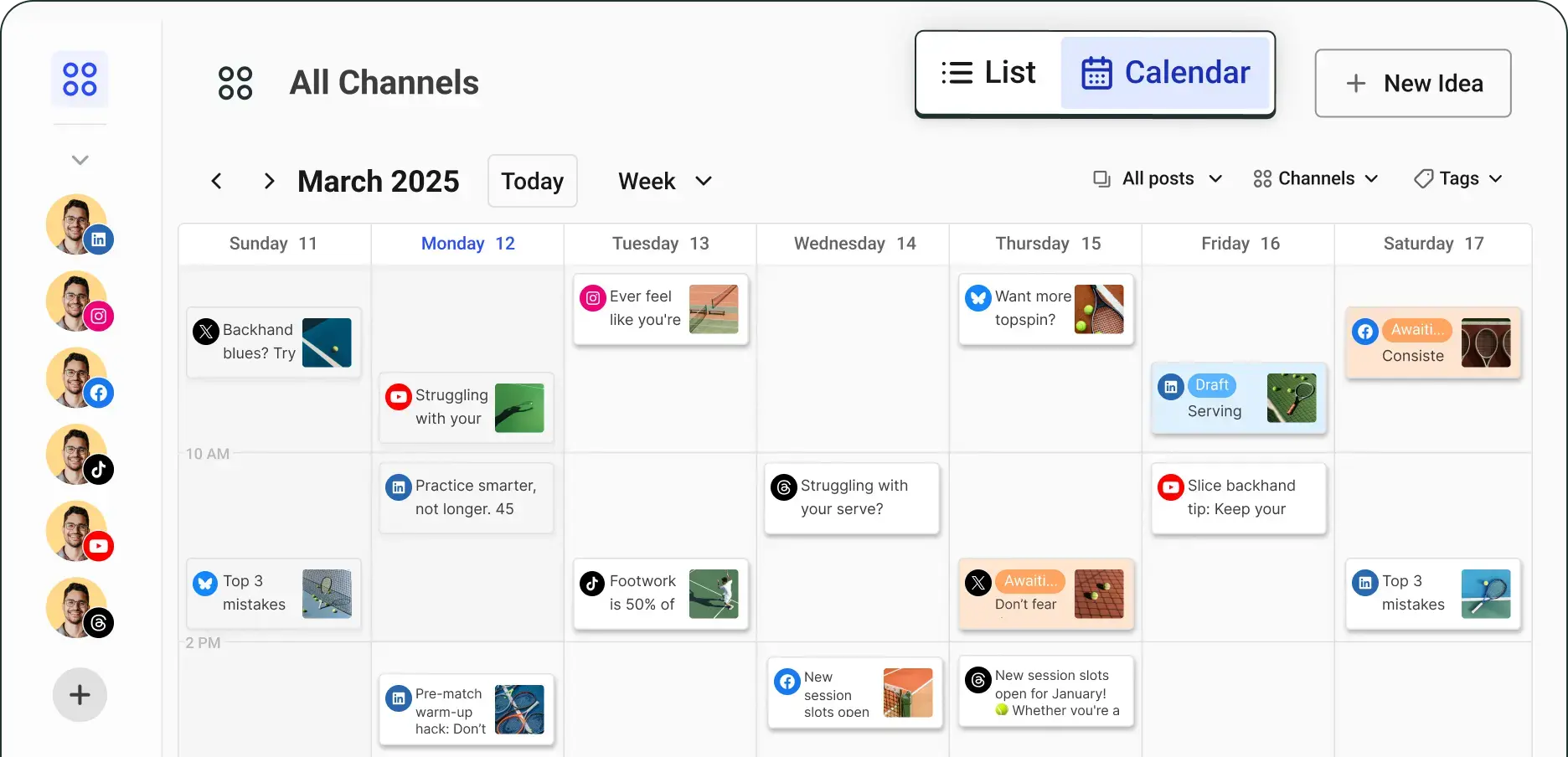
7. Social Media Management: Buffer
Social Without the Chaos
Social media matters for B2B SaaS, not for viral reach, but for consistent presence, thought leadership distribution, and community engagement.
The problem: managing multiple platforms manually is a time sink that rarely scales.
Why Buffer
Buffer wins on simplicity. While Hootsuite and Sprout Social offer more features, they also add complexity most B2B SaaS teams don't need. Buffer does the core job, schedule posts across platforms, analyze performance, collaborate with team members, without feature bloat.
For B2B SaaS, the goal isn't managing a sophisticated social media operation. It's maintaining consistent presence without it consuming your week.
Core Capabilities
Multi-platform scheduling (LinkedIn, Twitter/X, Facebook, Instagram)
Analytics showing what's performing across channels
Team collaboration with approval workflows
AI assistant for caption suggestions
Clean, intuitive interface that doesn't require training
Pricing: Free tier for basic scheduling; Essentials at $6/month per channel; Team tier at $12/month per channel
Best For: B2B SaaS teams needing social presence without a dedicated social media manager
8. Webinar & Video: Loom
Async Video for B2B Communication
Webinars aren't dead, but the format has evolved. Video marketing is massive in 2025, and the most practical application for B2B SaaS isn't polished production videos. It's async communication that scales.
Why Loom Over Traditional Webinar Platforms
Traditional webinar software solves for live events.
But for B2B SaaS, the higher-leverage play is async video, product demos prospects can watch on their time, customer onboarding without scheduling calls, internal communication that doesn't require meetings, and sales follow-ups that show rather than tell.
Loom makes it easy for viewers to retain information—95% of a message is retained through video versus only 5% through text. For complex B2B products, this matters enormously.
Core Capabilities
Screen and camera recording with instant sharing
Viewer analytics showing who watched and for how long
Comments and reactions for async conversation
Salesforce integration for embedding in outreach
AI summaries and transcriptions
For Live Webinars
If you need live webinar capability, consider Riverside (for high-quality recordings) or Demio (for B2B-focused webinar funnels). But start with Loom, it solves 80% of video needs with 20% of the complexity.
Pricing: Free tier with limited videos; Business at $15/user/month
Best For: B2B SaaS teams using video for sales, onboarding, and internal communication

9. Landing Page & Website: Webflow
Modern Web Without the Developer Bottleneck
Your website is your most important marketing asset. But for most B2B SaaS companies, making website changes requires developer involvement, creating bottlenecks that slow marketing velocity.
Why Webflow
Webflow gives marketing teams the power to build and iterate on landing pages, campaigns, and even full websites without engineering support. It's not a simple drag-and-drop builder—it's a professional-grade tool that produces clean code and scales with your needs.
For B2B SaaS, this means:
Ship landing pages for campaigns in hours, not weeks
A/B test messaging without developer tickets
Maintain brand consistency across all pages
SEO-friendly structure built in
The Framer Alternative
Framer has emerged as a strong competitor, especially for design-forward teams. If your priority is motion, interaction, and cutting-edge design, Framer might be worth evaluating. For most B2B SaaS companies prioritizing speed and flexibility, Webflow remains the better choice.
Pricing: Free tier for basic sites; CMS at $29/month; Business at $49/month
Best For: B2B SaaS marketing teams needing website control without developer dependency
10. Business Intelligence: Looker Studio (Google)
Reporting That Connects Everything
Every tool generates data. The question is whether you can actually see the complete picture. For most B2B SaaS companies, the answer is buried in multiple dashboards across multiple platforms with no unified view.
Why Looker Studio
Google's Looker Studio (formerly Data Studio) is free, integrates with virtually everything, and lets you build custom dashboards that pull from all your marketing tools. It's not the most sophisticated BI platform—that's Tableau or Power BI—but for most B2B SaaS marketing teams, it's more than enough.
Core Capabilities
Connect to 800+ data sources including Google Analytics, Google Ads, CRM exports, and spreadsheets
Custom dashboard building with drag-and-drop interface
Real-time data refresh
Shareable reports with team members and stakeholders
Free—no per-user or per-dashboard pricing
When You Need More
If you need advanced data modeling, predictive analytics, or enterprise-grade governance, Tableau or Power BI are worth the investment. But start with Looker Studio, it handles 80% of reporting needs at no cost.
Pricing: Free
Best For: B2B SaaS teams needing unified marketing dashboards without BI platform investment

The Stack Integration Principle
Here's the thing about this stack: it's not just ten tools that happen to be good individually. It's ten tools that work together.
Averi creates content optimized for SEO and GEO
Semrush identifies keyword opportunities and tracks visibility
HubSpot captures leads generated by that content
ActiveCampaign nurtures those leads with behavioral automation
Mixpanel tracks what users do after they convert
Gong analyzes sales conversations to improve messaging
Buffer distributes content across social channels
Loom enables video follow-up and async communication
Webflow hosts landing pages that convert
Looker Studio connects it all in unified reporting
The integration isn't theoretical, these tools have native connections or work through standard APIs.
The goal is a stack that compounds rather than one where each tool operates in isolation.
The Tool Sprawl Warning
A final note: only 49% of martech tools are actively used. 32% of organizations report not using the full capabilities of their current stack, up from 28% in 2024.
The tools in this stack are excellent. But tools don't create marketing results, execution does. Before adding any new tool, ask:
What specific problem does this solve?
Who will actually use it?
How does it integrate with what we already have?
What will we stop using when we add this?
The companies that will operate in flow in 2026 won't be the ones with the most sophisticated stacks. They're the ones who chose fewer tools, integrated them properly, and actually used them to create marketing that works.
Start with the content engine. Content that ranks and gets cited by AI compounds over time. Everything else supports that foundation.
FAQs
What's the minimum viable marketing stack for a B2B SaaS startup?
Start with three: a content marketing engine (Averi), a CRM (HubSpot free tier), and analytics (GA4 + Mixpanel free tier). These three cover content creation, lead management, and user understanding—the foundation for everything else. Add tools only when you have a specific problem they solve and someone who will actually use them.
How do I know if I have too many marketing tools?
Check utilization. If team members can't name the last time they logged into a tool, or if you're paying for features nobody uses, you have sprawl. The average organization uses about 75 martech tools, but most would be better served by 10-15 that actually integrate.
Why prioritize a content engine over individual AI writing tools?
Individual AI tools (ChatGPT, Claude) require you to supply context every time, produce generic outputs, and don't connect to your publishing workflow. A content engine like Averi learns your brand once, maintains context across sessions, and handles the complete workflow from strategy to analytics. The difference is execution velocity—publishing one piece per month versus four per week.
What's the difference between SEO and GEO optimization?
SEO optimizes for search engine rankings—appearing on Google when people search. GEO (Generative Engine Optimization) optimizes for AI citations—being the source AI systems like ChatGPT, Perplexity, and Google AI Overviews cite when answering questions. In 2026, you need both. Content structured only for traditional SEO misses the growing AI discovery channel.
How long before a content marketing engine shows ROI?
Content marketing typically shows meaningful results in 6-9 months. SEO campaigns average 748% ROI with a 9-month breakeven. The key is consistency—companies blogging 16+ times per month get 3.5x more traffic than those posting monthly. A content engine accelerates this by maintaining velocity without requiring proportional time investment.
Should I use HubSpot or Salesforce for my CRM?
For B2B SaaS companies under $100M ARR, HubSpot is almost always the better choice. It's more affordable, easier to implement (36 days average vs. enterprise complexity), and designed for growing teams. Salesforce excels for large enterprises with complex processes and dedicated admin resources. Match the tool to your stage—you can always migrate later.
Related Resources
The Future of B2B SaaS Marketing: GEO, AI Search, and LLM Optimization
Marketing at 12 Months Runway: The Survival Playbook for Series A Pressure
The GEO Playbook 2026: Getting Cited by LLMs, Not Just Ranked by Google
AI for CMOs: What to Delegate, What to Own, and What to Rethink
The Great Marketing Simplification: Why 2026 Is the Year of Less
Content Marketing in 2025: ROI Benchmarks and AI Integration Strategies