

In This Article
Effective cross-functional knowledge sharing enhances team alignment and collaboration, driving better results in marketing and product initiatives.
Updated:
Trusted by 1,000+ teams
Startups use Averi to build
content engines that rank.
Cross-functional knowledge sharing is the key to aligning teams like marketing and product for better results. When these teams share insights - like customer feedback or technical constraints - they can create unified strategies that improve customer experiences. But challenges like siloed communication, competing priorities, and unclear documentation often get in the way.
Key Takeaways:
Regular meetings (e.g., weekly standups, quarterly retrospectives) keep teams aligned.
Centralized documentation ensures everyone has access to the same information.
Feedback loops and post-mortems help refine processes and avoid repeating mistakes.
Shared goals and KPIs (e.g., customer satisfaction, time-to-market) encourage collaboration.
The right tools (e.g., Averi AI, Asana, Slack) streamline workflows and improve efficiency.
By focusing on structured processes, clear communication, and shared accountability, teams can overcome barriers and achieve better outcomes together. Start small - introduce weekly check-ins or standardized templates - and build from there.
How to Unlock Better Cross-Departmental Collaboration | Ask Us Anything - Organizational Silos
Core Strategies for Effective Knowledge Sharing
Building strong communication between marketing and product teams requires more than occasional updates. By establishing regular touchpoints, maintaining organized documentation, and fostering ongoing feedback, teams can create a structured approach to collaboration that delivers better results.
Regular Knowledge-Sharing Sessions
Set aside time for consistent, focused discussions to keep both teams aligned:
Weekly standups: These 15-20 minute sessions are perfect for quick updates, addressing blockers, and syncing priorities.
Monthly deep dives: Use these longer meetings to explore upcoming product features in detail, share performance data, and discuss customer insights.
Workshops for major initiatives: When tackling complex projects like product launches, interactive workshops can help map customer journeys, align messaging, and address potential challenges. This hands-on format ensures clarity and encourages active participation.
Quarterly retrospectives: These provide an opportunity to reflect on what’s working and what isn’t. Teams can assess the effectiveness of their knowledge-sharing processes, identify gaps, and brainstorm ways to enhance collaboration.
To reinforce these sessions, supplement live discussions with clear documentation that captures and organizes shared insights.
Structured Documentation Practices
Centralized and well-organized documentation is key to keeping everyone on the same page. A shared knowledge base or wiki can serve as a single source of truth, housing essential information like product specs, marketing guidelines, customer insights, and project updates.
Context-rich product documentation: Product teams should go beyond technical details to include the customer problems each feature addresses and its anticipated impact. This helps marketing craft messaging that resonates and sets realistic expectations.
Marketing documentation for product teams: Marketing should outline campaign strategies, audience insights, and performance metrics in formats that product teams can easily understand.
Standardized templates: Consistent formats for documents like product requirements and campaign briefs ensure no critical details are missed during handoffs. For example, product documents should include sections on marketing considerations, while campaign briefs should highlight any product dependencies or technical needs.
Dynamic documents: Instead of static files, use documents that evolve throughout a project’s lifecycle. Regular updates in shared folders keep everyone informed about progress and changes, reducing the need for constant meetings or status emails.
Feedback Loops and Post-Mortems
Continuous feedback is essential for refining collaboration. After each initiative, take time to evaluate what worked and what didn’t, and use these insights to adjust processes.
Post-mortems: These reviews shouldn’t just focus on mistakes. Celebrate successes and document the practices that contributed to them, especially when a product launch or campaign exceeds expectations.
Active project check-ins: Regular check-ins during a project help identify and address issues early, before they escalate. Weekly pulse surveys or brief feedback sessions can uncover gaps in communication or areas where more context is needed.
Cross-team retrospectives: These sessions provide a safe space for honest discussions about collaboration challenges. By focusing on processes rather than individual performance, teams can suggest improvements without fear of blame.
Finally, ensure that insights from retrospectives lead to actionable changes. Track progress over time to measure how these adjustments improve collaboration and outcomes.
Best Practices for Bridging Marketing and Product Gaps
When marketing and product teams work together seamlessly, they create a unified strategy that drives better results. By focusing on structured documentation, regular feedback sessions, and shared goals, these teams can align their efforts, ensuring accountability and cohesive execution.
Joint Campaign and Product Launch Planning
One common issue arises when marketing and product teams operate in silos, leading to mismatched messaging and missed opportunities. Collaborative planning from the outset can prevent this disconnect and ensure everyone is on the same page about the value being delivered to customers.
Start by jointly analyzing customer feedback, support tickets, and usage data. This shared insight not only informs product feature prioritization but also strengthens marketing messaging. When both teams understand what customers truly need, they can work toward solutions that resonate.
Coordination on timelines is equally important. Marketing teams often need 4–6 weeks to create assets, while product teams require time for testing and fixes. Aligning these schedules ensures a smooth launch process.
Defining shared success metrics is another key step. Instead of separate goals - like adoption rates for product teams and awareness metrics for marketing - agree on unified KPIs such as qualified trial sign-ups, feature activation rates, or customer satisfaction scores. This shared focus encourages both teams to work toward the same outcomes.
These practices establish a strong foundation for collaboration, setting the stage for better team integration.
Cross-Functional Teams and Clear Roles
Embedding team members from marketing, product management, design, and engineering into cross-functional squads encourages collaboration and reduces friction. These squads naturally share knowledge and align their efforts.
For key projects, appoint liaisons who act as bridges between the teams. These individuals attend planning sessions for both sides, translating technical product details into actionable marketing insights and vice versa. By serving as a central point of contact, they ensure clarity and consistency.
To avoid bottlenecks, clearly define decision-making authority. Marketing teams typically oversee messaging and creative elements, while product teams handle feature specifications and technical execution. However, allowing both teams to provide input ensures balanced decisions that reflect shared priorities.
When both teams share responsibility for outcomes, collaboration becomes second nature. For example, marketing might take ownership of activation metrics, while product teams contribute to customer acquisition goals. This mutual accountability fosters teamwork and drives better results.
While structured collaboration improves processes, ensuring consistent communication with customers is equally critical.
Maintaining Brand and Product Voice Consistency
Inconsistent messaging dilutes brand trust and confuses customers. Achieving alignment requires more than one-off reviews; it demands ongoing collaboration.
Develop a shared messaging framework that outlines key value propositions, customer pain points, competitive advantages, and approved terminology. This framework serves as a reference for both teams, ensuring that product release notes and in-app copy align with broader marketing campaigns.
Regular cross-team reviews can also help. Marketing teams should evaluate product copy to ensure it aligns with the brand voice, while product teams can verify the accuracy of marketing claims. Voice calibration sessions, where both teams review recent customer communications, are another effective way to identify inconsistencies and refine messaging.
Centralized content libraries are invaluable for maintaining consistency. These libraries should include approved product descriptions, feature explanations, customer use cases, and competitive positioning. By providing a single source of truth, both teams can ensure their communications stay aligned.
Tools and Platforms for Cross-Functional Collaboration
Modern collaboration platforms have transformed the way teams work, replacing endless email threads and scattered documents with structured workflows that keep everyone on the same page.
How to Choose Collaboration Tools
When selecting collaboration tools, it’s important to focus on features that align with your team’s needs and workflows:
Integration capabilities: Ensure the platform works seamlessly with your existing systems, such as CRM, project management, design, or analytics tools.
Workflow automation: Look for tools that reduce manual tasks, like status updates, with automated notifications to keep teams informed - especially when marketing campaigns or product releases require quick adjustments.
Scalability: Choose platforms that can handle increasing users, more complex projects, and growing interdependencies as your team expands.
Permission and access controls: Safeguard sensitive information with tools that allow granular control over who can view, edit, or approve content. This is especially critical when working with external collaborators like contractors or agencies.
To help you decide, here’s a quick comparison of some leading collaboration platforms and how they stack up against these criteria.
Collaboration Platform Comparison
Each platform brings its strengths to the table, so the right choice will depend on your team’s specific goals and existing workflows.
Platform | Best For | Integration Strength | Workflow Automation | Learning Curve |
|---|---|---|---|---|
Averi AI | Marketing-focused cross-functional work | CRM, content tools, analytics | Low - intuitive interface | |
Asana | Project management and task tracking | Wide range of business tools | Custom rules and templates | Medium - requires setup |
Slack | Real-time communication | Extensive app ecosystem | Basic workflow triggers | Low - familiar chat interface |
Documentation and knowledge management | Limited but growing | Database automation | High - powerful but complex |
Asana is ideal for teams managing detailed projects with clear task dependencies. For example, marketing teams can set up campaign timelines that notify product teams when technical specifications or updates are needed. However, it requires time and effort to configure effectively.
Slack shines in real-time communication but can quickly become overwhelming without proper channel organization. Its strength lies in its integrations, allowing teams to receive updates from development tools, analytics platforms, and customer support systems directly within relevant channels.
Notion offers robust documentation capabilities, making it a great choice for creating shared knowledge bases. For instance, product teams can document technical specs while marketing teams contribute messaging frameworks. However, its flexibility can lead to overly complicated setups that may be daunting for new users.
Selecting the right tool not only improves communication but also supports the strategies discussed earlier for bridging gaps between marketing and product teams.
Example: Averi AI for Marketing Workflows
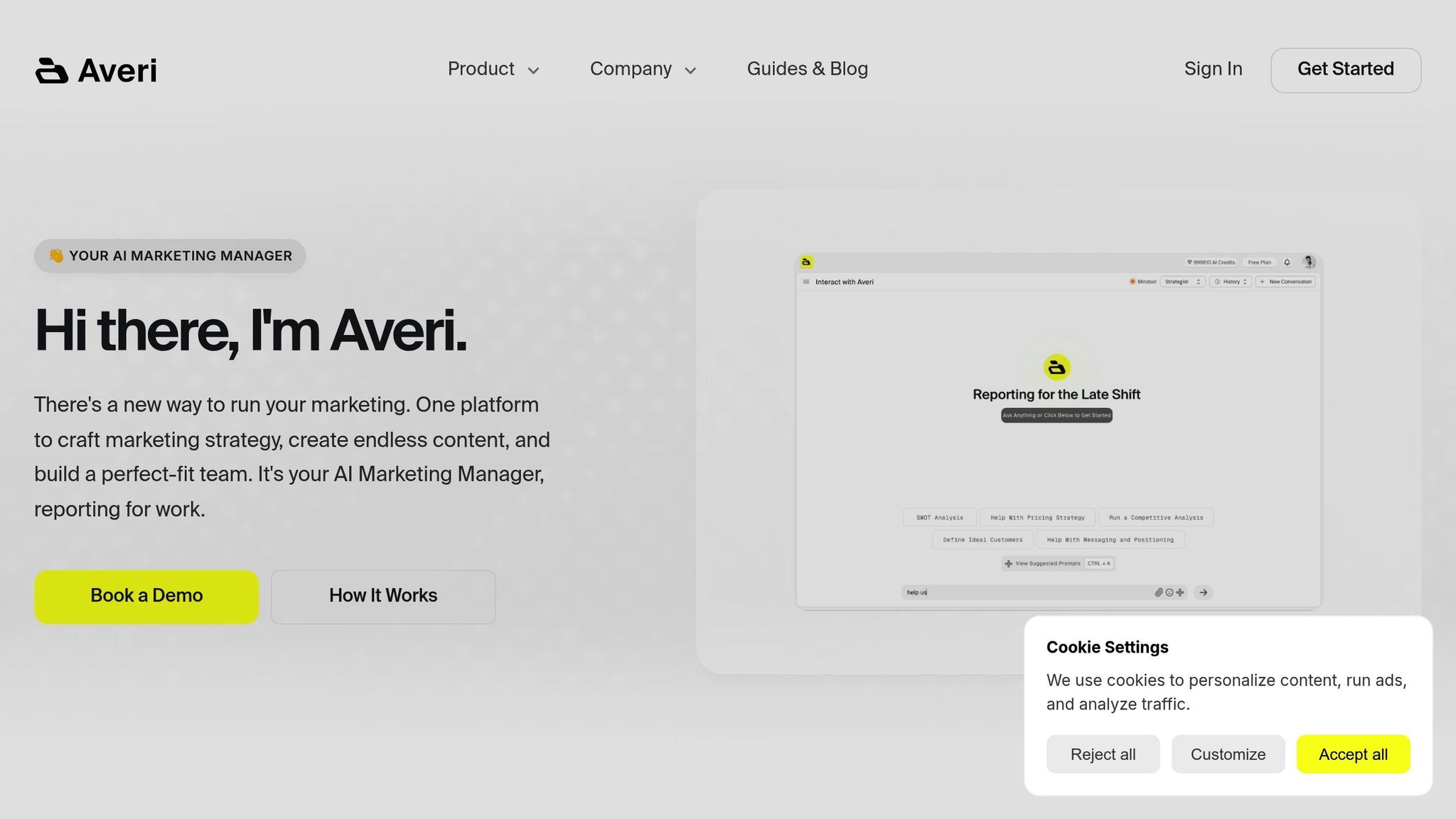
Averi AI stands out as a comprehensive solution for marketing-driven collaboration, combining AI capabilities with human expertise in one platform. It goes beyond simply organizing tasks, offering unique features that actively enhance cross-functional workflows.
Synapse architecture intelligently routes tasks to the right resources. For instance, routine content creation can be handled by AI, while more complex strategic decisions are directed to human specialists.
The AGM-2 foundation model is designed specifically for marketing contexts. It can suggest messaging angles, flag potential customer concerns, and recommend content formats when product teams share technical details.
Adaptive Reasoning adjusts its depth of analysis based on task complexity. Simple requests like social media post variations are handled quickly, while strategic decisions, such as product positioning, receive thorough evaluation. This ensures tasks are neither overcomplicated nor underanalyzed.
The Command Bar streamlines workflows by anticipating next steps. For example, after a product team shares release notes, it might suggest creating announcement emails, updating website copy, or scheduling social media posts.
Adventure Cards keep projects moving by suggesting logical follow-up actions based on the current context and team objectives.
For tasks requiring specialized knowledge, Averi’s Human Cortex connects teams with vetted experts, whether for technical writing, regulatory compliance, or user research.
Averi also prioritizes security, offering enterprise-grade encryption and user-controlled data access, export, and deletion. Teams can collaborate with confidence, knowing their sensitive information is protected and not used to train external AI models.
For organizations juggling multiple tools, Averi serves as a central hub, managing integrations, recommending strategies, and coordinating resources. This eliminates the chaos of tool sprawl, making cross-functional collaboration far more efficient.
Measuring Success and Continuous Improvement
Tracking progress and gathering feedback are essential to keeping cross-functional collaboration effective. By regularly measuring outcomes and refining strategies, teams can ensure alignment and improve their processes over time.
Setting Shared KPIs and Goals
The most effective teams focus on shared KPIs that represent collective success, rather than siloed metrics. These shared goals encourage collaboration and mutual accountability.
For example, time-to-market metrics can measure how quickly teams move from concept to launch. When marketing and product teams track timelines together - such as the time from a product brief to the first campaign launch - both sides become invested in better communication and smoother handoffs.
Similarly, customer satisfaction scores like Net Promoter Score (NPS) or retention rates can drive alignment. When both teams are held accountable for these metrics, they naturally work together to ensure messaging, features, and user experiences meet customer expectations.
Revenue attribution models also help foster collaboration by tracking the entire customer journey. Metrics like customer lifetime value, trial-to-paid conversion rates, or revenue growth from existing customers create shared ownership of business outcomes.
Achieving these goals requires open discussions about what success looks like for the organization. Teams should establish baseline metrics before implementing new processes and revisit them regularly. Holding quarterly goal-setting sessions where both teams contribute to and commit to shared objectives ensures ongoing alignment and accountability.
Building Continuous Feedback Loops
Feedback loops are most effective when they’re frequent and actionable, allowing teams to refine their collaboration processes in real time.
Weekly retrospectives focused on cross-functional projects can help identify and resolve issues while they’re still fresh. These sessions should address areas like communication breakdowns, missing information, and inefficient handoffs, with an emphasis on finding solutions rather than assigning blame.
Incorporating customer feedback provides valuable external insights. For instance, when customer support teams share recurring issues or complaints, marketing and product teams can identify gaps in messaging, features, or expectations. Regular customer interviews attended by both teams can further clarify how their collaboration impacts customer value.
Anonymous feedback is another important tool. Anonymous channels, such as monthly surveys, allow team members to voice concerns about communication or resource challenges without fear of conflict. These surveys can uncover hidden pain points and lead to improvements that might not emerge in face-to-face discussions.
To make feedback loops effective, every session should end with clear action items and follow-ups. Teams should define what needs to change, assign responsibilities, and set timelines for reviewing progress. This ensures feedback leads to tangible process improvements.
Tracking Innovation and Process Improvements
To gauge the impact of collaboration efforts, teams should monitor metrics that reflect both process efficiency and innovation.
Process efficiency metrics reveal whether collaboration is becoming more streamlined. For example, teams can track the number of revision cycles for joint deliverables, time spent in meetings versus productive work, or how often deadlines are missed due to communication issues. Monthly tracking of these metrics can highlight trends in efficiency.
Measuring knowledge retention and application is also key. Teams can monitor how often shared documentation is referenced, how quickly new members access relevant information, and whether past mistakes are avoided. Analytics on document usage can show which resources are most helpful.
Cross-functional project success rates provide insight into whether collaboration translates to better outcomes. Tracking the percentage of projects that meet goals, stay on budget, and finish on time can reveal how well teams are working together. Additionally, observing whether projects grow in ambition or complexity over time can indicate increased confidence in collaborative capabilities.
Innovation indicators can track creativity sparked by collaboration. This might include the number of new ideas generated in cross-functional discussions, the speed of experimentation, or the frequency of process improvements suggested by team members.
Finally, employee satisfaction and retention in cross-functional roles offers a critical perspective. High turnover in these roles may signal underlying issues in communication or processes that other metrics might overlook.
Regular quarterly business reviews should examine these metrics alongside traditional departmental KPIs to ensure collaboration is driving real business value. The ultimate aim is not just smoother internal workflows but better products, stronger marketing efforts, and measurable business success. Comparing performance to industry benchmarks can also provide valuable context, as leading companies often achieve faster launches, higher customer satisfaction, and more efficient resource use through superior collaboration.
Conclusion
Key Takeaways on Knowledge Sharing
Sharing knowledge across different teams is more than just a nice-to-have - it's the backbone of creating impactful products and effective marketing strategies. The best organizations see collaboration not as a task to check off but as a critical advantage.
Success lies in having structured systems in place. Regularly scheduled meetings, clear documentation, and open feedback channels help teams work together more effectively. When roles are clearly defined and plans are developed jointly, confusion fades, and teams can focus on delivering results. Over time, these habits become second nature, saving time and breaking down communication barriers.
Modern tools, such as Averi AI, simplify the connection between strategic ideas and on-the-ground execution. By combining smart workflows with human expertise, these tools make collaboration smoother. Add in consistent measurement and feedback - like tracking shared KPIs - and you have the recipe for turning teamwork into tangible business improvements.
Armed with these insights, teams are ready to take practical steps toward better collaboration.
Next Steps for Teams
Start by revisiting the communication and documentation challenges identified earlier. Take a close look at your workflows to uncover where breakdowns occur, whether it’s unclear processes, missing feedback, or poor documentation.
Begin with one impactful change. For instance, you could introduce weekly cross-functional check-ins or create a standardized template for documentation. Small, focused steps like these can build momentum for larger improvements.
Choose the right tools to fit your team’s specific needs. This might mean upgrading your project management software, implementing an AI-driven marketing platform, or simply improving how you document and share information. The goal is to make it easier for teams to work together and stay aligned.
Above all, keep evaluating and adapting. Schedule quarterly reviews to figure out what’s working, what’s not, and what could be improved. The most successful teams treat collaboration as a skill that evolves and improves with time and effort.
When teams get collaboration right, the results speak for themselves: better products, stronger marketing, and more successful business outcomes. Investing in these practices isn’t just about solving today’s challenges - it’s about setting your organization up for long-term success.
FAQs
What are the best ways to break down communication barriers for effective cross-functional knowledge sharing?
Breaking down communication barriers begins with aligning teams around common goals and cultivating an atmosphere of openness. Encouraging honest conversations helps build trust and ensures everyone is moving in the same direction.
Incorporating tools like project management platforms and setting up clear communication routines, such as regular check-ins or feedback sessions, can make a big difference. These strategies help maintain a steady flow of information, minimize confusion, and create a more cooperative dynamic among team members.
What are the best tools to improve collaboration between marketing and product teams?
To improve collaboration between marketing and product teams, leveraging the right tools can make all the difference in keeping communication clear and workflows efficient. Slack works well for instant messaging, fostering quick and direct conversations. For organizing projects and sharing knowledge in one centralized space, Notion stands out as a versatile option. When it comes to brainstorming and visual planning, Miro offers an intuitive platform for mapping out ideas collaboratively. For managing more complex tasks, platforms like Trello and Jira are often go-to choices, helping teams track progress and streamline workflows. These tools not only bridge communication gaps but also create effective feedback loops, ensuring both teams remain aligned on their shared objectives.
What are the best ways for teams to measure the success of cross-functional knowledge sharing and improve over time?
To evaluate the effectiveness of cross-functional knowledge sharing, teams can focus on several key metrics. These include how often and clearly teams communicate, the rate at which projects are completed, and the volume of shared updates or resources. These indicators provide a clear picture of how smoothly information is exchanged across teams.
Another valuable approach is tracking team satisfaction scores and assessing the speed at which updates are shared. These insights can highlight areas where collaboration is thriving and where adjustments might be needed. By regularly analyzing these metrics, teams can fine-tune their knowledge-sharing strategies to keep improving over time.
Related Blog Posts

Zach Chmael
CMO, Averi
"We built Averi around the exact workflow we've used to scale our web traffic over 6000% in the last 6 months."
Your content should be working harder.
Averi's content engine builds Google entity authority, drives AI citations, and scales your visibility so you can get more customers.