

In This Article
Learn how automated feedback loops gather, analyze, and act on customer signals to reduce churn, speed responses, and boost loyalty.
Updated:
Trusted by 1,000+ teams
Startups use Averi to build
content engines that rank.
Automated feedback loops are transforming how businesses retain customers by addressing dissatisfaction before it leads to churn. Instead of relying on slow, manual feedback collection, these systems gather data from multiple sources, analyze it in real time, and direct actionable insights to the right teams. This approach helps businesses respond faster, reduce churn, and strengthen customer loyalty.
Key Takeaways:
Churn Impact: Losing customers reduces revenue today and limits future growth opportunities like upsells and referrals.
Manual Feedback Challenges: Disconnected tools and slow processes delay action, making it harder to resolve issues quickly.
Feedback Loop Stages: Collect feedback, analyze it, act on insights, and follow up with customers to show their input matters.
Automation Benefits: AI-powered tools streamline feedback collection, detect dissatisfaction early, and trigger tailored responses.
Real-World Results: Companies using automated systems report faster execution and significant cost savings, like Lenovo saving $16M annually.
By centralizing feedback channels and automating responses, businesses can act quickly on customer concerns, turning potential churn into loyalty.
How Does AI Improve Proactive Customer Retention? - Customer Support Coach
How Feedback Loops Work: Collection to Action
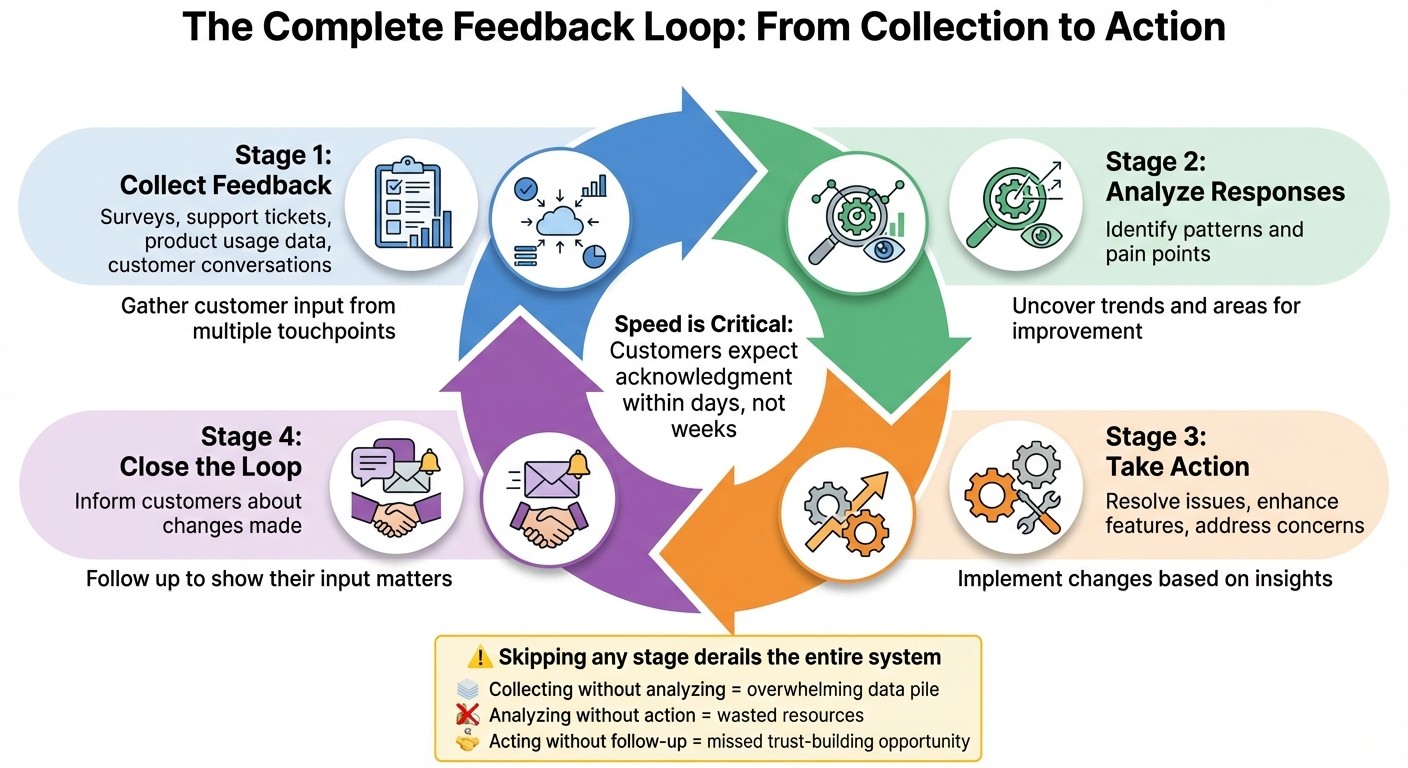
4-Stage Automated Feedback Loop Process for Customer Retention
A feedback loop turns customer input into meaningful changes. It starts with gathering data from surveys, support tickets, product usage, and direct conversations. This information is then analyzed to uncover patterns and identify areas for improvement. Next comes taking action - resolving issues, enhancing features, or addressing concerns. The final and often overlooked step is closing the loop by informing customers about the changes made based on their feedback.
When customers see their suggestions lead to tangible results, their trust grows, and loyalty strengthens. They feel acknowledged and valued, which deepens their connection to your product. On the other hand, failing to communicate these changes leaves even the best improvements unnoticed, making customers feel ignored. Let’s break down the key elements that ensure this process works effectively.
What Makes a Feedback Loop Work
The feedback process relies on four interconnected stages: gathering feedback, analyzing responses, taking action, and following up with customers. Each stage builds on the other, and skipping any step can derail the entire system. For instance, collecting feedback without proper analysis leads to an overwhelming pile of data. Analyzing responses but failing to act wastes time and resources. Taking action but neglecting to follow up with customers misses the opportunity to rebuild trust and show accountability.
Speed is a critical factor in making feedback loops effective. When customers report a bug or suggest a feature, they expect a quick acknowledgment - ideally within days, not weeks. Delays can escalate dissatisfaction, turning a loyal customer into a lost one. However, following up doesn’t have to be complicated. A simple email explaining the changes made and thanking the customer for their input can turn frustration into advocacy.
Why Businesses Fail to Close the Loop
Feedback loops often fail due to disconnected tools and limited resources. Many companies struggle with fragmented systems that make it hard to complete the cycle. Without integrated platforms, teams face delays in turning feedback into actionable insights. As David from Thorn shared:
"Averi doesn't just give us insights, it helps us act on them. That's the gap every other platform misses. We're finally turning data into real campaigns" [1].
Limited resources further complicate matters. Small teams, stretched thin by competing priorities, often lack the capacity to monitor feedback channels, analyze data, and coordinate responses across departments. For example, when Lucid AI replaced five separate tools with Averi, they achieved 40% faster execution and a 25% boost in performance [1]. Their challenge wasn’t a lack of effort - it was the inefficiency caused by fragmented systems. Without unified tools that seamlessly connect feedback collection to action, even the most dedicated teams struggle to consistently close the loop.
Automating Feedback Loops to Reduce Churn
Automation has revolutionized how businesses manage feedback loops, turning what was once a time-consuming process into a strategic advantage. Instead of manually combing through survey responses and support tickets, automated systems now continuously track customer signals, spot dissatisfaction trends, and respond instantly. Timing is everything - customers who receive prompt attention are far less likely to churn. This quick and efficient response forms the backbone of automated feedback systems.
By eliminating delays and inefficiencies, automation ensures no customer falls through the cracks. For example, when a customer submits negative feedback or shows signs of disengagement, automated workflows immediately flag the account as at risk and launch retention campaigns to address the issue.
How Automation Enhances Feedback Loops
Automated feedback systems tackle three key challenges: gathering input from multiple sources, analyzing sentiment in real time, and responding to customer behavior with tailored actions. These systems pull data from surveys, support tickets, product usage, and social media, creating a comprehensive view of customer satisfaction.
AI-powered tools take it a step further by diagnosing specific pain points. For instance, they can detect when "content retention is lagging" in a campaign and automatically recommend solutions by channel, complete with an actionable plan for review [1]. Roman Olney, Head of Global Digital Experience at Lenovo, shared how automating workflows with Copy.ai saved his company $16 million in a single year - workflows that previously took weeks and cost thousands of dollars through agencies [2].
Real-World Examples of Automated Feedback
Automated systems shine in scenarios like post-onboarding surveys and Net Promoter Score (NPS) segmentation. For instance, after a new customer completes their first week, an automated system sends a survey to gauge their experience. If the response hints at confusion or dissatisfaction, the system might send a personalized email with helpful resources or schedule a call with a customer success representative.
NPS-based automation takes things further by categorizing customers based on their likelihood to recommend your product. Detractors (scores 0–6) are funneled into re-engagement campaigns designed to address their concerns. Promoters (scores 9–10) might receive requests for reviews or referral incentives, while passive customers (scores 7–8) are sent content showcasing features they may have overlooked. These strategies lay the groundwork for using advanced AI platforms to refine feedback-driven retention efforts.
AI Marketing Platforms for Better Feedback Integration
AI marketing platforms like Averi take these automated workflows to the next level, streamlining feedback integration. Averi centralizes feedback insights and blends automation with human expertise, enabling faster and more effective responses. Unlike standalone tools that require constant context-switching, Averi maintains a consistent memory of customer interactions, brand guidelines, and past campaigns. Its integrated approach has helped users achieve 40% faster execution and a 25% improvement in performance [1].
What truly sets these platforms apart is their ability to recognize when human intervention is needed. Averi’s design allows it to bring in vetted marketing specialists directly into the workflow for complex retention strategies that require a human touch. As Laura from Cove & Current noted:
"Averi cut through the noise and gave us what we actually needed... a clear path from insight to campaign. No more guessing, no more wasted effort" [1].
This seamless combination of AI and human expertise ensures that feedback isn't just collected - it drives meaningful actions that keep customers engaged and reduce churn.
How to Set Up Automated Feedback Loops
Creating an automated feedback system may sound complex, but it doesn’t mean starting from scratch or overhauling everything you already have. The goal is to connect your existing tools - like your CRM, survey platforms, and analytics - into a seamless workflow that gathers customer feedback and acts on it automatically. Businesses already collect feedback; the challenge is building a system that responds to it effectively. Here’s how you can integrate and automate your feedback process step by step.
Steps to Build Your Automated Feedback System
Start by training your AI platform to align with your brand’s voice, customer profiles, and key assets. Tools like Averi AI make this simple by allowing you to centralize these details in what they call a Brand Core. This ensures that every automated response feels consistent and relevant to your brand identity.
Next, connect all your feedback channels to form a unified system. Link your CRM (such as HubSpot or Salesforce), survey tools (like Delighted, SurveyMonkey, or Typeform), support ticketing systems, and analytics software. Many platforms offer thousands of integrations, so you can ensure no data source is left out. By creating this unified view, you can track customer behavior across every interaction - from their first purchase to support follow-ups.
Once your tools are connected, establish automated response workflows. Define what actions should follow specific customer behaviors. For example, a low NPS score might trigger a re-engagement campaign with tailored resources, while a drop in product usage could prompt an alert for your customer success team. These workflows turn scattered feedback into actionable processes.
To refine your system, use AI-driven analysis to uncover gaps and suggest improvements. Advanced platforms can identify issues - like low content retention - and propose solutions tailored to specific channels. For instance, Roman Olney, Head of Global Digital Experience at Lenovo, shared that automating these workflows saved Lenovo $16 million in a year by replacing outdated, manual processes.
Choosing Tools and Platforms
Once your workflows are mapped out, focus on selecting the right tools to support them. A solid tech stack typically includes three core components: a CRM to manage customer data and trigger actions, survey tools for structured feedback collection, and an automation platform to connect and execute workflows.
While tools like Zapier are great for basic integrations, platforms like Averi offer more advanced capabilities. Averi combines strategic intelligence with workflow automation, integrating seamlessly with revenue, analytics, and advertising tools. Its Synapse architecture not only automates tasks but also knows when to involve human expertise for more complex strategies, saving time and effort compared to manual setups.
Tracking Results and Making Adjustments
To ensure your system delivers results, monitor key metrics like retention rates, churn percentages, and customer lifetime value (CLV) using dashboards within your analytics platform. Regular tracking - ideally weekly - helps you identify issues early and act quickly.
AI diagnostics can further simplify this process by highlighting areas of success and concern. For example, if your system detects strong click-through rates on paid ads but low content retention, you’ll know exactly where to focus your efforts. As Laura from Cove & Current explained:
"Averi cut through the noise and gave us what we actually needed... a clear path from insight to campaign. No more guessing, no more wasted effort" [1].
Finally, experiment and refine. Run A/B tests on automated responses - try different email subject lines for re-engagement campaigns, adjust the timing of follow-ups, or test new resource recommendations. Use these insights to continually improve your workflows, ensuring your feedback system grows smarter with every interaction.
Best Practices for Feedback Loop Automation
Automating feedback loops requires careful attention to privacy, quality, and judgment. The success of these systems often hinges on how well you protect customer data, maintain high standards, and know when to involve human expertise.
Data Privacy and Compliance Requirements
To build trust with your customers, start by being transparent. Clearly explain how you collect and use their data, obtain explicit consent, and provide simple opt-out options. Protect this data by encrypting it, limiting access, and conducting regular audits. Implement safeguards like automatic data retention limits to ensure you don’t hold on to customer information longer than necessary. These steps not only protect privacy but also reinforce trust, which is key to long-term customer relationships.
Running Feedback Automation Effectively
Once privacy concerns are addressed, focus on running your feedback system smoothly. Keep transactional surveys to a minimum - limit them to one per interaction - and schedule broader relationship surveys no more than once per quarter. When negative feedback comes in, act quickly; aim to follow up within 24 hours to resolve issues before they escalate. Regularly evaluate metrics like survey completion rates and response quality. If you notice a drop in engagement, tweak survey lengths, timing, or questions to improve effectiveness. Tools like Averi can help align feedback with your brand’s goals, ensuring every automated interaction feels purposeful and on-brand.
When to Add Human Review
Automation is great for routine tasks, but human oversight is essential for handling more complex situations. The best systems combine AI’s efficiency with human empathy and expertise. For instance, set up workflows where AI analyzes feedback and drafts responses, but escalate specific cases - like complaints from high-value customers or feedback requiring a personal touch - to a human team member. Kevin from Fieldgrade captures this balance perfectly:
"The AI handles what it should, and my team handles what we do best. No confusion about roles, no redundant work. Just better marketing, faster" [1].
Establish clear rules for when human intervention is needed. For example, prioritize customers with a lifetime value exceeding $10,000 or those with Net Promoter Scores (NPS) below 3. This approach ensures your responses remain thoughtful and personal, avoiding the impersonal tone that can make automation feel robotic. By blending AI with human judgment, you can build stronger connections and maintain customer trust.
Conclusion
Automated feedback loops have changed the way businesses turn customer insights into meaningful actions. By streamlining the process of collecting, analyzing, and responding to feedback, companies can not only reduce churn but also strengthen customer loyalty. Often, the key to retaining customers lies in how quickly and effectively feedback is acted upon.
It’s important to choose tools that go beyond just gathering data - they should also help drive meaningful action. Platforms like Averi stand out by combining AI-powered analysis with human expertise, delivering results that industry leaders have found both clear and actionable [1].
Start by automating routine tasks like feedback collection and basic responses, while reserving more complex situations for human intervention. This approach strikes a balance, ensuring efficiency without losing the personal touch that fosters trust. Unified workspaces also play a critical role in boosting execution speed and performance, replacing fragmented tools with cohesive systems [1].
However, feedback automation isn’t a one-and-done effort. It requires consistent monitoring, adapting based on new insights, and maintaining a strong focus on privacy and compliance. When executed thoughtfully, automated feedback loops become a powerful tool for turning customer input into retention strategies. The businesses that succeed in the years ahead will be those that listen to their customers and act faster than the competition. With automated feedback systems, this level of responsiveness becomes achievable, ensuring that every piece of feedback contributes to a stronger retention strategy.
FAQs
How can automated feedback loops help prevent customer churn?
Automated feedback loops play a crucial role in reducing customer churn by constantly gathering and analyzing customer input. This ongoing process helps businesses spot potential problems early, enabling them to address concerns before they grow into larger issues. By using this feedback to personalize customer experiences and respond more effectively, companies can enhance satisfaction and build stronger, long-lasting relationships with their customers.
What challenges do businesses face when using automated feedback loops to improve customer retention?
When businesses set out to implement automated feedback loops, they often face a range of hurdles. One major challenge is weaving the automation seamlessly into their existing systems without disrupting workflows. Ensuring the accuracy and relevance of the data collected is another critical concern, as unreliable data can undermine the entire process. Striking the right balance between automation and human oversight adds another layer of complexity, requiring careful planning to avoid over-reliance on either.
On top of these technical and operational challenges, companies must also manage customer expectations. This means responding to feedback promptly and meaningfully, while also filtering through the input to ensure it’s both actionable and accurate. Tackling these issues effectively can make a noticeable difference in boosting customer loyalty and retention.
How do AI-powered tools improve customer feedback loops?
AI-powered tools simplify the process of gathering customer feedback by automating data collection, analyzing responses instantly, and delivering insights that businesses can act on. This allows companies to identify early indicators of customer dissatisfaction, customize follow-ups to meet specific needs, and improve strategies to retain customers.
When AI-driven analysis is paired with human oversight, businesses can address customer concerns more quickly and effectively. This combination strengthens relationships and builds loyalty that lasts over time.
Related Blog Posts

Zach Chmael
CMO, Averi
"We built Averi around the exact workflow we've used to scale our web traffic over 6000% in the last 6 months."
Your content should be working harder.
Averi's content engine builds Google entity authority, drives AI citations, and scales your visibility so you can get more customers.