

In This Article
Position yourself as a local expert and scale founder-led real estate marketing with storytelling, AI content systems, social engagement, and clear metrics.
Updated:
Trusted by 1,000+ teams
Startups use Averi to build
content engines that rank.
Want to stand out in real estate marketing? Lead it yourself. Founder-led marketing builds trust by showcasing your personal expertise and local market knowledge - key factors when 97% of homebuyers start their search online. Here's how you can effectively manage it while balancing a busy schedule:
Position yourself as a local expert: Share hyper-local insights, like neighborhood trends or upcoming developments, that other agents miss.
Leverage technology: Use AI tools like Averi AI to handle content creation, SEO, and publishing, so you can focus on client relationships.
Build your personal brand: Share real-life client stories and market advice to connect emotionally with your audience.
Engage through social media and events: Use platforms like Instagram for property tours and host community events to strengthen relationships.
Track and refine your efforts: Measure key metrics like lead conversion rates and use AI to optimize your content and strategy.
Million-Dollar Real Estate Marketing Secrets Revealed | Build LA
Building Your Personal Brand as a Real Estate Founder
Your personal brand is what makes you stand out in a competitive market. It's about showing clients who you are and why they can trust you with one of the most significant financial decisions of their lives. In real estate, where clients often weigh their options among numerous agents, your unique perspective and deep local knowledge are some of your strongest marketing tools. This personal connection helps establish you as the go-to expert in your area.
Position Yourself as a Local Market Expert
Being seen as a local expert means going beyond just sharing MLS listings or generic market stats. It’s about truly understanding and showcasing the pulse of your community. Take actionable steps to immerse yourself in the local scene. Attend city council meetings, join your Chamber of Commerce, or volunteer on planning committees. These efforts can give you early insights into upcoming infrastructure projects, zoning changes, or school district updates - information that can set you apart from other agents.
Commit to creating 4–8 pieces of localized content every month and collaborate with other local professionals to strengthen your message. Focus on specific neighborhoods rather than broad city trends. For example, highlight new restaurants opening on Main Street, park renovations in the Riverside area, or how a particular school district impacts home values. In 2025, The Enclave in Fort Lauderdale improved its Google Business Profile with geo-specific metadata and high-quality photos, which led to better visibility and higher-quality leads [3].
Don’t stop at presenting data - explain what it means for your clients. For instance, if homes in a neighborhood are selling quickly or receiving multiple offers, dig into the reasons behind the trend. Is it due to new amenities, improved schools, or a surge in demand? Providing this context shows you’re not just knowledgeable but also invested in helping your clients make informed decisions.
Build relationships with local professionals like mortgage brokers, interior designers, and home inspectors. Team up to create content such as "First-Time Buyer Workshops" or "Home Renovation Cost Guides." Use visually engaging tools like drone footage or neighborhood tour videos to showcase your expertise - homes listed with video content sell 73% faster than those with just photos [4].
Once you’ve established yourself as a trusted expert, take it a step further by connecting with clients on a personal level through storytelling.
Connect with Clients Through Stories
Numbers and data are helpful, but they don’t build trust on their own - stories do. Share real-life examples from your work that show how you’ve helped clients overcome challenges similar to those your audience might face. Whether it’s guiding a first-time buyer through a competitive bidding war or helping a retiree downsize, these stories create an emotional connection.
Tailor your stories to different client groups like first-time buyers, retirees, and young families. First-time buyers often care about financing options and finding affordable neighborhoods. Retirees might focus on market timing or strategies for selling their homes. Young families are likely interested in school districts and community safety. When your stories address these specific concerns, they resonate more deeply with your audience.
Go beyond individual transactions and position yourself as an advocate for the community. Write about important issues like affordable housing, local infrastructure improvements, or neighborhood development plans. This type of content builds trust by showing you care about the broader community, not just your own business. Dedicate one day each month to batch-creating content like neighborhood spotlights, market updates, and video tours. This approach ensures consistency without overwhelming your schedule.
Use tools like Averi to simplify data collection, then add your personal touch and local insights to make the content engaging and relatable. By combining strategic storytelling with technology, you can keep your content fresh and meaningful while focusing on what truly matters - building relationships and showcasing your expertise. This blend of storytelling and tech-driven marketing can elevate your personal brand in the real estate world.
Setting Up a Content System That Scales
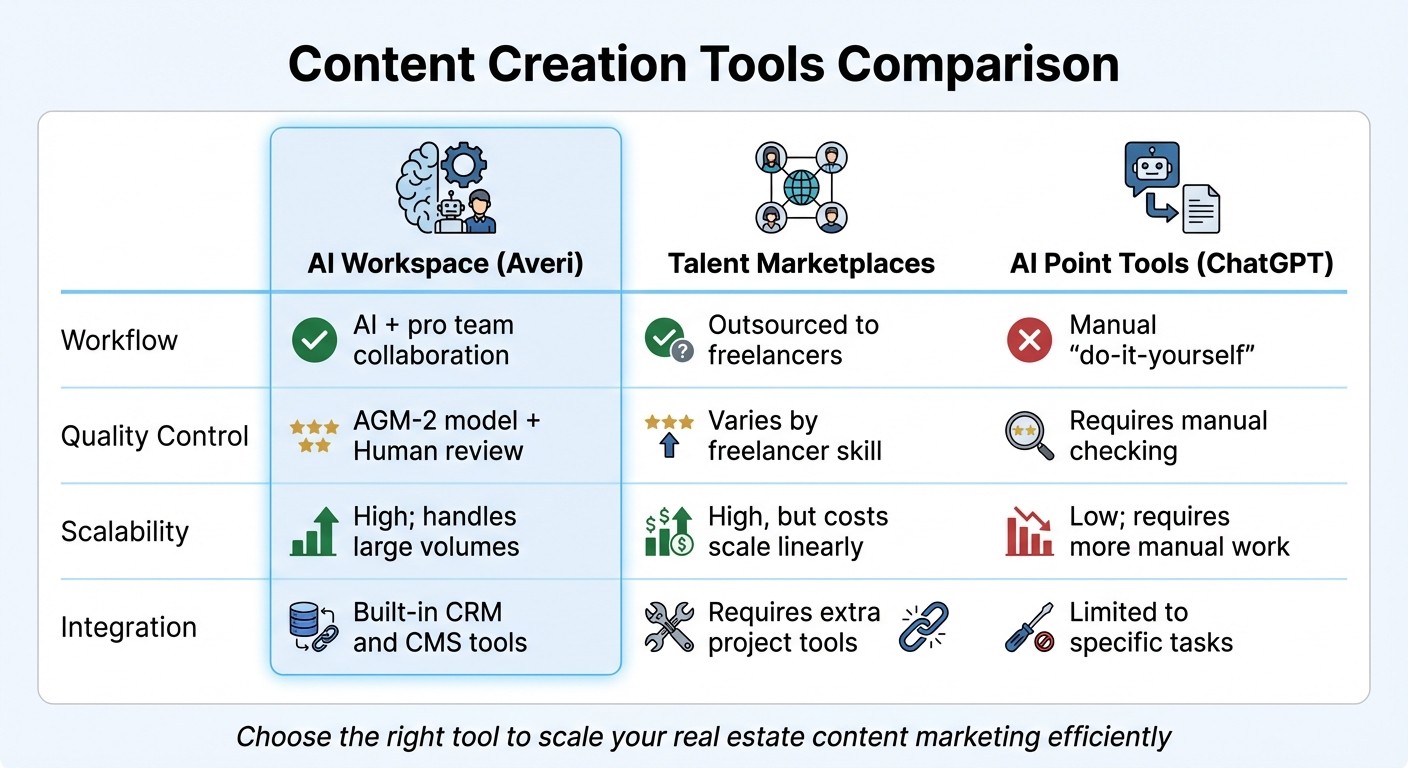
AI Workspace vs Traditional Content Creation Tools Comparison for Real Estate Marketing
Once your brand and storytelling are in place, the next hurdle is keeping the momentum going without running yourself into the ground. Many founders start strong but struggle to maintain consistency. The solution? Automating your content system for high-quality output. By streamlining the process, you can extend your personal brand’s reach while ensuring your expertise continues to shine.
Build Your Content Strategy with AI
A scalable content system begins with a well-thought-out strategy that aligns with your market, audience, and competitors. Tools like Averi AI simplify this by analyzing market trends, customer behaviors, and competitor moves to create a comprehensive content plan. This process, known as GEO, optimizes your content for both AI-driven search and local recommendations.
Here’s a compelling example: publishing content weekly can drive 320% more conversions than posting monthly. Additionally, startups with blogs generate 35% more leads compared to those without blogs [5]. To stay consistent, create a content calendar that mixes formats like market updates, neighborhood spotlights, buyer guides, and client success stories. Set aside one planning session each month to review and approve topics.
Automate Content Creation and Publishing
The real bottleneck in content production isn’t coming up with ideas - it’s execution. This is where Averi shines. Its AI workspaces streamline the entire process, from drafting and editing to formatting and publishing, all while maintaining your brand’s voice and quality.
The system doesn’t just create content; it conducts thorough research, structures pieces for SEO and GEO optimization, and even publishes directly to your CMS - eliminating the need for manual copy-pasting.
Here’s a quick look at how an AI workspace like Averi compares to other options:
Feature | AI Workspace (Averi) | Talent Marketplaces | AI Point Tools (ChatGPT) |
|---|---|---|---|
Workflow | AI + pro team collaboration | Outsourced to freelancers | Manual "do-it-yourself" |
Quality Control | AGM-2 model + Human review | Varies by freelancer skill | Requires manual checking |
Scalability | High; handles large volumes | High, but costs scale linearly | Low; requires more manual work |
Integration | Built-in CRM and CMS tools | Requires extra project tools | Limited to specific tasks |
One standout benefit of this system is its ability to build and retain your brand memory. Each piece of content enhances the AI’s understanding of your voice, market, and expertise, reducing the need for heavy edits as you go. You remain in control, approving and reviewing content, while the system handles the heavy lifting. This frees you up to focus on what matters most - building client relationships, showcasing properties, and closing deals.
Using Social Media and Local Community Engagement
Once you've established a scalable content system, the next step is translating your digital presence into meaningful real-world connections. This involves leveraging your expertise and founder-led marketing to engage directly with your audience. Real estate thrives on relationships, and combining social media with local events allows you to connect with potential clients and referral sources in a more personal and impactful way.
Share Your Expertise on Social Media
Focus on consistent, meaningful engagement rather than overwhelming yourself with daily posts. Spend about 30 minutes each day participating in local online discussions - this builds trust faster than any ad campaign ever could.
Different social platforms serve distinct purposes, so tailor your approach accordingly:
Instagram and TikTok: Perfect for short-form videos showcasing curb appeal, lifestyle content, and quick property highlights.
YouTube: Ideal for long-form content like property tours, neighborhood guides, and expert interviews to establish authority.
LinkedIn: A great platform to connect with developers, investors, and other high-value prospects.
Maximize your efforts by repurposing content. For instance, a single property tour or market update can be transformed into Instagram captions, Twitter threads, YouTube descriptions, and even graphics. Addressing common client questions - such as "What are the schools like in this area?" or "What's the average price per square foot?" - naturally draws in local searches.
Stage | Channel | Content Type |
|---|---|---|
Awareness | Instagram, TikTok, YouTube | Lifestyle reels, curb appeal, property highlights, local guides |
Consideration | LinkedIn, Facebook | Market updates, educational FAQs, client testimonials |
Conversion | Instagram/FB Messenger | Direct chat, tour scheduling, limited-time incentives |
Loyalty | All Channels | Features of satisfied customers and closing day photos (user-generated content) |
To maintain consistency without burning out, batch your content creation. Dedicate 90 minutes to 3 hours weekly to record videos and other materials, then use AI tools like Averi to handle transcription, formatting, and publishing. For instant responses to inquiries, set up chatbots on platforms like Facebook and Instagram.
Build Relationships Through Local Events
While social media fosters digital connections, local events provide the face-to-face trust essential in real estate. Isaiah Hazward, Managing Partner at The Homebound Group, emphasizes the importance of events:
Events are everything - they allow us to engage with the community, and we are nothing without our community [6].
A consistent event schedule, such as hosting four large events annually, can establish your presence. Mix casual gatherings, like neighborhood BBQs or outdoor movie nights, with educational workshops on topics such as homebuying or investment strategies. Partnering with local businesses like title companies or financial advisors can help share costs and add value for attendees.
To capture leads effectively, use digital sign-in apps that feed directly into your CRM for follow-up. Verify contact details on the spot by texting event information to attendees. Follow up social events with educational seminars about a month later to keep prospects engaged and moving through your full-funnel marketing campaign.
Keep attendance rates in mind - only about 40–50% of RSVPs typically show up - so plan accordingly. Event costs can range from $200 to over $10,000 annually, depending on scale. Booking venues like hotel ballrooms during off-peak times (e.g., Tuesdays) can save costs, and hosting open houses on consecutive days allows you to reuse decorations and refreshments efficiently.
Philanthropic events, such as neighborhood cleanups or charity drives, can further build trust and associate your brand with positive community initiatives. Between major events, maintain personal touchpoints by delivering small, themed gifts - think pumpkin-carving kits in the fall or hot cocoa sets in the winter. These gestures keep your brand top of mind while reinforcing a personal connection.
Tracking Results and Scaling Your Marketing
Track the Metrics That Matter
For real estate founders, keeping an eye on the right metrics can make all the difference. Focus on funnel conversion rates like lead-to-appointment, appointment-to-client, and client-to-close to gauge the health of your marketing efforts [8][9].
Set your sights on growing Marketing Qualified Leads (MQLs) by over 40% year-over-year [7]. Pay close attention to key performance indicators such as session counts, time spent on pages, returning visitor rates (aim for about 50%), and conversion rates - specifically, 2.2% for visitor-to-lead and 4.7% overall [7]. If your numbers fall short, focus on easy wins like optimizing for long-tail keywords that rank near the bottom of Google’s first page or on page two [7].
Another critical metric is Customer Acquisition Cost (CAC). For organic channels, aim for $660 with a 3.2% conversion rate, while paid channels typically run higher at $1,185 with a 1.5% conversion rate. Keep in mind that phone interactions close 38% of deals, making them a key part of your strategy [7].
Once you’ve established a strong foundation with a real estate marketing strategy, you can start integrating AI tools to fine-tune and scale your efforts.
Use AI to Improve and Scale
AI tools like Averi can take your marketing to the next level without requiring additional staff. Instead of manually sifting through performance data, Averi handles it for you - tracking impressions, clicks, and keyword rankings. It then provides actionable recommendations, such as which content to update, which keywords to prioritize, and how to counter competitor strategies.
Averi doesn’t just analyze; it actively monitors your market every week. It flags underperforming content and identifies trending topics, allowing you to make quick, impactful updates. By linking performance data directly to your content strategy, Averi ensures you’re always working on what matters most. Content that performs well gets amplified, while underperforming pieces are refined or replaced.
What makes Averi particularly powerful is its ability to learn. Every piece of content you publish helps the system better understand your brand, audience, and positioning. Over time, this results in increasingly effective content strategies, enabling you to continuously improve your marketing without needing a large team.
Conclusion: Building a Marketing System That Lasts
Founder-led marketing thrives on genuine expertise and relatable stories. By positioning yourself as a trusted local authority, sharing real client experiences, and actively participating on social media and at community events, you foster connections that drive results more effectively than traditional corporate campaigns.
To make this approach sustainable, having the right systems in place is key. Take Sam Browne, for example - he grew his LinkedIn following to over 100,000 by focusing on personal branding and targeted content [2]. Tools like Averi simplify this process. Instead of dedicating hours each week to creating content, you can automate tasks with an AI content engine for research, drafting, and publishing, all while staying aligned with your strategic goals. This not only saves time but ensures a steady presence in your market.
Commit to sharing at least one market insight or client story each week. Track your key conversion metrics, and let tools like Averi handle the heavy lifting of content production and performance tracking [1][2]. Your personal brand serves as the foundation, AI takes care of execution, and your community involvement deepens client relationships. This consistent and automated approach helps establish a marketing system that endures.
In real estate, success doesn’t hinge on having the largest marketing budget - it comes from creating systems that build momentum over time. Each piece of content strengthens your brand, sharpens your strategy, and widens your network. It’s not about working harder; it’s about crafting a sustainable system that keeps running while you focus on serving clients and growing your business. By blending your expertise with AI-powered tools, your marketing evolves and thrives continuously.
FAQs
What should I post each week as a real estate founder?
As a real estate founder, delivering consistent, locally tailored, and valuable content is key to drawing in leads and earning trust. Share a variety of content, such as market updates, neighborhood highlights, and practical tips for buyers and sellers, to establish yourself as the go-to local expert.
A good routine might involve regularly posting updates on market trends, advice for first-time buyers, and success stories from your clients. Leveraging tools like AI can simplify and speed up this process, allowing you to save time while keeping your content engaging and high-quality.
How do I use AI without losing my personal voice?
To make the most of AI while staying true to your personal voice, it's all about balance. Let AI handle initial drafts or repetitive tasks, but always take the time to refine and shape the output yourself. By injecting your own expertise and perspective, you can ensure the final product feels genuinely yours. Start by setting clear objectives, crafting specific prompts for the AI, and then editing the results to align with your style. This approach allows AI to streamline your workflow while preserving the individuality and authenticity of your voice.
What are the most important marketing metrics for agents?
Key metrics that matter for agents are lead generation, conversion rates, and measurable outcomes like a boost in newsletter subscribers or an uptick in property inquiries. These figures provide a clear picture of how well your content and outreach efforts are performing, making it easier to ensure your strategies are delivering real, actionable results.
Related Blog Posts

Zach Chmael
CMO, Averi
"We built Averi around the exact workflow we've used to scale our web traffic over 6000% in the last 6 months."
Your content should be working harder.
Averi's content engine builds Google entity authority, drives AI citations, and scales your visibility so you can get more customers.