
In This Article
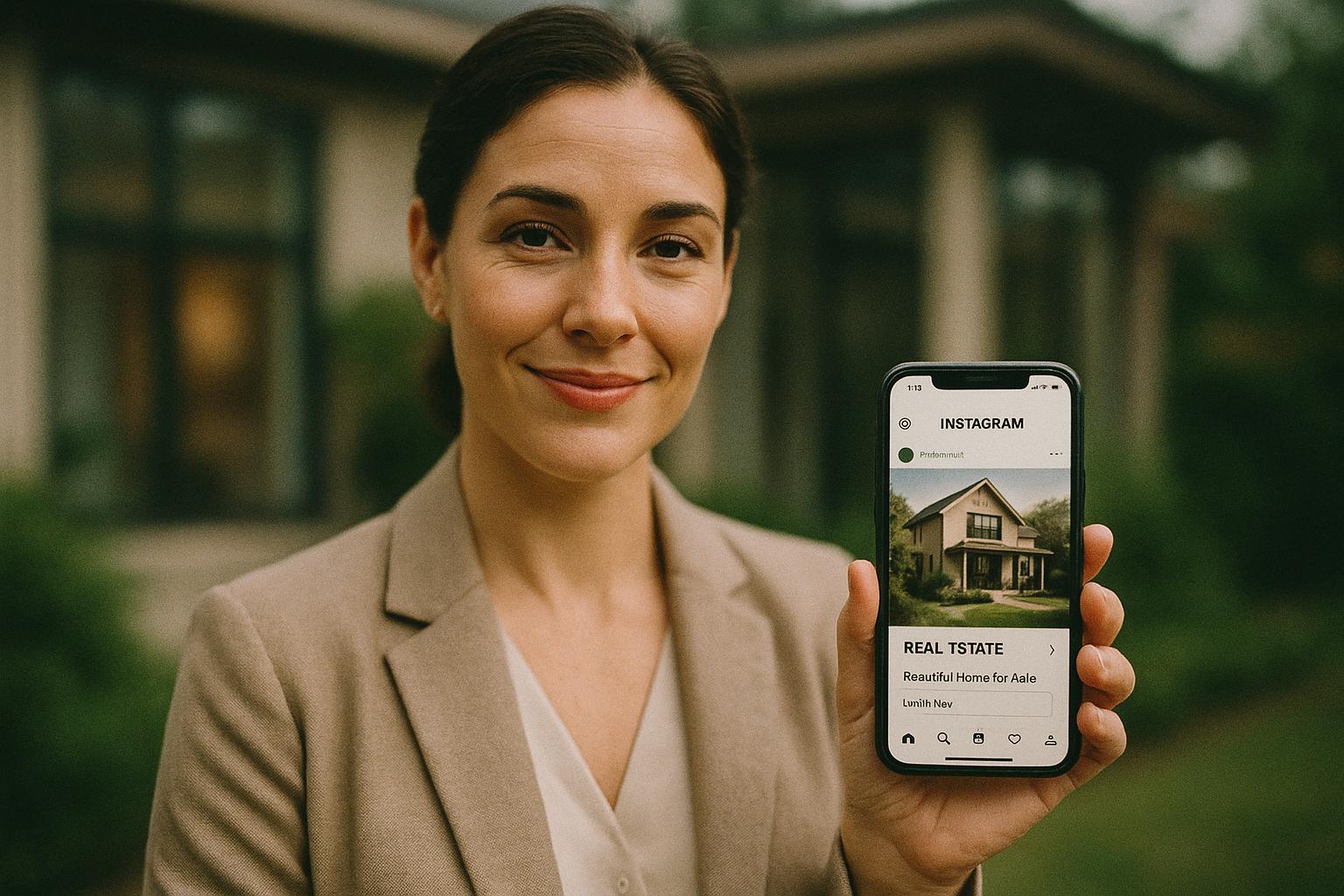
Learn effective strategies for running Instagram ads in real estate, focusing on targeting, visuals, and performance optimization to drive leads.
Updated:
Trusted by 1,000+ teams
Startups use Averi to build
content engines that rank.
Instagram is a powerful platform for real estate marketing, offering tools to connect with buyers through visually engaging ads. To succeed, focus on tailored strategies, high-quality visuals, and precise targeting. Here's a quick guide:
Set Up a Business Account: Convert your Instagram profile to a business account and link it to Meta Ads Manager for advanced tools and campaign management.
Choose the Right Objective:
Lead Generation: Collect buyer contact info.
Traffic: Drive users to property listings or virtual tours.
Awareness: Build your brand in local markets.
Target the Right Audience:
Use location-based targeting for specific neighborhoods or zip codes.
Adjust demographics for age, income, and buyer types.
Leverage interests like real estate or home improvement.
Utilize custom and lookalike audiences for precision.
Design Effective Ads:
Use formats like carousel ads, video walkthroughs, and story ads.
Include sharp, well-lit photos, virtual staging, and drone shots.
Highlight details like pricing in dollars, square footage, and local amenities.
Leverage AI Tools: Platforms like Averi AI automate campaigns, optimize targeting, and provide expert insights for better results.
Measure and Optimize:
Track metrics like cost per lead (CPL), click-through rates (CTR), and geographic performance.
Conduct A/B testing for visuals, headlines, and targeting.
Scale campaigns based on seasonal trends, market conditions, and performance data.
Instagram ads can transform your real estate marketing by showcasing properties, reaching the right audience, and driving leads. Focus on visuals, localization, and data-driven optimization to stand out.
Instagram Ads for Real Estate Agents 2025 - LEAD GENERATION [Tutorial]
How to Set Up and Target Instagram Ads
Setting up Instagram ads for your real estate business requires a solid strategy and a properly configured account. By following the platform's latest guidelines, you can effectively reach potential clients and maximize your advertising efforts.
Creating a Business Account and Using Meta Ads Manager
Start by converting your Instagram account into a business profile. This unlocks advanced advertising tools and detailed analytics essential for running targeted campaigns. After making the switch, link your account to Meta Ads Manager. This platform allows you to manage both Instagram and Facebook ad campaigns in one place, streamlining the process. For detailed instructions on converting your account and linking it to Meta Ads Manager, check Instagram's official resources.
Once your account is ready, focus on defining campaign objectives that align with your real estate goals.
Selecting Campaign Objectives for Real Estate Ads
Your campaign's success depends on choosing the right objective. Instagram offers several options tailored to different stages of the customer journey:
Lead Generation: Use integrated forms to capture contact information from potential buyers or sellers.
Traffic: Drive users to your website, property listings, or virtual tours by optimizing ads for clicks.
Awareness: Build your brand's presence in local markets, ensuring your business stays top-of-mind even if immediate leads aren’t generated.
The objective you select should match your audience's needs. For instance, if you're targeting new buyers, awareness campaigns can introduce them to your services. If you're working with a more engaged audience, lead generation or traffic campaigns may deliver better results.
Targeting the Right Audience for Real Estate Ads
After setting your campaign goal, refine your audience to ensure your ads reach the right people. Instagram offers powerful targeting options that can help you connect with potential buyers and sellers:
Location Targeting: Focus on specific neighborhoods, zip codes, or use radius targeting around key properties.
Demographic Targeting: Adjust your audience based on factors like age, income, and life events. For example, target younger individuals for first-time homebuyer campaigns or higher-income brackets for luxury properties.
Interest-Based Targeting: Choose interests such as real estate, home improvement, or interior design to attract users more likely to engage with your ads.
Custom and Lookalike Audiences: Upload customer lists to re-engage past clients or website visitors. Use lookalike audiences to find new prospects who share similarities with your current customers.
Test different combinations of these targeting options to find the most effective approach for generating high-quality leads.
How to Design Real Estate Ad Creatives
In the competitive world of real estate, ad creatives play a critical role in grabbing attention and generating interest in property listings. The visual elements you choose can determine whether a potential buyer clicks to learn more or scrolls past your ad.
Choosing the Best Ad Formats
Instagram offers several ad formats that are particularly effective for real estate marketing. Each format has unique strengths depending on the type of property or message you want to convey:
Carousel Ads: These allow you to feature multiple photos of a property, giving viewers the chance to swipe through images that highlight key areas like the kitchen, master bedroom, or outdoor space. It's a great way to showcase a property's best features all in one ad.
Video Ads: Short walkthrough videos help potential buyers get a real feel for the layout and flow of the property. Keep videos under 30 seconds to focus on the most appealing aspects.
Story Ads: Perfect for time-sensitive updates like open houses or price drops, Stories offer an immersive, full-screen experience. Features like "Swipe Up" or "Learn More" buttons encourage immediate action.
Single Image Ads: When you have one standout photo - like a stunning exterior shot or a beautifully staged living room - this format works well to leave a strong impression.
Selecting the right ad format is the first step to creating a compelling visual experience.
Producing High-Quality Visual Content
Great visuals are the backbone of any successful real estate ad. Here’s how to ensure your content stands out:
Photography Tips: Well-lit, sharp images perform significantly better than dark or poorly framed ones. Schedule photo shoots during the golden hour - shortly after sunrise or before sunset - when natural light is soft and warm, making spaces feel inviting.
Virtual Staging: If a property is empty, consider using virtual staging. This technique digitally adds furniture and décor to photos, helping buyers imagine themselves living in the space without the cost of physical staging.
Video Walkthroughs: Smooth, steady footage is essential for video ads. Start with an exterior shot, then guide viewers through the home in a logical order. Use tools like a gimbal stabilizer or a smartphone with stabilization features to avoid shaky footage.
Drone Photography: Aerial shots can set your listing apart, especially for homes with large lots, waterfront views, or unique surroundings. Drone images not only highlight features like pools or gardens but also provide context about the neighborhood and nearby amenities.
Keep platform-specific requirements in mind when planning your visuals. For example, Instagram feed posts perform best with square (1:1) or vertical (4:5) images, while Stories require vertical (9:16) content. Capturing content in multiple formats ensures your ads look polished across all platforms.
Including US-Specific Details in Your Ads
To connect with US buyers, tailor your ads with details that resonate locally:
Pricing: Display prices in US dollars, like "$450,000" or "$1.2M" for larger amounts. Avoid unnecessary decimal points for round numbers to keep the information clean and easy to read.
Dates and Times: Use the MM/DD/YYYY format for dates, such as "Open House 12/15/2024, 2:00 PM - 4:00 PM", to avoid confusion.
Measurements: Include square footage in your ad text or image overlays. Mention both the total square footage and lot size when relevant, e.g., "3,200 sq ft home on a 0.75-acre lot."
Neighborhood Highlights: Be specific about local amenities. Instead of "near shops", say "5 minutes from Whole Foods and Target." Mention proximity to schools, major employers, or transportation hubs to appeal to buyers' priorities.
Key Costs: Highlight important expenses like property taxes and HOA fees. For example, "$8,500/year property taxes" or "$250/month HOA fee."
US Terminology: Use familiar terms like "master bedroom" instead of "primary suite", "garage" instead of "car park", and "yard" instead of "garden" to align with US preferences.
Finally, make your call-to-action buttons clear and actionable. Phrases like "Schedule Tour", "Get More Info", or "Contact Agent" are far more effective than generic options like "Learn More." By combining high-quality visuals with localized details, you can create ads that truly resonate with your target audience.
Using AI Tools to Automate and Improve Campaigns
When it comes to running Instagram ad campaigns for real estate, there’s a lot to juggle - crafting engaging ad copy, selecting the right visuals, targeting the ideal audience, and keeping an eye on performance metrics. AI tools can simplify these tasks, saving time while delivering better results. The trick lies in choosing a platform that doesn’t just handle isolated tasks but understands and supports the entire marketing workflow.
Using Averi AI for Workflow Automation
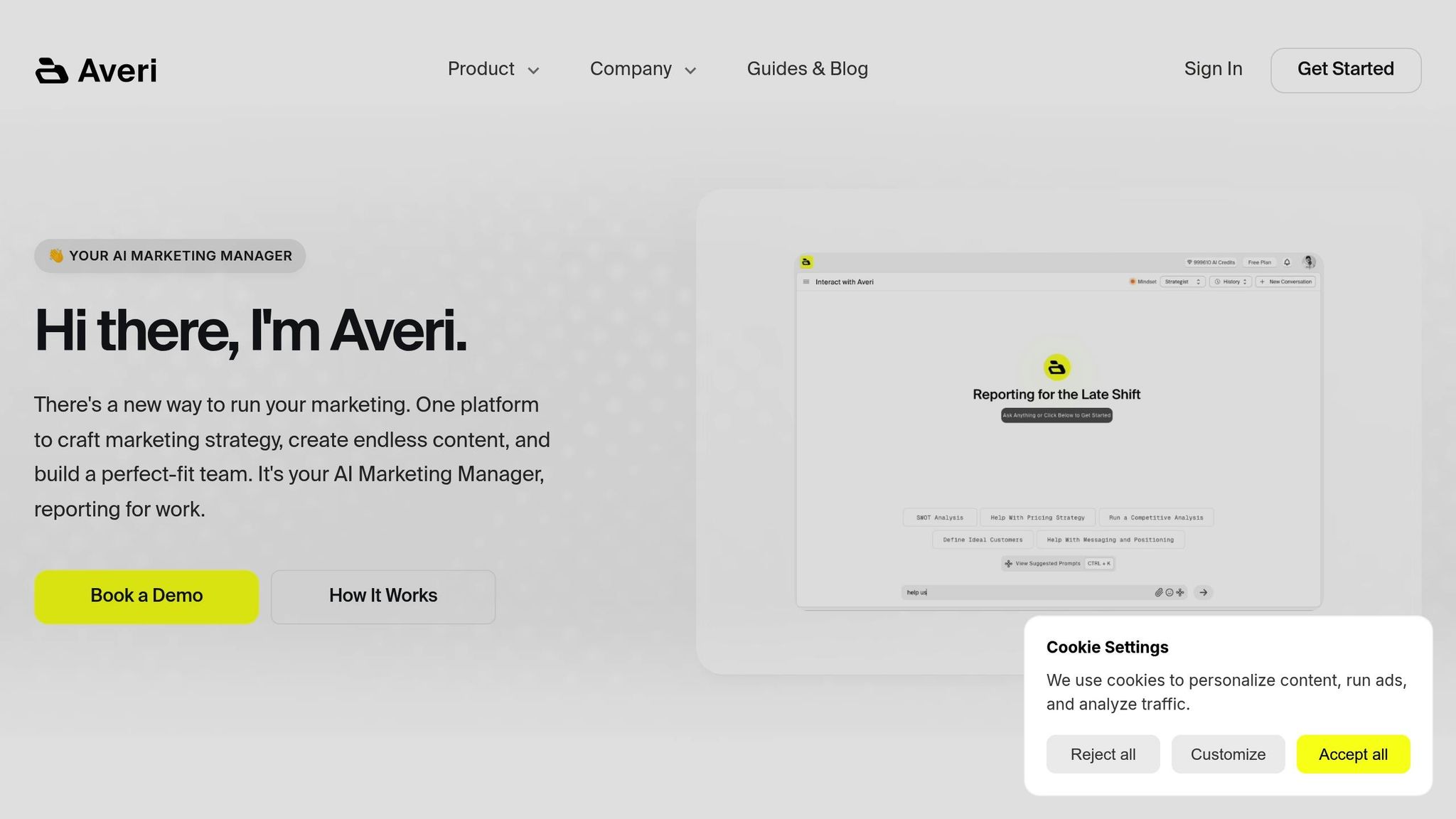
Averi AI is designed as a one-stop solution for real estate marketing, helping you move seamlessly from brainstorming campaign ideas to full execution. Unlike basic tools that focus solely on generating text, Averi’s Synapse orchestration system takes a broader, more strategic approach to streamline your entire campaign process.
For instance, when launching a new property listing, Averi’s AGM-2 model generates content tailored to real estate needs. It factors in local market trends, buyer psychology, and the complexity of your requests. Simple tasks, like writing property descriptions, are handled quickly, while more intricate strategies involving multiple audience segments get detailed analysis and precise recommendations.
What sets Averi apart is its Human Cortex feature. When the AI reaches its limits, the system seamlessly connects you with vetted marketing experts who specialize in real estate. This eliminates the need to manage separate campaign tools or hire external help. Features like the Command Bar and Adventure Cards provide actionable suggestions, such as retargeting strategies or ad variations, to keep your campaign on track.
For real estate teams managing multiple listings across varying neighborhoods and price points, Averi’s long-term memory ensures consistency. It retains details about your brand voice, past campaign successes, and market preferences, allowing each new campaign to build on the last. This integrated approach makes Averi a standout option compared to other tools.
Averi AI vs. Other Marketing Tools
Real estate professionals often need solutions that combine strategic planning with execution. Averi meets this need effectively, but it’s worth comparing it to other options in the AI marketing landscape. Here’s a look at three common approaches:
Traditional marketplaces like Fiverr and Upwork connect you with freelance marketers. While these platforms can be cost-effective, you’re responsible for managing the entire process - vetting candidates, explaining your market, and coordinating revisions. Success often requires ongoing relationships with multiple freelancers.
Point tools like Copy.ai and Jasper focus on specific tasks, such as generating ad copy or creating social media posts. Copy.ai, for instance, markets itself as a "GTM Agent Platform", aiming to integrate AI across the entire go-to-market process.
Roman Olney, Head of Global Digital Experience at Lenovo, shared, "Copy.ai has been phenomenal in transforming the way we develop marketing content. By automating workflows that would typically take weeks and cost thousands of dollars through agencies, they've saved us $16 million dollars this year alone." [1]
While these tools excel at content generation, real estate campaigns demand more - like strategic insights into local markets and buyer personas.
AI marketing workspaces like Averi go a step further by combining AI capabilities with human expertise. They offer an end-to-end solution, eliminating the need to juggle multiple tools or freelancers.
Feature | Averi AI | Copy.ai | Fiverr/Upwork | Jasper |
|---|---|---|---|---|
Workflow Orchestration | Full campaign management with human backup | GTM automation across teams | Manual workflow and variable quality | Individual content tasks |
Quality Controls | Built-in expert review and brand consistency | Brand voice settings and collaboration | Varies by freelancer | AI-only content generation |
Real Estate Focus | Tailored for property marketing | General business/GTM focus | Depends on freelancer expertise | General content creation |
Time to Results | Minutes to hours, including expert input | Fast for trained workflows | Days to weeks with vetting | Minutes for basic content |
Pricing Model | $45/month for Plus plan | Enterprise pricing varies | $5–$100+ per project | $39–$125/month |
Human Expertise | Integrated specialists | Team collaboration features | Manual freelancer hiring | AI-only approach |
The right choice depends on your team’s needs and the complexity of your campaigns. Copy.ai works well for larger real estate firms with dedicated marketing teams looking to integrate AI into their broader strategies.
Jean English, Former Chief Marketing Officer at Juniper Networks, noted, "Thanks to Copy.ai, we're generating 5x more meetings with our personalized, AI-powered GTM strategy." [1]
On the other hand, Averi is ideal for individual agents or smaller brokerages seeking a complete campaign solution without needing in-house marketing expertise.
Traditional marketplaces remain useful for clearly defined projects when you have the time to manage freelancers, while tools like Jasper are better suited for high-volume content creation if you already have the know-how to guide your strategy.
Success in real estate marketing hinges on consistent execution across multiple touchpoints - not just producing isolated pieces of content. Platforms like Averi simplify this process, offering a cohesive approach that balances strategy with execution.
How to Measure, Optimize, and Scale Instagram Ad Campaigns
Creating successful Instagram ads for real estate goes beyond simply launching campaigns. To truly succeed, you need to measure performance, refine your strategies based on data, and scale your efforts thoughtfully. The key difference between campaigns that thrive and those that fall flat often lies in how effectively you track results and make informed adjustments.
Tracking Performance with Instagram Insights
Instagram Insights offers a solid starting point for evaluating your ad performance. It tracks metrics like reach, impressions, and detailed engagement patterns, providing a window into buyer behavior. Here are some key metrics to focus on:
Cost per Lead (CPL): Instead of targeting a fixed CPL, evaluate it against your local market dynamics and property price ranges to ensure you're staying competitive.
Click-Through Rate (CTR): A low CTR suggests your visuals or copy might need improvement. If your CTR consistently lags behind industry benchmarks, it’s time to refresh your creative approach.
Frequency: Keep an eye on how often your audience sees your ads. While multiple exposures can help in real estate, overdoing it risks ad fatigue and wasted budget.
Website Traffic Quality: Look beyond the number of clicks. Metrics like time spent on property pages or the number of listings viewed can reveal whether your ads are attracting genuinely interested visitors.
Geographic Data: Understanding which neighborhoods or regions respond best to your ads can guide budget allocation and help you make localized adjustments.
Use these insights to fine-tune your campaigns through systematic A/B testing.
A/B Testing Ad Creatives and Targeting
Real estate’s longer decision-making cycles mean you need a deliberate and patient approach to A/B testing. Here’s how to test effectively:
Creative Testing: Test one element at a time, such as comparing video tours to high-quality photos for the same listing. Videos often drive higher engagement, but static images with clear calls-to-action might bring in more qualified leads.
Headline Variations: Try different headline styles, such as emotional appeals versus practical benefits. Including specific details about properties can also help improve ad performance.
Audience Targeting: Tailor your ads to different buyer personas - like first-time homebuyers, families looking to upgrade, or real estate investors. Each group responds best to messaging that speaks to their unique needs.
Geographic Targeting: Experiment with targeting specific areas to find where your ads resonate most.
Time-Based Testing: Run tests at different times and days to identify when your audience is most active. Allocate budgets accordingly for maximum impact.
Ensure your tests have enough budget and run long enough to provide reliable insights before making decisions.
Scaling Campaigns Based on Market Trends
Once your campaigns are optimized, scaling them effectively requires a combination of data analysis and awareness of market trends:
Seasonal Scaling: Adjust your ad spend to align with real estate cycles. For example, increase your budget during the busy spring and summer months, while maintaining a steady presence in slower seasons to capture serious buyers.
Market Condition Adjustments: Adapt your campaigns to current market dynamics. In competitive markets with limited inventory, highlight exclusivity and urgency. In markets with abundant inventory, focus on unique property features and value.
AI-Powered Scaling: Use tools like Averi AI to automate campaign management. These platforms can optimize creative elements, adjust targeting, and reallocate budgets based on real-time performance data, making it easier to scale effectively.
Geographic Expansion: Expand into new areas by using your best-performing ad sets as templates. Tailor your messaging to reflect the local market conditions and property values of each region.
Budget Scaling: Gradually increase your budget while closely monitoring performance metrics. A slow, steady approach helps maintain stability as your campaigns grow.
Cross-Platform Integration: Extend your successful Instagram campaigns to platforms like Facebook to reach different audience segments. This strategy can broaden your reach while catering to diverse buyer demographics.
Conclusion
Creating successful Instagram ads for real estate demands a well-thought-out strategy that blends platform expertise with a deep understanding of your market. Start with setting up Meta Ads Manager and focusing on precise, location-based targeting. This ensures your ads are seen by buyers and renters who are actively searching in your area.
Visual content is the backbone of real estate advertising on Instagram. High-quality photos, virtual tours, and engaging Reels showcasing properties and neighborhoods consistently outperform basic listings. For example, carousel ads generate 40% more clicks than single-image ads, and video content drives three times more engagement than static images[2]. These formats allow you to showcase multiple property features and create immersive experiences that help potential buyers picture themselves in the space.
Localization tailored to U.S. audiences is essential. Using familiar elements like dollar signs ($), square footage, and other local details builds trust with American buyers. Highlighting nearby amenities, local businesses, and community events helps potential buyers see the lifestyle that comes with the property. Agents who position themselves as local experts rather than just real estate sellers often see better results with this approach.
Automation tools such as Averi AI can simplify campaign creation, audience segmentation, and performance tracking, making it easier to optimize results. Quick lead responses - within 60 seconds through CRM integration - can significantly boost conversion rates[2].
Ongoing A/B testing and performance analysis are key to refining your campaigns. Tracking metrics like cost per lead, click-through rates, and geographic performance helps you fine-tune targeting and creative elements. Agents who consistently test ad formats, headlines, and audience segments achieve stronger results than those who rely on static campaigns.
Given the seasonal nature of real estate, flexibility is crucial. Successful agents scale their ad spend during peak buying seasons while staying visible during slower times to attract serious buyers. Expanding into new territories with proven ad templates and tailored messaging supports sustainable growth. These adaptable strategies highlight Instagram’s potential to drive real estate success.
FAQs
How can I measure the success of my Instagram ads for real estate and optimize them effectively?
To gauge how well your Instagram ads are performing in the real estate market, keep an eye on metrics like click-through rate (CTR), cost per lead (CPL), and conversion rate. Instagram's built-in analytics tools can help you monitor these numbers and spot emerging trends.
For better results, try experimenting with different audience groups, ad designs, and formats. Use visuals that grab attention - think high-quality property photos or immersive virtual tours - and fine-tune your targeting based on how users engage with your content. Make it a habit to review performance reports regularly so you can make informed adjustments and steadily improve your campaign outcomes.
What are some effective ways to use Instagram ads to showcase real estate properties?
To make the most of Instagram ads for showcasing real estate properties, focus on crafting visually captivating content that highlights the property's standout features. Use high-quality photos or videos to draw attention to elements like spacious living areas, sleek modern kitchens, or breathtaking views. Carousel ads are a great choice for displaying multiple perspectives or rooms, while Stories ads can deliver an immersive experience with compelling visuals and concise captions.
Take advantage of Instagram's audience targeting tools to connect with potential buyers or renters based on factors like location, interests, and demographics. For instance, you can aim your ads at users in specific neighborhoods or those showing interest in upscale living. Be sure to include clear calls-to-action, such as "Schedule a Tour" or "Learn More", to encourage users to visit your website or fill out a contact form.
Keep a close eye on your ad performance using Instagram's analytics. Experiment with various formats, captions, and visuals to determine what resonates most with your audience and delivers the best results.
How does Averi AI make running Instagram ads for real estate easier and more effective compared to other tools?
Averi AI makes running Instagram ad campaigns for real estate professionals simpler and more effective by blending AI-powered automation with expert human insights. What sets Averi AI apart from traditional tools is its ability to streamline every step of the process. From crafting visually compelling ads to fine-tuning audience targeting and managing campaigns, everything is handled seamlessly within one platform.
Key features like real-time analytics, consistent brand messaging, and integration with major ad platforms ensure your campaigns are designed to grab the attention of potential buyers or renters. By cutting down the time and effort required to oversee ads, Averi AI becomes an ideal choice for real estate professionals aiming to boost their marketing efforts without dealing with unnecessary hassles.
Related Blog Posts

Zach Chmael
CMO, Averi
"We built Averi around the exact workflow we've used to scale our web traffic over 6000% in the last 6 months."
Your content should be working harder.
Averi's content engine builds Google entity authority, drives AI citations, and scales your visibility so you can get more customers.