Keyword Research for Voice Search and Conversational Content: A Practical Guide

Averi Academy
Averi Team
8 minutes

In This Article
Learn how to optimize your keyword strategy for voice search by focusing on conversational queries, user intent, and local relevance.
Updated:
Trusted by 1,000+ teams
Startups use Averi to build
content engines that rank.
Voice search is changing how people find information online. Instead of typing short keywords, users now ask detailed, conversational questions like, "Where can I find a coffee shop open now near me?" This shift demands a new keyword strategy focused on natural language and user intent. Businesses must create content that answers full questions, incorporates local details, and aligns with how people speak to their voice assistants.
Key Insights:
Voice Search Behavior: Queries are longer, conversational, and often include context like location or specific needs.
User Intent: Focus on three main types - informational (e.g., "how to"), navigational (e.g., "find the nearest"), and transactional (e.g., "order now").
Local Relevance: "Near me" and time-sensitive searches are common, requiring businesses to include location and situational keywords.
AI Tools: Platforms like Averi AI and SEMrush help identify conversational keywords and optimize content for voice search.
Actionable Steps:
Analyze Current Keywords: Use tools like Google Search Console to find conversational queries already driving traffic.
Discover New Keywords: Tools like AnswerThePublic and SEMrush's Questions filter can help uncover long-tail, question-based phrases.
Optimize Content: Write in natural language, include local modifiers, and structure content for featured snippets.
Leverage AI: Automate keyword research and content updates with tools like Averi AI to stay ahead of search trends.
By focusing on conversational content and user intent, businesses can improve their visibility in voice search results and better connect with their audience.
Ultimate Voice Search SEO 2025 Guide
How Voice Search Queries Work
To craft an effective keyword strategy for voice search, it's important to first understand how these queries operate. Unlike traditional text searches, voice searches rely on conversational, full-sentence queries. This shift reflects how people naturally speak, and adapting to this behavior is key to aligning your content with evolving search habits.
What Makes Voice Search Queries Different
Voice searches are generally longer and more conversational than text-based searches. While text searches often use short phrases like "Italian restaurant downtown", voice searches tend to resemble complete questions or thoughts. For example, someone might ask, "What’s the best Italian restaurant in downtown Seattle that’s open for dinner tonight?"
These queries also follow predictable formats, often starting with phrases like:
"How do I..." for instructional queries
"What is..." for definitions or explanations
"Where can I find..." to locate businesses or services
"When does..." for time-related inquiries
"Why should I..." for recommendations or advice
This natural, question-based structure mirrors how people seek solutions in everyday conversations.
Voice searches also tend to include more context. Instead of a generic query like "running shoes", a voice search might be, "What are the best running shoes for flat feet if I run on concrete?" This additional detail reflects users’ specific needs and circumstances, making voice search inherently more descriptive.
Local Intent in Voice Search
Another defining feature of voice search is its strong focus on local relevance. These queries often aim to find nearby businesses, services, or information that’s immediately actionable. Phrases like "near me" are common, highlighting the mobile and on-the-go nature of voice search.
Users frequently include geographic or situational details in their queries, such as "on my way to work" or "in the downtown area." Many of these searches are time-sensitive, with users looking for real-time information like "coffee shop open now near me."
Additionally, local voice searches often get highly specific. Instead of searching for "restaurant", someone might ask, "Are there any family-friendly restaurants with outdoor seating and vegetarian options near downtown Portland?" This level of detail reflects a conversational tone and a desire for tailored recommendations, pushing businesses to refine their local content and keyword strategies to better align with user intent.
Step-by-Step Voice Search Keyword Research Process
Building on the insights into how people use voice search, this guide will help you refine your keyword strategy. Unlike traditional keyword research, this approach focuses on natural language patterns and user intent rather than short, fragmented phrases.
Review Your Current Keyword Performance
Start by analyzing your current keyword performance to identify areas where you can optimize for voice search. Google Search Console is a great tool for uncovering which queries are already driving traffic and how they align with conversational search patterns.
Log into Google Search Console and head to the Performance report. Look for queries that include conversational terms like "how", "what", "where", "when", and "why." Pay special attention to queries with three or more words, as these often mimic the way people speak when using voice search. Sort by impressions to find longer queries that are gaining visibility, even if they’re not yet generating significant clicks.
Next, use Google Analytics to analyze long-tail queries and their engagement metrics. Go to Acquisition > Search Console > Queries and review data like bounce rate, session duration, and pages per session. Queries with conversational phrasing often show unique engagement patterns, which can guide your optimization efforts.
Identify queries where your site is ranking on page two or three of search results. These represent opportunities for improvement. Since voice search results typically pull from the top three positions, boosting your rankings for these queries can make a substantial difference.
Once you’ve pinpointed gaps in your current performance, it’s time to discover new conversational keywords.
Find Conversational and Long-Tail Keywords
To capture how people naturally speak, focus on finding conversational and long-tail keywords. Tools like AnswerThePublic can help you uncover question-based queries by visualizing search suggestions around your core topics. Similarly, SEMrush's Keyword Magic Tool offers a "Questions" filter that isolates queries with four or more words. For a more tailored approach, Averi AI can generate keyword suggestions specifically aligned with your brand and audience, identifying patterns that broader tools might miss.
Pay attention to local modifiers like "near me" and situational phrases such as "open now", "on my way to work", or "with kids." These details often indicate actionable intent, which is common in voice searches.
You can also use tools like SEMrush or Ahrefs to analyze conversational queries driving traffic to competitors’ websites. Look for trends in how they structure content around question-based keywords, especially in FAQ sections or blog post titles. These insights can inform how you approach your own content strategy.
Once you’ve gathered a list of potential keywords, the next step is to align them with user intent.
Match Keywords to User Intent
Organizing your keywords by user intent ensures your content meets the needs of voice search users. Voice search queries generally fall into three main intent categories, each requiring a tailored content approach.
Informational intent: These users seek quick answers to questions starting with "how to", "what is", or "why does." Your content should deliver concise, actionable answers, often formatted for featured snippets.
Navigational intent: These queries focus on finding specific businesses or locations, using phrases like "find the nearest" or "directions to." Content like location pages or directories works best here.
Transactional intent: These users are ready to take action, with queries like "order", "buy", or "schedule." Product pages or service booking options should address these needs.
Create a framework to categorize your conversational keywords. For each keyword, determine whether the user is seeking information, navigation, or a transaction. Then map these keywords to the right content type - blog posts for informational queries, location pages for navigational ones, and product or service pages for transactional queries.
It’s also important to consider the customer journey stage when aligning keywords with intent. For example, someone asking, "What are the benefits of solar panels?" is in the awareness stage, while someone asking, "Which solar panel installer near me offers the best warranty?" is much closer to making a decision. Your content should address conversational keywords across all stages of the journey to maximize your voice search traffic.
How to Optimize Content for Voice Search Keywords
Once you've identified conversational keywords that align with user intent, the next step is weaving them into content that voice assistants can easily process. Voice search optimization isn't the same as traditional SEO - your content needs to flow naturally when spoken aloud while delivering clear, concise answers. Here's how to tailor your language and incorporate local signals for maximum impact.
Write in Natural, Conversational Language
For voice search, your content should sound like everyday conversation. This means using complete sentences, contractions, and familiar, straightforward language.
Integrate conversational keywords into your headlines and subheadings, phrased as real questions. For instance, rather than titling a section "Solar Panel Installation Cost", go with something like "How Much Does Solar Panel Installation Cost in 2025?" This approach better mirrors how people naturally phrase their queries.
Swap out formal terms for more casual alternatives. For example, use "you" instead of "one", "help" instead of "assist", and "buy" instead of "purchase." This makes your content more relatable and approachable. Tools like Averi AI can assist by analyzing your existing content and suggesting conversational tweaks while keeping your brand's voice intact.
Add Local and Contextual Keywords
While conversational language enhances readability, adding local and contextual details ensures your content aligns with user intent - especially for location-based searches. Voice queries often include specific geographic references, making it essential to incorporate location-based modifiers.
Use terms that locals would naturally say. Instead of just "Chicago", try adding specificity, such as "downtown Chicago", "the Loop", or "near Millennium Park." These details help match how users describe their surroundings in everyday speech.
Incorporate context that resonates with U.S. audiences by using culturally relevant and seasonal phrases. For example, terms like "back-to-school season", "holiday shopping", "spring cleaning", or "tax season" align with predictable search patterns and user expectations.
If your business has a physical location, proximity-based phrases like "near you", "in your area", or "close to home" can make your content more relevant for voice searches. Time-sensitive keywords are also vital - restaurants might emphasize "open now" or "late night", while retailers could highlight "same-day pickup" or "weekend hours."
Finally, consider adding personal context to your content. Voice search users often include qualifiers like "with kids", "on a budget", or "for beginners" in their queries. Incorporating these phrases can help you capture more specific, high-intent searches and provide answers tailored to your audience's unique needs. Together, these strategies create a well-rounded voice search optimization plan.
AI Tools for Voice Search Optimization
Refining your voice search strategy becomes significantly more efficient when AI tools are part of the equation. These platforms take the guesswork out of keyword research by identifying conversational phrases and user intent, while also helping to organize content in a way that resonates with voice-first audiences.
How Averi AI Enhances Keyword Research
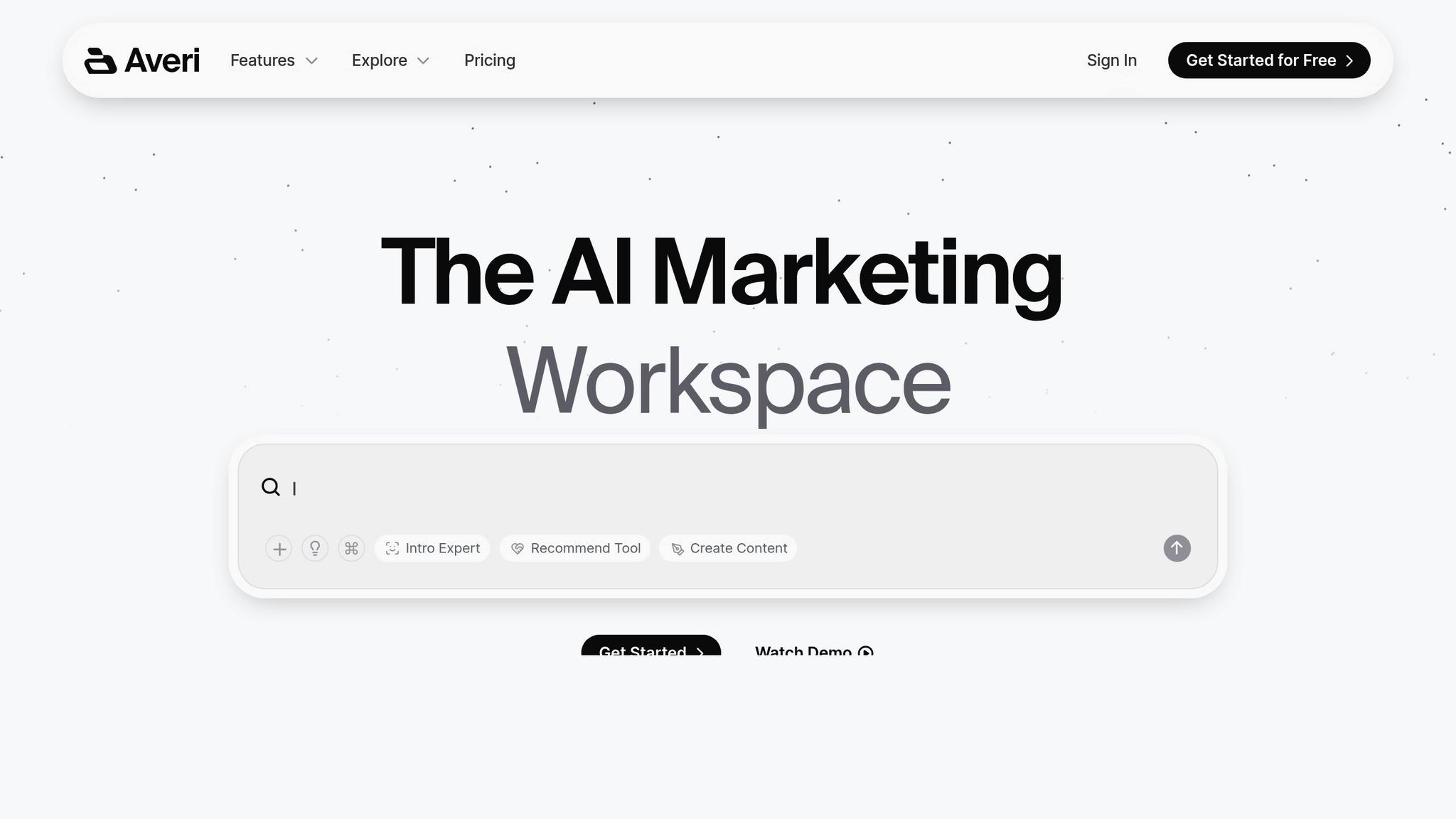
Averi AI takes keyword research to the next level with its Synapse orchestration, blending AI-generated insights with marketing expertise. Instead of simply generating a list of keywords, it interprets conversational search queries within context. Its Adaptive Reasoning feature adjusts its approach based on the complexity of the query, handling straightforward searches like "pizza near me" with ease while diving deeper into more nuanced questions.
Averi AI also integrates seamlessly with your brand identity through its Brand Core feature. By aligning keyword suggestions with your brand voice and audience profiles, it ensures that the recommended phrases feel natural and on-brand. Additionally, its Library system acts as a repository for your keyword research, creating a long-term, data-driven strategy that complements manual insights and keeps your efforts consistent over time.
Comparing Other Tools for Voice Search
While tools like SEMrush and AnswerThePublic are useful for generating keyword lists, they often require additional manual effort to turn raw data into a voice-optimized strategy. This is where platforms like Averi AI shine, offering a more integrated solution that combines strategy, execution, and expert collaboration in one place.
Streamlining Your Voice Search Workflow with AI
The real power of AI in voice search optimization lies in its ability to automate workflows. AI tools categorize keywords into informational, navigational, or transactional groups, simplifying the process of structuring content. They also ensure a conversational tone, flagging overly formal language and suggesting more approachable phrasing that aligns with how people naturally speak.
AI systems also excel at keeping content current. They can detect shifts in trends or rankings, identify areas that need updates, and recommend specific adjustments. This ongoing refinement ensures your content stays relevant and aligned with the evolving nature of voice search.
Conclusion: Voice Search Keyword Research Checklist
Optimizing for voice search isn't just a passing trend - it's about connecting with your audience in the way they naturally communicate. With conversational queries becoming increasingly common and voice assistants managing everything from quick inquiries to in-depth research, your keyword strategy should mirror how people actually speak.
To adapt, focus on long-tail phrases and question-based keywords that align with natural speech patterns. For example, instead of targeting "best pizza restaurant", aim for phrases like "where can I find the best pizza near me right now?" This approach captures the conversational tone that voice search thrives on.
Local intent plays a major role, as voice searches often involve immediate, location-specific needs. Ensure your content addresses these situational details while maintaining a natural, conversational style that aligns with the way users interact with voice assistants.
AI-powered tools make keyword research more efficient by analyzing conversational patterns, categorizing user intent, and suggesting natural phrasing. These platforms save time and deliver insights that go beyond basic keyword generation, offering strategic context that aligns with your brand goals.
Don't overlook the power of featured snippets, which dominate voice search results. Structuring your content with clear headers, bullet points, and direct answers increases your chances of being selected as the preferred voice response.
Finally, remember that voice search optimization works best when integrated into your overall content strategy, rather than treated as a standalone effort. Regular audits help identify which conversational phrases resonate most with your audience. When your strategy aligns with your brand voice and user behavior, your content will perform well across all search formats, fostering stronger connections with your audience.
This checklist serves as a practical guide to refining your voice search strategy - from understanding conversational queries to leveraging AI tools effectively.
FAQs
How can businesses adjust their content strategy to better align with voice search and conversational queries?
To stay ahead in the world of voice search, businesses need to align their strategies with how people naturally speak. This means focusing on natural language queries, long-tail keywords, and question-based phrases that mirror everyday conversations with voice assistants. Crafting content that feels conversational and straightforward is key to meeting user intent.
Incorporating FAQ-style formats into your content is another smart move. Providing clear, concise answers to common questions not only supports voice search optimization but also enhances your content's relevance for conversational platforms. By tailoring your approach to these elements, you'll create content that connects with voice-first users and improves your chances of ranking well.
What are the main differences between optimizing for traditional text-based searches and voice searches when it comes to keyword strategy?
To make the most of voice search, it's crucial to focus on natural language queries. These searches are typically longer and more conversational compared to traditional text-based keywords. Voice search users often phrase their queries as complete questions, making it important to emphasize long-tail keywords and question-focused phrases.
Another key aspect of voice search is its strong connection to local intent. For example, someone might ask, "Where's the nearest coffee shop?" To capture this audience, your content should provide direct, concise answers in a conversational tone. By understanding how people interact with voice assistants, you can fine-tune your strategy to match these habits and boost your presence in voice-driven search results.
How can AI tools like Averi AI help with finding and using conversational keywords for voice search optimization?
AI tools such as Averi AI make pinpointing conversational keywords easier by examining natural language patterns, long-tail phrases, and the types of queries often used in voice searches. These tools use advanced insights to anticipate how users engage with voice assistants, enabling marketers to craft content that feels intuitive and relatable.
With Averi AI, you can efficiently identify keywords that match conversational styles, fine-tune your content for voice-first platforms, and ensure it connects with your audience. This doesn’t just boost your search visibility - it also enhances user engagement by addressing their needs in a more meaningful way.
Related Blog Posts

Zach Chmael
CMO, Averi
"We built Averi around the exact workflow we've used to scale our web traffic over 6000% in the last 6 months."
Your content should be working harder.
Averi's content engine builds Google entity authority, drives AI citations, and scales your visibility so you can get more customers.