

In This Article
How AI and behavioral data power adaptive gamification—tailored challenges, zero-party insights, cross-device profiles, and real-time optimization.
Updated:
Trusted by 1,000+ teams
Startups use Averi to build
content engines that rank.
Personalized gamification transforms user engagement by tailoring challenges, rewards, and experiences to individual preferences using AI and data. Unlike generic systems, this approach adapts to user behavior, motivations, and activity across devices, keeping interactions consistent and relevant.
Key Takeaways:
Individualized Rewards: AI-driven systems customize challenges and incentives, catering to personal milestones or competitive preferences.
Behavioral Insights: Platforms analyze user actions, like task completion and engagement trends, to refine experiences.
Cross-Device Consistency: Data integration ensures a seamless experience across phones, desktops, and tablets.
Zero-Party Data: Users willingly share preferences through surveys and quizzes, shaping their experiences directly.
Real-Time Adjustments: AI predicts disengagement and adjusts difficulty or sends prompts to maintain interest.
Proven Results: Brands like Duolingo, Nike+, and Spotify have successfully implemented these strategies, boosting engagement and loyalty.
By leveraging AI and behavioral data, brands can create gamified systems that evolve with users, ensuring long-term satisfaction and retention.
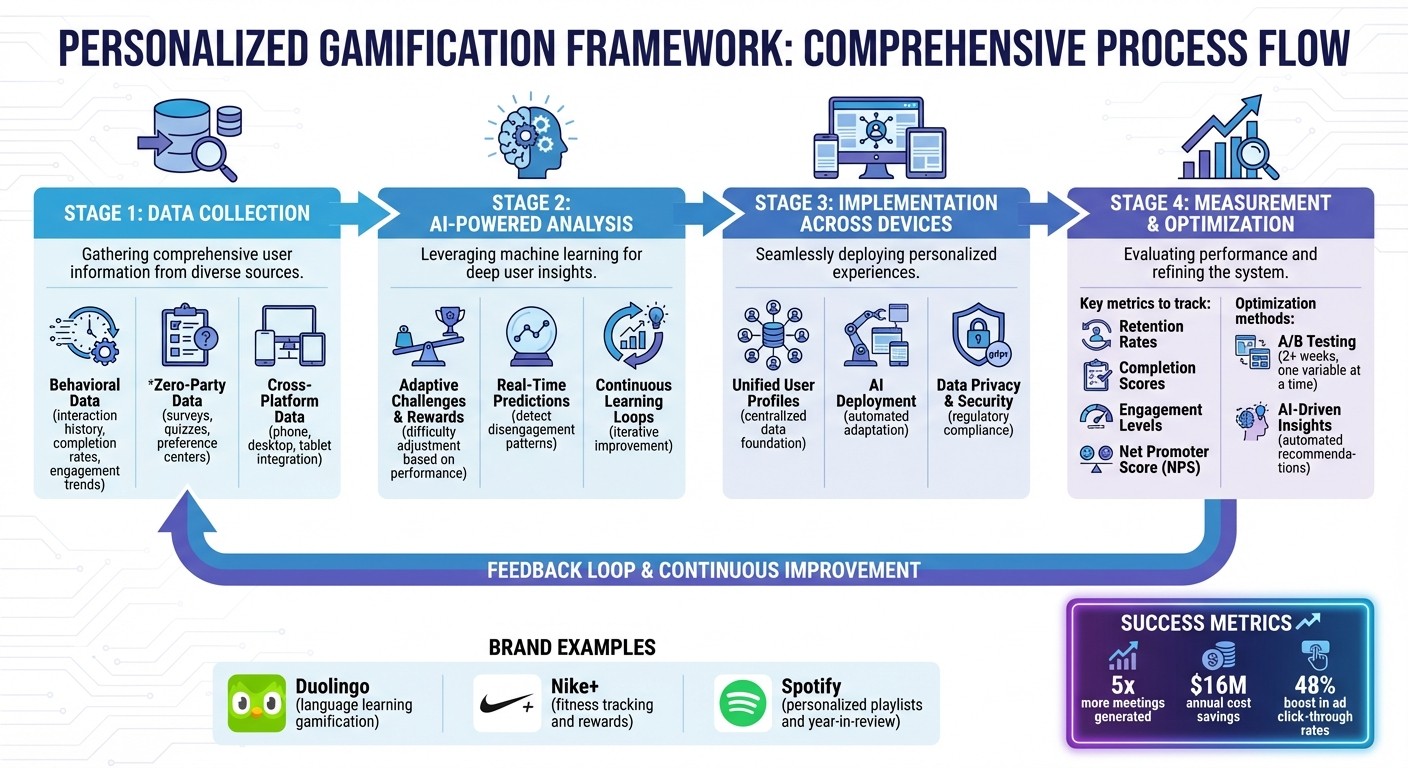
Data-Driven Personalized Gamification Framework: From Data Collection to Optimization
How Eagle AI Delivers a 7:1 ROI Through Personalization & Gamification | Cédric Chéreau, Co-Founder
Data Sources for Personalized Gamification
Personalized gamification starts with gathering targeted data that uncovers what drives each individual. The aim is to collect and use information responsibly - focusing on preferences, behaviors, and engagement patterns - to design experiences that feel uniquely tailored. Let’s take a closer look at how behavioral data can help create detailed user profiles.
Behavioral Data and User Profiling
Understanding user activity is key to personalization. This involves analyzing interaction history, content retention rates, click-through rates on paid social ads, lead engagement trends, and even sales transcripts. By observing how users move through your platform - what challenges they complete, where they lose interest, and which rewards they claim - you can uncover what motivates them.
Effective profiling also requires layering this behavioral data with account details, industry-specific factors, and persona-based insights. For example, a B2B platform might examine deal scoring metrics and close date predictions alongside user behavior to design gamified sales challenges. This level of detail enables systems to cater to different motivations, such as a competitive user who thrives on leaderboards versus someone who prefers reaching personal milestones.
"Averi doesn't just give us insights, it helps us act on them. That's the gap every other platform misses. We're finally turning data into real campaigns." - David, Thorn
Zero-Party Data Collection
The most reliable insights come directly from users themselves. Zero-party data - information users willingly share - removes the guesswork. Tools like gamified surveys, onboarding quizzes, and preference centers encourage users to share their goals or interests in exchange for personalized recommendations or access to exclusive features. This approach not only gathers valuable data but also actively involves users in shaping their experience.
AI platforms can be customized with a company’s core values and voice, ensuring that personalization aligns seamlessly with brand identity. By storing essential business details in a centralized repository, companies create a foundation for content that feels genuine. Transparency plays a big role here; when users know how their input enhances their experience, they’re more likely to share.
"I love how it's customized to the information that I have in there in terms of my brand and tone." - Payton, Broadside
Cross-Platform Data Integration
Today’s users engage across multiple devices - starting a challenge on their phone during a commute, continuing on a desktop at work, and checking progress on a tablet at home. Integrating data across devices ensures a seamless experience no matter where the user interacts.
Modern AI platforms are designed to consolidate data from diverse sources - revenue systems, analytics tools, advertising platforms, and more - into one unified system. Some platforms even support thousands of integrations to pull in data from every channel. This comprehensive approach not only tracks user behavior but also creates a complete view of their journey. By understanding the full context of user interactions, systems can deliver rewards and next steps that reflect the entire relationship, not just isolated actions. This integrated data approach sets the stage for the AI-driven personalization techniques discussed next.
AI-Powered Personalization Techniques
AI, fueled by integrated behavioral data, crafts experiences that adapt in real time. By analyzing performance metrics, engagement trends, and past interactions, machine learning builds detailed user profiles. These profiles allow systems to anticipate user needs, dynamically adjusting challenges, rewards, and content based on individual behavior. This level of personalization forms the backbone of adaptive gamified experiences.
Adaptive Challenges and Rewards
AI fine-tunes difficulty and incentives by closely monitoring user performance. For instance, if someone breezes through early challenges, the system ramps up complexity to keep them engaged. On the other hand, if a user struggles, AI can lower the difficulty or provide helpful hints to reduce frustration. This real-time balancing act ensures that experiences remain both engaging and achievable. Rewards are also tailored - whether a user thrives on competitive leaderboards or prefers celebrating personal milestones, AI adapts to their preferences.
Real-Time Analytics and Behavioral Predictions
AI goes beyond just adjusting challenges - it uses real-time data to predict and prevent disengagement. By spotting patterns like fewer logins, incomplete tasks, or shorter interaction times, predictive models can flag potential drop-offs. Once identified, AI triggers targeted actions such as sending personalized messages, offering bonus rewards, or suggesting fresh content to re-engage users. A practical example comes from Averi AI, which, during Q3 campaigns, analyzed marketing data to pinpoint areas of low content retention and provided tailored fixes for each channel. This demonstrates how AI continuously identifies issues and proposes solutions to maintain user interest.
Continuous Learning Loops
Every interaction feeds into a learning cycle that sharpens future personalization. AI doesn’t just respond to user behavior - it evolves with it. By tracking the outcomes of its interventions, machine learning refines its strategies over time. This iterative process combines insights from multiple data sources, creating a system that becomes increasingly effective at delivering tailored, gamified experiences. Each cycle builds on the last, ensuring users enjoy a continuously improving experience.
Implementing Personalized Gamification Across Devices
Creating a cohesive gamification experience across devices starts with a solid, centralized data foundation. The goal is to build a system that ensures personalized interactions no matter where users engage. Here’s how AI can play a role in crafting tailored gamified experiences that adapt seamlessly.
Building User Profiles and Data Models
To deliver consistent personalization, it’s crucial to establish unified user profiles. This begins with integrating your existing systems into a single platform capable of dynamically updating in real time. Train your AI with segmentation rules, brand guidelines, and user preferences so it can go beyond tracking user actions to understanding why specific gamification elements appeal to different groups.
Roman Olney, Head of Global Digital Experience at Lenovo, highlighted the benefits of such an approach: “Automating workflows through a unified AI platform saved Lenovo $16 million in 2024 alone by eliminating the need for multiple agencies and tools” [2]. This level of efficiency underscores the importance of a centralized, AI-driven system for managing user data and preferences.
Deploying AI for Adaptation
AI can help automate and scale gamification strategies across every channel. By deploying AI agents with built-in guardrails, you can ensure challenges, rewards, and content are adjusted in real time - whether a user switches devices or shows signs of disengagement. The ability to respond instantly is critical to maintaining user engagement.
Jean English, former Chief Marketing Officer at Juniper Networks, shared a compelling example: “We generated 5x more meetings with our personalized, AI-powered GTM strategy” [2]. This demonstrates how leveraging AI to create adaptive, user-focused experiences can drive tangible results. To maximize flexibility, opt for model-agnostic platforms that can integrate evolving AI technologies while ensuring consistent performance.
Data Privacy and Security
Personalized gamification at scale must go hand-in-hand with robust data privacy measures. Follow industry best practices and adhere to regulatory standards to protect user information. Maintaining trust is essential for fostering long-term engagement, making data security a non-negotiable priority.
Measuring and Optimizing Personalized Gamification
To create engaging and effective gamification experiences, it's essential to measure performance and fine-tune strategies using data-driven insights.
Metrics to Track
Start by keeping an eye on retention rates to see how many users return after their initial experience. This can indicate whether your gamification elements are compelling enough to bring people back. Completion scores are another critical metric, showing how many users successfully finish challenges or reach milestones. These scores can help you assess if the difficulty levels and rewards are balanced correctly. Additionally, track engagement levels, which reflect how often and for how long users interact with your gamified content. Finally, measure your Net Promoter Score (NPS) - a key indicator of user satisfaction and loyalty - by gauging how likely users are to recommend your gamified experience to others.
By monitoring these metrics, you can identify what’s working and where adjustments are needed.
Using A/B Testing for Optimization
A/B testing is a powerful way to compare different gamification strategies directly with your audience. Test variations in elements like challenge difficulty, reward timing, point systems, and visual design to understand what resonates most with specific user segments. Make sure to run these tests for a sufficient period - usually at least two weeks - to gather meaningful data on behavioral patterns. It's also crucial to test one variable at a time, ensuring you can pinpoint exactly what drives changes in user engagement or satisfaction. Larger sample sizes are essential to ensure your results are statistically reliable.
This method allows you to refine your gamification elements based on real user feedback rather than assumptions.
Iterative Improvement with AI
AI takes optimization to the next level by turning performance data into actionable insights. It can analyze metrics like retention and engagement rates to uncover underperforming gamification features and identify the root causes [1]. Beyond diagnosing problems, AI can recommend targeted solutions and even automate their implementation [1]. To make this process effective, establish a centralized data system that consolidates user information, enabling AI to make more accurate predictions about what works for different audience segments [2]. AI tools can also standardize your most effective strategies and roll them out across platforms, ensuring consistent results while freeing your team to focus on high-level planning [2].
The ultimate aim isn’t to perfect gamification immediately but to build a system that evolves and improves with every user interaction. By focusing on what users actually do - rather than what you think they want - you can create dynamic, personalized experiences that keep getting better over time.
Case Studies: Personalized Gamification in Practice
Examples from top brands reveal how data-driven strategies have redefined gamification, creating experiences that adapt to individual users. These companies have ditched generic approaches in favor of dynamic systems that respond to real-time user behavior, showing how tailored methods can boost engagement across various industries.
Duolingo: Tailored Learning Experiences
Duolingo uses metrics like accuracy, time spent, and streak maintenance to fine-tune lesson difficulty and rewards for each user. For instance, if someone struggles with verb conjugations, the platform offers focused practice sessions before moving forward. On the flip side, learners who breeze through vocabulary drills are given more complex tasks or new material at a quicker pace. This thoughtful pacing keeps beginners from feeling overwhelmed and ensures advanced users stay challenged. Rewards are equally personalized - some learners thrive on competitive leaderboards, while others prefer earning virtual currency to customize their in-app characters. By leveraging AI to analyze user preferences, Duolingo continuously refines its gamification elements to match different learning styles and personality types.
Nike+: Customized Fitness Challenges
Nike+ takes personalization to the next level by analyzing real-time workout data, including users' exercise history, performance trends, and fitness goals. For example, someone training for their first 5K will encounter milestone challenges tailored to beginners, while a seasoned marathon runner faces more advanced goals. The app also adapts challenge difficulty dynamically - users who exceed their weekly distance targets are encouraged to aim higher, while those who miss workouts are given scaled-down goals to help rebuild momentum. Even social features are personalized, pairing users with workout partners who share similar fitness levels and schedules, making group challenges both motivating and achievable.
Spotify: Engaging Through Data-Driven Gamification
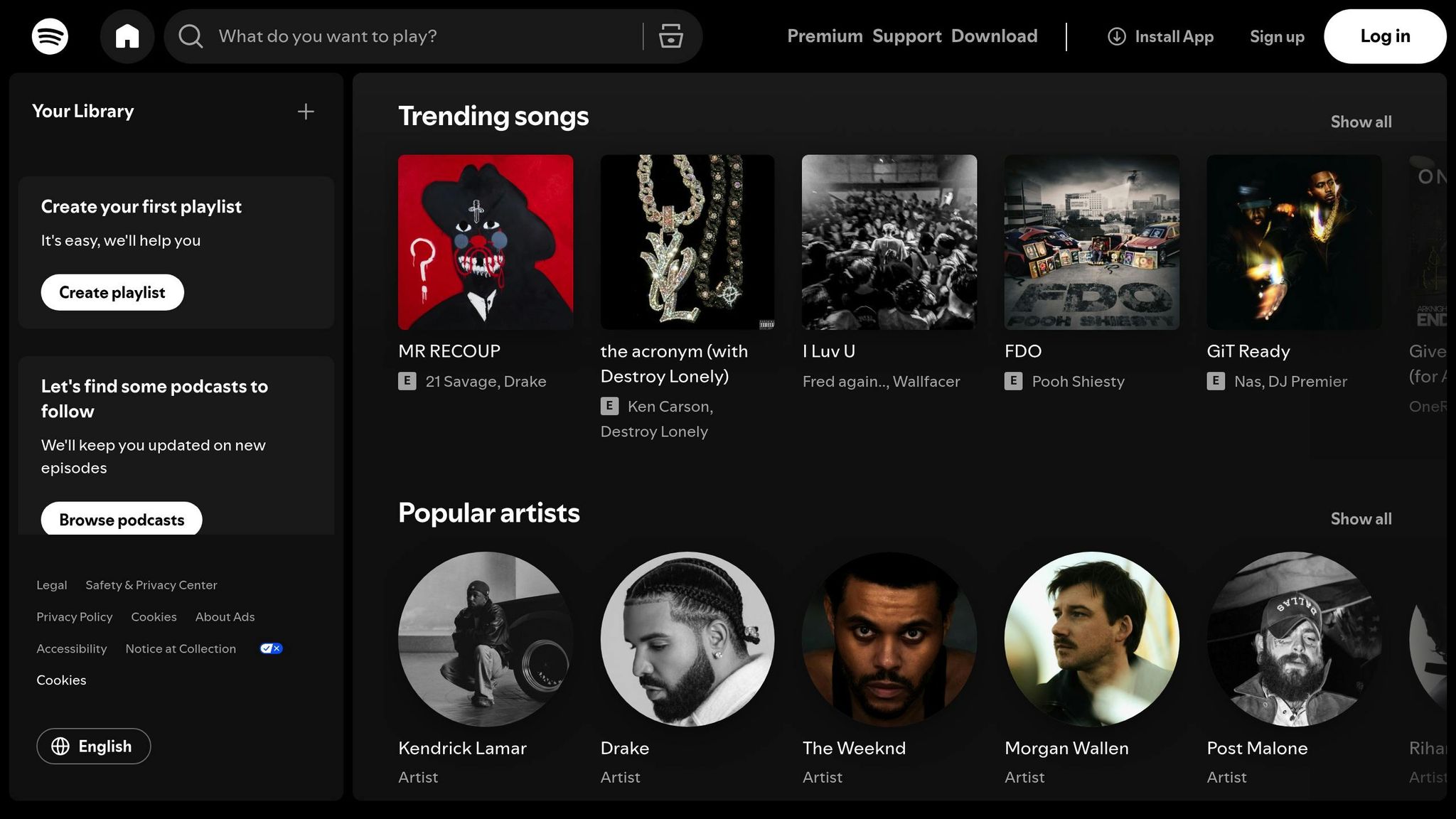
Spotify transforms music streaming into a gamified experience by analyzing listening habits and preferences. Features like Wrapped year-end summaries and listening streaks are powered by data that tracks not only what users play but also when they skip songs, save playlists, or explore new genres. This information fuels challenges like "Discover 10 new artists this month", with recommendations tailored to individual tastes. Spotify also rewards exploration with stats like "You're in the top 5% of fans for this artist", turning listening into a series of achievements. Notifications are timed strategically based on users' past engagement patterns, making the experience feel uniquely personal. These thoughtful touches turn everyday streaming into a fun, goal-oriented journey tailored to each listener's evolving preferences.
Conclusion
Personalized gamification is reshaping how brands engage users, turning every interaction into an opportunity to adapt and improve. Companies like Duolingo, Nike+, and Spotify show that generic rewards and one-size-fits-all challenges are no longer enough. By leveraging behavioral data, zero-party insights, and AI-driven analytics, brands can craft experiences that not only capture attention but also build long-term loyalty.
The secret lies in creating systems that learn and evolve based on user behavior across all channels. AI-powered platforms consolidate data from multiple sources to build detailed user profiles, enabling the automation of highly relevant content and challenges at scale [1][2]. This eliminates the trial-and-error approach of traditional gamification, replacing it with strategies grounded in real user patterns and preferences. Training AI tools with your brand's unique data and refining gamification elements through real-time analytics ensures you’re always optimizing for what works best. The brands leading in this space treat every data point as a chance to refine and enhance their approach.
This focus on continuous improvement is already delivering measurable results. Companies adopting AI-backed personalization report outcomes like five times more meetings, $16 million in annual cost savings, and a 48% boost in ad click-through rates by integrating their data and automating workflows [1][2]. Whether you’re designing fitness challenges, educational journeys, or loyalty programs, the process remains consistent: gather meaningful data, let AI handle complex analysis, and ensure human oversight for strategic and creative decisions. Together, these tactics are driving a new wave of gamification strategies.
As this evolution unfolds, it reflects a broader trend toward smarter, more personalized user experiences. Personalized gamification thrives on adapting dynamically to each interaction, setting the stage for a future where user engagement becomes increasingly tailored and rewarding.
FAQs
How does personalized gamification increase user engagement compared to standard systems?
Personalized gamification takes user engagement to a whole new level by aligning experiences with individual preferences and behaviors. Instead of sticking to generic, one-size-fits-all systems, it offers customized challenges, rewards, and interactions that resonate on a deeper level.
This approach does more than just keep users entertained - it builds a stronger emotional connection, making each interaction feel meaningful. As a result, users stay motivated, engaged, and are far more likely to keep coming back.
How does zero-party data shape personalized gamification experiences?
Zero-party data plays a key role in crafting personalized gamification experiences because it’s information willingly shared by users. This type of data provides direct insights into what users enjoy, what drives them, and how they behave, making it a valuable resource for creating features like rewards, challenges, and content that feel uniquely suited to each individual.
Using zero-party data allows brands to deliver personalization that’s not only precise but also respectful of privacy, as it relies on explicit input from users. This thoughtful approach helps build trust, boosts user satisfaction, and fosters more meaningful engagement across various platforms and devices.
How do AI-driven personalization strategies adjust to user behavior in real time?
AI-powered personalization techniques analyze user behavior in real time, processing interactions and data as they occur. These systems track activity across multiple devices and platforms, identifying patterns, preferences, and context to deliver customized content and recommendations on the spot.
By adjusting to shifts in user behavior instantly, AI creates interactions that feel timely and meaningful, enriching the user experience while keeping everything effortlessly aligned with their needs.
Related Blog Posts

Zach Chmael
CMO, Averi
"We built Averi around the exact workflow we've used to scale our web traffic over 6000% in the last 6 months."
Your content should be working harder.
Averi's content engine builds Google entity authority, drives AI citations, and scales your visibility so you can get more customers.