57% of Our Traffic Is "Direct/Unknown" — Here's What That Actually Means in 2026

5 minutes

TL;DR
📊 57% of Averi's daily traffic (468–510 visitors) shows as Direct/Unknown in GA4 with no referrer, no source, and no campaign tag
🔍 This traffic isn't people typing our URL from memory. It's links shared in Slack DMs, WhatsApp groups, newsletter forwards, podcast listeners, and AI-assisted browsing sessions that strip referrer data
🤖 AI chatbots now send 25–37 daily visitors we can track, but AI-assisted browsing (users researching in ChatGPT, then navigating to us) shows up as Direct, not as AI referral
📉 69% of all content shares globally happen through private channels that analytics can't attribute. Slack, WhatsApp, DMs, SMS, and email forwards all strip referrer headers
💡 The fix isn't better tracking software. It's accepting that the most valuable marketing (word-of-mouth, peer recommendations, community sharing) is inherently untrackable. Measure outcomes (pipeline, signups, revenue) instead of attributing every click

Zach Chmael
CMO, Averi
"We built Averi around the exact workflow we've used to scale our web traffic over 6000% in the last 6 months."
Your content should be working harder.
Averi's content engine builds Google entity authority, drives AI citations, and scales your visibility so you can get more customers.
57% of Our Traffic Is "Direct/Unknown" — Here's What That Actually Means in 2026
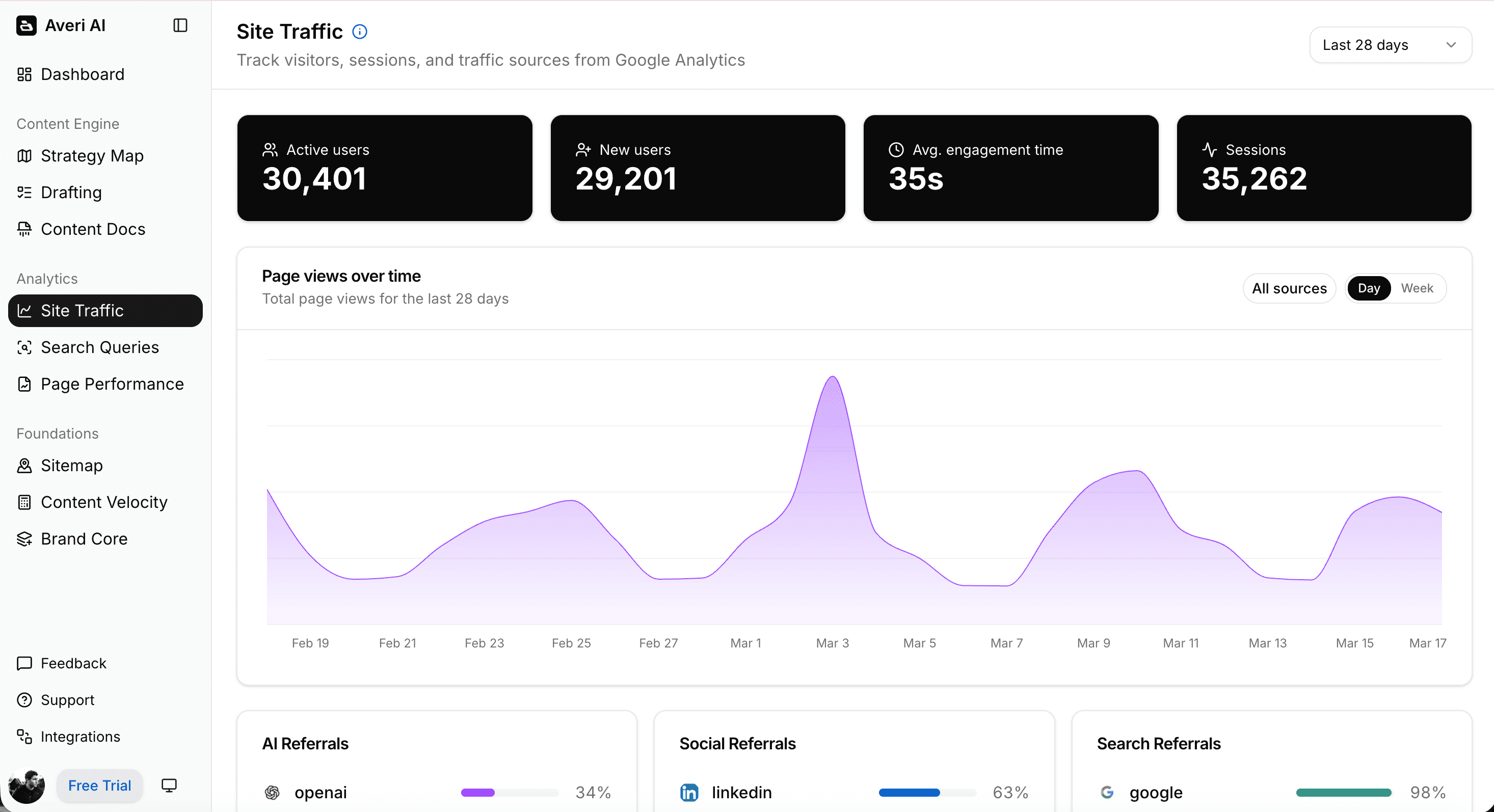
Last Tuesday, 892 people visited averi.ai. Google sent 196 of them. AI chatbots — ChatGPT, Perplexity, Google AI Mode — sent 37. Social platforms sent 41. Email sent 28.
The other 510? No source. No referrer. No attribution. Just "Direct/Unknown." The analytics equivalent of a shrug emoji.
That's 57% of our traffic arriving through a door with no label.
We've been staring at this number for months. It's consistently 468–510 daily visitors, holding between 50% and 57% of total traffic. And we're not special. 84% of all content shares happen through channels that strip referrer data, meaning the majority of sharing activity on the internet is invisible to every analytics platform. One B2B company found that 97% of their revenue came from dark social channels when they actually asked customers how they found them. Their attribution software said 0%.
This article is us opening our analytics, showing you exactly what we see, and arguing that the "unknown" bucket is where the most interesting marketing is happening.
For us and probably for you.
Unsure of where you stand? Calculate your Marketing Maturity below
Our Actual Referrer Breakdown (No Cherry-Picking)
We pulled 30 days of data from Fathom Analytics. Here's what we see on a typical day.
Source | Daily Visitors | % of Total | Trend (90 days) |
|---|---|---|---|
Direct/Unknown | 468–510 | 50–57% | Steady. Not growing, not shrinking |
Google Organic | 151–196 | 18–22% | Growing. Up ~40% QoQ |
AI Chatbots (ChatGPT, Perplexity, Google AI Mode) | 25–37 | 3–4% | Growing fast. Up ~200% since Jan |
Social (LinkedIn, X, Reddit) | 35–48 | 4–6% | Flat |
Email (beehiiv newsletter, campaigns) | 22–35 | 3–4% | Correlates with send days |
Referral (other websites linking) | 30–45 | 4–5% | Slight growth |
Other/Unclassified | 15–25 | 2–3% | Noise |
The first thing you notice: our fastest-growing attributed channel (Google Organic) is less than a quarter of our traffic.
Our second-fastest (AI chatbots) is 3–4%.
Combined, every channel we can actually attribute (Google, AI, social, email, referral) accounts for 43–50% of daily visitors.
The majority of people finding us arrive through channels we cannot see.
We tested whether these were bots. The session duration and page depth on Direct/Unknown traffic is comparable to Google Organic traffic — 2.1 pages/session vs. 2.3, and 1:42 avg duration vs. 1:51.
These are real humans reading real pages. They're just arriving without a return address.
What's Actually Hiding in the "Direct/Unknown" Bucket
GA4 labels traffic as "Direct" when no referrer header is passed. In theory, that means someone typed your URL. In practice, it captures any channel that strips referrer data, which in 2026 includes almost everything interesting.
Here's what we believe, based on correlation analysis, timing patterns, and self-reported data, is inside our 468–510 daily "unknown" visitors:
1. Dark Social (~40–50% of Direct/Unknown)
Links copy-pasted into Slack channels, WhatsApp groups, iMessage threads, LinkedIn DMs, and Discord servers. Platforms like Slack, Discord, and WhatsApp fail to pass referral data nearly 100% of the time. Even Facebook Messenger strips referrer data roughly 75% of the time.
How we know it's there: When we publish a post that gets shared in the Startup Content Lab subreddit or a founder Slack group, we see a spike in Direct traffic to that specific URL within hours. Not to our homepage. To the deep blog URL. Nobody types averi.ai/blog/the-rise-of-the-10-marketer-how-one-person-can-now-do-the-work-of-ten from memory.
The concept of isolating "Deep Direct" traffic (direct visits to interior pages rather than the homepage) is the most reliable proxy for dark social. When we filter our Direct/Unknown traffic to blog posts only, it represents roughly 62% of that bucket. People are absolutely clicking shared links. The analytics just don't know who shared them.
2. AI-Assisted Browsing (~15–20%)
This is the new category nobody's measuring well.
A user asks ChatGPT: "What's the best AI content engine for startups?" ChatGPT mentions Averi. The user then opens a new tab and navigates to averi.ai directly. GA4 records this as "Direct." The AI interaction that prompted the visit? Invisible.
We can track the 25–37 daily visitors who click links inside AI chatbot interfaces — those pass referrer data from chat.openai.com, perplexity.ai, or google.com/search.
But the users who read an AI answer, close the chat, and then navigate to us independently? They look identical to someone who typed our URL.
Given that AI Overviews now appear on 48% of queries and ChatGPT has 700 million weekly active users, the number of brand-discovery events happening inside AI interfaces and then manifesting as "Direct" traffic is probably much larger than most marketers realize.
3. Privacy Tools & Browser Behavior (~10–15%)
Safari's Intelligent Tracking Prevention, Firefox Enhanced Tracking Protection, Brave, VPNs, and ad blockers all strip or modify referrer headers in various ways. iOS privacy changes alone have made significant portions of mobile web traffic unattributable. Some browser extensions specifically strip the Referer header on every request.
This isn't a niche concern.
Safari is the default browser on every iPhone and Mac. When ~50% of web traffic comes from mobile devices running Safari with privacy defaults enabled, the referrer header becomes unreliable for a huge percentage of visitors.
4. Newsletter Forwards & Email Clients (~10–15%)
We send Don't Feed The Algorithm on Tuesdays.
Every Tuesday, our Direct/Unknown traffic spikes 20–30% above baseline. The subscribers who click our UTM-tagged links in beehiiv show up as "Email." But their colleagues who receive a forwarded copy (without the UTM parameters) show up as "Direct."
Some email clients also strip referrer headers entirely. Outlook's web client, Apple Mail in certain configurations, and corporate email gateways can all remove the referrer before the browser makes the request.
5. Podcast & Offline Mentions (~5–10%)
We've been on a handful of podcasts.
When a host says "check out averi.ai," listeners either type the URL directly or Google "Averi AI" — the first shows up as Direct, the second as Branded Organic Search. Neither attributes back to the podcast.
This is the hardest to measure and the most undervalued.
A SaaS founder cut podcast sponsorships because their attribution software said zero leads came from them. Six months later, pipeline dried up 40%. The podcasts were creating demand. The attribution software couldn't see it.
The Attribution Pyramid Is Upside Down
Here's the uncomfortable pattern we see across our data and hear from other founders:
Marketing Activity | Business Impact | Attribution Accuracy |
|---|---|---|
Word-of-mouth (peer recommendations, community sharing) | Highest. Prospects arrive pre-sold | Lowest — 100% invisible |
Content marketing (organic search, AI citations) | High. Compounds over time | Medium — Google and AI referrals trackable, but dark social sharing of content is invisible |
Email marketing (newsletter, campaigns) | Medium. Nurtures existing | Medium — clicks trackable, forwards invisible |
Paid advertising | Variable. Depends on targeting | Highest — every click tracked and attributed |
The activities with the highest attribution accuracy (paid ads) aren't necessarily the most impactful.
The activities with the lowest attribution accuracy (dark social, word-of-mouth, community) are often the most valuable.
This creates a dangerous incentive: over-investing in what's measurable and under-investing in what actually works.
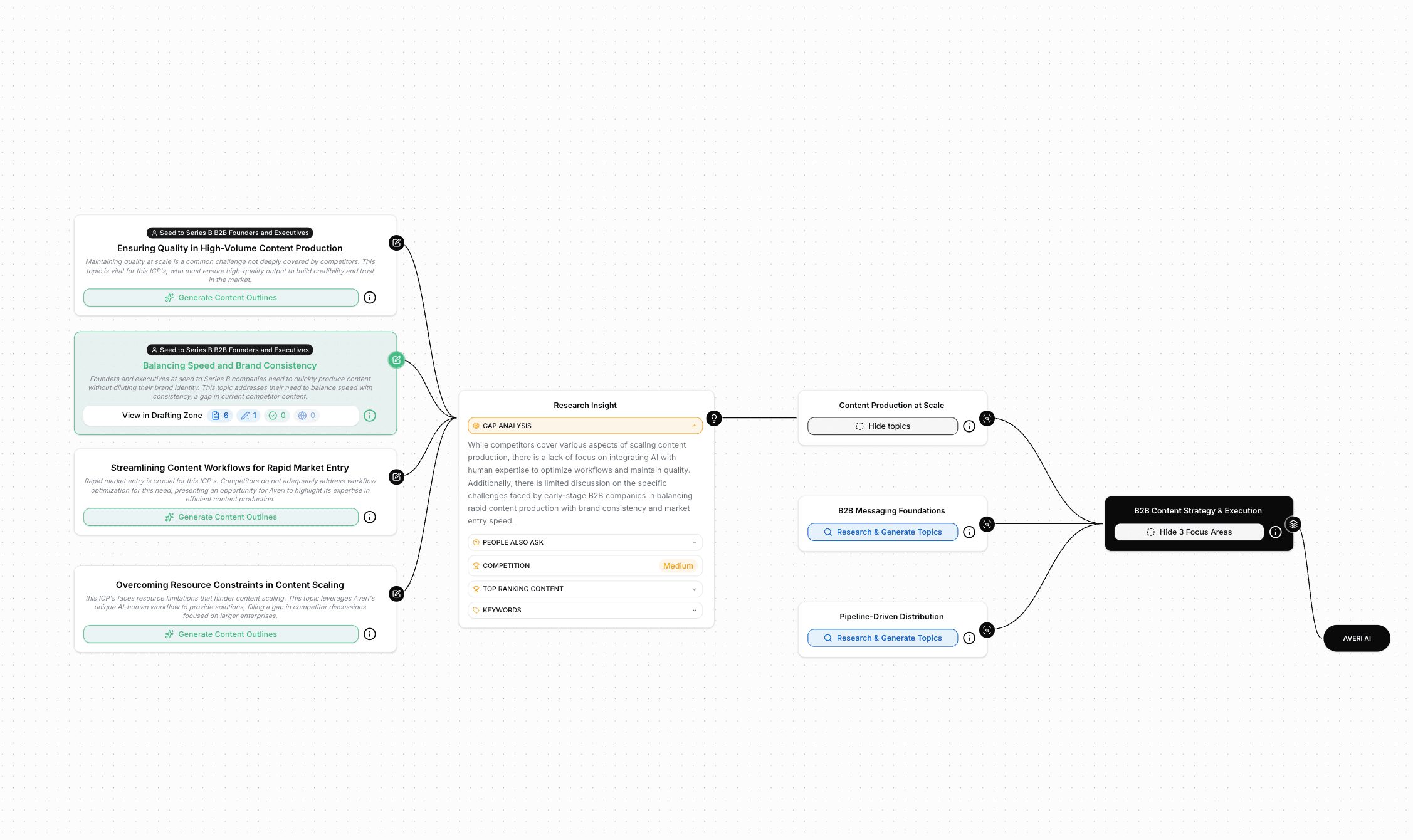
We almost fell into this trap. When we looked at attributed channels only, Google Organic was our "best" channel.
But when we added a "How did you hear about us?" field to our onboarding — free text, not a dropdown — the answers were revealing:
"Saw a post about you in a Slack group for B2B founders" → GA4 said: Direct
"My co-founder sent me your GEO article" → GA4 said: Direct
"ChatGPT recommended you when I asked about content engines" → GA4 said: Direct
"Read your newsletter. Someone forwarded it to me" → GA4 said: Direct
Four real conversion paths. All invisible to analytics. All attributed to the same meaningless bucket.
See what your Content ROI could be
What We're Doing About It (And What We're Not)
What we stopped doing
We stopped optimizing for attribution accuracy. We used to spend time trying to make every link trackable… UTMs on everything, custom short URLs, tracking parameters in every share. The result was ugly URLs that people didn't want to share, and we still couldn't capture the most important sharing: organic word-of-mouth where we didn't control the link.
We stopped asking "which channel drove this conversion?" The question assumes a single-touch model that does not reflect how people actually find software.
A more honest question… "Is our total marketing effort producing enough signups at an acceptable cost?"
That's Marketing Efficiency Ratio: total revenue divided by total marketing spend, no attribution required.
What we started doing
Self-reported attribution on every signup.
Free text field: "How did you hear about us?" Not a dropdown. Dropdowns constrain answers to channels you've already imagined. Free text captures the actual journey.
"My friend sent me your blog post" tells you something a dropdown with "Social Media / Search / Other" never will.
Deep Direct analysis. We segment Direct traffic by landing page. Direct to homepage = probably typed navigation or branded search leakage. Direct to /blog/the-geo-playbook-2026-getting-cited-by-llms-not-just-ranked-by-google = definitely a shared link. This "Deep Direct" segment is our best proxy for dark social volume.
Timing correlation. When Direct spikes correlate with newsletter sends, podcast appearances, or LinkedIn posts, we log the correlation. It's not proof, but it builds an evidence narrative that's better than "we don't know."
Content designed for sharing. If dark social is our largest traffic source, we should be creating content that people want to share in private channels. That means original data (like this article), contrarian takes, and frameworks people screenshot and send to their team. Not generic listicles that are identical to every other result on page 1.
Content engine with analytics integration. Averi connects Google Analytics and Search Console data directly to our content library. We can see which pieces drive the most Google traffic, which earn AI citations, and (by inference from the self-reported data) generate the most dark social sharing. The content that performs best across all three surfaces gets more investment. The content that only performs on one gets optimized or deprioritized.
What This Means for Your Marketing
If you're a B2B SaaS startup looking at your analytics and feeling confused by a giant "Direct/Unknown" bucket, here's the framework.
If Direct/Unknown is 30–60% of your traffic: This is normal for content-driven brands in 2026. It means people are sharing your content privately, finding you through AI platforms, and arriving through channels that don't pass referrer data. 69% of global content shares happen through private channels. Your analytics are reflecting a structural reality, not a tracking failure.
If Direct/Unknown is growing: Your word-of-mouth and dark social presence is expanding. This is good, even though it looks like noise in your analytics. Check your self-reported attribution for signal.
If Direct/Unknown is shrinking: Either your trackable channels are growing faster (good) or your shareability is declining (investigate). Cross-reference with your organic traffic trends.
The meta-lesson: Stop trying to attribute every visit. Start measuring outcomes — pipeline, signups, revenue — and correlating them with your marketing activities. The founder who publishes consistent content, builds community presence, and tracks whether signups are growing will outperform the founder who obsesses over which channel gets "credit" for each conversion.
Build the content engine that creates the organic visibility in the first place →
FAQs
What is dark social and why does it affect my analytics?
Dark social is content sharing through private channels (Slack DMs, WhatsApp messages, iMessage threads, email forwards, Discord servers) where the referrer header is stripped before the recipient's browser makes the request. Your analytics platform sees the visitor but can't identify the source, so it labels them "Direct." 84% of all content shares happen through these private channels. The term was coined in 2012 and the problem has only worsened as private messaging platforms have grown. The result: your analytics systematically undercount word-of-mouth and peer sharing while overcounting "Direct" navigation.
How much of "Direct" traffic is actually dark social?
It varies by business, but the pattern is consistent. When you filter Direct traffic to interior pages only (blog posts, product pages, URLs nobody types from memory). The remaining "Deep Direct" traffic is primarily dark social. For Averi, approximately 62% of our Direct/Unknown traffic lands on blog posts, not the homepage. SparkToro research found that significant percentages of web traffic attributed as "Direct" actually came from social shares in private channels. The only way to know your specific number is to add self-reported attribution ("How did you hear about us?") and correlate Direct traffic spikes with marketing activities.
Does AI-assisted browsing show up as Direct traffic?
Partially. When a user clicks a link inside ChatGPT, Perplexity, or Google AI Mode, the referrer header often passes — so you see "chat.openai.com" or "perplexity.ai" as a source. When a user reads an AI answer, closes the chat, and then navigates to your site independently, GA4 records it as Direct. We track 25–37 daily visitors from AI chatbot referrals, but the AI-influenced visits that manifest as Direct are unquantifiable with current tools. This is the dark funnel expanding into AI-assisted discovery.
How do I track dark social if analytics can't see it?
Four approaches, layered together. First: self-reported attribution via a free-text "How did you hear about us?" field on signups and demos. Second: segment "Deep Direct" traffic (direct visits to blog posts and interior pages) as a proxy for dark social volume. Third: correlate Direct traffic spikes with specific marketing activities (newsletter sends, podcast appearances, community posts). Fourth: accept that some marketing is inherently unmeasurable and focus on outcome metrics — pipeline, signups, and revenue trends — rather than per-channel attribution.
Should I care about dark social as a B2B SaaS startup?
If you're creating content, running a newsletter, or active in communities — yes. B2B buying decisions are increasingly shaped in private channels: Slack workspaces, WhatsApp groups, LinkedIn DMs, and AI tools where buyers research vendors before engaging directly. 80% of B2B shortlists are finalized before a demo request. The content you produce gets shared in these channels, influences buying decisions, and drives traffic that shows up as "Direct." The value is real. Only the attribution is broken.
What metrics should I use instead of channel attribution?
Marketing Efficiency Ratio (MER): total revenue divided by total marketing spend. No attribution needed — it measures whether your overall effort is working. Pipeline Lift: are demos, qualified leads, and opportunities trending up? Conversion Yield: what's your conversion rate and revenue per session? Content Velocity vs. Organic Growth: are you publishing consistently and is organic traffic compounding? Averi's analytics integration connects GSC + GA4 data to your content library so you can track which pieces drive attributed organic traffic and infer which generate dark social sharing.
Is this a problem with GA4 specifically?
Not exclusively — every analytics platform faces the same structural limitation. When a browser doesn't send a referrer header, no tool can attribute the visit. GA4's specific contribution to the problem is its handling of "Unassigned" traffic and its limited modeling for cross-device journeys. But the core issue is that private sharing channels strip referrer data by design — Slack, WhatsApp, iMessage, and most messaging apps don't pass source information to the destination site. This is a privacy feature, not a bug. The attribution gap will widen as private messaging continues to grow and AI-assisted browsing becomes more common.
Related Resources
Attribution & Analytics
How to Measure Marketing Success: The Most Important KPIs & Metrics
The Top 5 Marketing Metrics Every Startup Should Track in 2026
AI Search & Visibility
How to Track AI Citations and Measure GEO Success: The 2026 Metrics Guide
How to Track Your Brand's Visibility in ChatGPT & Other Top LLMs
The GEO Playbook 2026: Getting Cited by LLMs, Not Just Ranked by Google