AI Search Visitors Convert 23x Higher. Everyone's Ignoring It.
5 minutes

TL;DR
📉 60% of searches end without a click. 83% when AI Overviews appear. Every headline calls this a crisis.
📈 Ahrefs found AI search visitors convert 23x higher than organic — 0.5% of traffic drove 12.1% of signups
📊 Semrush 2026: AI visitors convert at 4.4x the rate of standard organic across industries 🛒 Visibility Labs (94 ecommerce brands): ChatGPT traffic converts 31% higher than non-branded organic, with session volume up 1,079% in 2025
💡 B2B SaaS companies report 6x to 27x conversion rate lifts from AI-sourced traffic
⏱️ AI visitors spend 68% more time on websites than traditional search visitors (SE Ranking)
🎯 Zero-click isn't killing content marketing. It's filtering out the visitors who weren't going to convert anyway.

Zach Chmael
CMO, Averi
"We built Averi around the exact workflow we've used to scale our web traffic over 6000% in the last 6 months."
Your content should be working harder.
Averi's content engine builds Google entity authority, drives AI citations, and scales your visibility so you can get more customers.
The AI Search Conversion Paradox: Why Fewer Clicks Is the Best Thing That's Happened to Content Marketing
Everyone Got the Zero-Click Story Wrong
You've seen the headlines. You've probably felt the panic.
"60% of searches end without a click." "Organic CTR dropped 61%." "83% zero-click rate for AI Overviews." "Google is stealing your traffic."
These numbers are all real. The conclusion everyone's drawing from them — that content marketing is dying — is wrong.
It's wrong because it confuses volume with value. And once you look at the conversion data, the picture flips completely.
The Data Nobody's Leading With
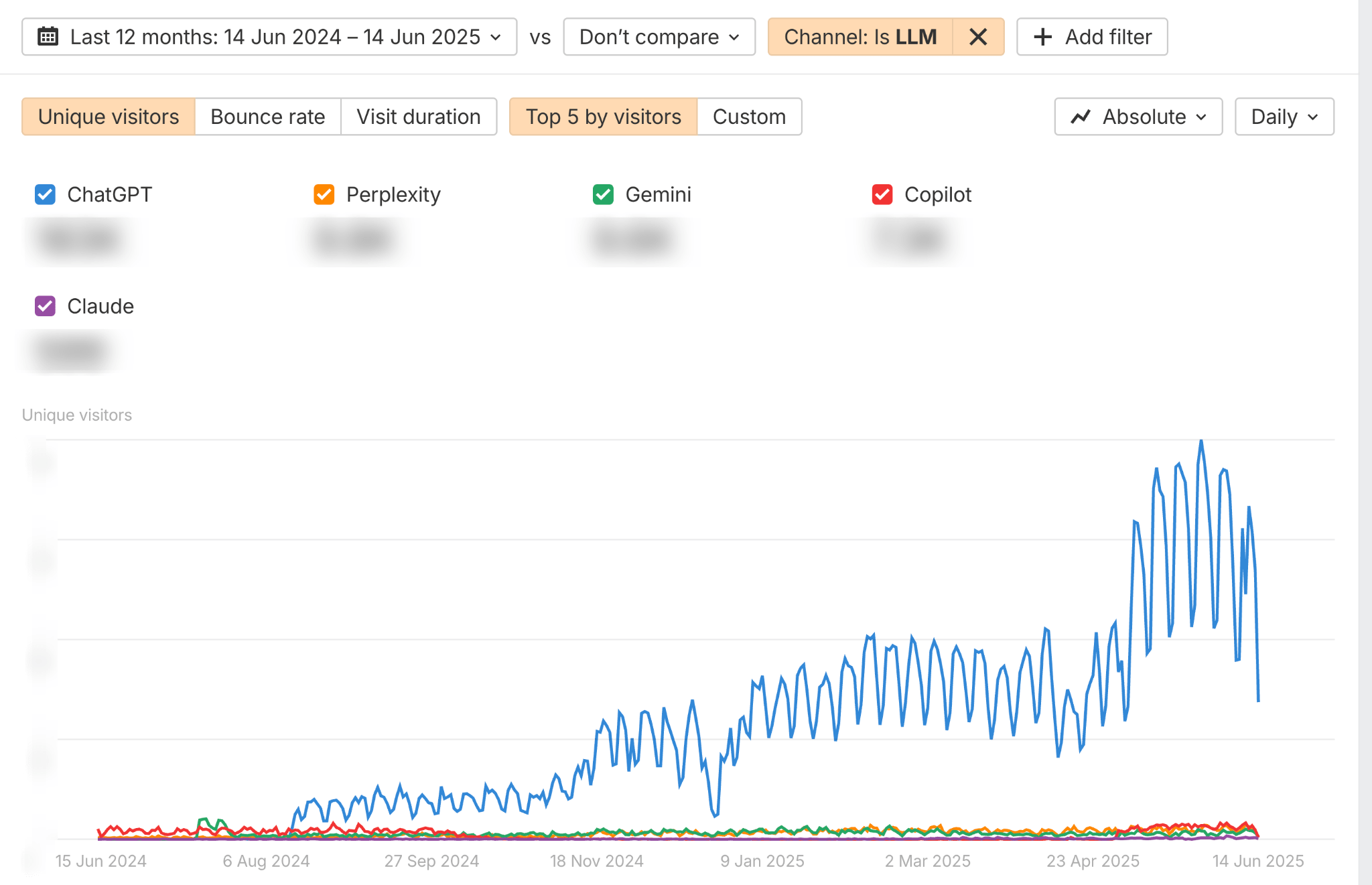
In June 2025, Ahrefs published something remarkable. They analyzed their own traffic data and found that AI search — visitors from ChatGPT, Perplexity, Copilot, and other AI platforms — accounted for just 0.5% of their total traffic. Tiny.
But that 0.5% drove 12.1% of all signups.
That's a 23x higher conversion rate than traditional organic search. Not a marginal improvement. A category-level difference.
And Ahrefs isn't an outlier. The pattern shows up in every study that's looked:
Semrush (2026): AI-driven visitors convert at 4.4x the rate of standard organic across industries.
Visibility Labs (94 ecommerce brands, 2025): ChatGPT referral traffic converted at 1.81% vs. 1.39% for non-branded organic — 31% higher. ChatGPT sessions grew 1,079% over the year. Revenue share from ChatGPT rose from 1.48% to 2.2% in H2 alone.
RankScience: AI search traffic converts at 14.2% compared to traditional organic's 2.8% — a 5x premium.
Rocket Agency (18-month cross-industry study): ChatGPT visits convert at 5.1x the rate of organic.
B2B SaaS broadly: 6x to 27x conversion rate lifts from AI-sourced traffic depending on industry and measurement period.
SE Ranking: AI visitors spend 68% more time on websites than traditional search visitors.
Five independent sources. Different methodologies. Different industries. Different time periods.
All telling the same story… AI search sends fewer visitors, but those visitors are dramatically more valuable.
Why This Happens (The Mechanism)
The conversion advantage isn't magic. It's filtering.
When someone searches "what is content marketing" on Google and gets an AI Overview, the overview answers their question.
They got what they needed. They leave. That's a zero-click search. It's also a visitor who would have bounced from your site in 8 seconds anyway.
The person who reads the AI Overview and still clicks through to your site has already had their surface-level question answered.
They're arriving because they want something the AI couldn't provide: deeper analysis, specific implementation details, your actual experience, a product to evaluate, a decision to make.
That's pre-qualified traffic.
The AI did the top-of-funnel filtering that your site used to do (poorly, with a 97% bounce rate). Now it happens before the click.
As Patrick Stox at Ahrefs described it: users arriving from ChatGPT citations had already read synthesized comparisons and arrived with clear purchase intent. The AI Overview is doing your qualification work for free.
This is why brands cited in AI Overviews earn 35% more organic clicks and 91% more paid clicks.
The citation doesn't just drive direct traffic — it acts as a trust signal that increases click-through from every other SERP element.
What This Changes About Your Content Strategy
If fewer-but-better visitors is the new reality, your content strategy needs to match. Five shifts:
1. Stop measuring traffic. Start measuring cited traffic.
Total traffic is increasingly meaningless as a standalone metric. Companies like NerdWallet and HubSpot have publicly shared that organic traffic declined while revenue increased. The aggregate number masks the quality shift happening underneath.
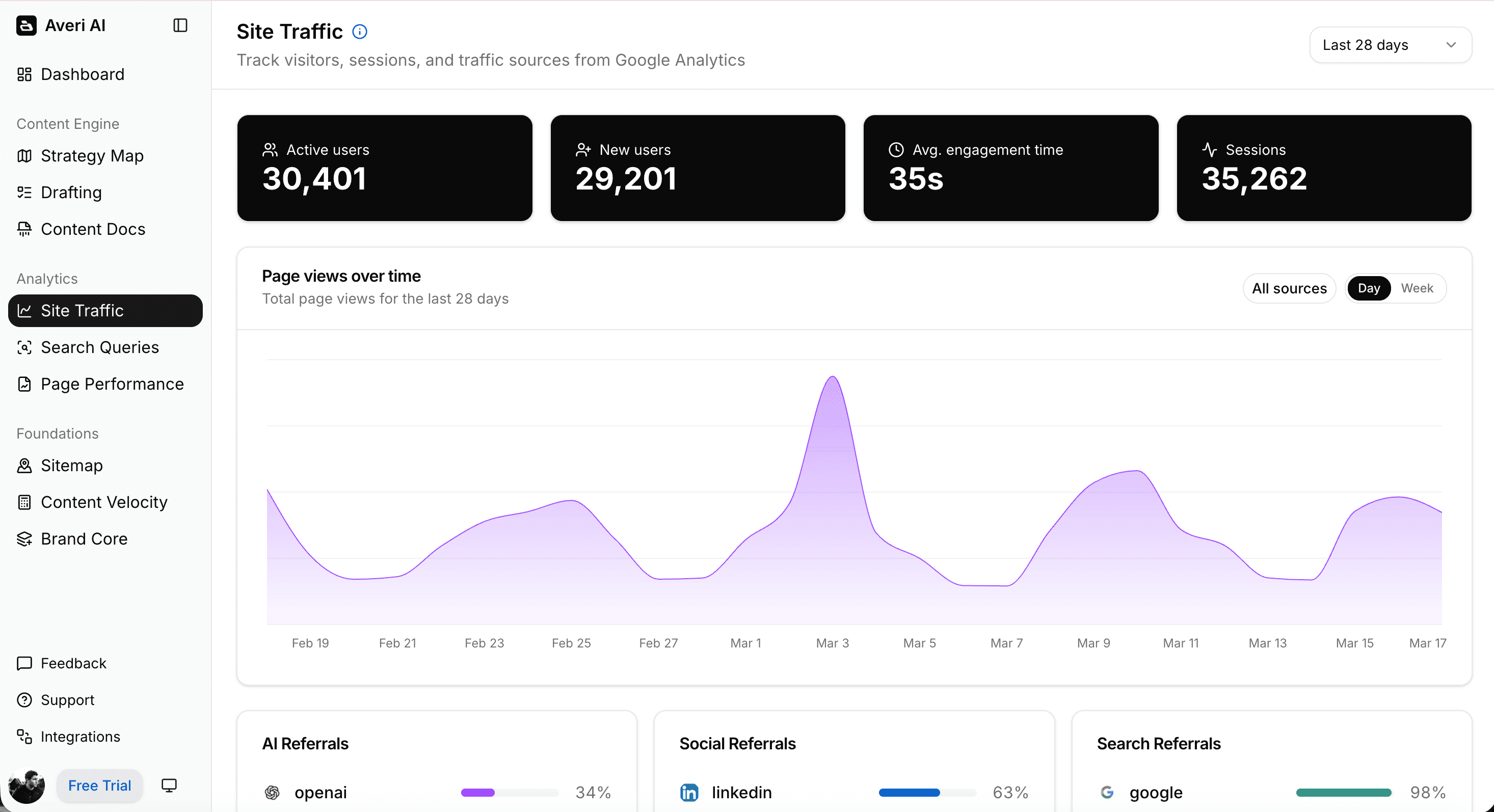
Set up GA4 segments for AI referral sources: chat.openai.com, perplexity.ai, gemini.google.com, copilot.microsoft.com.
Track conversion rates by segment monthly. That's your real growth signal.
AI referral traffic currently accounts for about 1.08% of total web traffic — small but growing roughly 1% month over month, with ChatGPT sessions across some sites up 1,079% in a single year.
The trajectory matters more than today's snapshot.
2. Optimize for citation, not just ranking
Ranking on Google still matters — 76% of AI-cited URLs come from the top 10 organic results. But ranking alone isn't enough. 80% of LLM citations don't rank in Google's top 100 at all. You need to rank AND be citation-ready.
That means every piece structured for both: traditional SEO elements (keywords, meta tags, internal links) plus GEO elements (extractable answer blocks, FAQ sections, sourced statistics, entity definitions, schema markup). Dual optimization isn't optional anymore.
3. Write for the post-summary reader
Your content's job has changed. It used to need to answer the basic question — because the reader arrived with it.
Now the AI already answered the basic question.
The people who click through are past "what is X." They want "here's exactly how to do X, what I learned when I did it, and what I'd do differently."
Original perspective. Specific implementation details. Actual experience. The stuff a model can't synthesize because it doesn't exist yet.
This is where the authenticity premium — human voice on AI infrastructure — becomes a conversion advantage, not just a brand play.
4. Shift content investment toward the bottom of the funnel
If AI handles top-of-funnel information delivery in the SERP, your website content should shift toward mid- and bottom-funnel:
Comparison pages (your product vs. alternatives)
Implementation guides (how to actually do the thing)
Case studies and proof points (evidence that it works)
Pricing context (help the buyer make the decision)
"Here's what I'd actually do" opinionated guides
The informational top-of-funnel is being served in the SERP. Build for the people who click through with intent.
5. Embrace smaller audience, deeper conversion
The content engine model still compounds — but what compounds changes.
Instead of building a massive top-of-funnel audience, you're building a smaller, high-intent audience that converts at 4-23x the rate.
Run the math: 5,000 visitors converting at 12% produces more signups than 50,000 visitors converting at 1%.
For startups especially, this is an asymmetric advantage.
You don't need to compete with established players on traffic volume. You need to win citation positions that send you the highest-quality visitors in marketing.
The Math That Should Change Your Mind
Let's make this tangible.
Traditional volume model (2024 playbook):
50,000 monthly organic visitors
2.8% average conversion rate
= 1,400 conversions/month
Citation-optimized model (2026 reality):
20,000 monthly visitors (60% drop in raw traffic)
Mix: 17,000 traditional organic (2.8% CVR) + 3,000 AI-referred (12% CVR)
= 476 + 360 = 836 conversions from blended traffic
But: AI-referred conversions are higher-intent (68% more time on site, 23% lower bounce). Revenue per conversion is higher.
And: the AI-referred segment is growing at 1,079% annually while traditional organic is flat.
The snapshot looks like a loss. The trajectory is a win.
In 12 months, the AI-referred segment compounds. In 24 months, it may be the majority of your conversion-producing traffic.
The brands that optimized for citations early will own those positions. Once an AI system selects a trusted source, it reinforces that choice across related queries. The compounding is structural, not just incremental.
Why the Content Engine Model Was Built for This
We designed Averi's content engine around compounding content before the conversion data got this extreme. But the system turns out to be perfectly structured for a world where citation quality matters more than traffic volume.
Every piece is dual-optimized for SEO and GEO — maximizing both ranking probability and citation readiness.
FAQ sections and extractable answer blocks are built into the creation workflow.
LinkedIn post generation from blog content doubles your citation surface across the #1 domain for professional AI queries.
Built-in analytics show you which pieces generate AI referral traffic so you can double down.
The content compounds. The citations compound. And every citation sends visitors who convert at rates that make the entire system more valuable over time.
We grew our traffic 6,000% in 10 months.
The conversion quality of AI-referred visitors makes us more excited about the next 10 months than the last.
Start your 14-day free trial →
The Real Opportunity in the Zero-Click Era
Here's what I keep coming back to…
Everyone in content marketing is playing defense right now. "How do we survive zero-click?" "How do we replace lost traffic?" "How do we adapt to the new reality?"
The founders who will win aren't playing defense. They're recognizing that the zero-click era is doing them a favor.
It's filtering out the noise. Removing the vanity metrics. Stripping content marketing down to what actually mattered all along… are you attracting people who become customers?
If your traffic drops 50% but your conversions stay flat — or grow — that's not a crisis. That's efficiency. That's the compounding game working on a higher-quality foundation.
Stop mourning the death of traffic. Start engineering the quality of the clicks you get.
FAQs
What is the AI search conversion paradox?
The AI search conversion paradox describes how AI-powered search reduces total website traffic through zero-click behavior while simultaneously increasing the quality and conversion rate of visitors who do arrive. Ahrefs found that AI search visitors convert at 23x the rate of traditional organic — 0.5% of traffic drove 12.1% of signups. Semrush's 2026 data shows a 4.4x average conversion advantage across industries. The paradox is that declining traffic numbers can actually indicate improving business outcomes when the remaining visitors are higher intent.
Why do AI search visitors convert at higher rates?
AI Overviews and chatbot responses answer surface-level questions before the user clicks. This filters out casual browsers and information-seekers who would have bounced from your site. The visitors who do click through have already consumed a summary and arrive with higher intent, clearer understanding of what you offer, and more specific needs. AI search functions as a pre-qualification layer — doing top-of-funnel filtering that used to happen (poorly) on your website. AI visitors also spend 68% more time on sites than traditional search visitors.
Is the 23x conversion rate realistic for most businesses?
The 23x figure is from Ahrefs' own data — a single-company case study. The range across studies is 2x to 27x depending on industry, measurement period, and conversion definition. Semrush's broader 2026 dataset shows 4.4x as the cross-industry average. B2B SaaS reports 6-27x. Ecommerce sees 31% higher conversion rates (Visibility Labs). Even the conservative end of the range changes the economics of content marketing. The pattern is consistent even if the magnitude varies. See our GEO implementation guide for how to optimize for this channel.
Should I stop caring about organic traffic numbers?
Don't ignore them — but stop treating total traffic as your primary success metric. Segment your analytics: track AI referral traffic separately, measure conversion rates by source, and focus on revenue per visitor rather than total visitors. A declining traffic number with an improving conversion rate often means your content strategy is actually working better. Companies like NerdWallet and HubSpot have publicly reported declining organic traffic alongside increasing revenue — the zero-click shift is redistributing value, not destroying it.
How do I get my content cited by AI search engines?
Structure content for extraction: 40-60 word answer blocks after every H2, FAQ sections with schema markup, statistics with clear attribution, consistent entity definitions. Build authority across platforms — LinkedIn is now #1 for professional AI queries. Update content quarterly (pages updated within 2 months earn 28% more citations). And optimize for both SEO and GEO simultaneously — Averi's content engine builds this dual optimization into every piece by default.
Does this apply to startups specifically?
Startups have an asymmetric advantage here. You don't need to manage the decline of a large existing traffic base or explain to a board why "traffic is down." You can build your entire content strategy around the citation model from day one — optimizing for fewer, higher-quality visitors rather than competing for volume against established players with 10x your domain authority. A content engine that builds citation authority from the start produces compounding returns on the highest-converting discovery channel available.
How do I track AI referral traffic in GA4?
Create a custom segment filtering referral traffic from chat.openai.com, perplexity.ai, gemini.google.com, copilot.microsoft.com, and claude.ai. AI referral traffic currently accounts for about 1.08% of total web traffic and is growing roughly 1% month over month. Compare this segment's conversion rate against your traditional organic segment monthly. If you're using Averi's built-in analytics, AI referral patterns surface alongside your traditional metrics automatically.