Beyond Google: How to Get Your Startup Cited by ChatGPT, Perplexity, and AI Search

9 minutes

TL;DR
📌 The shift is real: ChatGPT has 400M+ weekly users. 62% of people use AI chatbots daily. ChatGPT's share of search queries tripled to 12.5% in six months.
📌 GEO is the new game: Generative Engine Optimization focuses on getting cited by AI, not just ranked by Google. LLMs only cite 2-7 sources per response—competition for those slots is fierce.
📌 What works: Statistics boost citation likelihood by up to 115%. Authority citations, technical terminology, expert quotes, and extractable structure all improve AI visibility.
📌 Platform differences matter: ChatGPT favors Reddit and major publications. Perplexity prioritizes real-time accuracy and source credibility. Google AI Overviews heavily weight established brands.
📌 The 7-part strategy: Build entity authority, create citation-worthy content, implement schema markup, build external citations, optimize for conversational queries, maintain freshness, monitor AI visibility.
📌 Dual-optimization is required: You need both traditional SEO and GEO. Google isn't dying—but search behavior is fragmenting across multiple channels.
📌 Early movers win: AI citation authority compounds over time. Start now while the landscape is still forming.

Zach Chmael
CMO, Averi
"We built Averi around the exact workflow we've used to scale our web traffic over 6000% in the last 6 months."
Your content should be working harder.
Averi's content engine builds Google entity authority, drives AI citations, and scales your visibility so you can get more customers.
Beyond Google: How to Get Your Startup Cited by ChatGPT, Perplexity, and AI Search
There's a question being asked millions of times per day that you're probably not optimized for.
It's not typed into Google. It doesn't trigger your carefully constructed keyword strategy. It bypasses your meticulously optimized meta descriptions entirely.
The question sounds something like…
"What's the best project management software for remote teams?"
or "Which CRM should a B2B SaaS startup use?"
or "Recommend a marketing platform for small businesses."
And it's being asked to ChatGPT. To Perplexity. To Claude. To Google's AI Overviews. To a growing ecosystem of AI-powered search tools that don't play by the rules you spent a decade learning.
ChatGPT now has over 400 million weekly users. Perplexity processes 780 million queries monthly, up from 230 million just a year ago. 62% of people now use an AI chatbot every day, and 51% plan to use them even more.
Here's what should concern you: when someone asks ChatGPT for a recommendation in your category, does your company get mentioned? Or does the AI confidently recommend your competitors while you remain invisible in this new discovery layer?
This isn't about Google dying.
Google still processes over 8.5 billion searches daily. But search behavior is fragmenting.
ChatGPT's share of general search queries has tripled to 12.5% in six months. The founders who understand this shift will capture attention in places their competitors don't even know exist.

The Discovery Layer You're Missing
Let me paint you a word picture of what's already happening.
A VP of Marketing at a growing SaaS company needs to choose a content marketing platform.
Ten years ago, she would have Googled "best content marketing platforms," clicked through ten results, and made a shortlist.
Five years ago, she would have added "content marketing platforms G2 reviews" to her research.
Today, she opens ChatGPT and types: "I'm a VP of Marketing at a Series A SaaS company with a team of three. We need a content marketing platform that combines AI assistance with access to human experts when needed. What are my best options?"
This query is richer. More contextual. More specific. And the answer she receives isn't a list of ten blue links, it's a synthesized recommendation with reasoning.
If your company isn't in that response, you don't exist in her consideration set. Period.
Research from major internet companies confirms that traffic from AI sources converts at higher rates than traditional organic search. The prospects arriving through AI citations are often further along in their decision process, having already received a curated recommendation.
GEO: The New Optimization Game
The industry has started calling this Generative Engine Optimization, or GEO.
Where SEO asked "How do I rank for this keyword?", GEO asks "How do I become the answer when AI synthesizes a response?"
These are fundamentally different questions.
Traditional SEO optimizes for algorithms that rank and display links.
GEO optimizes for algorithms that read, understand, synthesize, and cite.
LLMs only cite 2-7 domains on average per response, far fewer than Google's ten blue links. The competition for those limited citation slots is about to become fierce.
Here's what the Princeton research on GEO discovered about what actually works:
Statistics dramatically increase citation likelihood. Adding quantitative data—specific numbers, percentages, research findings—boosted visibility by up to 115% for lower-ranked content. AI systems love citable facts.
Citations to authoritative sources compound credibility. When your content references and links to trusted sources, AI systems treat your content as more trustworthy in turn.
Technical terminology signals expertise. Using domain-specific language helps AI systems recognize you as an authority in your field.
Quotations from experts add weight. Including named expert perspectives gives AI something concrete to extract and attribute.
Fluency and structure matter for extraction. Content needs to be organized in ways that AI can easily parse—clear headings, logical flow, extractable chunks.
The combination of statistics and fluency optimization outperformed any single strategy by more than 5.5%.
This isn't about gaming systems; it's about creating content that AI can confidently cite.

How AI Search Actually Works
Understanding the mechanics helps you optimize for them.
When someone asks ChatGPT a question, here's what happens behind the scenes:
Step 1: Retrieval. The system searches the web (or its training data) for relevant sources. This is where traditional SEO still matters, if you're not indexed and ranking, you won't be retrieved.
Step 2: Analysis. The LLM evaluates retrieved sources for relevance, authority, and extractability. Can it pull specific, citable information? Does the source seem trustworthy?
Step 3: Synthesis. The AI combines information from multiple sources into a coherent response. Your content competes with others for inclusion.
Step 4: Citation. The system decides which sources to credit. Not every source used in synthesis gets cited, only those deemed most authoritative or relevant.
This process means your content needs to pass multiple gates. You need to be findable (SEO), authoritative (E-E-A-T), and extractable (structure).
Miss any gate, and you're out of the running.
The Platform-Specific Reality
Different AI platforms have different citation preferences. A strategy optimized for ChatGPT won't automatically work for Perplexity or Google's AI Overviews.
ChatGPT
ChatGPT dominates with 59.5% of the US AI tool market. Its citation patterns favor:
Reddit threads and community discussions (heavily weighted in training data)
Major publications and authoritative news sources
Comprehensive guides that serve as go-to resources
Content that's been quoted or referenced by multiple other sources
ChatGPT's SearchGPT mode now actively browses the web for queries, making real-time content freshness increasingly important.
Perplexity
Perplexity has grown 500% year-over-year and is valued at $18 billion. It differs from ChatGPT in key ways:
Every response includes visible citations with links
Real-time web search is core to its function
Users can click through to sources, making CTR potentially higher than other AI tools
Technical accuracy and source credibility are heavily weighted
Perplexity users are often researchers, students, and professionals who value verifiable information. Your content needs clear attribution and factual precision to earn citations here.
Google AI Overviews
Google's AI Overviews now appear on at least 13% of all searches, and over half of searches tracked by Backlinko. Key patterns:
Popular, established brands receive 10x more features than smaller sites
Traditional SEO signals (authority, backlinks) still heavily influence inclusion
Content that directly answers common questions performs best
Schema markup correlates strongly with AI Overview inclusion
For startups, this means you're fighting an uphill battle against established players in AI Overviews specifically. Your GEO strategy might prioritize ChatGPT and Perplexity where brand size matters less.

The 7-Part GEO Strategy for Startups
Here's the practical playbook for getting your startup cited by AI.
1. Build Entity Authority, Not Just Keywords
AI systems don't just match keywords, they understand entities. An entity is a distinct, identifiable concept: your company, your product, your founders, your methodology.
What this means in practice:
Create a comprehensive "about" ecosystem.
Your website should clearly define who you are, what you do, and what makes you authoritative. This information should be consistent across your website, LinkedIn, Crunchbase, industry directories, and anywhere else your brand appears.
Entity-based optimization drives 61% organic growth in eight months when prioritized over pure keyword targeting. AI needs to understand your company as an entity before it can recommend you as an answer.
Ensure consistency across platforms.
Your company description should be nearly identical on your website, LinkedIn company page, G2 profile, and industry directories. Inconsistency confuses AI systems about who you actually are.
2. Create Citation-Worthy Content
Content optimized for AI citation looks different from content optimized purely for SEO.
Structure for extraction:
Lead with clear, definitive statements that can stand alone as quotes
Use specific numbers, percentages, and data points throughout
Include named expert perspectives with credentials
Create FAQ sections that directly answer common questions
Add TL;DR summaries that AI can easily extract
The "Answer Kit" approach:
Instead of standalone blog posts, create interconnected content clusters that provide comprehensive answers to topic areas. An answer kit might include:
A definitive guide (your primary authority page)
Supporting research and data
Practical implementation guides
FAQ compilations
Visual explainers and diagrams
This structure signals to AI that you're the authoritative source on a topic, not just one voice among many.
3. Implement Schema Markup Extensively
Schema-enhanced pages are 30% more likely to appear in rich results, which directly impacts AI visibility.
Essential schema types for GEO:
Organization schema: Defines your company as an entity
FAQ schema: Marks up question-answer content for easy extraction
HowTo schema: Structures process explanations for AI parsing
Article schema: Identifies your content type and author credentials
Product schema: If applicable, defines your offering clearly
Use Google's Rich Results Test to validate implementation. Even small schema errors can prevent AI systems from properly parsing your content.
4. Build External Citations Strategically
AI systems cross-reference multiple sources to validate authority. Being mentioned (and linked) by trusted third parties dramatically increases your citation likelihood.
High-value citation sources:
Industry research reports (contribute data to analysts)
Expert roundups and journalist inquiries (HARO, Qwoted, Featured)
Comparison and review sites (G2, Capterra, industry-specific directories)
Academic collaborations (if applicable to your field)
Conference presentations and published transcripts
The co-citation effect:
When your brand appears alongside established players in comparison content, industry lists, and collaborative research, AI systems learn to include you in similar recommendation contexts.
5. Optimize for Conversational Queries
People ask AI questions differently than they search Google. Voice and conversational queries use full phrases and questions rather than fragmented keywords.
Adapt your content accordingly:
Instead of optimizing only for "content marketing software," create content that answers "What's the best content marketing software for a small team?" and "Which content marketing platform should a startup choose?"
Natural language patterns in your content should match natural language patterns in queries. Write sections that sound like direct answers to questions someone might actually ask.
6. Maintain Freshness Signals
AI systems check publication dates and prefer recent information. Proper LastMod tags in sitemaps help search engines understand when content was genuinely updated.
Freshness best practices:
Display "Last updated" dates prominently on evergreen content
Set accurate LastMod values in your sitemap (18% of sitemaps incorrectly set these to sitemap generation date)
Actually update content regularly with fresh statistics and examples
Create timely content around industry trends and developments
Stale content gets deprioritized in AI responses, even if it once ranked well in traditional search.
7. Monitor AI Visibility (Not Just Rankings)
Traditional rank tracking becomes less relevant when your goal is citation frequency rather than SERP position.
What to track:
Citation frequency: How often you're mentioned across AI platforms
Attribution quality: Are citations including your brand name, URL, or specific content?
Context relevance: Are you cited as a primary source or supporting evidence?
Competitive share: Your citation rate compared to main competitors
Tools for measurement:
Semrush's AI Visibility Toolkit for cross-platform tracking
Manual auditing through regular queries on target topics
GA4 exploration with segments for AI referrers
"How did you hear about us?" surveys with AI as an explicit option
The Timeline Reality
Here's something that annoys founders… GEO compounds slowly.
Unlike paid ads that deliver immediate traffic, AI citation authority builds over time. When an LLM learns to trust a source, it reinforces that choice across related prompts. Early adoption creates compounding benefits while latecomers face increasingly steep competition.
What the first 90 days look like:
Days 1-30:
Audit current entity representation across platforms
Implement foundational schema markup
Create or update comprehensive "about" content
Establish baseline citation metrics through manual querying
Days 31-60:
Develop answer kits for your top 3-5 strategic topics
Restructure existing high-value content for AI extraction
Begin external citation building through PR and partnerships
Monitor and refine based on initial data
Days 61-90:
Launch original research or unique data projects
Scale content production with GEO principles
Build relationships with journalists and industry analysts
Evaluate citation trends and adjust strategy
The founders who start now will have a significant advantage over those who wait until AI search becomes obviously dominant. By then, the citation landscape will be much harder to penetrate.
The Dual-Optimization Imperative
Here's what the smartest operators understand: you can't abandon traditional SEO for GEO. You need both.
Research confirms that ChatGPT adoption doesn't reduce Google usage, it expands overall information-seeking behavior. Google searches actually increased 22% year-over-year in 2024 even as AI usage surged.
The implication: your content strategy needs to work for both traditional search and AI citation. Fortunately, many GEO principles (quality content, clear structure, authoritative sources) also improve traditional SEO performance.
What changes is emphasis.
Pure keyword optimization matters less. Entity authority and citation-worthiness matter more. The content that wins in 2026 and beyond serves multiple discovery channels simultaneously.
Getting Ahead of the Curve with Averi
Here's the challenge: optimizing for both Google and AI search requires systematic content creation at a pace most startup teams can't sustain.
You need fresh content, proper structure, schema implementation, external citation building, and ongoing monitoring… all while running a business.
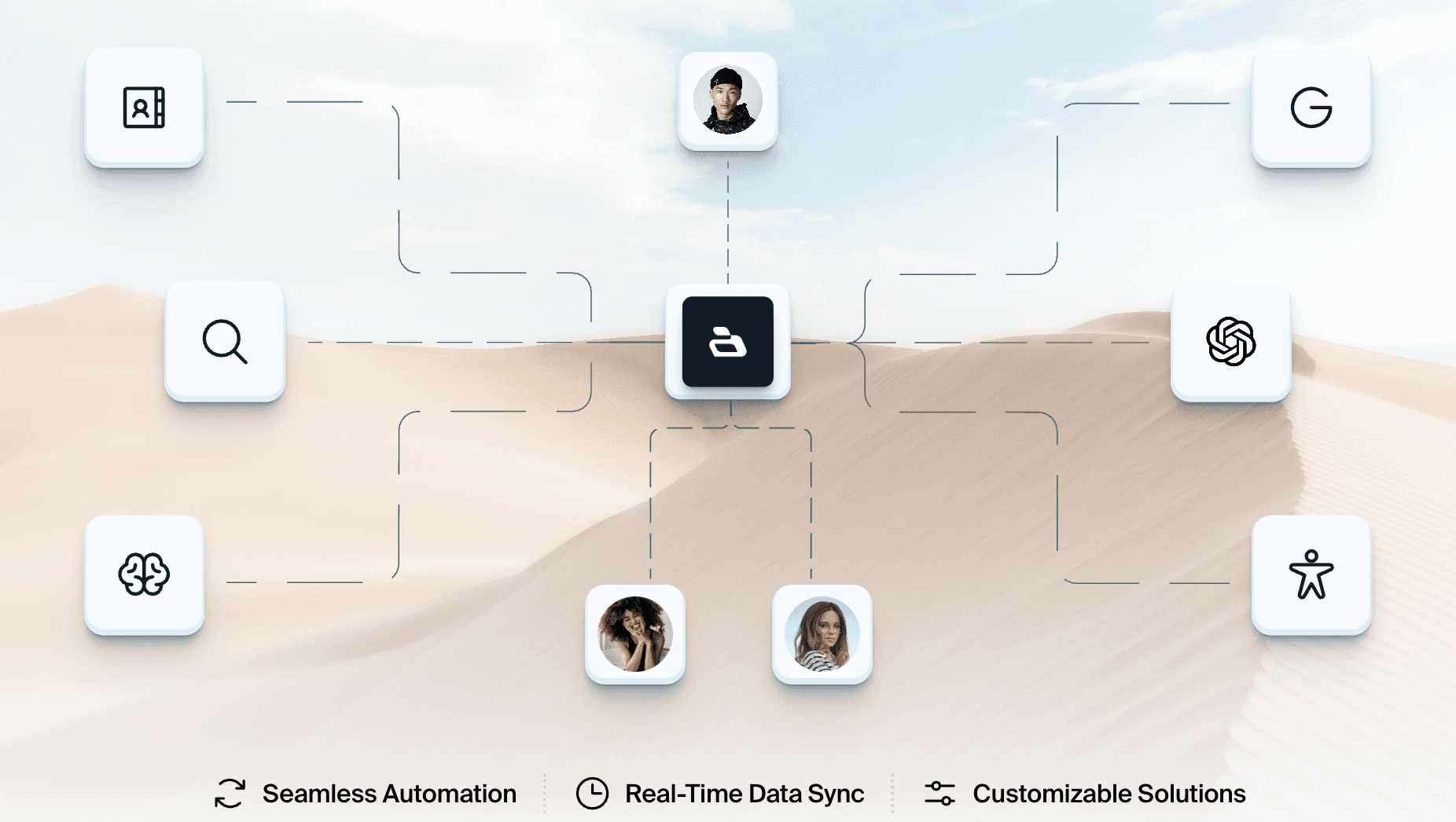
Averi's content engine was built for exactly this dual-optimization challenge.
Every piece of content is automatically structured for both traditional SEO and AI citation:
For Google: Keyword optimization, meta tags, internal linking, schema markup, the fundamentals that keep traditional search working.
For AI: FAQ sections that AI can extract, clear entity definitions, authoritative source citations, TL;DR summaries optimized for synthesis, statistics and data points that LLMs love to cite.
The platform handles the technical complexity (proper schema implementation, freshness signals, citation-worthy structure) while you focus on the strategic decisions that actually matter.
Content optimized for both Google and AI → Start with Averi
The Forward-Looking Perspective
I've watched enough technology transitions to recognize the pattern.
The founders who position for emerging channels before they become obvious capture disproportionate advantage.
Those who wait for certainty compete in crowded, expensive markets.
AI search isn't certain to overtake Google. But the trajectory is unmistakable. LLM referral traffic grew 800% year-over-year according to Backlinko's data. Semrush predicts LLM traffic will overtake traditional Google search by 2027. Gartner warns of a 25% drop in traditional search volume by 2026 as AI captures share.
You don't need AI to fully replace Google for this to matter. You need enough queries happening in AI channels that missing them costs you meaningful pipeline.
That threshold has already been crossed for many categories.
The question isn't whether to optimize for AI search. It's whether you start now, while the citation landscape is still forming, or later, when entrenched competitors have already claimed the authoritative positions.
Additional Resources
GEO Strategy Deep Dives
Content Strategy Foundations
AI Content Tools
Startup Marketing
FAQs
What is GEO (Generative Engine Optimization)?
GEO is the practice of optimizing content to be cited by AI-powered search tools like ChatGPT, Perplexity, and Google AI Overviews. Unlike traditional SEO that focuses on ranking in search results, GEO focuses on becoming the source that AI systems synthesize and cite when generating answers. This requires content that is authoritative, well-structured, and extractable—with specific statistics, clear definitions, and proper schema markup that AI can easily parse and reference.
How is AI search different from Google search?
Traditional Google search displays ranked links for users to click through. AI search synthesizes information from multiple sources into direct answers, often citing only 2-7 sources per response compared to Google's ten blue links. This means fewer opportunities for visibility but higher conversion rates when you do get cited. AI queries also tend to be longer, more conversational, and more specific than traditional keyword searches, requiring content optimization for natural language patterns.
Will AI search replace Google?
AI search is unlikely to fully replace Google in the near term, but it's fragmenting search behavior significantly. Research shows Google searches actually increased 22% year-over-year in 2024 even as AI usage surged—suggesting AI is expanding information-seeking behavior rather than replacing it. However, projections suggest LLM traffic could overtake traditional Google search by 2027, and ChatGPT's share of queries has already tripled to 12.5% in six months. Smart marketers are optimizing for both channels.
What type of content gets cited by ChatGPT and Perplexity?
AI systems prefer content with specific statistics and data points, citations to authoritative sources, clear expert credentials, well-structured headings and summaries, FAQ sections with direct answers, and recent publication or update dates. Princeton research found that adding statistics increased citation visibility by up to 115% for lower-ranked content. Content should be organized in extractable chunks that AI can easily quote and attribute, with clear definitions of entities and concepts.
How long does it take to see results from GEO?
GEO compounds slowly compared to paid advertising. Initial citation improvements typically emerge within 60-90 days of systematic optimization, but meaningful authority building takes 6-12 months. The advantage of starting early is significant—once an LLM learns to trust and cite a source, it reinforces that choice across related queries. Brands that establish AI citation authority now will have compounding advantages over latecomers who wait until AI search becomes obviously dominant.
Do I need to choose between SEO and GEO?
No—you need both. Research confirms that ChatGPT adoption doesn't reduce Google usage; it expands overall information-seeking behavior. Your content strategy should optimize for both traditional search and AI citation simultaneously. Fortunately, many GEO best practices (high-quality content, clear structure, authoritative sourcing, proper schema markup) also improve traditional SEO performance. The key is shifting emphasis from pure keyword optimization toward entity authority and citation-worthiness.