

In This Article
Compare leading AI tools that automate marketing workflows, content, and customer journeys—features, pricing, and integrations.
Updated:
Trusted by 1,000+ teams
Startups use Averi to build
content engines that rank.
Marketing automation is evolving rapidly, with AI transforming how teams manage campaigns, personalize experiences, and optimize results. Below are the top AI tools for marketing automation in 2026, tailored to various needs and budgets:
Averi: Ideal for startups seeking content marketing automation. Pricing starts at $100/month.
HubSpot: A unified CRM and marketing platform for SMBs, starting at ~$15/seat/month.
Zapier: Connects 8,000+ apps for workflow automation, with plans starting at $19.99/month.
Jasper: Focused on content creation for small teams and agencies, starting at $59/seat/month.
Creatio: No-code CRM and AI tools for mid-sized to enterprise teams, starting at $25/user/month.
Lindy: Automates entire workflows using AI agents, with plans starting at $49.99/month.
Ortto: Combines customer data, journey automation, and analytics, starting at $99/month.
Optimove: Enterprise-grade campaign orchestration with custom pricing.
ChatGPT: A versatile AI assistant for content and workflows, starting at $20/month.
Surfer SEO: Specializes in SEO-driven content strategies, starting at $79/month.
Quick Comparison
Tool | Best For | Starting Price | Key Features | Notable Integrations |
|---|---|---|---|---|
Averi | Startups | $100/month | Content workflows, SEO optimization | Webflow, WordPress |
HubSpot | SMBs | $15/seat/month | CRM, email automation, AI agents | 2,000+ apps |
Zapier | Workflow automation | $19.99/month | App connections, AI Copilot | 8,000+ apps |
Jasper | Content creation | $59/seat/month | Brand voice, campaign workflows | Google Docs, CMS tools |
Creatio | Mid-sized to enterprise teams | $25/user/month | No-code CRM, AI predictions | CRM, ERP systems |
Lindy | Workflow automation | $49.99/month | AI agents, multi-app execution | 5,000+ apps |
Ortto | SaaS and mid-market teams | $99/month | CDP, journey automation | CRM, analytics tools |
Optimove | Enterprises | Custom pricing | Predictive segmentation, orchestration | CRM, ad platforms |
ChatGPT | All team sizes | $20/month | Content drafting, workflow automation | API-based tools |
Surfer SEO | SEO-focused marketers | $79/month | SEO optimization, content briefs | Google Docs, WordPress |
Each tool offers unique advantages depending on your goals, from content creation to advanced CRM systems. Start with a free trial or demo to identify the best fit for your team.
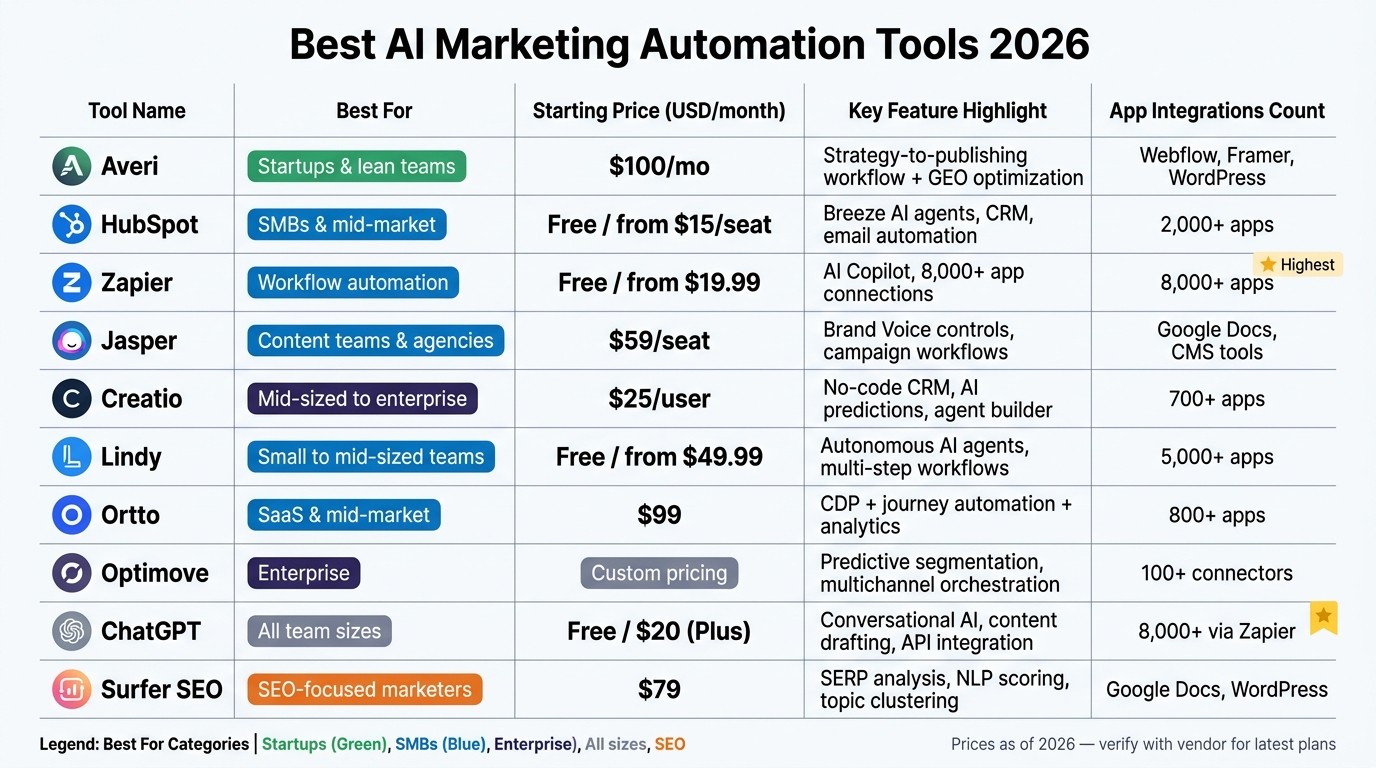
Best AI Marketing Automation Tools 2026: Side-by-Side Comparison
Best AI Tools for Marketers (Content, Campaigns, Automation) | ClickUp
1. Averi
Best for: Startups and lean teams looking for a complete content marketing solution without needing a dedicated team.
Pricing: $100/month (Plus Plan) | Free trial: 14 days, no credit card required
Averi streamlines your content workflow by automating tasks after you approve the output. Setup takes just five minutes - simply input your website URL, and the platform captures your brand voice, product details, and positioning. From there, it creates a visual strategy map that includes ideal customer profiles and competitor insights in mere minutes.
The platform operates through a six-phase workflow: Strategy, Intelligence, Execution, Publication, Analytics, and Automation. Once you approve a topic, Averi drafts a research-backed, SEO-optimized article and highlights internal linking opportunities. You can then refine the draft using a collaborative editing canvas before publishing directly to Webflow, Framer, or WordPress with a single click - eliminating the usual 20 minutes spent on formatting [9].
Between early 2025 and February 2026, Averi achieved impressive growth, scaling their organic traffic from zero to 1.68 million monthly impressions and experiencing a 6,000% increase in visitors over just 10 months. By April 2026, they reported 26,000+ monthly visitors and a 700% rise in AI referral traffic, thanks to the platform's integrated GEO (Generative Engine Optimization) capabilities [8][9].
"Startups shouldn't need a 5-person marketing team to build real content-driven growth." - Zach Chmael, Founding Team at Averi AI [8]
Every piece of published content is saved in a growing Library, which helps refine future AI drafts. The more you publish, the smarter and faster the system becomes, ensuring each new piece is even more aligned with your brand.
Averi's ability to automate and optimize the entire content marketing process sets a high standard for AI-driven tools. Up next, we’ll see how other platforms stack up.
2. HubSpot
Best for: SMBs and mid-market teams seeking a unified platform for CRM, email automation, and AI-driven tools.
Pricing: Free tier available | Starter from ~$15/seat/month | Professional from ~$890/month | Free trial: Available on select plans
HubSpot provides a centralized, AI-powered platform tailored for SMBs and mid-market teams, combining CRM, marketing, and sales tools with workflow automation. The system allows for smooth operations without manual intervention - when a visitor submits a form, HubSpot can launch a nurturing sequence, assign the lead to the right representative, and send a Slack notification automatically [13]. Its Breeze AI features cover everything from email drafting and deal summaries to prospecting, customer support, and content creation [6][2]. Impressively, the AI Customer Agent resolves 65% of support queries independently, leading to a 39% faster ticket resolution rate for teams using it [2].
"Getting started with HubSpot's marketing software is almost instantaneous. Provide your marketing team with logins and access to the appropriate tools, and they'll be running lead generation campaigns that same day." - HubSpot [14]
HubSpot's impact is measurable: users experience a 167% boost in website traffic within six months, and inbound leads triple during the same period [14]. However, it takes 6 to 12 weeks for the platform's predictive models to fully optimize [4]. HubSpot suggests a 90-day implementation plan: spend the first 30 days assessing your current setup, the next 30 days assigning ownership and defining marketing KPIs and metrics, and the final 30 days launching and scaling [15].
The platform's extensive integrations further enhance its appeal. It connects with Google, Meta, and LinkedIn for audience syncing and conversion tracking and supports over 1,500 native integrations, including Salesforce, Microsoft Dynamics 365, and Shopify. This makes it adaptable to most tech stacks [11][1]. A practical tip for users: when integrating third-party forms, opt for the Forms API instead of the Contacts API to maintain accurate web analytics and source attribution [13].
"HubSpot is at its strongest when the native features are used and not integrated from third-party solutions." - Karsten Köhler, HubSpot Freelancer [12]
The primary drawback is cost. The Professional plan starts at ~$890/month (billed annually) and typically includes a $3,000 onboarding fee, which can strain smaller teams' budgets [2][5]. Additionally, as businesses grow, pricing can escalate quickly due to rising contact counts and seat requirements - a common frustration for users who outgrow the Starter tier sooner than anticipated [1].
3. Zapier
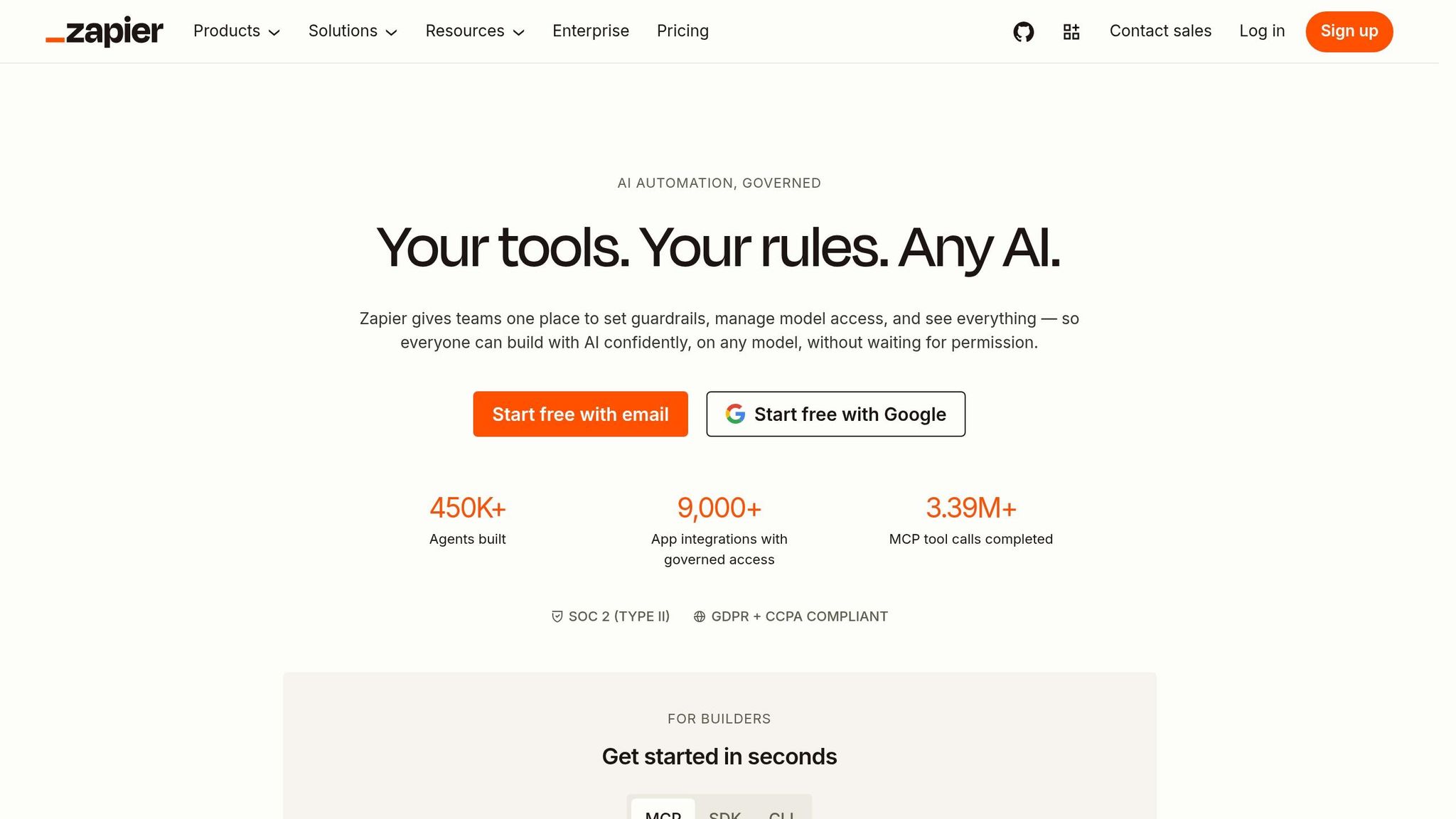
Best for: Small marketing teams and operations specialists who need to connect tools without coding.
Pricing: Free tier available (100 tasks/month) | Pro from $19.99/month (billed annually) | Team from ~$69/month | Enterprise: Custom pricing
Zapier isn’t a platform for sending emails or running ads directly. Instead, it acts as an AI-powered integration layer, connecting over 8,000 apps like HubSpot, Mailchimp, Google Ads, Facebook Lead Ads, Salesforce, Typeform, and Slack. This approach allows Zapier to unify your tools into a single automated system, making it an ideal complement to existing marketing platforms [5][7]. Think of it as the glue that holds your marketing stack together.
One standout feature is the AI Copilot, which lets you set up workflows in plain English - no coding required. You can also integrate ChatGPT, Claude, or Gemini prompts directly into workflows for tasks like drafting follow-up emails, summarizing campaign data, or scoring leads [5][6]. The platform's AI Agents further enhance productivity by adjusting workflows automatically in real time.
The results speak for themselves. Jacob Sirrs, a Marketing Operations Specialist at Vendasta, used Zapier and AI to overhaul their lead process. By automating CRM updates and follow-up drafts, his team saved 20 hours daily across 20 reps, recovering roughly $1 million in pipeline revenue [17][18]. Similarly, Nina Mirabella, Senior Director of Marketing Operations at Superhuman, designed workflows with Zapier that saved her team over 42 hours per week and cut lead errors by 87% - all without relying on engineering [17].
"Zapier has become a critical part of Superhuman's operating backbone … When we can design workflows, we can respond to stakeholder needs without relying on engineering resources." - Nina Mirabella, Senior Director, Marketing Operations, Superhuman [17]
However, "Zap sprawl" can be a challenge. As automations grow, duplicate or unmanaged workflows can become difficult to debug and costly to maintain. To counter this, teams can use a shared registry to track each Zap's owner, trigger, purpose, and last update [1]. For larger organizations, Enterprise Workspaces offer added safeguards like audit trails and role-based access. Meanwhile, smaller teams can get automations running in under six minutes using pre-built templates [16][17].
With its ability to deploy workflows quickly and deliver measurable results, Zapier remains a powerful tool for streamlining marketing and operational tasks.
4. Jasper
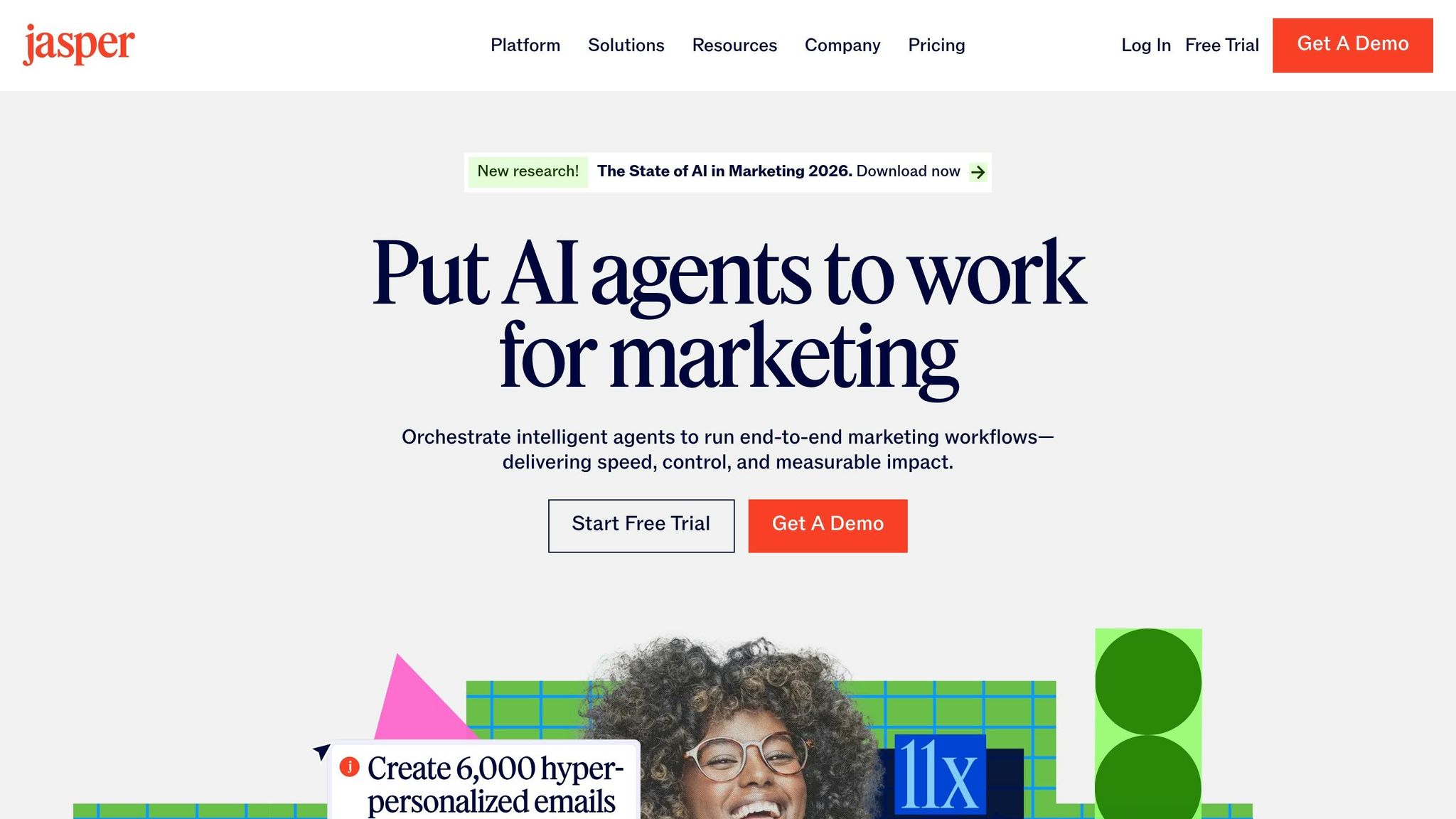
Best for: Content teams, agencies, and small marketing teams aiming to scale copy across multiple channels while keeping a consistent brand voice.
Pricing: Pro plan starts at $59/seat/month (billed annually) | Business plan: Custom pricing | Free trial: 7 days
Jasper is built to help marketing teams create content faster while ensuring brand messaging stays consistent. It covers a wide range of content marketing needs, from long-form blog posts and campaign briefs to ad variations and email sequences. Its standout features, Brand Voice and Knowledge Base, ensure that every piece of content reflects your company's tone, messaging, and unique value, cutting down on editing time.
Getting started with Jasper is quick. The Jasper Marketing Agent can generate fully designed, on-brand campaigns in as little as three clicks [2]. For example, iHeartMedia used Jasper to produce a multi-platform asset package for its "Cardiac Cowboys" podcast campaign in just one day [22].
Jasper integrates smoothly with many popular tools in the US marketing ecosystem. It works natively with Webflow for direct CMS publishing, Salesforce and HubSpot for personalized lead follow-ups, Semrush for SEO-optimized content, and Slack for real-time collaboration. Extensions for Google Docs, Google Sheets, and Microsoft Word allow teams to access Brand Voice directly within their favorite platforms [20][21]. For teams using Zapier, automating tasks like sending follow-up emails when a new lead enters HubSpot is simple.
These integrations are designed for scalability, delivering measurable results for enterprise users. Adidas, for instance, used Jasper to create 7,500 product descriptions in just 24 hours [19]. Similarly, Cushman & Wakefield, under the leadership of Peter So, VP of Digital Innovation, saved over 10,000 hours annually on localized marketing content [19][22].
Here's how industry leaders view Jasper’s impact:
"It's not just about efficiency gains, it's about augmenting human creativity, scaling expertise, and unlocking new ways to engage customers and drive business outcomes." - Peter So, VP of Digital Innovation, Cushman & Wakefield [19]
However, Jasper’s output quality relies heavily on the quality of the inputs. Without a well-defined message bank that includes your ideal customer profile’s pain points, differentiators, and proof points, the results can feel generic. Adding a human review step for claims and compliance remains essential [3][10].
5. Creatio
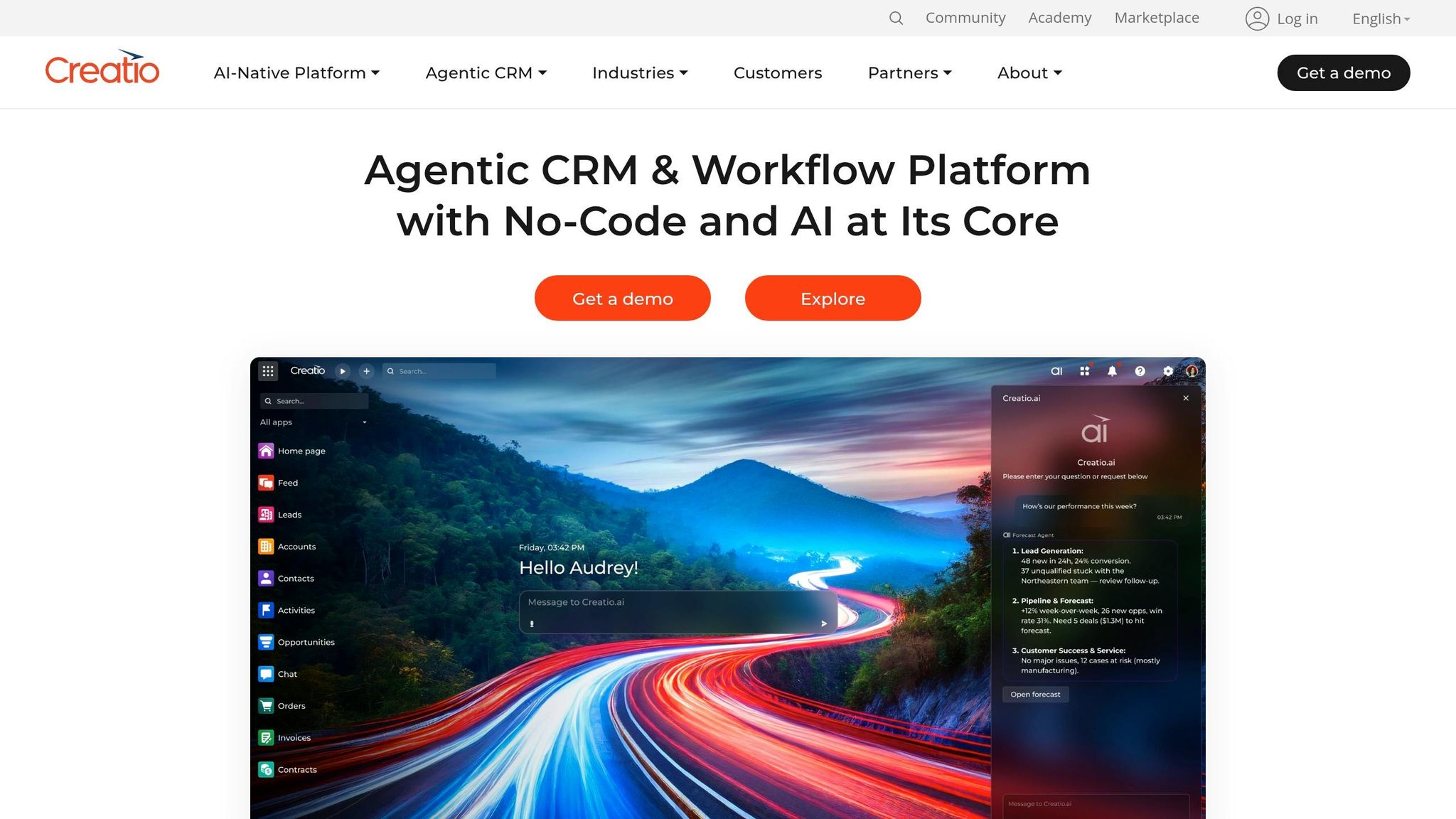
Best for: Mid-sized to enterprise teams seeking a customizable CRM and marketing automation platform that doesn’t require coding.
Pricing: Core platform starts at $25/user/month | Marketing CRM add-on: $15/user/month | AI features (Predictive, Generative, Agentic): included at no additional cost | Minimum annual purchase: $5,000 [25]
Creatio takes a unified approach to AI-powered marketing automation, combining CRM, workflow automation, and integrated AI tools - Generative, Predictive, and Agentic - into a single platform. All AI capabilities are included in the base license, making it accessible without extra fees. A standout feature is its No-Code Agent Builder, which allows marketers to create custom AI agents using plain-language prompts, bypassing the need for IT support. Additionally, the centralized AI Command Center provides a hub for monitoring and optimizing agent performance.
On the marketing front, Creatio offers pre-built AI agents designed for tasks like email generation, lead scoring, campaign management, and lead distribution. With integrations spanning over 700 apps - including Shopify, Power BI, Google Workspace, Microsoft 365, and ChatGPT - the platform ensures compatibility across a wide range of tools, streamlining implementation for large-scale operations.
Creatio’s speed of deployment is a major selling point. For example, Howdens implemented a solution for 7,000 users across 800 locations in just 12 weeks. Similarly, PSI achieved a 4× faster rollout of an Agentic CRM in May 2026 compared to typical industry timelines [23]. The City of Boston also leveraged Creatio to automate 311 and basic city services. Jay Greenspan, Senior Director of 311 & Basic City Services Technology for the City of Boston, highlighted:
"The biggest advantage of Creatio is speed. The speed to develop, release, iterate, prototype. And it doesn't require someone deeply experienced in the platform to do it." [24]
While Creatio excels for larger teams, its strict contractual terms - a minimum 3-year commitment and a $5,000 annual spending requirement - may deter startups looking for leaner automation. However, for growth-stage companies and enterprises aiming to consolidate their CRM and marketing automation into a single AI-native platform, Creatio offers a compelling option. Some organizations have even reported a 37% reduction in total cost of ownership [24].
Next, we’ll explore how Creatio stacks up against other AI-driven marketing tools.
6. Lindy
Best for: Small to mid-sized US teams looking for no-code, end-to-end marketing workflow automation.
Pricing: Free plan available (400 credits/month) | Pro: $49.99/month (5,000 credits) | Business: $299.99/month (30,000 credits) | Enterprise: custom pricing [30]
Lindy stands out by automating entire workflows rather than just individual tasks. Its autonomous AI agents can handle everything from capturing leads and updating CRMs to sending personalized follow-up emails and monitoring replies - completely removing the need for manual handoffs [29]. With Lindy’s "vibe coding", users can describe their needs in plain English, and the system builds an agent in under a minute [31].
One of Lindy’s strengths lies in its multi-agent coordination. It allows teams to chain specialized agents for various tasks - one might handle SEO research, another writes content, and a third oversees editing [29]. Teams using Lindy for outreach and personalization have seen conversion rates improve by 25% [29]. Campaign launch times can shrink by up to 75% thanks to automated setup validation, and the platform can cut manual reporting tasks in half [26].
US-based teams will appreciate Lindy’s compliance with SOC 2 and HIPAA standards, along with AES-256 encryption, making it suitable for industries like healthcare and fintech [31]. The platform also integrates with over 5,000 business tools, including HubSpot, Salesforce, Slack, Gmail, and Google Calendar [31].
However, there are some challenges. The credit-based pricing model might pose issues for high-volume teams, and setting up complex multi-agent workflows can require some time to learn [27][30]. Greg Isenberg, CEO of Late Checkout, captured the essence of Lindy’s capabilities:
"This feels like the most human assistant I've seen in any product. You need to use it to really see it." [28]
For teams aiming to improve AI productivity and go beyond single-channel automation, Lindy is a strong contender.
7. Ortto
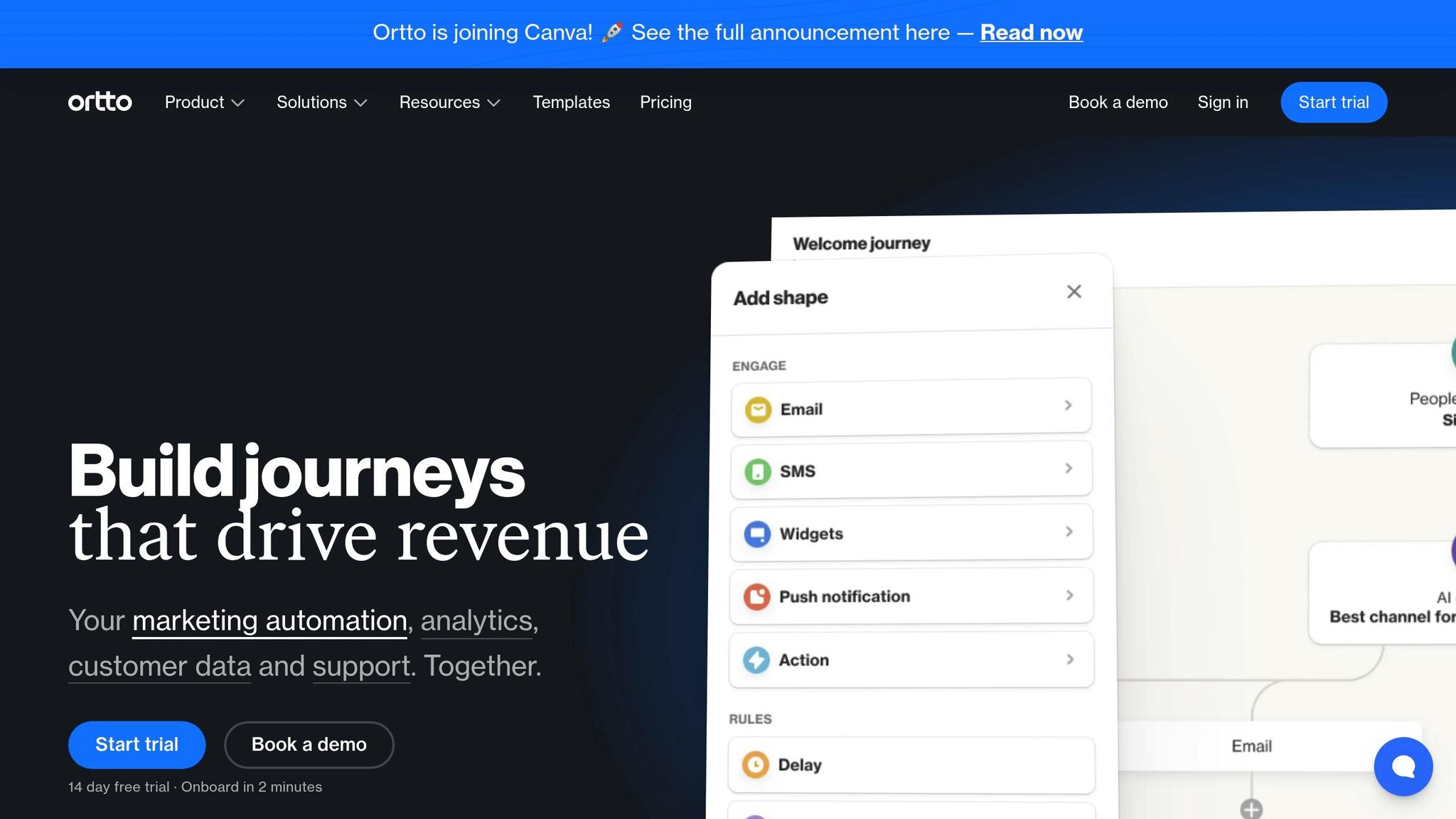
Best for: SaaS companies and mid-market US teams looking for a unified platform that combines customer data, journey automation, and analytics - without needing multiple tools.
Pricing: 14-day free trial available | Professional: $99/month (5,000 contacts) | Salesforce CRM add-on: $159.20/month | Expert setup & training: $1,699 (one-time, optional) [34]
Ortto merges Customer Data Platform (CDP), marketing automation, and analytics into one interface, eliminating data silos and enabling faster campaign adjustments. Data is hosted on dedicated US servers with compliance to HIPAA, SOC2, and ISO 27001 standards [32], making it a trusted option for industries like healthcare and fintech that require strict data security.
One of Ortto's standout features is its AI-powered journey builder. The AI Decision Shape allows users to define branching logic in plain English, such as asking, "What is the likelihood of lead conversion to a paid plan?" The system then automatically generates the necessary split path. Similarly, AI Filters enable audience segmentation using natural language prompts, removing the need for manual field configuration or SQL coding. During beta testing, these tools helped teams create customer lifecycle journeys 26% faster [33]. Real-world results include a 375% increase in first reviews for one B2B customer and a 50% boost in Daily Active Users for a SaaS team using Ortto's workflows [32].
Ortto also shines in its ability to integrate seamlessly with other tools. It offers bi-directional connections with Salesforce, HubSpot, and Pipedrive, along with compatibility with over 800 apps like Slack, Shopify, Google, and Meta [34]. For example, leads captured through Facebook Lead Ads can instantly trigger personalized email or SMS campaigns - no manual intervention required. Following its acquisition by Canva in April 2026 [37], Ortto now includes Canva integration, simplifying creative production directly within marketing workflows.
"With Ortto AI, we're taking marketing automation to the next level, making it faster, smarter, and more intuitive." - Michael Sharkey, CEO, Ortto [33]
Getting started with Ortto is quick, with a four-step onboarding process: connect your data, integrate tools, set brand styles, and invite your team. This can take as little as two minutes [36]. Users appreciate its intuitive drag-and-drop journey builder, earning it ratings of 4.4/5 on G2 and 4.6/5 on Capterra [32]. However, scaling contact lists can increase costs, and some users have noted limitations in custom reporting [35]. Despite these considerations, Ortto's ease of use and powerful integrations demonstrate how AI-driven marketing automation can deliver impactful results without unnecessary complexity.
8. Optimove
Best for: Enterprise US teams in retail, eCommerce, financial services, and iGaming seeking AI-driven campaign orchestration at scale - without needing data engineers for every campaign.
Pricing: Custom pricing (contact sales) | Free demo available
Optimove takes campaign orchestration to the next level for enterprise teams managing complex customer bases and high-volume campaigns. Its standout feature, the OptiGenie AI decisioning layer, determines the best content, channel, and timing for each customer in real time, replacing outdated "if-then" rules with predictive, adaptive logic [38][40]. In 2023, Gartner ranked Optimove #1 in Journey Orchestration and recognized it as a "Visionary" in the 2025 Magic Quadrant for Multichannel Marketing Hubs for the second consecutive year [39][40].
The platform goes beyond real-time decision-making by unifying customer data from multiple sources to enable precise segmentation. Acting as a Customer Data Platform (CDP), Optimove integrates data from CRMs, data warehouses, POS systems, and service clouds into a single, comprehensive customer view. Its machine learning capabilities identify micro-segments based on factors like churn risk, purchase likelihood, and lifetime value - no SQL knowledge required [38][39]. For enterprise teams, its Snowflake integration is a game changer. Using Secure Data Sharing, teams can access enriched customer data directly in their data warehouse, bypassing complex API setups. This integration also allows for automated data quality checks by comparing Optimove's predictive metrics with internal models in real time [41][43].
One notable success story comes from FDJ United, a leading European lottery operator. After adopting Optimove's "Positionless Marketing" framework, FDJ United slashed its campaign execution timeline from 6 weeks to under 24 hours. This framework empowers individual marketers to handle campaigns end-to-end without technical delays [45].
"With Optimove as our core orchestration engine, a single marketer can now execute a campaign end-to-end from ideation through planning, content, and delivery in under 24 hours." - Georgi Pepelyankov, Head of Marketing Transformation, FDJ United [38]
Optimove also boasts 100+ pre-built connectors for platforms like Facebook, Google, Pinterest (advertising), Adobe Campaign, Braze (email), Attentive, Twilio (SMS), and Airship (mobile push) [42][44]. These integrations simplify marketing execution on an enterprise scale. For governance, the platform supports SSO through Okta, Azure AD, and Duo. While onboarding requires an initial time investment - data ingestion typically takes 20 minutes to an hour - the platform’s analytics provide the agility needed for enterprise-grade campaigns.
Optimove is ideal for teams with robust data infrastructure, ready to move beyond basic automation. Its advanced AI and seamless data integration make it a standout choice for transforming marketing workflows at the enterprise level.
9. ChatGPT
Best for: US marketing teams of all sizes seeking an adaptable AI tool to automate content creation, lead enrichment, and workflow management within their existing tech setup.
Pricing: $20/month (Plus/Pro for individuals) | API usage billed per token (pay-as-you-go)
ChatGPT isn’t a traditional marketing automation platform. Instead, it functions as an intelligence layer that integrates seamlessly with your current tools. With the OpenAI API and connectors like Zapier, it links to over 8,000 apps. A typical setup for US-based teams might involve capturing leads via tools like Typeform, using ChatGPT to enrich those leads with AI-generated insights, and then updating CRMs like HubSpot or Salesforce effortlessly [46].
Its utility goes beyond just lead management. ChatGPT is highly effective in content operations and sales enablement. For example, it can pull records from Salesforce to create personalized sales pitches, summarize call transcripts for team reviews, or transform raw Airtable data into polished blog drafts. Automating these tasks helps teams execute campaigns more efficiently. According to McKinsey, 78% of businesses now incorporate AI into at least one area of their operations [47].
When considering costs, choosing the right model is essential. For high-volume, cost-sensitive tasks like data extraction and tagging, GPT-4o mini is an economical choice at $0.60 per million output tokens. On the other hand, GPT-5.5 Pro is better suited for complex reasoning tasks, priced at approximately $180 per million output tokens [46]. By matching the model to the task, teams can manage expenses without sacrificing quality.
To ensure ChatGPT aligns with your brand, it’s wise to train it by providing 3–5 examples of your best-performing content. This helps the model replicate your brand’s tone and avoid generic outputs. Additionally, when using ChatGPT in customer-facing scenarios, implementing AI guardrails is a smart move. These guardrails can screen for sensitive information, inappropriate language, or potential vulnerabilities like prompt injection [48].
"Automation with AI will save workers up to 12 hours per week by 2029." - Thomson Reuters [47]
The shift toward Agentic AI - autonomous systems capable of planning and executing multi-step campaigns with little human input - is gaining momentum. Gartner predicts that by 2028, 33% of enterprise software will feature such capabilities. Even basic integrations through platforms like Zapier or Power Automate are already delivering measurable efficiency improvements [2]. Up next, we’ll dive into how Surfer SEO enhances content optimization within AI-driven marketing workflows.
10. Surfer SEO
Best for: US content teams and SEO-focused marketers looking for a structured, data-driven approach to planning, writing, and optimizing content at scale.
Pricing: Starts at $79/month, with higher-tier plans including AI writing credits [3].
Surfer SEO focuses on one thing: making your content strategy competitive and data-driven. Unlike all-in-one marketing platforms, it zeroes in on SEO-driven content strategy, helping teams streamline their workflow from research to publishing. By analyzing live SERPs, scoring your content against top competitors, and highlighting keyword gaps through NLP, Surfer eliminates the need to manually comb through competitor pages. Instead, it provides a clear, actionable view of where your content can improve [3][4].
One standout feature is its content brief tool. Writers receive structured outlines based on competitor gap analysis, complete with recommended keywords, headings, and subtopics that competitors rank for but your content might be missing [3]. This reduces time spent on research and allows writers to focus on creating content. For US teams handling large volumes of content, these consistent, data-backed briefs translate into faster production cycles.
Another handy tool is topic clustering, which helps teams build topical authority. Rather than treating each article as an isolated piece, Surfer identifies related subtopics under a primary keyword, ensuring comprehensive coverage across an entire content pillar [3]. Combined with its audit tool - which uses NLP scoring to suggest improvements for existing articles - Surfer creates a repeatable system for both fresh content and optimizing older posts [3]. These SEO-focused tools are a perfect complement to broader marketing automation platforms, making content optimization more efficient.
Surfer also integrates with Google Docs and WordPress, keeping it aligned with the tools most US content teams already rely on. While it doesn’t handle tasks like email marketing, ad campaigns, or lead nurturing, its sharp focus on organic search makes it a go-to choice for teams prioritizing SEO as their main acquisition strategy.
Comparison Table
Here’s a streamlined table comparing the key use cases, standout features, pricing, and integrations of various marketing automation tools. Use it to quickly pinpoint which tool aligns with your needs.
Tool | Primary Use Case | Key Features | Starting Price (USD/mo) | Notable Integrations |
|---|---|---|---|---|
Averi | AI content engine for startups | Strategy-to-publishing workflow, brand memory, SEO + GEO optimization, analytics recommendations | $100 | Webflow, Framer, WordPress |
HubSpot | Unified CRM, marketing & sales automation | Breeze AI agents, Copilot, email drafting, deal summaries | Free tier; paid plans from ~$15/seat | 2,000+ native integrations |
Zapier | Workflow automation & app connectivity | AI Copilot for natural language workflows, "AI by Zapier" steps, 8,000+ app connections | Free tier; paid from ~$19.99 | 8,000+ apps |
Jasper | AI copywriting & content generation | Brand voice controls, templates, campaign workflows | ~$39/seat | Google Docs, Surfer SEO, CMS tools |
Creatio | No-code CRM & process automation | Visual workflow builder, AI-powered predictions, sales and marketing pipelines | ~$25/user | CRM, ERP, email platforms |
Lindy | Agentic AI for multi-step task automation | Autonomous AI agents, natural language triggers, multi-app execution | Free tier; paid from ~$49 | 5,000+ apps |
Ortto | Customer journey & email automation | Journey builder, CDP, SMS, push notifications, contact-based billing | ~$99 | CRM, e-commerce, analytics tools |
Optimove | AI-driven customer marketing & retention | Predictive segmentation, multichannel campaign orchestration, A/B testing | Custom (enterprise pricing) | CRM, data warehouses, ad platforms |
ChatGPT | General-purpose AI assistant | Conversational AI, content drafting, research, code generation | Free tier; Plus at $20/user | API-based; connects via Zapier and others |
Surfer SEO | SEO content strategy & optimization | SERP analysis, NLP scoring, content briefs, topic clustering, audit tool | $79 | Google Docs, WordPress |
Key Takeaways
Pricing Models: Tools feature varied billing structures, from free tiers to enterprise pricing. Some, like HubSpot and Jasper, use seat-based pricing, while Zapier and Lindy rely on task- or credit-based models. This can significantly affect costs as your team or workload grows.
Integrations: Integration capabilities are crucial for compatibility with your existing tools. Zapier leads with 8,000+ app connections, ideal for fragmented tech stacks. HubSpot offers 2,000+ native integrations, making it a strong all-in-one platform. Meanwhile, tools like Averi and Surfer SEO focus on specific workflows, offering fewer but targeted integrations.
This table serves as a foundation for deeper evaluation, helping you match each tool to your unique marketing automation needs.
Conclusion
When selecting an AI tool, focus on addressing your biggest challenge. For content creation, Averi or Jasper are direct solutions. If your priority is integrating apps, Zapier is a natural choice. For an all-in-one CRM with automation, HubSpot fits the bill, though its Professional tier starts at about $890/month. Matching your needs to the right tool ensures the best results.
Your team size also plays a critical role. Lean startups often thrive with affordable, targeted tools, while SMBs and larger enterprises require platforms that can grow alongside their team size and campaign demands.
Before committing to an annual plan, test a single workflow for 30 days. Whether it’s a lead scoring process, a content schedule, or an email campaign, this trial run helps you evaluate the tool’s impact. As Waqas Arshad, Co-Founder & CEO of The Rank Masters, wisely notes:
"AI won't magically fix an inefficient funnel - but it will amplify whatever system you already have. The winners in 2026 aren't the teams with the most tools; they're the teams with the cleanest loop." [1]
Data handling is another key consideration. If you're operating in the US, ensure your chosen tool complies with CCPA/CPRA and has SOC 2 certification - especially if you're managing leads or running personalized campaigns.
The comparison table above serves as a helpful guide to streamline your workflows. Start with the tool that addresses your most pressing challenge, achieve measurable results, and then gradually expand your tech stack.
FAQs
Which AI tool fits my team size and budget?
When selecting an AI marketing automation tool, your team’s size and budget will play a key role in the decision. For smaller teams or those working with tighter budgets, ActiveCampaign and Klaviyo provide cost-effective options, with plans starting at approximately $49 per month. If you're part of a larger team or have a more flexible budget, HubSpot and Campaign Monitor offer advanced features and robust integrations that cater to more complex needs. Evaluate your specific requirements alongside your budget to find the right match for your organization.
How do I choose between an all-in-one platform and workflow automation?
When deciding, think about what suits your needs and goals best. All-in-one platforms bring together tools like email marketing, CRM, and analytics into a single system, making them perfect for those who value simplicity and centralized management. On the other hand, workflow automation tools (such as Zapier or Make) are designed to link specialized tools, enabling customizable, multi-step processes. If you prioritize ease of use, an all-in-one platform might be the way to go. However, if flexibility and scalability in creating tailored workflows are more important, automation tools are a better fit. Be sure to factor in your team’s size, expertise, and the specific objectives of your campaigns.
What should I test in a 30-day trial before buying?
During a 30-day trial, evaluate how effectively the platform fits into your current setup and improves your processes. Pay close attention to:
Task Automation: Assess how well it handles content creation, email campaigns, and lead nurturing without manual intervention.
Output Quality: Review the relevance and accuracy of AI-generated content.
Workflow Setup: Test how simple it is to establish workflows and automation sequences.
Results Tracking: Check if it provides measurable outcomes like ROI insights or detailed campaign analytics.
This trial period is your chance to confirm that the platform aligns with your specific needs before committing to a purchase.
Related Blog Posts

Zach Chmael
CMO, Averi
"We built Averi around the exact workflow we've used to scale our web traffic over 6000% in the last 6 months."
Your content should be working harder.
Averi's content engine builds Google entity authority, drives AI citations, and scales your visibility so you can get more customers.