Best AI SEO Content Tools (2026) — From Research to Ranked
Averi Academy
Averi Team
8 minutes

In This Article
Create content that ranks on Google using AI. We compare tools for keyword research, writing, optimization, and publishing — in one workflow. Tested with real ranking data.
Updated:
Trusted by 1,000+ teams
Startups use Averi to build
content engines that rank.
Creating SEO content is faster and smarter with AI tools that streamline keyword research, competitor analysis, and writing. These tools cut production time drastically - from hours to minutes - and optimize content for both search engines and AI platforms like ChatGPT and Perplexity. Here’s what you need to know:
Top Tools: Scalenut, Surfer SEO, Semrush, Ahrefs, Jasper, NeuronWriter, Writesonic, RankIQ, Averi, and Frase.
Key Features: Automated keyword clustering, live SERP data integration, AI-generated drafts, real-time SEO scoring, and AI citation tracking.
Pricing: Options range from $16/month (Writesonic) to $499.95/month (Semrush Business plan), catering to individuals, startups, and large teams.
Emerging Trend: Generative Engine Optimization (GEO) ensures visibility on AI-driven platforms, now critical as AI search tools grow 800% year-over-year.
Each tool offers unique capabilities, from Scalenut’s "Cruise Mode" to Frase’s fast content outlines. Whether you’re a solo creator or managing an agency, these platforms can simplify and enhance your SEO efforts. Below, we explore their features, integrations, and pricing in detail.
AI SEO Tools Tier List 2025 (What Actually Works)
1. Scalenut
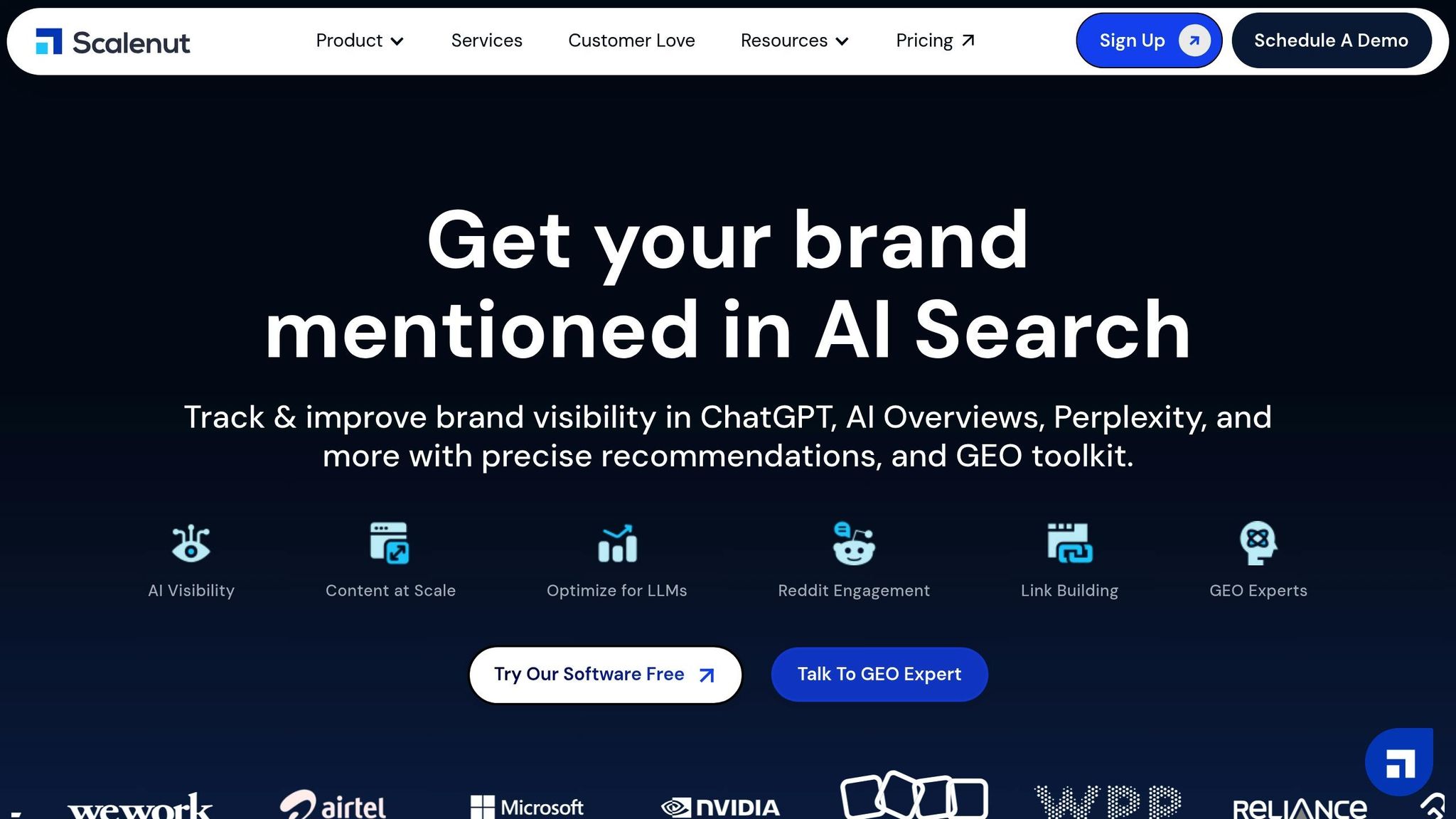
Scalenut is an all-in-one content creation platform that combines keyword research, drafting, and optimization into a single, seamless workspace. A standout feature is its Cruise Mode, a guided workflow that takes users from keyword selection and competitor analysis to a draft ready for optimization. This feature simplifies the process for agencies by consolidating research, writing, and editing into one streamlined system. Let’s take a closer look at how its SEO tools contribute to creating relevant, optimized content while automating tedious tasks.
SEO-Specific Capabilities
Scalenut integrates SERP data directly into your content workflow, analyzing top-ranking competitor pages for key elements like headings, word counts, and frequently asked questions. Its keyword clustering groups related terms to help build authority around a topic. The in-editor SEO scorer uses NLP to pinpoint missing semantic terms and structural gaps, providing real-time updates as you write. Additionally, automated content briefs create structured outlines based on current ranking trends, eliminating guesswork about what search engines prioritize.
Automation Level
The platform excels at automating critical stages in the content production process. With Cruise Mode, it handles everything from extracting competitor insights to generating draft sections. Meanwhile, the in-editor optimizer continuously suggests improvements, eliminating the need for manual checks of SERP data. This cohesive system is particularly popular among agencies producing content in bulk, as it significantly cuts down the time spent on planning, drafting, and refining articles.
Pricing and Affordability
Scalenut operates on a hybrid model that combines seat licenses with usage-based credits, a common approach for AI-powered SEO tools. While exact pricing tiers aren’t publicly disclosed, the platform is designed to provide cost efficiency for high-volume teams by replacing multiple separate tools. On the flip side, smaller teams with a distinct brand voice may find the interface a bit overwhelming, and the generated outputs might require additional human editing to align with their tone. It’s worth testing the platform at both current and increased usage levels to better estimate credit consumption [6].
2. Surfer SEO
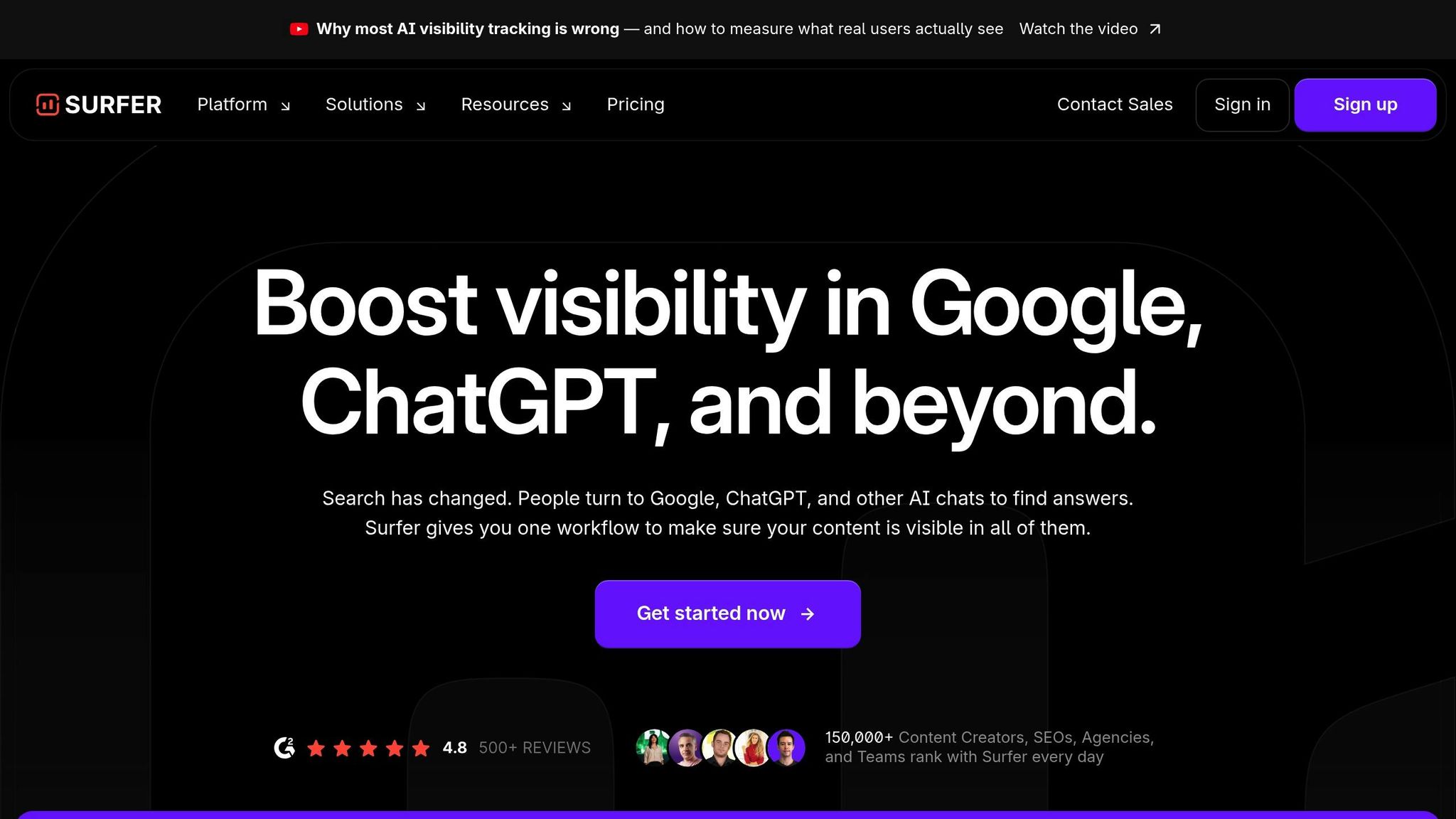
Surfer SEO transforms complex SERP analysis into actionable on-page recommendations. Unlike tools that prioritize content creation alone, Surfer focuses on real-time editing guidance, analyzing hundreds of high-ranking pages to suggest the exact keywords, headings, and structural tweaks your draft needs to compete. Its Content Editor provides a live score (ranging from 0 to 100) that updates as you write, indicating how well your content aligns with top-performing pages. A score of 67 or higher is often a good benchmark for ranking success [2]. This precision-oriented approach sets Surfer SEO apart by emphasizing optimization over mere content generation.
SEO-Specific Capabilities
Surfer’s SERP Analyzer offers in-depth competitor insights, identifying patterns from top-ranking pages and turning them into practical recommendations. The Content Audit feature connects seamlessly with Google Search Console, enabling users to refresh older articles by pinpointing gaps in optimization based on current ranking data [5]. Tools like the "Facts" tab (Coverage Booster) and the Topical Map help identify missing topics from leading pages and suggest content clusters that could boost AI citations by up to 25% [2]. Additionally, internal link suggestions streamline the process of adding related links, allowing users to insert up to 10 links in bulk [5][2].
Integration Options
Surfer enhances productivity by integrating directly with platforms like WordPress and Google Docs, enabling writers to access SEO scoring without disrupting their workflow [5][9][10]. It also pairs with tools like Semrush and Ahrefs to pull comprehensive keyword data and works with AI writing platforms such as Jasper, Frase, and Rytr, combining optimization insights with generative capabilities [10]. The Auto-Optimize feature simplifies keyword insertion, though reviewing the output ensures the content remains natural and engaging [5][2].
Pricing and Affordability
Surfer uses a tiered subscription model based on credits for articles and audits. The Essential plan costs $99 per month, covering 360 articles annually, while the Scale plan is priced at $219 per month for up to 1,200 articles. For larger operations, Enterprise plans offer customized pricing [2][8]. Additional features, like the AI Tracker (designed to monitor brand mentions in ChatGPT), are available for an extra $95 per month [8]. While the platform boasts a 4.8/5 rating on G2 as of December 2025, with users praising its live scoring feature, some have expressed concerns about the rising costs of add-ons [5][8]. These pricing tiers are designed to help users balance SEO effectiveness with budget considerations, making it a flexible option for various content strategies.
3. Semrush

Semrush is a comprehensive SEO platform that merges traditional SEO tools with features tailored for Generative Engine Optimization (GEO). Beyond its core offerings like keyword research, content creation, and site audits, it also tracks how your brand performs in AI-driven search results across platforms like ChatGPT, Google Gemini, and Perplexity. One standout feature is its Keyword Magic Tool, which calculates a custom "Personal Keyword Difficulty" (PKD%) score. This helps you focus on keywords you can realistically rank for, rather than relying on generic difficulty metrics [3].
SEO-Specific Capabilities
Semrush's SEO arsenal includes tools designed to give you an edge. The SEO Content Template analyzes the top 10 competitors for your target keywords and generates detailed briefs. These briefs recommend word counts, semantically related keywords, and backlink opportunities. Once you're drafting, the Content Optimizer and SEO Writing Assistant provide real-time feedback on SEO strength, readability, tone, and originality [4].
For AI-focused optimization, the AI SEO tab evaluates E-E-A-T signals, QA formatting, and structured data to improve visibility in AI-generated search results. Meanwhile, the AI Visibility Toolkit monitors share of voice and sentiment, giving you a benchmark against competitors.
"Semrush's SEO Content Template and SEO Writing Assistant are great, practical tools for helping to focus content creation efforts on things that are more likely to deliver higher expected value." - Andrew Bruce Smith, PR, Social Media, SEO & Analytics Consultant [11]
Semrush doesn’t stop at SEO. It also simplifies content workflows across various platforms, making it a highly versatile tool.
Integration Options
Semrush integrates smoothly with popular platforms like WordPress, Google Docs, Microsoft Word, Google Search Console, and Google Analytics. For technical SEO, the Site Audit tool flags issues and can send them directly to Trello for task management. Additionally, its Chrome extension allows for quick, on-the-go content optimization, while Zapier automates repetitive workflows for added efficiency.
Automation Level
The platform's automation features are a major time-saver. For instance, its AI Article Generator can produce an 833-word draft, complete with a title and meta description, in just 42 seconds [3]. SEO strategist Zach Paruch shared that using the AI Article Generator alongside the Content Optimizer reduced his article creation time from two hours to just 20 minutes - an impressive 83% time savings. Tools like "Cruise Mode" and "Improve All" buttons further streamline content creation and optimization. On the technical side, the Site Audit tool scans up to 1,000 pages in about 12 minutes and automatically sends results via email or to project management tools. Additionally, the Semrush Copilot, an AI-powered assistant, monitors your data daily, notifying you of ranking changes, emerging competitors, or technical issues [7].
Pricing and Affordability
Semrush offers a tiered subscription model, catering to different needs:
Pro plan: $139.95/month. Includes basic SEO tools and supports up to five projects, making it a solid choice for startups and small teams.
Guru plan: $249.95/month. Adds the Content Marketing Toolkit, supports 15 projects, and includes access to historical data, ideal for agencies and mid-sized businesses.
Business plan: $499.95/month. Designed for large enterprises, this plan supports 40 projects, offers API access, and includes advanced share-of-voice tracking.
Optional add-ons include the Content Toolkit for $60/month and the AI Visibility Toolkit for $99/month, which monitors brand mentions across AI search platforms. For a bundled option, the Semrush One package combines the Pro SEO Toolkit with the AI Visibility Toolkit for $199/month.
Semrush boasts a 4.5/5 rating on G2 based on over 2,680 reviews. While users praise its robust features, some note that the interface can be overwhelming for beginners, and the pricing might be a bit high for solo creators.
4. Ahrefs
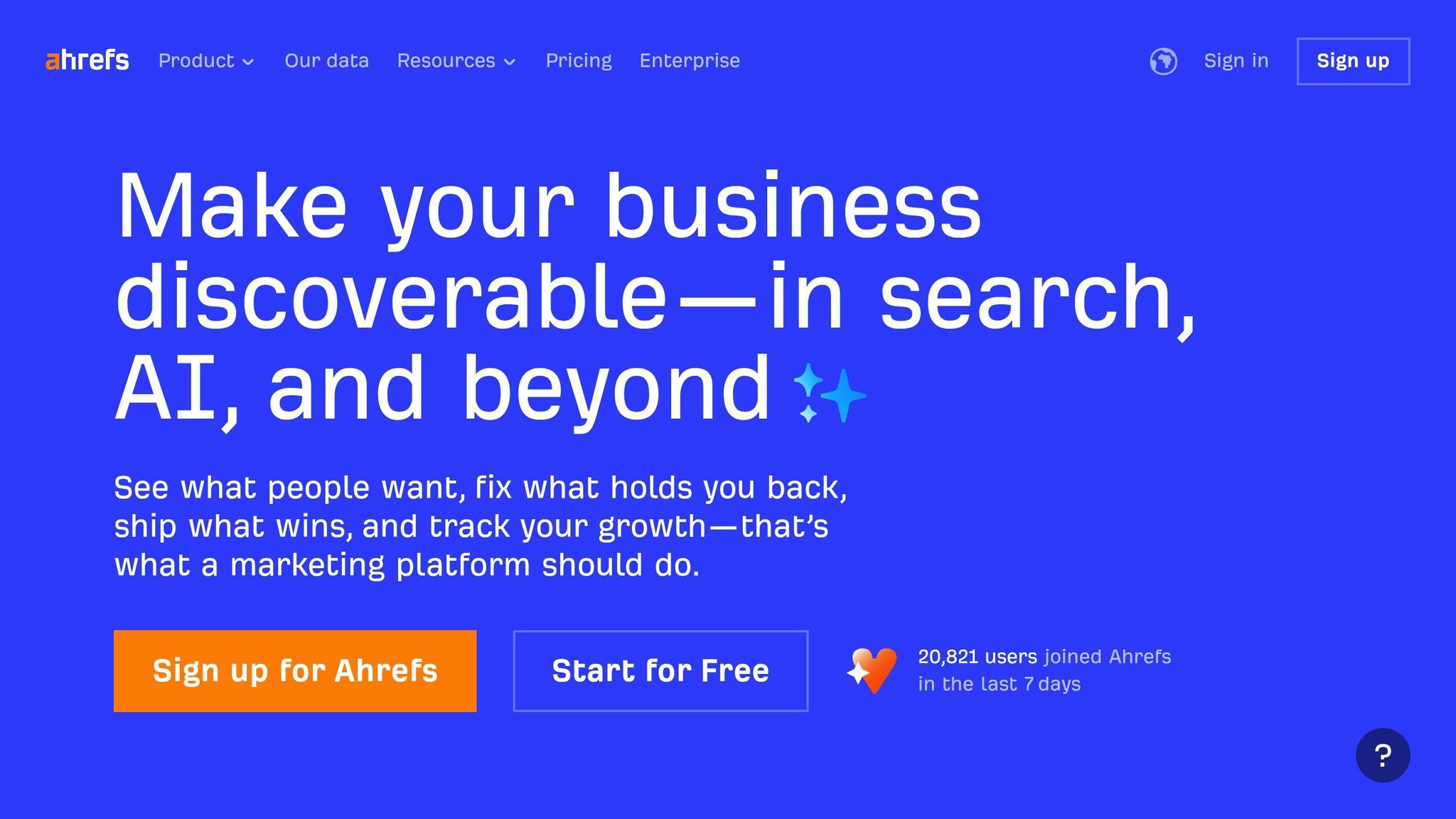
Ahrefs is a powerhouse for keyword research, backlink analysis, and technical SEO audits, making it an essential tool for shaping content strategies. While it doesn’t generate AI-driven content like Jasper or Frase, it plays a pivotal role in identifying what topics to cover and why. By laying the groundwork with actionable data, Ahrefs allows AI content tools to shine in the drafting phase. Its capabilities provide a solid foundation for competitive analysis and technical SEO insights.
SEO-Specific Capabilities
Ahrefs excels in delivering competitive insights through tools like Site Explorer and Content Gap, which help identify top-performing competitor pages and overlooked keyword opportunities. Its Site Audit feature pinpoints technical issues such as broken links, slow-loading pages, and missing meta tags. Additionally, Ahrefs provides detailed keyword metrics like search volume, difficulty, and click-through rates to help prioritize efforts. Many AI-powered SEO platforms rely on Ahrefs data for rank tracking and performance monitoring.
"Ahrefs enhances AI writing workflows by providing in-depth keyword data, which informs prompt generation and content structure." - The CMO Review
A standout feature is Ahrefs Webmaster Tools, a free resource offering technical and backlink insights. This is particularly useful for smaller websites or early-stage projects looking for basic SEO diagnostics.
Integration Options
Ahrefs seamlessly connects with tools like Google Search Console, Google Analytics 4, and Looker Studio, allowing users to track organic growth effortlessly. Its API further simplifies workflows by enabling data integration with other platforms, removing the need for manual dashboard setups.
Automation Level
While Ahrefs doesn’t automate content creation, it simplifies research and monitoring tasks. It tracks keyword rankings, backlink updates, and site health through automated alerts. Its AI Content Helper suggests article structures, making it a valuable tool during the strategy and research phases before diving into content creation with AI tools like Jasper or Frase. Ahrefs is best utilized for planning and research, leaving content execution to specialized drafting tools.
Pricing and Affordability
Ahrefs’ pricing reflects the depth and precision of its data. While it’s on the higher end compared to some alternatives, the investment is often justified by the quality of insights it provides. Plans range from the Starter tier at $29 per month for basic tasks, to Lite ($108–$129 per month for small businesses), Standard at $208 per month for mid-sized teams, and Advanced at $374 per month for agencies. Custom pricing is available for enterprise-level needs. With ratings of 4.5/5 on G2 and 4.7/5 on Capterra, users praise its competitive insights and frequent updates, though some note its steep learning curve.
"Ahrefs is known to not be the cheapest tool out there... However, I think the price is justified to some degree." - Omid G, Founder, Marketer Milk
5. Jasper
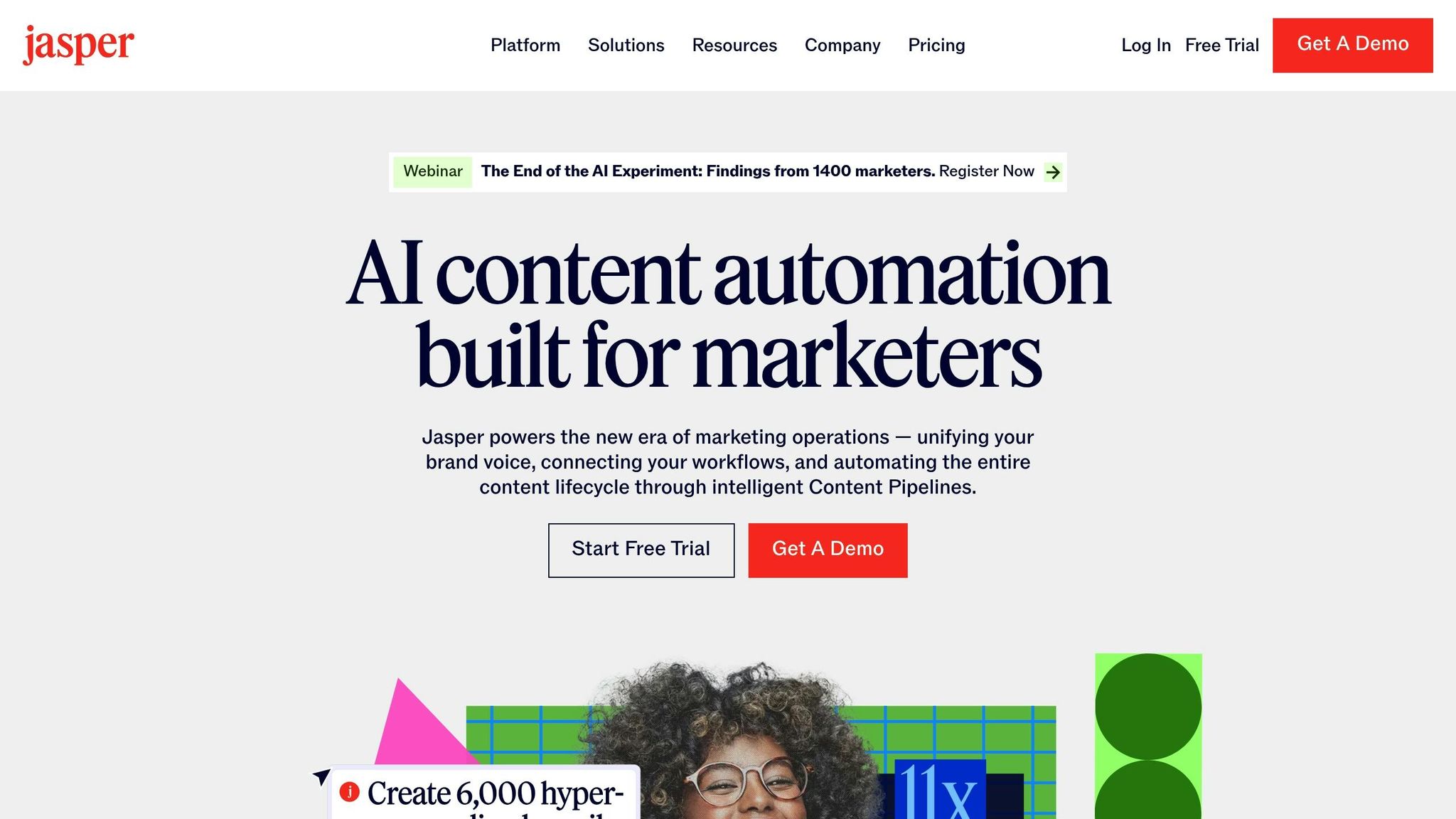
Jasper is a powerful AI tool designed to create scalable, SEO-friendly drafts. It shines during the writing phase, transforming keyword strategies into polished first drafts. This makes it an excellent choice for agencies and in-house marketing teams managing multiple content projects simultaneously.
SEO-Specific Capabilities
Jasper's SEO Mode, integrated with Surfer SEO, provides real-time feedback on crucial elements like keyword density, structure, and content gaps by analyzing top-ranking competitors on search engine results pages (SERPs). This feature streamlines the initial drafting process by generating keyword-optimized outlines and drafts, speeding up content creation significantly [13][5].
The platform also offers Jasper Chat, which automates technical SEO tasks such as generating JSON-LD schema markup and FAQ sections, reducing the need for manual coding. Additionally, the Brand IQ feature ensures every piece of content aligns with your brand's voice, style, and guidelines. For added quality control, Jasper integrates with Copyscape to scan for plagiarism. Impressively, the tool supports over 30 languages, making it versatile for global teams [13][7].
Integration Options
Jasper seamlessly integrates with platforms like Webflow, Google Docs, Google Sheets, Zapier, and Make through its API and browser extensions [13]. This flexibility allows the tool to adapt to your existing workflows, whether you're drafting in Google Docs or publishing directly to a CMS. Its Content Pipelines feature connects data sources, creative execution, and distribution channels, automating the entire content lifecycle [13][14]. Jasper acts as a production layer, bridging the gap between SEO tools like Semrush and on-brand content creation [7].
Automation Level
Jasper excels at automating the drafting and optimization stages but still requires human oversight for final edits and strategic decisions. It generates first drafts based on keyword inputs and uses Surfer SEO's scoring to suggest improvements. With its Jasper MCP feature, users can design custom workflows tailored to their specific content needs [14]. While it accelerates the content creation process, human review remains essential for maintaining editorial quality.
Pricing and Affordability
Jasper offers competitive pricing to match its robust features. The Pro Plan starts at $59 per seat per month when billed annually, or $69 per seat per month when billed monthly. This plan includes access to Canvas, core marketing tools, and Jasper IQ features. For larger teams or agencies, the Business Plan provides custom pricing and includes advanced campaign tools, a no-code AI app builder, and enterprise-level governance [7]. For startups or solo creators, the Pro Plan offers great value for high-volume content production, while larger organizations may benefit from the additional customization and automation options available in the Business Plan.
6. NeuronWriter
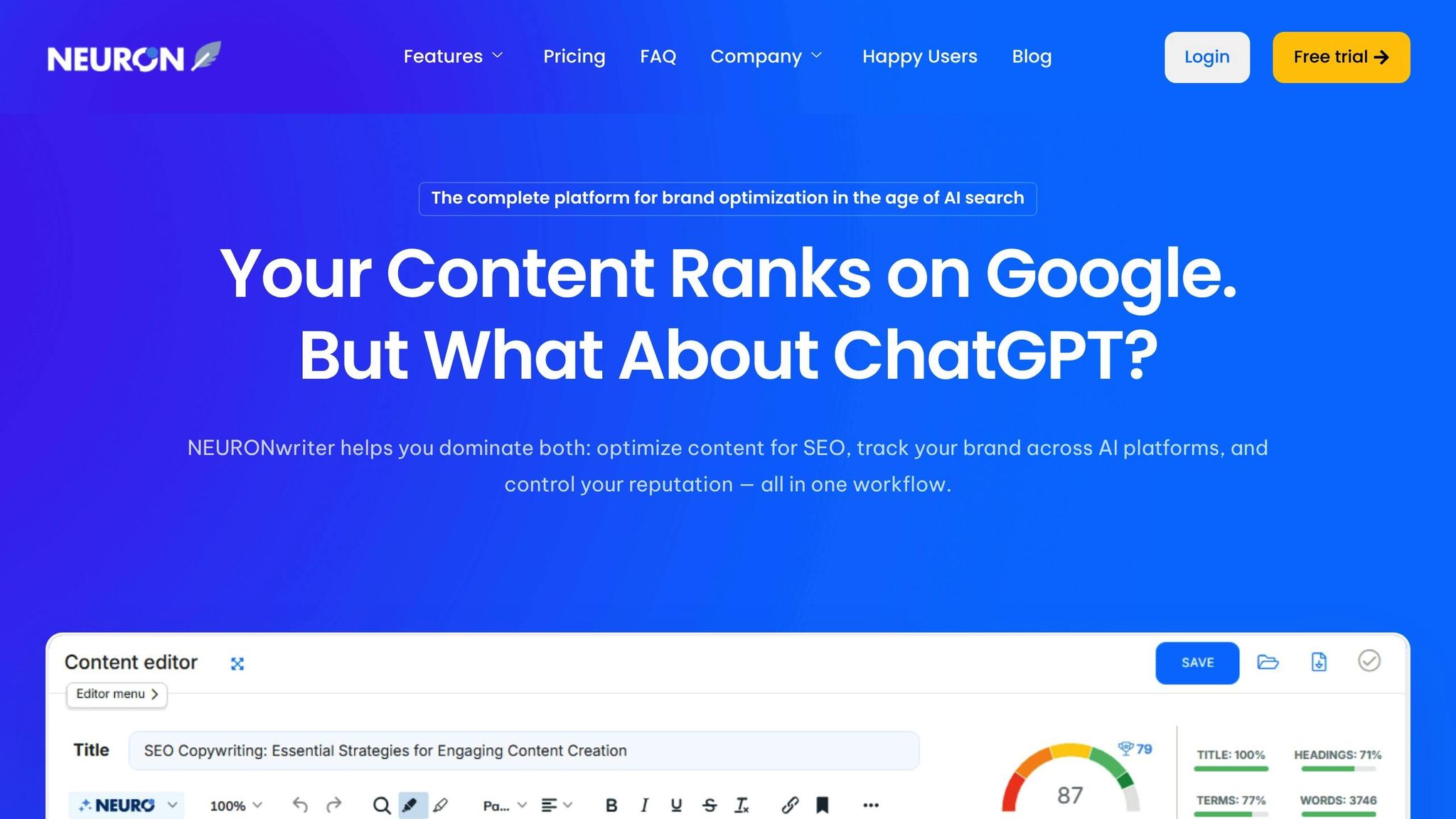
NeuronWriter stands out as an affordable option for those seeking SEO tools without breaking the bank, making it a practical choice for startups, freelancers, and solo creators. It combines AI-assisted writing with basic content analysis, helping you create AI-optimized content that ranks, using a credit-based system for tasks, which allows for flexible and scalable usage depending on your needs. The platform offers a range of plans, from the Bronze tier designed for individuals to the Diamond tier tailored for agencies, ensuring there's an option to suit different budgets and goals. This approach delivers essential SEO functionalities at a fraction of the cost of premium tools, making it a valuable addition to the growing array of AI tools for content marketing.
7. Writesonic
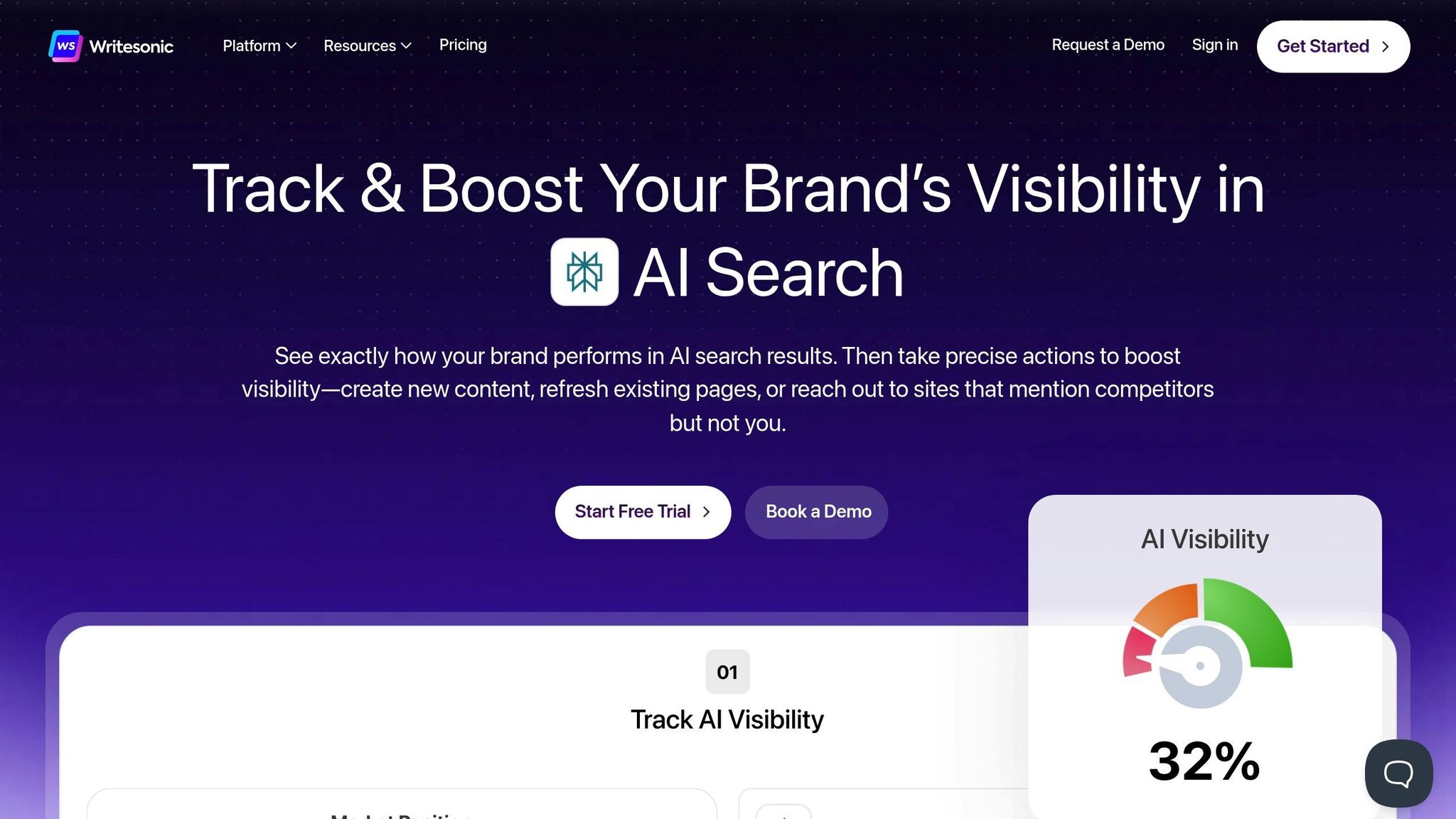
Writesonic stands out in the lineup of top SEO tools by blending AI-driven writing capabilities with features tailored for on-page optimization. Designed to help teams produce search-optimized content at scale, it offers a combination of ease of use and robust functionality. With a 4.7/5 rating on G2 from 2,029 reviews [9], it has earned recognition for its ability to streamline the content creation process while meeting SEO demands. Let’s delve into how its SEO-focused features enhance content performance.
SEO-Specific Features
Writesonic’s AI SEO Agent (Chatsonic) integrates with tools like Ahrefs, Semrush, Google Search Console, and Keywords Everywhere to provide actionable insights. It identifies gaps such as missing alt text and unused keyword opportunities. Users can select a primary keyword and up to 20 secondary keywords, prioritizing search volume and intent, which lays a strong foundation for SEO before content drafting even begins.
The platform also incorporates on-page scoring and NLP-driven keyword suggestions, ensuring your content aligns with the latest search engine algorithms. By analyzing competitor data, Writesonic refines its recommendations, giving users a competitive edge. Moreover, its Generative Engine Optimization (GEO) tracking feature monitors brand visibility and citations within AI search engines like ChatGPT and Perplexity. Automated site audits, available in varying quantities depending on your subscription, scan for technical SEO issues to keep your website in top shape.
"LLMs like ChatGPT provide generic advice that doesn't consider what's already on the page. But Chatsonic identified real areas for improvement and concrete suggestions - it felt like collaborating with another SEO expert on the team!" - Evelina Milenova, SEO and Growth Manager, Opinion Stage [12]
Integration with Third-Party Tools
Writesonic’s functionality is further enhanced through its integrations. It connects seamlessly with Google Search Console and Google Analytics (available from the Standard plan onward), enabling personalized optimization suggestions based on your site’s real-world performance data. The platform also supports one-click publishing to WordPress, simplifying the publishing process. For those working in Google Docs, Writesonic offers a dedicated add-on, bringing its SEO and AI writing tools directly into your existing workflow.
Automation Capabilities
The platform’s AI Article Writer 5.0 can produce an SEO-optimized draft in roughly 10 minutes. Unlike tools that rely solely on one-click generation, Writesonic’s "10-step AI article writer" walks users through a structured process, including source selection, outlining, and keyword integration. Additionally, it allows users to choose between GPT-4, Claude 3.5, and Gemini models, offering flexibility in writing style and tone. To further streamline the process, the brand voice customization feature lets you upload guidelines or PDFs, ensuring the generated content matches your specific tone, reducing the need for heavy edits.
Pricing Options for Different Users
Writesonic provides a range of plans to suit various needs:
Free Trial: Includes 25 one-time credits with limited features, ideal for testing the platform.
Basic Plan: Priced at $16/month (billed annually), it includes 5 articles and 3 site audits, making it a great option for solo creators or small blogs.
Standard Plan: At $79/month, this plan unlocks integrations with Google Analytics and Google Search Console, supports 30 articles per month, and allows up to 5 custom brand voices, catering to growing content teams.
Professional Plan: For $199/month, this plan offers 100 articles, API access, and the Topic Explorer, making it a strong choice for agencies managing multiple clients.
Advanced Plan: At $399/month, this plan supports up to 5 users across 4 projects, with 200 articles and 60 site audits, designed for larger teams handling high content volumes.
From individual creators to large teams, Writesonic provides flexible solutions to meet diverse content and SEO needs.
8. RankIQ
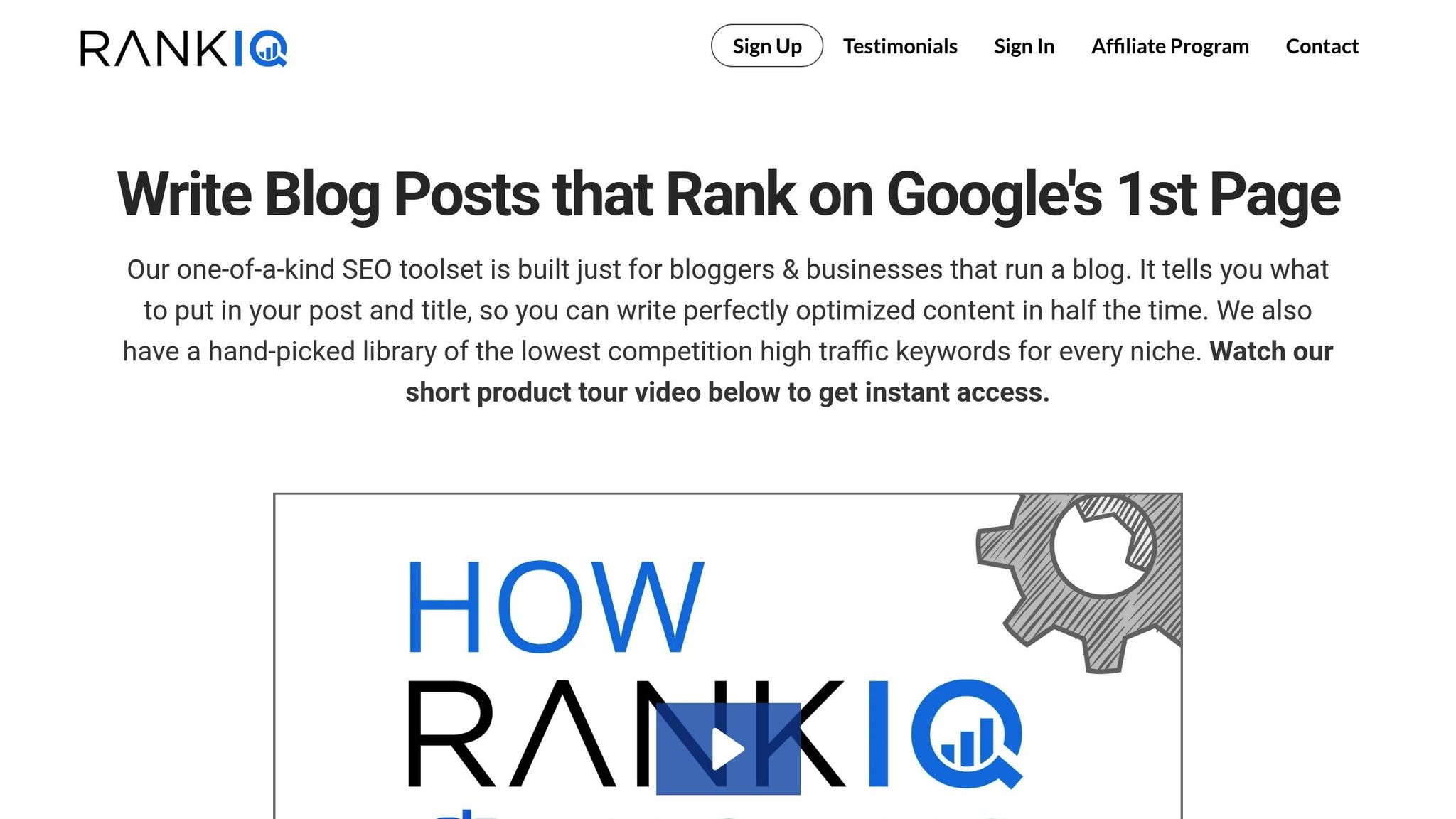
RankIQ is designed with bloggers and niche publishers in mind, offering straightforward SEO solutions without the complexity of larger, all-in-one platforms. Its focus lies in curated, low-competition keywords that help users achieve better rankings. This makes it an excellent choice for solo creators and small teams who want to stand out in competitive search spaces without wading through overwhelming data. By honing in on specific SEO needs, RankIQ simplifies the process for those with limited time or resources.
SEO-Specific Features
One of RankIQ's standout tools is its content grading system, which provides real-time feedback as you write. This grading (e.g., A++ scores) highlights how well your content aligns with ranking criteria, ensuring you're on track to meet search engine expectations. It eliminates the guesswork by guiding you to include the right terms and topics. Additionally, the platform offers an outline and report builder that generates content structures based on top-performing search results, saving hours of manual competitor analysis.
For those managing older content, RankIQ's content refresh workflow is invaluable. It helps identify which posts need updating and suggests changes to boost their rankings, making it easier to maintain traffic from existing articles.
Integration with Other Platforms
RankIQ supports integration with select third-party tools, enhancing its usability. For e-commerce merchants, it works seamlessly with Shopify, automating keyword research and technical SEO tasks. WordPress users can also utilize RankIQ, though content must be copied and pasted manually. Unlike some tools, RankIQ preserves formatting better than Microsoft Word during this process. While its integration options are less extensive than enterprise-level platforms, the curated keyword library significantly reduces the time spent on manual research by providing pre-vetted, high-traffic keywords tailored to specific niches.
Cost and Accessibility
RankIQ positions itself as a cost-effective option for bloggers and small websites, offering predictable pricing through capped plans. These plans limit the number of reports or keywords available each month, making it easier to manage costs without the hefty fees typically associated with enterprise tools. However, free trials are limited, so users should evaluate carefully before committing. While ideal for solo bloggers and small teams focused on keyword discovery and content optimization, RankIQ is not suited for large-scale enterprises requiring advanced analytics or deep topical modeling.
9. Averi
Averi goes beyond being a simple keyword tracker - it's an all-in-one content platform that handles everything from planning to publishing. This makes it an excellent choice for founders who value content marketing but don’t have the bandwidth or resources to juggle multiple tools or freelancers. Its streamlined approach pairs convenience with advanced automation features.
Automation Level
Averi automates the entire content creation process. After a quick 10-minute setup, during which it analyzes your website to understand your brand, products, and tone, the platform takes over. It continuously researches your market and organizes content ideas into categories like listicles, how-to guides, comparisons, and editorials. Each idea comes with ready-to-go titles, keywords, and overviews for your approval. Once you greenlight a topic, Averi drafts the content complete with hyperlinked sources to ensure accuracy, applies SEO and GEO optimizations to boost search rankings and AI citations, and even generates internal linking suggestions, meta descriptions, and FAQ sections. Its collaborative editing canvas allows you to tweak drafts with ease, using real-time comments or AI-assisted rewrites for specific sections.
Integration Options with Third-Party Tools
Averi doesn’t stop at content creation - it also simplifies publishing. The platform integrates directly with Webflow, Framer, and WordPress, eliminating the need for tedious copy-pasting. Every published piece is saved to your Library, which helps the system refine future drafts by learning from your past content. Over time, your brand voice becomes sharper and more consistent. Averi also tracks key metrics like impressions, clicks, and keyword rankings, but it goes a step further by offering actionable insights - suggesting updates for older content, identifying trending topics in your industry, and pinpointing high-relevance, low-competition keywords.
Pricing and Affordability
Averi is designed to keep things efficient without straining your budget. For $100/month, the Plus Plan includes self-serve onboarding - no demo calls or sales pitches required. New users also receive a personalized marketing plan tailored to their business upon signup. With its flat-rate pricing, Averi offers startups a complete content solution, cutting out the high costs of agencies and the hassle of managing freelancers.
10. Frase
Frase stands out for its speed, making it a popular choice for freelancers and small teams aiming to create optimized content efficiently. Trusted by over 50,000 content teams globally, the platform saves more than 4 hours of research time per article [1]. It’s designed to optimize content for both traditional search engines like Google and emerging AI platforms such as ChatGPT, Perplexity, Claude, and Gemini, thanks to its Generative Engine Optimization (GEO) feature [1].
SEO-Specific Capabilities
Frase goes beyond just fast content creation by offering a range of SEO-focused tools. It analyzes top-performing competitors and generates detailed outlines in mere seconds [1]. While writing, users benefit from a real-time SEO score that updates dynamically, helping match the optimization level of high-ranking pages [1]. Its "Content Opportunities" feature identifies underperforming pages using a "Fix/Boost/Fill" framework, providing actionable suggestions for improvement. Frase also uncovers real visitor questions and pinpoints content gaps, ensuring your work aligns with actual search intent [1].
"It used to take forever to put together an outline. Now, it takes half the time - or less. That was the 'wow moment' for us. It's what converted us." - Opinion Stage Content Team [1]
Automation Level
Frase’s AI writer simplifies the process by generating articles optimized for both SEO and GEO in just minutes. With an average SEO score of 94/100, it also takes care of schema markup, meta tags, and AI-friendly formatting automatically [1]. This automation significantly streamlines workflows, with most users seeing their content cited in AI search results within 2–4 weeks and traditional SEO improvements within 30–60 days [1]. The platform’s built-in editor, similar to Google Docs, supports collaborative workflows, allowing teams to share documents and templates seamlessly [1].
Pricing and Affordability
Frase combines its technical features with accessible pricing. Plans begin at $38/month [1], and new users can explore the platform through a free trial that includes three optimized articles - no credit card required [1]. This affordability makes it an excellent option for startups and small businesses. With a 4.8/5 rating on G2, users frequently praise its ability to simplify SEO for writers without requiring specialist knowledge [1].
"Before Frase, we could maybe do one post a week. Now we can confidently do three to four a week for each client - and know it's competitive." - Red 11 Media, Agency [1]
Tool Comparison Table
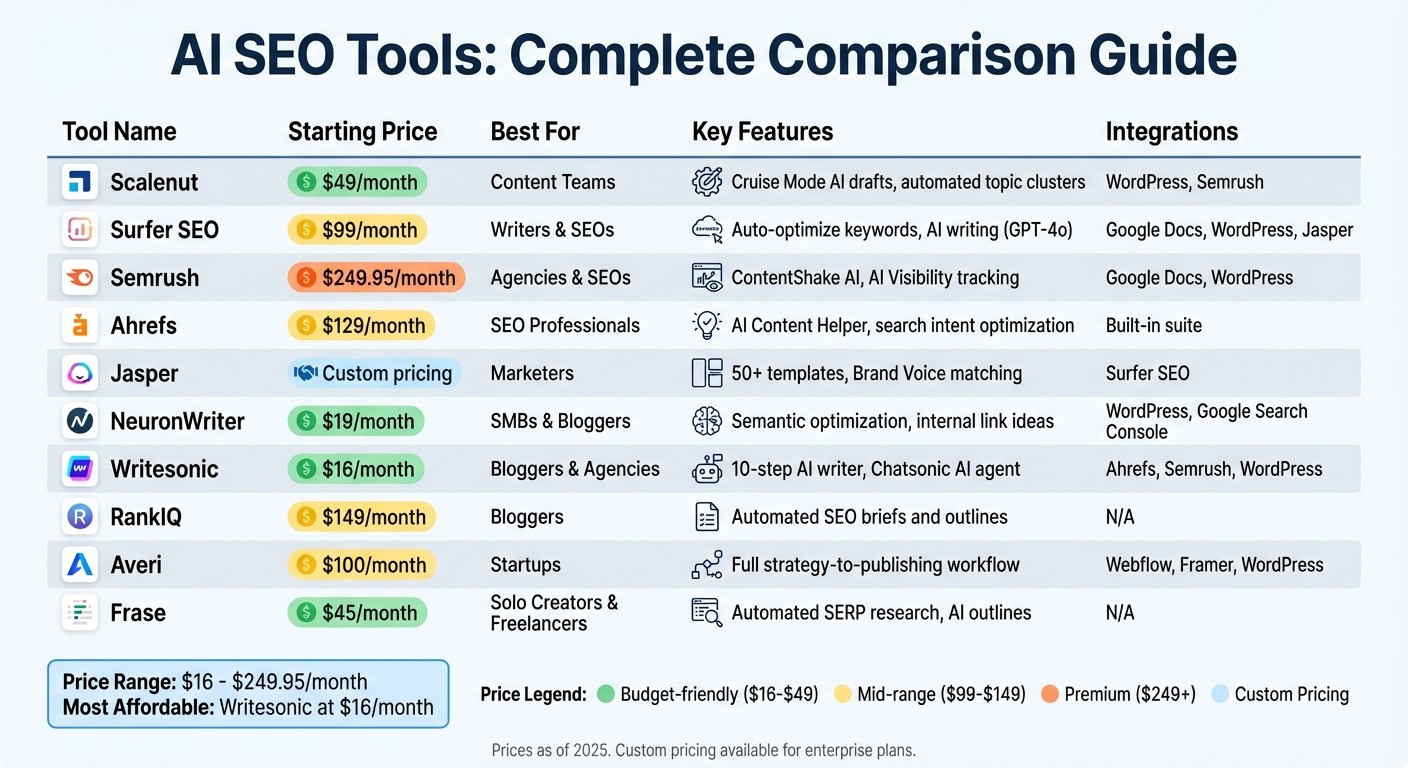
AI SEO Tools Comparison: Pricing, Features and Target Users
When deciding on the best SEO content tool, it's crucial to weigh factors like pricing, target users, automation capabilities, and integrations. Here's a breakdown of popular tools to help you make an informed choice:
Tool | Starting Price | Target Users | Key Automation Features | Notable Integrations |
|---|---|---|---|---|
Scalenut | $49/month [9] | Content Teams | "Cruise Mode" AI drafts, automated topic clusters | WordPress, Semrush |
Surfer SEO | Writers & SEOs | Auto-optimize (keyword insertion), AI writing (GPT-4o) | Google Docs, WordPress, Jasper | |
Semrush | Agencies & SEOs | ContentShake AI (article generation), AI Visibility tracking | Google Docs, WordPress | |
Ahrefs | $129/month [12] | SEO Professionals | AI Content Helper for search intent optimization | Built-in suite |
Jasper | Custom pricing | Marketers | 50+ templates for blog/ad copy, Brand Voice matching | Surfer SEO |
NeuronWriter | $19/month [9] | SMBs & Bloggers | Semantic model optimization, internal link ideas | WordPress, Google Search Console |
Writesonic | Bloggers & Agencies | 10-step AI article writer, Chatsonic AI agent | Ahrefs, Semrush, WordPress | |
RankIQ | Bloggers | Automated SEO content briefs and outlines | N/A | |
Averi | $100/month | Startups | Full strategy-to-publishing workflow, automated content queue | Webflow, Framer, WordPress |
Frase | $45/month [9] | Solo Creators & Freelancers | Automated SERP research, AI-generated outlines | N/A |
This table highlights each tool's standout features, so you can align them with your specific needs and goals.
Pricing and Additional Costs
While comparing prices, remember to consider the total cost of ownership (TCO). Some tools, like Surfer SEO and Semrush, operate on credit-based models, potentially adding $50–$200/month in extra charges for credits, onboarding, or data exports [6]. On the other hand, Averi offers a straightforward subscription model, making it a simpler choice for startups and small teams.
Automation and Workflow Efficiency
Automation is where these tools truly shine. For example:
Scalenut's "Cruise Mode" and Writesonic's 10-step AI writer streamline the entire process, from research to optimization, in a single flow [5][9][12].
Averi automates the entire content engine, handling strategy, content queue generation, publishing, and performance recommendations. Teams only need to approve the final draft.
Frase significantly cuts down research time, saving over four hours per article on average [1].
For those seeking speed and efficiency, tools like Semrush can reduce the time needed to create an 800-word article from two hours to just 20 minutes with its unified workflow [3].
AI Search Optimization
As AI-driven search engines like ChatGPT and Perplexity gain traction, it's worth noting that tools such as Frase and Semrush now optimize content specifically for LLM search platforms - not just for Google [1][2]. Recent studies reveal that 65% of companies see improved SEO results with AI tools, and platforms like Perplexity.ai match Google's top 10 domains in over 91% of cases [16][17].
Conclusion
Picking the right AI tool for SEO content creation depends heavily on your team's size, budget, and specific goals. For freelancers and solo creators, Frase (starting at $38/month) and RankIQ ($99/month) offer fast content briefs and curated low-competition keywords, making them excellent choices for smaller-scale needs [5][7]. On the other hand, agencies managing high-volume content production will find Surfer SEO ($99/month) and Scalenut's data-driven "Cruise Mode" workflows particularly useful for streamlining their efforts [5][2]. These tools highlight how varied workflows can cater to different SEO strategies.
The landscape of SEO is also shifting toward Generative Engine Optimization (GEO). Tools like Frase and Semrush's AI Visibility Toolkit ($99/month add-on) now monitor how content performs across AI-driven platforms like ChatGPT, Perplexity, and Google AI Overviews - not just in traditional search rankings [5][2][7]. With AI-powered search platforms seeing an 800% year-over-year growth as a content discovery method, optimizing for AI citations has become a necessity [1]. Among these solutions, Averi stands out, offering an all-in-one platform that streamlines every aspect of the content creation process.
For startups, Averi provides a complete strategy-to-publishing solution at $100/month. It automates key tasks like content queue generation, drafting, optimization, and publishing - all while learning and adapting to your brand's voice. This is particularly valuable for founders who need to focus on building their product rather than diving into full-time content marketing. Averi handles the heavy lifting, leaving you to review and approve the final output.
To find the best fit, consider testing two or three tools with a 14-day trial. Evaluate them based on time saved, content quality, and improvements in rankings [6]. While AI-generated content can be a powerful starting point, human oversight is essential to ensure compliance with E-E-A-T (Experience, Expertise, Authoritativeness, Trustworthiness) standards. This step is crucial to avoid producing generic content that search engines are likely to deprioritize [2][7].
FAQs
What is Generative Engine Optimization (GEO) and why does it matter for SEO?
Generative Engine Optimization (GEO) focuses on crafting and fine-tuning content to perform well in AI-generated search results, like those produced by tools such as ChatGPT.
As AI-powered search rapidly becomes a key channel for discovering information, GEO is emerging as a critical extension of traditional SEO. By adopting GEO strategies, businesses can strengthen their visibility, boost brand recognition, and secure a competitive edge in both AI-driven and conventional search landscapes.
How do Surfer SEO and Semrush work with tools like Google Docs and WordPress?
Surfer SEO works effortlessly with Google Docs and WordPress, making content creation more efficient. In Google Docs, it delivers real-time insights on keyword usage, content structure, and SEO scores right within your document. For WordPress users, Surfer allows you to push optimized content directly to the platform, where its plug-in or API ensures on-page SEO recommendations are applied as you publish.
Semrush, meanwhile, takes a different approach by offering comprehensive toolkits and visibility dashboards designed for in-depth SEO insights. While it doesn’t currently integrate directly with Google Docs or WordPress, it shines in areas like keyword research, competitor analysis, and performance tracking, making it an excellent choice for developing broader SEO strategies.
What should I look for in an AI tool for SEO content creation?
When selecting an AI tool for SEO content creation, begin by pinpointing what you need most - be it keyword research, content creation, or performance monitoring. The tool should align with your objectives and integrate smoothly into your workflow to avoid potential bottlenecks.
Here are some key aspects to keep in mind:
Quality of AI-generated content: The tool should deliver well-crafted, audience-centered content that performs well in search rankings, steering clear of keyword stuffing.
Integration options: Check for compatibility with tools like your CMS, Google Search Console, or other essential platforms to simplify your processes.
Data security and growth potential: Opt for a solution that prioritizes data protection while offering features like multi-user access and tools to maintain brand consistency as your needs expand.
The most effective tools strike a balance between automation and human oversight, helping you save time without sacrificing quality or control. Look for platforms that simplify your workflow and enhance your strategy without adding unnecessary complexity or expense.
Related Blog Posts

Zach Chmael
CMO, Averi
"We built Averi around the exact workflow we've used to scale our web traffic over 6000% in the last 6 months."
Your content should be working harder.
Averi's content engine builds Google entity authority, drives AI citations, and scales your visibility so you can get more customers.