Data Privacy & AI Regulation: What Marketers Need to Know

Averi Academy
Averi Team
8 minutes

In This Article
Marketers must navigate the complexities of data privacy laws and AI regulations to build trust and ensure compliance in their strategies.
Updated:
Trusted by 1,000+ teams
Startups use Averi to build
content engines that rank.
Data privacy laws and AI regulations are reshaping marketing. To stay compliant and maintain trust, marketers must balance AI's capabilities with legal obligations like GDPR and CCPA. Here's what you need to know:
GDPR: Requires explicit consent for data use, transparency in automated decisions, and the right for users to access or delete their data.
CCPA/CPRA: Focuses on opt-out rights, disclosing data use, and protecting sensitive information.
AI in Marketing: AI tools must comply with privacy rules, document decisions, and ensure human oversight for significant impacts.
Building Privacy-First Workflows: Minimize data collection, encrypt sensitive information, and use tools like Averi AI for built-in compliance features.
Future-Proofing: Stay updated on evolving regulations, design flexible workflows, and ensure vendor tools support privacy standards.
Marketers who prioritize privacy and responsible AI use will gain consumer trust and avoid penalties. The key is transparency, ethical data use, and preparation for changing laws.
Ethical AI in Marketing: Marketers' Guide to Privacy, Policy, and Regulatory Compliance - Ruth Carter
Key Data Privacy Law for Marketers: GDPR

The General Data Protection Regulation (GDPR) requires businesses to obtain explicit and informed consent before handling the personal data of EU residents. For marketers, this means following a set of strict guidelines to ensure compliance.
Consent must be given through a clear, affirmative action - it cannot be implied or pre-selected.
Privacy notices must outline the legal grounds for every data processing activity in straightforward language.
Individuals have the right to access, correct, or request the deletion of their personal data at any time.
These regulations emphasize consumer control and transparency, reshaping how marketers approach data-driven campaigns. Up next, we’ll look at how these GDPR principles align with the use of AI in marketing tools.
How AI Rules Change Marketing Automation and Tools
The rise of AI regulations is reshaping how marketing teams deploy automated tools and workflows. Unlike traditional marketing software that primarily processes data, AI systems go further - they make predictions, decisions, and even generate content. These advanced capabilities now fall under stricter regulatory oversight.
Data Collection and Automated Decisions
AI-powered marketing tools stand apart by their ability to analyze and act on customer data. For instance, when an email platform uses AI to determine the best time to send messages or when an advertising tool adjusts targeting automatically, these actions qualify as decisions that must comply with privacy regulations. Under GDPR, any automated decision with a significant impact on individuals requires explicit consent and human oversight. For example, an AI-driven personalization engine cannot optimize content based solely on browsing behavior unless users are clearly informed and give their consent. Additionally, data handling practices must be meticulously documented, ensuring each data point is used only for its approved purpose.
These regulatory demands are driving a push for greater transparency in data usage and decision-making processes.
Transparency and Explainability Rules
The "black box" nature of AI presents a major hurdle when it comes to compliance. If an AI tool generates an email subject line or decides which customers receive a promotion, regulators expect marketers to explain how these decisions are made. GDPR grants customers the right to request detailed information about the logic and factors behind automated decisions that impact them. To meet these transparency requirements, businesses should collaborate with vendors that can provide audit trails and thorough documentation of AI processes. Keeping detailed records of AI operations not only supports regulatory compliance but also fosters trust with customers.
GDPR vs. CCPA/CPRA: AI Tool Compliance Comparison
The differences between GDPR and CCPA/CPRA highlight the varying regulatory demands businesses must navigate when using AI tools.
Requirement | GDPR (EU) | CCPA/CPRA (California) |
|---|---|---|
AI Decision Rights | Right to human review for significant automated decisions; explicit consent required | Right to know what data is processed and opt-out rights for certain uses |
Data Minimization | Strict purpose limitation - only data necessary for the stated purpose is used | Emphasis on disclosing data collection purposes |
Consent Standards | Requires explicit, granular consent that is freely given and withdrawable | Generally follows an opt-out model; consent needed for sensitive data |
Transparency | Must explain the logic, significance, and consequences behind automated processing | Must disclose categories of data used and their business purposes |
Vendor Responsibility | Shared responsibility between businesses and AI tool providers | Primary responsibility rests with the business using the tool |
Cross-Border Data | Enforces strict restrictions on processing EU resident data outside the EU | No explicit geographic restrictions for California residents |
While GDPR emphasizes proactive consent and detailed explanations, CCPA/CPRA focuses on providing consumers with control over their data after it has been collected.
Platforms like Averi AI are adapting to these regulatory landscapes by offering built-in privacy controls that address both GDPR and CCPA/CPRA requirements. For example, Averi's Privacy Mode allows users to opt out of AI training data, ensuring GDPR-compliant data handling without the need for additional compliance workflows.
Building Privacy-First Marketing Workflows
Once you've addressed regulatory requirements, the next step is to weave privacy into every aspect of your marketing process. By designing workflows that prioritize data protection from the outset, you safeguard customer information while maintaining trust. The secret lies in embedding privacy measures at every stage, ensuring they’re not an afterthought but a core part of your strategy.
Privacy-By-Design for AI Marketing
"Privacy-by-design" isn’t just a buzzword - it’s a proactive approach to safeguarding data. Before collecting even a single customer email, this method emphasizes minimizing data collection to only what’s absolutely necessary. Instead of hoarding data you don’t need, focus on gathering only what directly supports your campaign goals.
Start by establishing transparent consent mechanisms. Customers need to know exactly how their data will be used, especially when AI tools are involved. For instance, if you’re leveraging AI for email personalization, clarify that browsing behavior might be used to train recommendation algorithms. Similarly, if a chatbot learns from user interactions, make that clear from the start.
Key steps include encrypting data both during transfer and while stored, partnering with vendors who can validate their security practices, and documenting every data touchpoint for auditing purposes. Purpose limitation controls are another essential element - they ensure data is only used for its intended purpose, keeping your workflows compliant and trustworthy.
By laying this groundwork, you can automate compliance within your marketing processes.
Using AI Tools to Manage Compliance
AI can simplify the often-complicated task of staying compliant with privacy regulations. Automated consent management tools, for example, can track which customers have agreed to specific data uses and automatically exclude those who haven’t from AI-driven campaigns. These systems keep real-time records of consent and instantly update targeting when permissions change.
Risk detection algorithms are another powerful tool, flagging data that’s processed without proper consent or originates from restricted regions. Additionally, AI platforms can generate detailed audit trails, documenting every instance of data processing and consent changes. These logs are invaluable for regulatory audits or responding to customer data requests.
For critical operations, marketers should consider AI-native platforms that prioritize data security in every aspect of marketing automation [1].
Platforms like Averi AI take this a step further by streamlining privacy management.
How Averi AI Supports Privacy-First Marketing
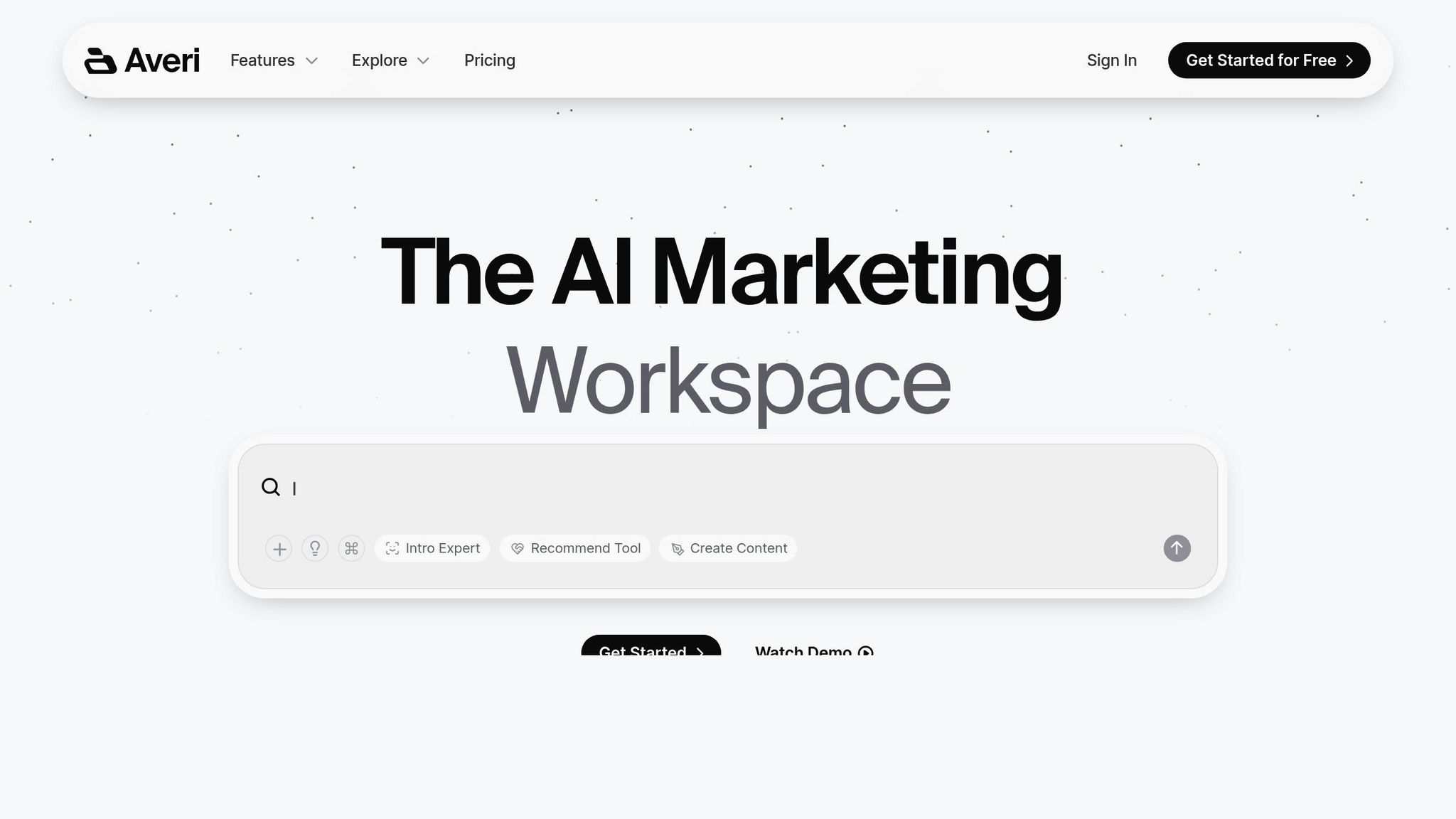
Averi AI tackles privacy challenges head-on with enterprise-grade data protection measures. It uses robust encryption and ensures strict user control over data access, export, and deletion. The platform adheres to GDPR and CCPA guidelines, guaranteeing that your data won’t be used to train other customers’ AI models.
For users on the Plus plan, Averi’s Privacy Mode offers an additional layer of protection by allowing them to opt out of contributing their data to improve Averi's AI capabilities. This feature is particularly useful for agencies managing sensitive client data or companies with strict governance policies.
The Brand Core feature centralizes sensitive data - like brand guidelines and voice - in a secure environment. When working with Averi’s network of vetted marketing experts via the Human Cortex, you have complete control over which Library folders are accessible, minimizing the risk of exposing confidential information.
Averi’s SOC 2 Type II compliance underscores its commitment to security, addressing critical criteria such as confidentiality, availability, and privacy. This ensures your marketing workflows remain secure and trustworthy.
Additionally, the .AVRI file format offers a secure way to share projects, embedding brand references and conversation history without revealing customer data or proprietary algorithms. This format ensures collaboration stays safe and controlled.
Finally, Averi’s Synapse orchestration system intelligently manages tasks while maintaining strict data privacy boundaries. By determining when human expertise is necessary, it ensures customer information is shared only when absolutely required, reinforcing the principle of data minimization throughout your marketing workflow.
Building Trust with Responsible AI and Future Planning
Trust is a delicate balance - it takes time to earn but can disappear in an instant. As AI becomes more integrated into marketing strategies, consumers are paying closer attention to how their data is being used. Brands that succeed will be the ones that embrace responsible AI practices while staying ahead of evolving regulations. Let’s dive into how responsible AI can help solidify customer trust.
Responsible AI Use in Marketing
Transparency is key to trust. When using AI in your marketing efforts, be upfront with your customers about its role, but keep it simple. For instance, if your chatbot uses AI to recommend products or your email campaigns rely on machine learning for personalization, explain how these features enhance their experience without overwhelming them with jargon.
Human oversight is critical for automated decisions, particularly in sensitive areas. This safeguards your brand from potential missteps that could damage its reputation or violate regulations.
Data minimization is another important practice. By collecting only the information you truly need, you not only improve compliance but also enhance AI performance. For example, if you’re using AI to segment email audiences, data like purchase history and engagement metrics might be sufficient - there’s no need to track every detail of browsing behavior.
Regular audits of AI outputs are essential to catch problems early. Set up processes to review AI-generated content for bias, accuracy, and alignment with your brand’s values. Keeping detailed records of how your AI systems operate - including the data they use and the decisions they influence - will help ensure regulatory compliance and make troubleshooting more efficient.
Preparing for Future Regulation Changes
The rules governing AI are evolving at a rapid pace. Global frameworks like the proposed European Union AI Act are poised to establish new standards that could influence regulations worldwide. To stay ahead, marketers need systems that can adapt to these changes without requiring major overhauls.
Keeping informed is crucial. Subscribe to updates from organizations like the FTC, follow privacy law newsletters, and join industry groups that monitor legislative developments. Staying proactive is far less costly than scrambling to retrofit systems after new regulations take effect.
Designing AI workflows in modular components can offer flexibility. If new laws require changes like additional consent mechanisms or stricter data processing rules, you can adjust individual modules without disrupting your entire system.
Vendor selection is another critical area. When evaluating AI tools, ask about their ability to handle data deletion requests, provide audit trails, and support region-specific data processing. These capabilities will become increasingly important as regulatory requirements expand.
It’s also wise to establish compliance monitoring systems. This could involve setting up alerts for key terms, subscribing to legal updates, or consulting with experts who specialize in marketing technology compliance. Given the global nature of many audiences, meeting the strictest regulatory standards - such as those in California or Europe - can save significant time and resources down the line.
Why Human-AI Collaboration Works
As regulations evolve, a balanced approach that combines human expertise with AI capabilities becomes even more essential. The most effective marketing teams don’t replace humans with AI - they use it to enhance what humans do best. This collaboration delivers better results while ensuring the oversight and creativity that pure automation often lacks.
AI is unmatched in scale and consistency, able to analyze vast amounts of customer data to uncover patterns. But humans bring the context, creativity, and emotional intelligence needed to turn those insights into strategies that truly connect with people.
Platforms like Averi AI illustrate this partnership by intelligently routing tasks to either AI or humans based on complexity. Routine tasks benefit from AI’s efficiency, while humans tackle the nuanced decisions that require strategic thinking.
This collaboration also strengthens quality control. AI can identify potential issues or inconsistencies, while human oversight ensures that the final output aligns with your brand’s voice and objectives.
Key Takeaways for Marketers
Building compliance into your marketing strategy isn’t just about meeting regulations - it’s an opportunity to enhance your approach and build stronger customer relationships. Here’s how you can align your efforts with data privacy and AI regulations effectively.
Understand the rules that apply to your market. Start by identifying the laws and regulations that impact your business based on where your customers are located. This knowledge forms the backbone of your compliance strategy, helping you make informed decisions about tools and practices while avoiding costly missteps.
Opt for AI tools designed with compliance in mind. When selecting marketing platforms, prioritize those that come equipped with features like data minimization, audit trails, and easy data deletion. These built-in safeguards make it easier to align with regulations while maintaining efficiency.
Keep your practices transparent. Customers value honesty, especially when it comes to how their data is used. Clearly explain how AI improves their experience, such as through personalized product recommendations or tailored content. Simple, customer-focused language not only meets regulatory standards but also builds trust and loyalty.
Leverage human oversight for a smarter balance. Let AI handle repetitive tasks, but keep humans at the helm for strategy, creativity, and quality assurance. Regularly auditing AI outputs ensures compliance and maintains brand consistency, giving you an edge over competitors relying solely on automation.
Plan for change from the outset. Regulations are constantly evolving, so set up systems that can adapt. Modular workflows and privacy-first designs allow for easier updates without overhauling your entire operation. Maintain detailed records of AI processes and data usage - this documentation will be a lifesaver during audits or when new rules emerge.
Marketers who succeed in this landscape won’t shy away from AI or privacy concerns. Instead, they’ll embrace responsible AI practices and privacy-first strategies as competitive advantages. By doing so, they’ll not only stay compliant but also foster deeper customer trust and drive operational success in an ever-changing regulatory environment.
FAQs
How can marketers comply with GDPR and CCPA/CPRA when using AI tools in their campaigns?
To navigate GDPR and CCPA/CPRA requirements while using AI tools in marketing, adopting a privacy-focused mindset is essential. Begin by thoroughly examining how these tools handle personal data - this includes collection, processing, and storage practices. Look for features like data anonymization, secure storage mechanisms, and built-in user consent options to ensure compliance.
Transparency is key when working with AI tools. Make it clear to users how their data is being used, and provide straightforward options for opting out or requesting data deletion. Regularly assess and update your workflows to meet regulatory requirements, such as GDPR's focus on user consent and limiting data collection, or CCPA/CPRA's provisions for data access and deletion.
Collaboration with legal or compliance experts is crucial to keep up with evolving global data privacy laws. Staying informed and proactive not only helps you avoid legal issues but also fosters trust and confidence among your audience.
What are the key best practices for ensuring privacy-by-design in AI-driven marketing strategies?
To integrate privacy-by-design into AI-driven marketing, it's essential to weave privacy principles into every part of your strategy. Begin with a data privacy impact assessment to pinpoint potential risks and ensure you're meeting regulations like GDPR and CCPA.
Stick to data minimization practices by gathering only the information absolutely necessary for your campaigns. Protect sensitive data through anonymization or encryption. Use AI tools thoughtfully, ensuring they comply with privacy guidelines and clearly explain how data is handled. Make it a habit to audit your processes regularly to uphold compliance and reinforce trust with your audience.
Focusing on privacy-first marketing not only strengthens customer trust but also helps you avoid legal pitfalls while keeping your campaigns ethical and effective.
How can marketers stay ahead of changes in AI and data privacy regulations while maintaining trust?
To keep pace with changing AI and data privacy regulations, marketers must prioritize privacy-first strategies and ensure adherence to key laws such as GDPR and CCPA. This means integrating responsible AI practices into workflows while aligning with global data protection standards.
Here are some essential actions to consider:
Stay up to date on regulatory changes to adjust strategies as needed.
Incorporate transparency into your marketing efforts to build trust with your audience.
Use AI tools designed with a strong focus on data security and ethical practices.
By staying vigilant and proactive, marketers can maintain a balance between innovation and compliance, fostering both trust and effectiveness in their campaigns.
Related Blog Posts

Zach Chmael
CMO, Averi
"We built Averi around the exact workflow we've used to scale our web traffic over 6000% in the last 6 months."
Your content should be working harder.
Averi's content engine builds Google entity authority, drives AI citations, and scales your visibility so you can get more customers.