How to Build Human-First AI Marketing That Preserves Trust

Averi Academy
Averi Team
8 minutes

In This Article
Discover how to create human-first AI marketing strategies that preserve trust and deliver personalized results for your audience.
Updated:
Trusted by 1,000+ teams
Startups use Averi to build
content engines that rank.
The integration of artificial intelligence (AI) into marketing has generated both excitement and skepticism. While the technology promises to revolutionize content creation and personalization, many fear it may erode authenticity and trust between brands and their audiences. In a recent discussion, marketing expert Mike Monu from Avenue 9 explored how founders and marketers can build human-first AI marketing systems that not only enhance efficiency but also preserve trust. This article breaks down the key insights from the conversation and offers actionable strategies for applying AI in a way that empowers human creativity and connection.
The Challenge: Navigating AI Without Losing the Human Touch
The central premise of Monu’s approach stems from a critical concern: how can businesses leverage AI without producing generic, impersonalized content that erodes trust? As he aptly put it, many current uses of AI in marketing are akin to driving a high-performance sports car in first gear - barely scratching the surface of its potential. Instead of using AI as a shortcut for bulk content creation, Monu advocates for a more strategic approach that amplifies human ideas, customizes messaging, and builds meaningful relationships with audiences.
Key Elements of a Human-First AI Marketing System
To build an AI-driven marketing framework that prioritizes trust and personalization, it’s essential to follow a structured process. Here’s how Monu recommends achieving this:
1. Start with Human-Created Context
Why it matters: AI is only as effective as the context and instructions it’s given. To get results that resonate with your audience, you need to begin with a deep understanding of your brand, your audience, and your goals.
How to do it:
Create a detailed "context file" that outlines your company’s mission, values, target audience, differentiators, and past successful campaigns.
Use interviews, marketing materials, sales call transcripts, and customer feedback to feed AI with rich, specific data.
2. Use AI as an Amplifier, Not a Creator
The strategy: Instead of relying on AI to generate content from scratch, use it to refine, reformat, and repurpose existing human-created materials.
For example, if you’ve given a compelling public speech or recorded a podcast, leverage AI tools to transcribe, summarize, and adapt that content into blogs, email campaigns, or social media posts.
Key takeaway: AI excels in remixing and scaling your ideas, but the initial creative spark should always come from a human.
3. Personalization at Scale
The power of customization: AI can enable hyper-personalized marketing campaigns that speak directly to individual audience members.
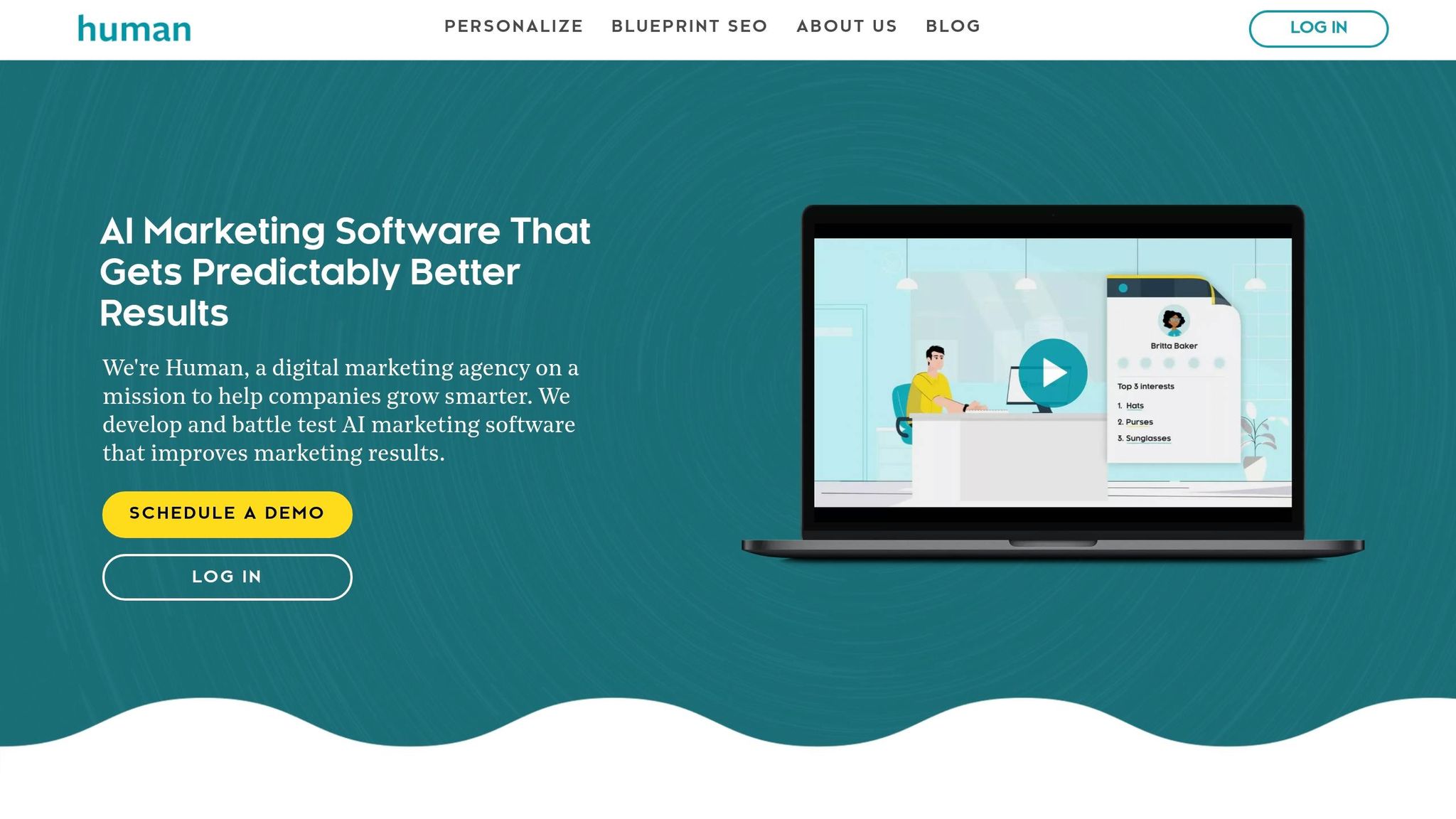
Tools like Human and CRM-integrated AI systems analyze behavioral and demographic data to tailor messages for specific people.
For example:
Dominant decision-makers might receive short, assertive emails with ROI-focused language.
Detail-oriented individuals could get data-driven reports and analyses.
Example use case: AI tools can even adjust website copy dynamically based on the visitor’s industry or preferences, creating an experience that feels bespoke.
4. Avoid Common AI Pitfalls
Formatting issues: Watch for AI quirks like inconsistent fonts, overuse of M-dashes, and repetitive phrases. Scrutinize outputs for human readability before publishing.
Generic outputs: AI often defaults to predictable, uninspired content if given vague prompts. Combat this by providing detailed instructions and reviewing results critically.
Trust-killers: Be transparent about using AI in a way that supports human creativity, rather than replacing it. For instance, avoid using AI-generated generic stock photos or overly robotic language in client interactions.
The Iron Man Analogy: Empowering Humans, Not Replacing Them
A compelling metaphor shared during the conversation compared AI usage to being Iron Man rather than the Terminator. While the Terminator represents a dystopian vision of machines replacing humans, Iron Man symbolizes the augmentation of human capabilities with technology. In marketing, this means using AI to empower professionals to deliver exceptional, personalized results that wouldn’t be feasible without its assistance.
For example:
AI tools can analyze hours of sales calls or customer interviews, surfacing key insights and opportunities.
They can save teams hours of work by automating repetitive tasks like transcription, data entry, or initial content drafts.
But the ultimate decision-making and creative oversight remain firmly in human hands, ensuring output aligns with the brand’s voice and values.
Practical Steps to Implement Human-First AI Marketing
Step 1: Upgrade Your Tools
Start by using advanced AI platforms like ChatGPT Pro that allow for custom instructions and contextual databases. These tools can store your company’s specific information for more tailored outputs.
Step 2: Develop a Robust Content Library
Aggregate all your marketing materials, customer insights, and key data into a centralized database. Use AI to organize, summarize, and retrieve information quickly.
Step 3: Leverage AI for Personalization
Integrate AI with your CRM to segment and customize email campaigns, nurture sequences, and landing pages. For example, use AI to:
Craft tailored proposals based on client-specific conversations.
Rewrite webpages dynamically based on visitor profiles.
Step 4: Iterate with Feedback
After creating AI-assisted content, review it with fresh eyes. Ask:
Does this reflect our brand voice?
Would this resonate with the target audience?
What’s missing or feels "off"?
Step 5: Focus on Relationships, Not Transactions
AI can handle the technical side of creating and delivering marketing materials, but trust is built through human-to-human connections. Ensure your marketing efforts support meaningful conversations and interactions.
The Future of AI Marketing: The Era of Personalized Experiences
Monu predicts that the future of AI marketing lies in hyper-personalization and account-based approaches. Instead of broadcasting one-size-fits-all messages, businesses will increasingly tailor their content and offers to individual preferences, behaviors, and needs. From website copy that adapts in real-time to choose-your-own-adventure-style video content, the possibilities are immense.
However, as AI capabilities grow, the need for ethical and thoughtful implementation becomes even more critical. Businesses must resist the temptation to flood the market with generic AI-generated content and instead focus on harnessing AI to deliver more human, impactful, and memorable experiences.
Key Takeaways
Start with clarity: Feed AI detailed information about your brand, audience, and goals to maximize its effectiveness.
Be human-first: Use AI to amplify and scale your creativity, not replace it. Always ensure a human touch at the beginning and end of the process.
Avoid red flags: Watch out for AI quirks like formatting errors, repetitive phrasing, and overly generic language - these can erode trust.
Personalize at scale: Leverage AI to create tailored campaigns for different audience segments based on behavioral and demographic insights.
Think like Iron Man: Use AI as a tool to augment your abilities, not as a standalone decision-maker.
Iterate and improve: Regularly review AI outputs to ensure they align with your brand voice and audience expectations.
Focus on relationships: Use AI to free up time for meaningful, human-to-human interactions with your clients.
Be forward-thinking: Prepare for a future where marketing becomes increasingly personalized, dynamic, and context-driven.
Conclusion
The integration of AI into marketing offers unprecedented opportunities for efficiency, personalization, and creativity. However, its power must be wielded thoughtfully to preserve trust and authenticity. By following the principles of human-first marketing, founders and marketing leaders can harness AI to deliver not only impactful campaigns but also genuine human connection. As Monu puts it, this is a transformative moment for businesses - one where AI is a partner, not a replacement, in the pursuit of better marketing strategies.
Source: "How to Build a Human-First AI Marketing System That Doesn’t Kill Trust with Mike Montague" - Counsel Cast Podcast, YouTube, Jan 6, 2026 - https://www.youtube.com/watch?v=yT1bBwsuclo
Related Blog Posts

Zach Chmael
CMO, Averi
"We built Averi around the exact workflow we've used to scale our web traffic over 6000% in the last 6 months."
Your content should be working harder.
Averi's content engine builds Google entity authority, drives AI citations, and scales your visibility so you can get more customers.