How to Scale Your Marketing Without Hiring a Full Team for Automotive Businesses

Averi Academy
Averi Team
8 minutes

In This Article
Learn how automotive businesses can leverage AI to scale marketing efforts efficiently without expanding their teams or budgets.
Updated:
Trusted by 1,000+ teams
Startups use Averi to build
content engines that rank.
Scaling marketing for automotive businesses no longer requires large teams or hefty budgets. AI-powered tools now allow small teams to handle tasks like content creation, lead management, and campaign optimization efficiently. By automating repetitive tasks, personalizing campaigns, and streamlining workflows, businesses can achieve better results without hiring additional staff.
Key Takeaways:
AI simplifies marketing: Automate content creation, lead nurturing, and campaign management.
Personalized campaigns: Tailor messaging to customer preferences, budgets, and regional trends.
Cost-effective solutions: Platforms like Averi AI offer all-in-one marketing tools starting at $45/month.
Save time and resources: Focus on strategy while AI handles routine tasks.
AI marketing tools, like Averi AI, allow automotive businesses to compete with larger players by automating complex tasks, improving efficiency, and delivering personalized customer experiences - all without expanding your team.
AI, Marketing & the Future of Automotive: How Your Marketing Should Evolve to Drive More Sales
Why AI Marketing Automation Matters for Automotive Businesses
The automotive industry operates within a web of complexities - managing inventory cycles, coordinating across multiple locations, and nurturing leads over extended periods. AI marketing automation steps in to simplify these challenges, all while driving better results for your business.
How Automation Improves Efficiency
AI takes the weight off small marketing teams by handling tedious, time-consuming tasks like data entry, campaign scheduling, and lead processing. Instead of getting bogged down in routine operations, your team can focus on high-level strategy and building customer relationships. By unifying data and consolidating tools into one system, AI eliminates the inefficiencies of juggling disconnected platforms.
Content creation, which often takes weeks, can now be done in seconds with AI. For automotive businesses, this means you can quickly generate location-specific promotions, model-focused materials, and seasonal campaigns without relying on outside agencies or overburdening your team.
AI also streamlines inbound lead processing. For example, when a customer inquires about a specific vehicle, AI instantly gathers data on their preferences and local inventory, then triggers a personalized follow-up. This process happens in seconds, not days.
Moreover, AI enhances account research and automates sales drafts, significantly boosting pipeline generation. This is especially critical for commercial vehicle sales or fleet management, where understanding a business's unique requirements is key. These efficiencies not only save time but also enable the development of highly targeted campaigns.
Personalizing Campaigns at Scale
Effective personalization in automotive marketing goes far beyond simply addressing a customer by name. It’s about understanding their vehicle preferences, budget, and local market trends. AI enables marketers to create highly relevant, tailored content for different customer segments, vehicle models, and regions - at scale.
The impact can be profound. Jean English, Former Chief Marketing Officer at Juniper Networks, shared how AI-powered personalization transformed their approach:
"Thanks to Copy.ai, we're generating 5x more meetings with our personalized, AI-powered GTM strategy." [1]
For automotive businesses, this level of personalization leads to better-qualified showroom visits, higher-quality leads, and stronger conversion rates. AI can automatically craft distinct messaging for various audiences, such as first-time buyers versus repeat customers, luxury shoppers versus budget-conscious families, or commercial fleet managers versus individual buyers.
Making the Most of Small Teams
Small marketing teams in the automotive sector often face stiff competition from larger dealership groups and national chains with extensive resources. AI helps level the playing field by automating complex tasks and making smart decisions, enabling smaller teams to achieve ambitious goals with fewer hands on deck.
For instance, AI can analyze sales conversations, score deals, and predict close dates, offering insights that were once only accessible to organizations with dedicated analytics teams. It also provides real-time localization for any language, making it easier and more affordable to serve diverse markets.
Platforms like Copy.ai illustrate how these efficiencies can scale. Trusted by 17 million users across leading companies [1], AI technology has proven its ability to save costs and improve operations across industries, including automotive. By automating and optimizing critical marketing functions, AI empowers businesses to do more with less.
Best AI Marketing Tools for Automotive Businesses
AI marketing platforms are reshaping how automotive businesses engage with customers and manage campaigns. These tools simplify processes like lead nurturing and multi-channel campaign execution, enabling smaller teams to compete effectively with larger, resource-heavy operations.
Averi AI: A Holistic Marketing Solution
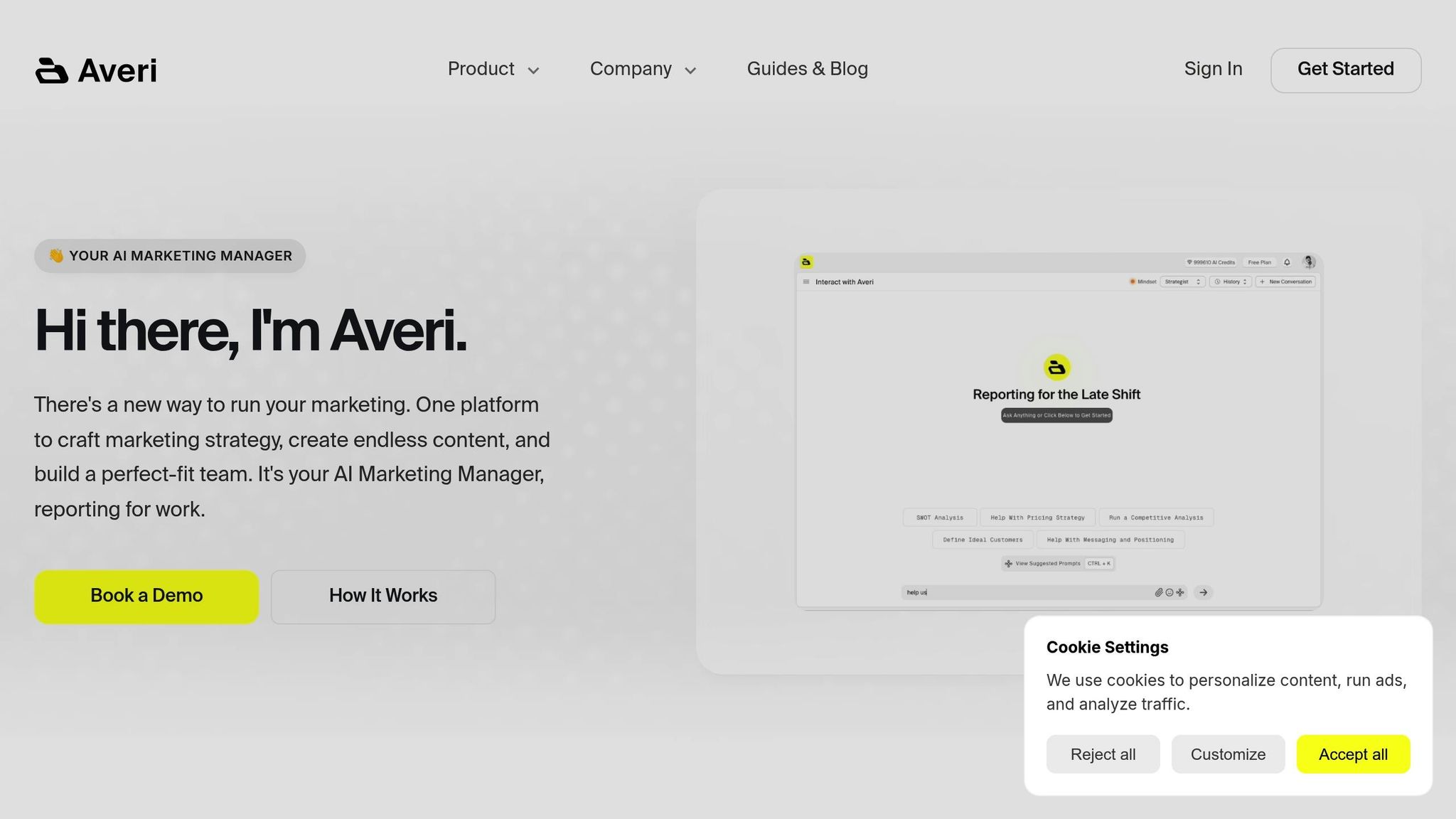
Averi AI stands out as a marketing platform that blends automation with human expertise. It’s more than just a tool - it’s a workspace designed to tackle the unique challenges faced by automotive businesses. Unlike generic AI tools, Averi’s Synapse system is tailored specifically for the automotive sector, ensuring campaigns are both relevant and impactful.
At the heart of Averi AI is AGM-2, a proprietary model fine-tuned for automotive needs. This model ensures campaigns are aligned with specific inventory and localization requirements, making it an ideal choice for dealerships or manufacturers looking to address regional markets. Its adaptive reasoning feature is particularly noteworthy, as it adjusts its processing depth based on the complexity of the task - delivering quick outputs for straightforward tasks and more nuanced strategies for intricate campaigns.
The platform’s Command Bar takes workflow optimization to the next level. For instance, after setting up a vehicle showcase campaign, it might suggest automated follow-up sequences or even recommend complementary social media content to enhance outreach.
Averi AI also integrates human expertise through its Human Cortex network, which includes 2,500 vetted specialists. This feature ensures that when tasks require a personal touch - like crafting recall messages or designing campaigns for high-end vehicles - you’re seamlessly connected with the right professional.
Security is another area where Averi excels. With enterprise-grade encryption and GDPR compliance, it ensures data privacy and protection for businesses of all sizes. For pricing, Averi offers a free plan that includes content creation and talent matching, while the Plus plan, priced at $45/month, adds advanced insights and enhanced security features.
How to Set Up Automated Automotive Marketing: Step-by-Step Guide
Automating your automotive marketing doesn't mean overhauling your entire system. Instead, it’s about creating a streamlined process that connects your existing tools, designs smarter campaigns, and ensures quality at every step.
Step 1: Connect Data Sources and Segment Audiences
Start by pulling together all your customer data - whether it's from your CRM, dealership software, service records, or website analytics - into a single hub that AI can access. This eliminates the need to jump between systems and provides a clear view of your customers' journeys. Many AI platforms integrate seamlessly with tools like inventory management systems and social media accounts, simplifying this process.
AI takes segmentation to the next level by analyzing more than just basic demographics. It groups customers based on behaviors like service history, purchase cycles, and vehicle preferences. For instance, you could create a segment for truck buyers in rural areas who made their purchase within the last two years - perfect for targeting with a heavy-duty model campaign. Once your data is centralized and your audiences are defined, you're ready to build targeted campaigns.
Step 2: Create and Personalize Automated Campaigns
AI tools can analyze customer data to draft campaigns tailored to specific audience segments. These tools generate briefs that outline strategies, messaging, and the best channels for reaching each group. For example, first-time buyers, loyal service customers, and lease-end prospects can each receive campaigns designed just for them.
Personalization happens in real time. If a customer’s lease is about to expire, they’ll automatically get details on new models and lease offers. Meanwhile, someone with a high-mileage vehicle might see promotions for maintenance packages or trade-in options. AI also enriches your leads by uncovering additional customer preferences, speeding up response times and improving engagement with more relevant offers.
Step 3: Deploy Campaigns Across Multiple Channels
Once your campaigns are ready, it’s time to launch them across various platforms. Automation ensures that the content is tailored for each channel - whether it’s email, social media, direct mail, or digital ads - while keeping the overall messaging consistent. A unified AI platform can manage all these channels from one dashboard, preventing timing conflicts or mixed signals.
For example, when introducing a new vehicle model, the system can schedule teaser posts on social media, send targeted emails, and adjust digital ad targeting - all in a synchronized manner. AI also monitors campaign performance in real time, reallocating resources to the best-performing channels for maximum impact.
Step 4: Add Human Review for Quality Control
Even the most advanced AI systems benefit from human oversight to ensure campaigns align with your brand’s voice and goals. While routine tasks like sending promotional emails can run automatically, sensitive communications - such as recall notices or crisis responses - should always go through human review.
By defining your brand’s tone and guidelines within the AI platform, you can ensure consistency across all messaging. Combining AI’s efficiency with human creativity and strategic insight creates the best results. Marketing specialists can step in for complex decisions or to refine content where needed.
"Thanks to Copy.ai, we're generating 5x more meetings with our personalized, AI-powered GTM strategy."
– Jean English, Former Chief Marketing Officer, Juniper Networks [1]
Averi AI vs. Freelancer Marketplaces vs. AI Point Tools
When it comes to automotive marketing without a full team, businesses often find themselves choosing between three distinct approaches: AI-powered platforms like Averi, freelancer marketplaces such as Fiverr and Upwork, or standalone AI tools like Jasper and Copy.ai. Each option caters to different priorities - Averi offers end-to-end campaign management with automation and expert input, freelancer marketplaces provide access to specialized talent, and AI tools excel at handling specific tasks.
Complete Comparison Table
Feature | Freelancer Marketplaces | AI Point Tools | |
|---|---|---|---|
Monthly Cost | $45/month (Plus plan) | Around $500–$2,000+ per project | $20–$100/month per tool |
How Work Gets Done | Automated task routing with expert oversight | Requires hiring and manual project management | Self-serve, with manual editing |
Quality Control | Brand voice training and expert review included | Varies by freelancer - manual vetting required | Relies on user input, no layered review |
Time to Results | Fast, thanks to Synapse orchestration | Days to weeks due to hiring and coordination | Instant output, but requires significant editing |
Data Security | Strong encryption, GDPR compliant | Varies by freelancer | Depends on platform; data may be used for training |
Integration Capability | Built-in CRM, social media, and campaign tool integrations | Often involves manual data handling | Limited to individual tool functions |
Scalability | Designed for multiple campaigns simultaneously | May require managing several freelancers | Often needs combining multiple tools for broader campaigns |
Best For | Businesses seeking comprehensive, automated marketing solutions | One-off projects or specialized tasks | Teams comfortable juggling multiple subscriptions |
Key Insights
Freelancer marketplaces might appear cost-effective at first glance, but managing multiple specialists can quickly drive up expenses. Similarly, relying on several AI tools for different functions can be time-consuming, especially when trying to merge outputs into a cohesive campaign.
Averi stands out by automating task distribution through its Synapse feature, which combines AI efficiency with expert input to deliver a fully orchestrated campaign from a single briefing. In contrast, freelancer platforms demand hands-on coordination and manual quality checks, while AI tools require users to master prompt creation and handle integration efforts themselves.
Maintaining brand voice consistency is another challenge. Freelancer marketplaces often require detailed guidelines to ensure alignment, whereas Averi's AGM-2 model and expert oversight streamline this process. While standalone AI tools can produce consistent content, they often lack the strategic depth needed for impactful automotive marketing.
Integration is a critical factor for automotive businesses. Averi simplifies this by connecting seamlessly with CRM systems, social media platforms, and campaign tools, ensuring your marketing efforts stay aligned with your latest promotions. Achieving this level of integration is far more complex with freelance arrangements or standalone tools.
Ultimately, your choice should reflect your specific needs - whether it’s seamless integration, streamlined workflows, or strategic support. These considerations will set the stage for evaluating the pros and cons of each model in greater detail.
Pros and Cons of AI Marketing Automation for Automotive Businesses
When it comes to scaling marketing efforts in the automotive sector, selecting the right automation strategy is critical. Each approach offers distinct advantages and drawbacks, so understanding these trade-offs can help businesses make informed decisions without the need to expand their teams significantly.
Pros and Cons Comparison Table
Approach | Pros | Cons |
|---|---|---|
Averi AI (Workspace) | Streamlined workflow: Synapse orchestration automates task routing and expert coordination. | Adjustment period: Teams may need time to adapt to AI-driven workflows and build trust in automated decisions. |
Freelancer Marketplaces | Niche expertise: Access professionals with proven skills in automotive marketing. | Time-intensive management: Coordinating multiple freelancers can be a significant drain on resources. |
AI Point Tools | Targeted capabilities: Tools like Jasper specialize in tasks such as ad copywriting or social media content creation. | Integration issues: Managing multiple tools often requires manual coordination and data transfers. |
Key Insights for Automotive Marketing
Consider this: unified AI platforms like Averi AI have been shown to increase meeting generation by up to five times through personalized strategies. Companies such as Lenovo have saved $16 million annually by automating content workflows that previously required weeks of effort and significant costs when handled by traditional agencies [1].
While AI tools can produce content in seconds, coordinating freelancers can delay campaigns, and managing multiple specialists often leads to escalating costs. Similarly, scalability becomes a critical factor as businesses grow. Small teams using automation can double their pipeline generation through advanced account research and automated outreach. On the other hand, relying on freelancer marketplaces or juggling several AI tools can become inefficient and cumbersome as marketing needs expand.
Quality control also varies significantly across these approaches. Averi AI ensures consistent results by embedding best practices, whereas freelancer output can be inconsistent, and AI point tools require well-crafted prompts to deliver effective results. These factors are essential when choosing the right solution for your business.
Your decision should align with your specific goals - whether that’s maintaining direct control, ensuring cost predictability, or leveraging specialized expertise - to address the unique challenges of automotive marketing.
How to Pick the Right Marketing Automation Solution
Selecting the right marketing automation platform is a critical decision for any business looking to scale effectively. The wrong choice can lead to wasted time, resources, and disjointed workflows, while the right solution can turn a small team into a highly efficient marketing force.
Key Factors to Evaluate
When assessing marketing automation platforms, it's essential to consider several factors to ensure the solution aligns with your business needs:
Team size and expertise: Smaller teams often require plug-and-play solutions that don’t demand extensive training or technical know-how. Larger teams, on the other hand, can manage more complex platforms with customizable features.
Campaign complexity: The platform should match the level of sophistication your campaigns demand. For instance, sending simple service reminders is vastly different from running multi-channel campaigns aimed at specific customer segments.
Integration capabilities: Seamless data flow between your CRM, inventory management system, and dealership software is crucial. Relying on manual data transfers can slow down your operations and divert attention from strategic tasks.
Budget predictability: The upfront cost is just one part of the equation. You also need to account for training, workflow management, and time spent on coordination when evaluating the total cost of ownership.
Quality control: Some platforms offer built-in features to maintain brand consistency and compliance, while others may require significant manual oversight.
Speed to results: In fast-paced industries like automotive, platforms that deliver actionable outputs quickly - whether for responding to inventory turnover or seasonal shifts - are invaluable.
Choosing the Right Solution for Your Needs
Different platforms cater to varying operational requirements, and understanding when to use each type can make all the difference.
1. Averi AI
If you’re looking for a platform that combines robust marketing capabilities with ease of use, Averi AI is a strong contender. It’s particularly suited for small teams (2–5 people) managing multiple locations or brands. Averi's Synapse orchestration system automates tasks and integrates human expertise where needed, ensuring professional-quality results without the hassle of juggling multiple tools. The AGM-2 model is specifically designed for automotive marketing, and at $45 per month, it offers a predictable cost structure.
2. Freelancer marketplaces
For businesses with short-term or specialized needs, freelancer platforms are a great option. They’re ideal for projects like seasonal campaigns, website redesigns, or niche marketing efforts - such as targeting luxury vehicle buyers or commercial fleet operators. However, this approach works best for teams with dedicated project management resources and a flexible budget.
3. AI point tools
Larger organizations with technical expertise may find AI point tools effective for managing individual tasks like copywriting, social media, email marketing, and analytics. These tools are best suited for teams that can handle the complexity of integrating and coordinating multiple platforms. However, managing multiple subscriptions and ensuring smooth data flow can create additional technical demands.
Streamlining Operations for Maximum Efficiency
While many businesses start with a mix of point tools and freelancers, this approach often leads to coordination challenges and operational inefficiencies. Unified platforms offer a better alternative by automating task routing, ensuring quality control, and facilitating collaboration. This allows smaller teams to focus on strategy and results rather than getting bogged down in project management. For businesses aiming to scale without adding headcount, a unified solution can be the key to achieving streamlined and impactful marketing efforts.
Conclusion: Scale Your Automotive Marketing with AI
Automotive businesses clinging to traditional marketing methods are at risk of falling behind. AI marketing automation has moved from being optional to essential for staying competitive while keeping costs in check. This shift toward automation supports every strategy we've explored.
Rather than juggling disconnected tools or relying heavily on costly freelancers, many businesses are turning to unified platforms that manage everything from content creation to lead management. This streamlined approach reduces inefficiencies and simplifies operations [1].
The secret to success lies in adopting a unified strategy instead of fragmented solutions. Effective implementations focus on practical, high-impact use cases: automating SEO and social media content, speeding up lead processing, and tailoring campaigns for various customer segments [1]. These aren't just theoretical advantages - they lead to faster responses, improved customer experiences, and increased sales without expanding your team.
Start small and build from there. Identify the repetitive task your team spends the most time on and automate it first. Whether it’s generating social media posts for new inventory, following up with service customers, or crafting personalized email campaigns for different vehicle models, take it one step at a time.
As discussed earlier, AI not only replaces manual tasks but also enhances the efficiency of your campaigns. By leveraging tools that offer precise pricing and unified workflows, you can elevate your marketing strategy. Platforms like Averi AI strike the perfect balance between power and simplicity. For just $45/month, Averi AI provides AI-driven content creation, campaign automation, and access to marketing expertise - all without the hassle of managing multiple tools or the unpredictability of freelancer expenses.
The winning formula combines smart automation with thoughtful human oversight, enabling businesses to achieve better results, faster, and with fewer resources. This approach ensures quick wins and long-term growth. The tools are ready, the costs are manageable, and your competitors are already taking advantage.
Take the leap into AI-powered marketing today. Sign up for the AI Marketing Workspace and discover how much your team can achieve.
FAQs
How can small automotive businesses use AI tools like Averi AI to compete with larger companies?
AI tools like Averi AI are giving small automotive businesses a real shot at competing with industry giants. By automating repetitive marketing tasks, fine-tuning workflows, and producing polished results without the need for extensive resources, these tools bring efficiency and precision to the table. What’s more, they pair the speed of AI with human input, ensuring campaigns stay aligned with the brand’s unique voice.
Take Averi AI, for instance - it can handle tasks like crafting personalized ad campaigns, organizing customer data, and simplifying content creation. This not only saves time but also cuts costs. With tools like this, smaller teams can shift their focus to big-picture strategies and growth opportunities, making it possible to stand toe-to-toe with larger competitors.
What challenges might automotive businesses face when implementing AI marketing automation?
Implementing AI-driven marketing automation in the automotive industry comes with its own set of hurdles. A key challenge lies in tailoring AI tools to match your brand's unique voice and specific goals. If the tools aren't customized effectively, campaigns can come across as impersonal or fail to resonate with your target audience.
Another obstacle is integrating these AI solutions with your existing systems, such as CRM platforms, ad managers, or content management systems. Smooth integration is essential to maintain efficient workflows, but achieving this often demands technical expertise or assistance from the tool provider.
Additionally, resistance from team members unfamiliar with AI technology can be a stumbling block. Offering thorough training and clearly demonstrating the benefits of automation can help bridge this gap, making the transition smoother and encouraging broader adoption within your team.
How does Averi AI protect customer data and ensure privacy on its platform?
Averi AI places a strong emphasis on keeping customer data safe and private, using reliable measures to protect sensitive information. The platform employs state-of-the-art encryption protocols to secure data both during transmission and while stored, ensuring it stays protected at every step.
In addition, Averi AI follows rigorous data privacy standards and complies with all applicable regulations to uphold customer confidence. Users also have access to customizable settings for managing data usage and retention, giving them greater control over their information. These efforts reflect a commitment to handling your data with care and security.
Related Blog Posts

Zach Chmael
CMO, Averi
"We built Averi around the exact workflow we've used to scale our web traffic over 6000% in the last 6 months."
Your content should be working harder.
Averi's content engine builds Google entity authority, drives AI citations, and scales your visibility so you can get more customers.