ChatGPT Atlas Is the New Browser. Here's What Your B2B SaaS Site Looks Like to It.
6 minutes

TL;DR
📅 Atlas is six months old and already part of a five-product class of agentic browsers reshaping how buyers research B2B SaaS — Chrome itself shipped agentic features in January 2026, making this category the new default rather than a fringe tool
📊 ChatGPT now has 900M weekly active users, and 65% of consumers say they plan to use ChatGPT-style tools instead of traditional search — even partial migration to Atlas means 100M+ buyers researching through an agentic lens
💸 Three things break for B2B SaaS funnels: traffic becomes a polluted metric, on-page agents complete tasks without clicks, and paid ad budgets get drained by AI agents clicking ads they have no intention of converting on
🛠 The agent-readiness checklist is five things: semantic completeness, fact density, structured FAQs, schema markup, source-of-truth content
📈 Your KPIs need a new layer: AI citations, share of voice in agent responses, branded query growth, and direct traffic anomaly patterns matter more than raw organic sessions
⚙️ At Averi, we built GEO-by-default into the content engine because agentic browsers don't read content the way humans do — every piece scored 80+ on the composite SEO+GEO scale before publish

Zach Chmael
CMO, Averi
"We built Averi around the exact workflow we've used to scale our web traffic over 6000% in the last 6 months."
Your content should be working harder.
Averi's content engine builds Google entity authority, drives AI citations, and scales your visibility so you can get more customers.
ChatGPT Atlas Is the New Browser. Here's What Your B2B SaaS Site Looks Like to It.
ChatGPT Atlas launched October 21, 2025, and six months in, the agency takes have settled into one of two camps: "this changes everything" or "demo-quality, ignore it."
Both are wrong for the same reason.
Atlas isn't one product — it's the loudest member of a product class that now includes Perplexity Comet (July 2025), Chrome with Gemini agent mode (rolled out in the U.S. in January 2026), Opera Neon, Brave AI, and The Browser Company's Dia.
Treating Atlas as a single threat misses the actual shift.
The actual shift is this: a meaningful slice of your B2B SaaS funnel now runs through software that reads your site, decides what's relevant, and completes tasks on the user's behalf — without the user ever scrolling past your above-the-fold.
Three specific things break when that happens.
This piece is the diagnostic, the checklist, and the answer to "what does my site look like to an agent."
What ChatGPT Atlas actually is, in April 2026
Strip away the launch-day hype and the "browser wars are back" coverage.
Here's what Atlas actually does today:
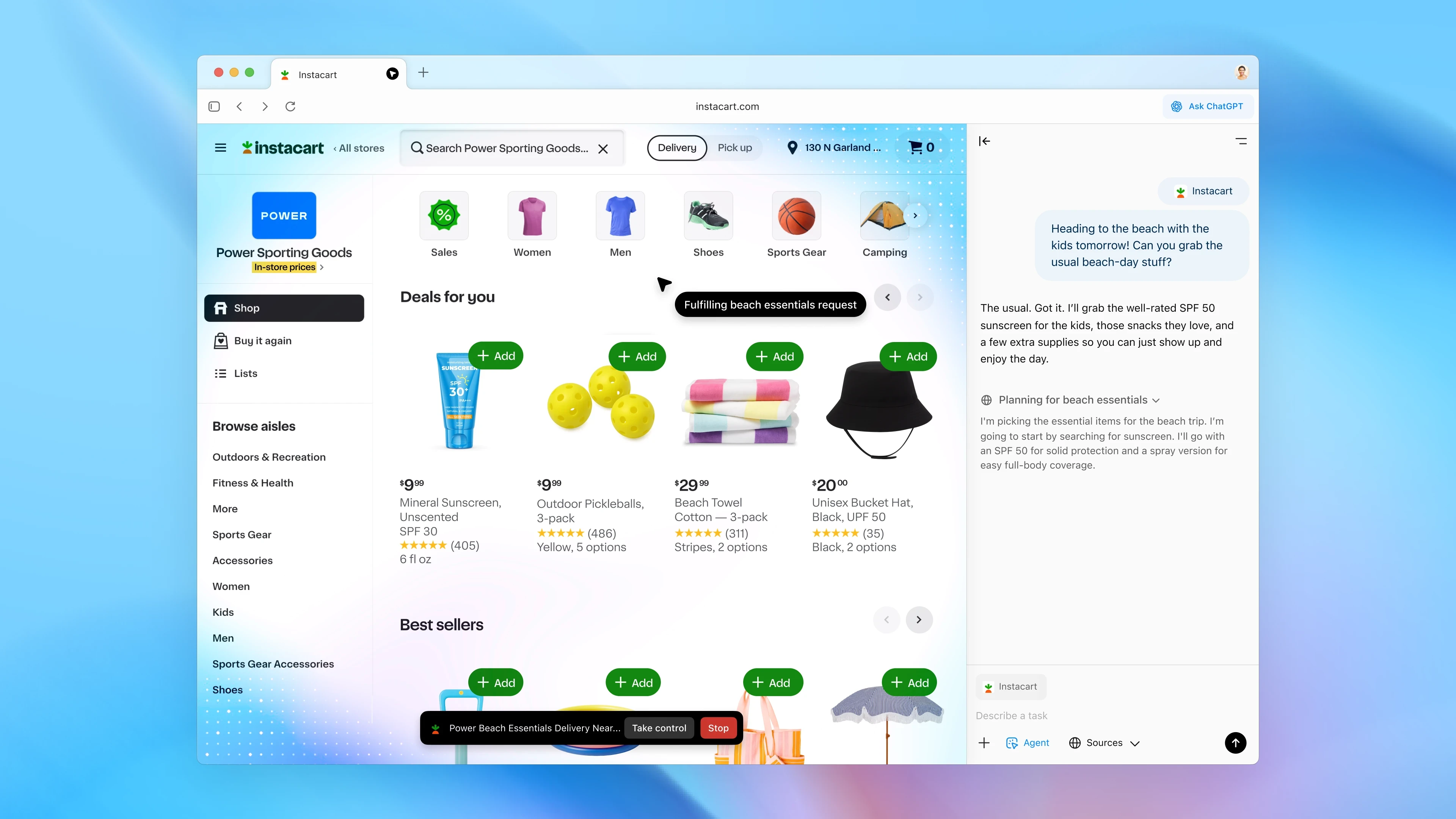
A persistent ChatGPT sidebar on every page. Highlight any text, ask a question, get an answer. The model has context on what you're looking at. This is the most-used feature, and it's the one that turns every webpage into a passive citation source rather than an active destination.
Browser Memories. Atlas remembers what you looked at across sessions, so when you come back tomorrow asking "compare those three CRM tools again," it pulls the context forward. Chrome doesn't do this natively. That's the moat OpenAI is building.
Agent Mode. Available in preview for Plus, Pro, and Business accounts. The agent can browse sites, fill forms, complete purchases, book travel — all under user supervision. Most published reviews describe Agent Mode as "demo-quality" today, but the trajectory is clear: OpenAI announced in March 2026 they're folding Atlas, Codex, and ChatGPT into a single "superapp", with agentic features as the spine.
It's still macOS-only. Six months post-launch, Atlas hasn't shipped Windows or mobile. That alone limits adoption. Chrome still holds 71.86% of global browser market share.
So why does this matter for B2B SaaS?
Because Atlas is not the only agentic browser anymore. Chrome with Gemini agent mode shipped in January 2026. Once Chrome's 71.86% becomes "Chrome + Gemini's 71.86%," the agentic browsing experience becomes the default browsing experience.
Atlas is the early signal. The agentic class as a whole is what reshapes your funnel.
For more on the underlying shift, our piece on the future of B2B SaaS marketing in the GEO era covers the broader buyer behavior changes, and our zero-click SEO guide covers what to do when traffic stops being the right metric.
The three things Atlas (and its peers) break for B2B SaaS
The hype takes are theatrical. The actual mechanics are specific. Here are the three concrete things agentic browsers do to a B2B SaaS funnel today.
1. Traffic becomes a polluted metric
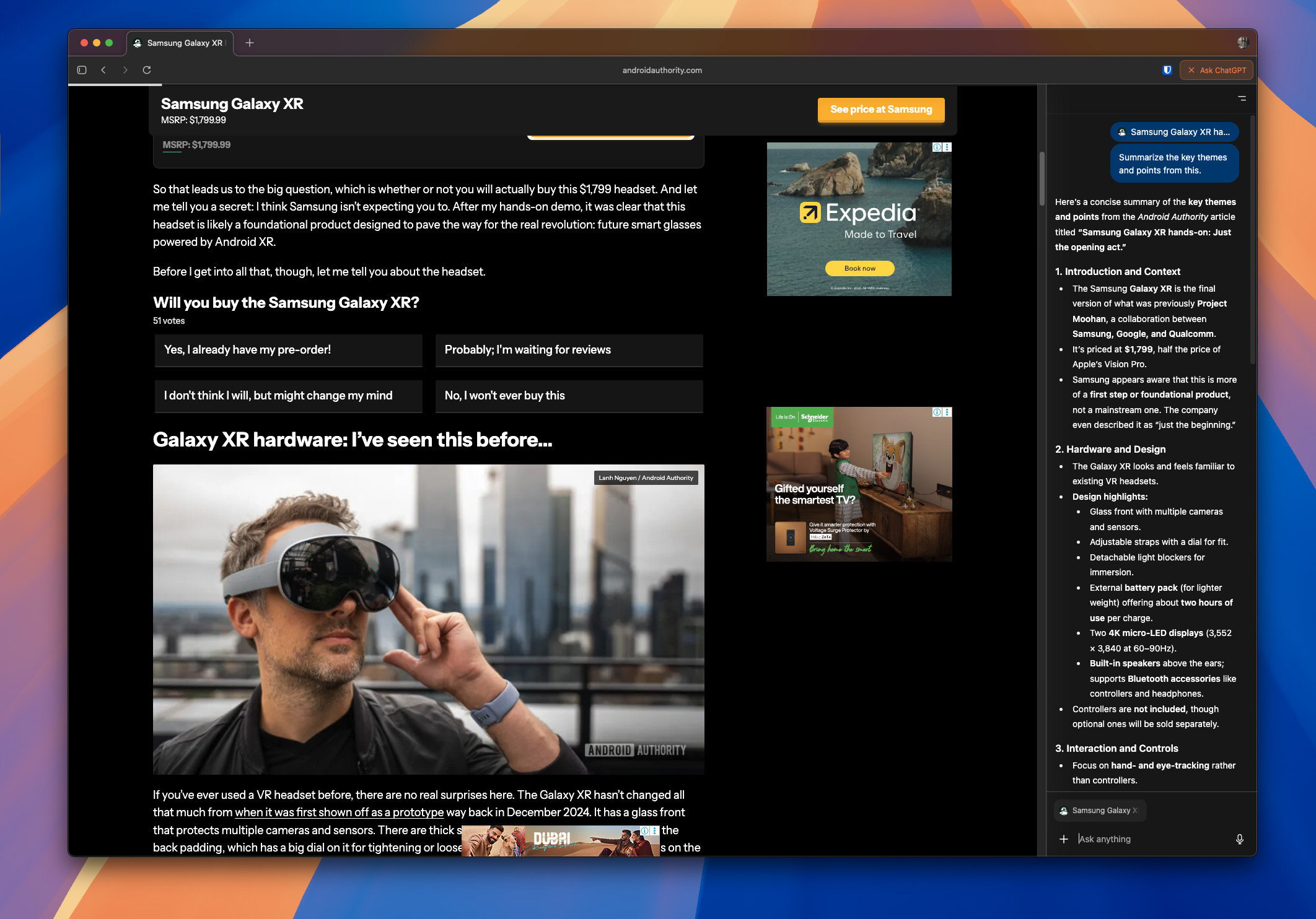
When a buyer asks ChatGPT Atlas to "find the best content marketing tools for a Series A B2B SaaS," the agent visits your site, reads your H1, scans your pricing, pulls your features, summarizes your reviews, and reports back — all in one synthesized answer. The buyer makes a decision based on that answer.
Your analytics will show one of two things:
A session that looks human — bounce rate, time on page, scroll depth all fall in normal ranges, but no signup, no demo request, no email captured
No session at all — if the agent uses cached content, search engine snippets, or third-party citations, your site is shaping the buyer's decision without the buyer ever loading your page
Either way, your traffic numbers stop telling you what they used to tell you.
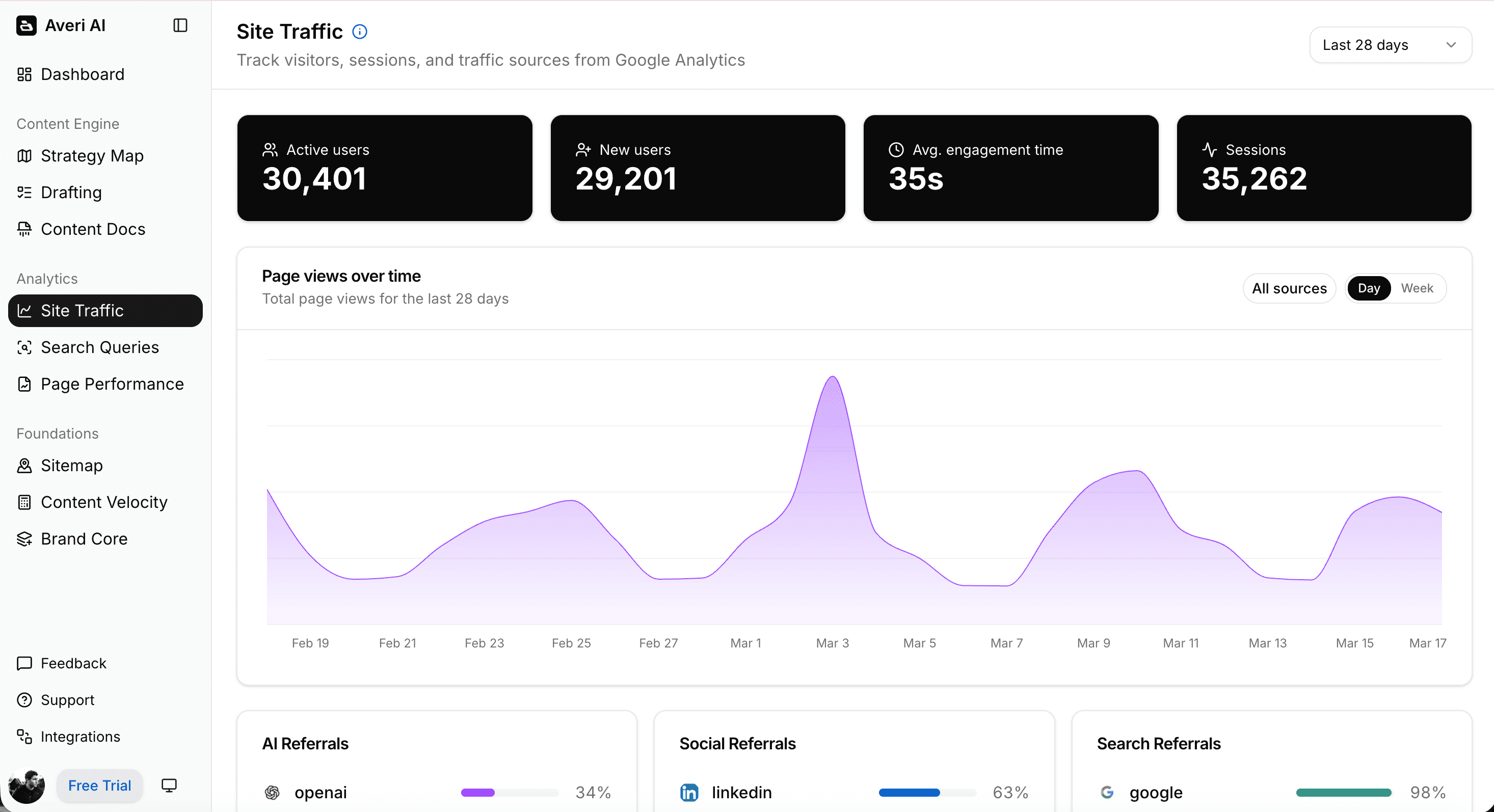
Early reports show marketers already spotting unusual traffic spikes with declining conversion rates that don't match historical patterns. The traffic isn't bad — it's polluted with agent-mediated sessions that don't convert because they were never going to convert in the human sense. The decision happened in the chat window.
2. On-page agents complete tasks without clicks
The Atlas sidebar lets a buyer compare your tool to two competitors, summarize your pricing model, extract your top three features, and pull testimonials — without ever scrolling past your hero section.
Your beautifully designed feature comparison page that converts at 4.2% gets zero credit because the buyer never reached it.
This is the "click collapse" pattern in its agentic form.
60% of traditional searches already end without a click. Agentic browsing extends that pattern from search results pages to your own website. The buyer reaches the answer they need on the page they happen to be on, then closes the tab.
For B2B SaaS specifically, this hits hardest on:
Comparison pages ("X vs Y" content) — agents synthesize across both sites instead of forcing a choice
Pricing pages — agents extract the number and the tier without scrolling past the pricing table
Feature/benefit pages — agents pull the specific feature the buyer asked about, ignoring the rest
3. Paid ad budgets get drained by AI agents
This one is the immediate financial bleed. Search Atlas founder Manick Bhan warned that Atlas could drain ad budgets by mimicking human clicks. When an Atlas agent in autonomous research mode clicks on a sponsored result, your ad gets charged.
The agent extracts the information and moves on. No conversion path. No retargeting opportunity. No buyer to nurture.
Most ad platforms ban bot traffic, but current detection methods can't reliably flag AI agents — the agents look like human users because they're acting on behalf of human users. Until Google and Meta develop new attribution standards (which they will, but slowly), B2B SaaS teams running paid acquisition through Google Ads or LinkedIn need to model that some percentage of their spend is now being absorbed by agent traffic that has zero conversion intent.
For founders running paid alongside content, this is the moment to lean harder into the organic side of the budget.
Our 2026 marketing budget reality check walks through how to reallocate when paid attribution becomes unreliable.
What your B2B SaaS site actually looks like to Atlas
Here's the part most agency takes skip. What does an agentic browser literally see when it lands on your site?
It doesn't see your hero animation. It doesn't see your pricing page's clever toggle interaction. It doesn't see the carefully art-directed product screenshots.
What it sees is the document object model rendered as text, parsed against the buyer's prompt, weighted by structural signals.
Specifically, agentic browsers pull:
The first 200–400 words after each H2 — the same extractable answer pattern AI Overviews favor
Lists, tables, and numerical data — anything structured for fast extraction
Schema.org markup — Product, Article, FAQ, HowTo, Organization, Review
The H1, meta title, and meta description — entity definition signals
Hyperlinked sources within your content — citation chains that tell the agent what you trust
Author and "Last updated" metadata — freshness and E-E-A-T signals
The hreflang and canonical tags — to deduplicate across regions and URLs
What it doesn't reliably parse:
Text inside images (without alt text)
JavaScript-rendered content that requires interaction to load
Modal-only content (FAQs hidden behind accordion clicks, for example)
Carousel content past the first slide
Anything below a "click to load more"
The implication is harrowing for B2B SaaS sites built around dynamic, interactive experiences.
The flashier the interaction, the less an agent can read. The more your competitor's site is "boring documentation in semantic HTML with schema markup," the more an agent will pull from them and ignore you.
For a deeper technical implementation walk-through, see our schema markup for AI citations guide and our building content that AI agents will recommend playbook.
The agent-readiness checklist
Five things to audit on every page that matters to your funnel:
1. Semantic completeness
Every page should fully answer the question its URL implies. A page titled "B2B SaaS Pricing Models" should explain what the models are, when each applies, who uses them, what the tradeoffs are — not just list HubSpot's three pricing tiers and call it complete. Agents extract whole answers, not partial ones. LLMs only cite 2–7 domains per response — completeness is what gets you into that tight citation window.
Audit question: If an agent had to answer the question your page targets using only your page, could it produce a complete response?
2. Fact density
Content with original statistics sees 30–40% higher visibility in AI responses. Pages with high fact density — specific numbers, dates, percentages, named sources — get cited at materially higher rates than pages with vague claims. "Our customers see significant growth" gets ignored. "Our customers averaged 47% organic traffic growth in their first 90 days" gets quoted.
Audit question: How many specific, attributable facts appear in the first 500 words of each page? Aim for at least one per 100 words, with hyperlinked sources where possible. Our piece on building citation-worthy content walks through the fact-density patterns that earn citations consistently.
3. Structured FAQs
FAQ sections get cited by AI at roughly 3x the rate of standard content sections. For agentic browsers specifically, FAQs are the easiest content to extract because the question/answer pattern matches the agent's task pattern. A 7-question FAQ with self-contained 40–60 word answers and FAQPage schema markup is one of the highest-impact additions you can make to any page. Our FAQ optimization for AI search guide covers the specific structural patterns.
Audit question: Does every key page have an FAQ section with structured schema? Are the answers self-contained (i.e., do they make sense if extracted with zero surrounding context)?
4. Schema markup
The non-negotiable types for B2B SaaS:
Article schema on every blog post and editorial
FAQPage schema on every FAQ section
Organization schema on your site root with sameAs properties pointing to your LinkedIn, X, and other brand presences
Product schema on your pricing page
Review schema on testimonials
HowTo schema on tutorials and walkthroughs
BreadcrumbList schema on every page deeper than the homepage
Schema is the API contract between your site and the agent. Without it, the agent has to guess at structure. With it, you tell the agent exactly what each block of content is. Our schema markup implementation guide breaks down the priority order and the actual JSON-LD patterns.
Audit question: Run your top 10 pages through Google's Rich Results Test. How many fail validation? How many have schema at all?
5. Source-of-truth content
For every claim about your category, have a definitive page that owns the answer. If you sell content marketing software, you should have the most thorough, most-updated, most-cited page on "what is content velocity" or "how to measure content ROI" in your category. Agents prefer fewer high-authority sources over many shallow ones. Be one of the few.
Audit question: For your top 20 category questions, is your page the obvious source of truth, or is a competitor's? If a competitor's, that's a content gap. For broader context on building topical authority for AI search, see our content clustering and pillar pages guide.
What this means for your KPIs
The metrics that worked in 2023 don't work in 2026. Here's the honest update:
Metric | What it told you in 2023 | What it tells you in 2026 |
|---|---|---|
Organic sessions | Demand for your content | Partially polluted by agent traffic |
Bounce rate | Engagement quality | Less reliable; agents often "bounce" after extracting |
Time on page | Reader interest | Less reliable; agents may stay milliseconds or fake-stay |
Branded queries (GSC) | Brand awareness | Strongest signal of AI-mediated discovery |
Direct traffic patterns | Loyalty | Now correlates with AI citations driving brand search |
AI citation frequency | (Didn't exist) | The new "share of voice" — track weekly |
Conversion rate by source | Channel performance | Still works, but segment AI-referred separately |
The two metrics that matter most going forward are AI citation frequency (how often your brand appears in agent responses for your category questions) and branded search growth (how often people search your brand name directly after AI mentions you).
Together, they capture the discovery half of the funnel that traditional analytics can't see.
For more on how to structure this measurement layer, see our piece on tracking AI citations and measuring GEO success.
What to do this quarter
If you're a founder or solo marketer running B2B SaaS marketing in Q2 2026, here's the order I'd work in:
Audit your top 20 pages against the five-point checklist. Use a spreadsheet. Mark each page green/yellow/red on semantic completeness, fact density, structured FAQ, schema, and source-of-truth status. The reds are your priority queue.
Add FAQ sections with FAQPage schema to your top 5 commercial pages. Pricing, comparison, integrations, security, and your most-trafficked feature page. This is the fastest single win.
Install Organization schema on your homepage with sameAs properties. This single schema block significantly improves how agents identify your brand entity across platforms.
Set up AI citation tracking. Manually query ChatGPT, Perplexity, and Gemini on your top 10 category questions weekly. Document who gets cited. Compare to last week. This is your new share-of-voice dashboard until automated tools catch up.
Pause incremental paid spend on top-funnel queries. The combination of agent click pollution + zero-click answers means your top-funnel paid ROI is dropping. Reallocate that budget to organic content production and citation building.
This is roughly 20 hours of work spread across two weeks. The payoff is months of compound visibility.
If you want this baked into your content workflow instead of run as a quarterly project, that's what we built Averi for.
Every piece of content created in Averi is scored on a composite SEO+GEO scale before publish — agent-readiness is the default, not an afterthought.
Start a free 14-day trial and run your existing site through the Strategy Map to see where the agent-readiness gaps are.
FAQs
What is ChatGPT Atlas and how does it affect SEO for B2B SaaS?
ChatGPT Atlas is OpenAI's agentic web browser, launched October 21, 2025, with a built-in ChatGPT sidebar, Browser Memories, and Agent Mode. For B2B SaaS, Atlas changes SEO by extracting answers from your site without driving clicks, polluting traffic metrics with agent-mediated sessions, and shifting the buyer decision into the chat window before the buyer ever reaches your conversion path.
How is ChatGPT Atlas different from regular ChatGPT?
Regular ChatGPT is a chat interface; ChatGPT Atlas is a full Chromium-based browser with ChatGPT embedded as a persistent sidebar on every page, plus Browser Memories that retain context across sessions and Agent Mode that can complete tasks like research and shopping autonomously. Atlas runs websites through ChatGPT's reasoning layer in real time rather than requiring a separate visit to chatgpt.com.
Will agentic browsers like Atlas replace Google search for B2B buyers?
Not entirely, but a meaningful share is shifting. Chrome still holds 71.86% browser market share and Atlas remains macOS-only, but 65% of consumers say they plan to use ChatGPT-style tools for research, and Chrome itself shipped agentic features in January 2026 — meaning the agentic browsing experience is becoming the default rather than the exception within the next 12 months.
How do I optimize my B2B SaaS site for agentic browsers?
Five priorities: semantic completeness (each page fully answers its target question), fact density (one specific, attributable claim per 100 words), structured FAQs with FAQPage schema, full schema markup (Article, Organization, Product, Review, HowTo, BreadcrumbList), and source-of-truth content (be the definitive page on each category question). Together these signals make your content extractable and citable by every major agentic browser.
Are AI agents draining my paid ad budget?
Likely yes, at low percentages today and growing. Agentic browsers in research mode click sponsored results to extract information, generating ad spend without conversion intent. Most ad platforms can't yet distinguish AI agent clicks from human clicks. B2B SaaS teams running paid acquisition should expect attribution noise to increase through 2026 and reallocate budget toward organic content and citation building where the signal is cleaner.
What metrics should I track instead of organic traffic?
Track AI citation frequency (how often your brand appears in ChatGPT, Perplexity, and Gemini responses for your category questions) and branded search growth (Google Search Console queries containing your brand name). Together these two metrics capture the discovery layer that traditional analytics misses. Continue tracking organic sessions and conversions, but segment AI-referred traffic separately when you can identify it.
How does Averi help with agent-readiness for B2B SaaS sites?
Averi's content engine bakes GEO optimization into every piece of content created on the platform. The Content Scoring System evaluates each draft on a composite SEO + GEO scale of 0–100 before publish, surfacing missing answer capsules, weak fact density, and missing FAQ structure. Strategy Map identifies category questions where you're not the source of truth, and CMS publishing ships content with proper schema by default to Webflow, Framer, or WordPress.
Related Resources
Agentic Browsers & AI Search
The Future of B2B SaaS Marketing: GEO, AI Search, and LLM Optimization
ChatGPT vs Perplexity vs Google AI Mode: B2B SaaS Citation Benchmarks
Technical Implementation
Zero-Click Strategy
Founder & Budget Context
Audit your site against the agent-readiness checklist with Averi's Content Scoring System. Connect your site, and every page gets a composite SEO + GEO score showing exactly where the gaps are. Start your free 14-day trial →