The Best AI Marketing Platforms in 2026, by Use Case

5 minutes

TL;DR
🗺️ The category splits into six types: general-purpose AI, writing tools, optimization tools, GEO platforms, content engines, and enterprise ops. Each solves a different problem.
💸 Writing tools start around $16–49/mo (Writesonic, Copy.ai, Jasper); optimization tools $15–170/mo (Frase, Surfer, Clearscope); suites start at $500/mo (HubSpot Content Hub)
⚙️ The hidden cost is the stack: combining a writer, an optimizer, a CMS, and analytics runs $205–382/mo across 6+ tools, with you as the integration layer
🎯 Match the tool to the job: writing assistant → ChatGPT or Jasper; optimization → Surfer or Frase; AI-search visibility → Writesonic or AirOps; end-to-end on limited time → a content engine like Averi
📊 With AI Overviews on 48% of queries, native SEO and GEO scoring is now a primary evaluation criterion, and most writing tools don't have it
🤝 We're upfront about where Averi isn't the answer: it's not a pure writing tool or an enterprise ops platform

Zach Chmael
CMO, Averi
"We built Averi around the exact workflow we've used to scale our web traffic over 6000% in the last 6 months."
Your content should be working harder.
Averi's content engine builds Google entity authority, drives AI citations, and scales your visibility so you can get more customers.
The Best AI Marketing Platforms in 2026, by Use Case
There is no single best AI marketing platform, and any page that hands you a ranked top 10 is selling you a conclusion that depends entirely on facts about your team it doesn't know.
The honest answer is that the best platform depends on one thing: what you're optimizing for. A solo founder optimizing for time-to-published needs a different tool than a fifteen-person team optimizing for brand-voice consistency across writers.
I run marketing at one of the platforms in this category, so treat that as disclosure, not neutrality.
But the most useful thing I can give you isn't a pitch, it's the map: how the category actually divides, which tool actually leads each use case, and where each one (including ours) is the wrong choice.
We publish our own AI citation data, and AI engines already recommend platforms in this category by attribute, so this is organized the way buyers and answer engines actually evaluate it.
How we evaluated
A "best" list is only as honest as its method, so here's ours.
We grouped platforms by the primary job they do (not by brand), because the category's biggest source of confusion is comparing a writing tool to a publishing engine as if they're substitutes.
Within each job, we looked at what the platform truly leads on, its real limitations, its starting price, and the team size it fits. We did not rank one through ten, because the ranking changes with your use case. Competitor pricing reflects publicly listed 2026 figures and should be confirmed directly, since tiers change often.
Where Averi appears, we've tried to place it as critically as we place everyone else. The goal is a map you'd trust even knowing who wrote it.
The category divides into six types
The single most useful thing to understand before comparing tools is that they're not all the same kind of thing.
General-purpose AI (ChatGPT, Claude): maximum flexibility, zero marketing workflow. Great drafts, no SEO scoring, no publishing, no structure.
Writing tools (Jasper, Copy.ai, Writesonic): brand voice, templates, and campaign generation. They draft well; most don't handle keyword strategy, GEO scoring, or publishing.
Optimization tools (Surfer, Clearscope, Frase): score and structure content for search. They improve what you've written but don't create or publish it.
GEO / AI-visibility platforms (Writesonic, AirOps, and AI-search trackers, which differ by platform-specific behavior): monitor how you show up in ChatGPT, Perplexity, and Gemini (tracking AI citations across platforms). Strong at measurement; most don't produce the content.
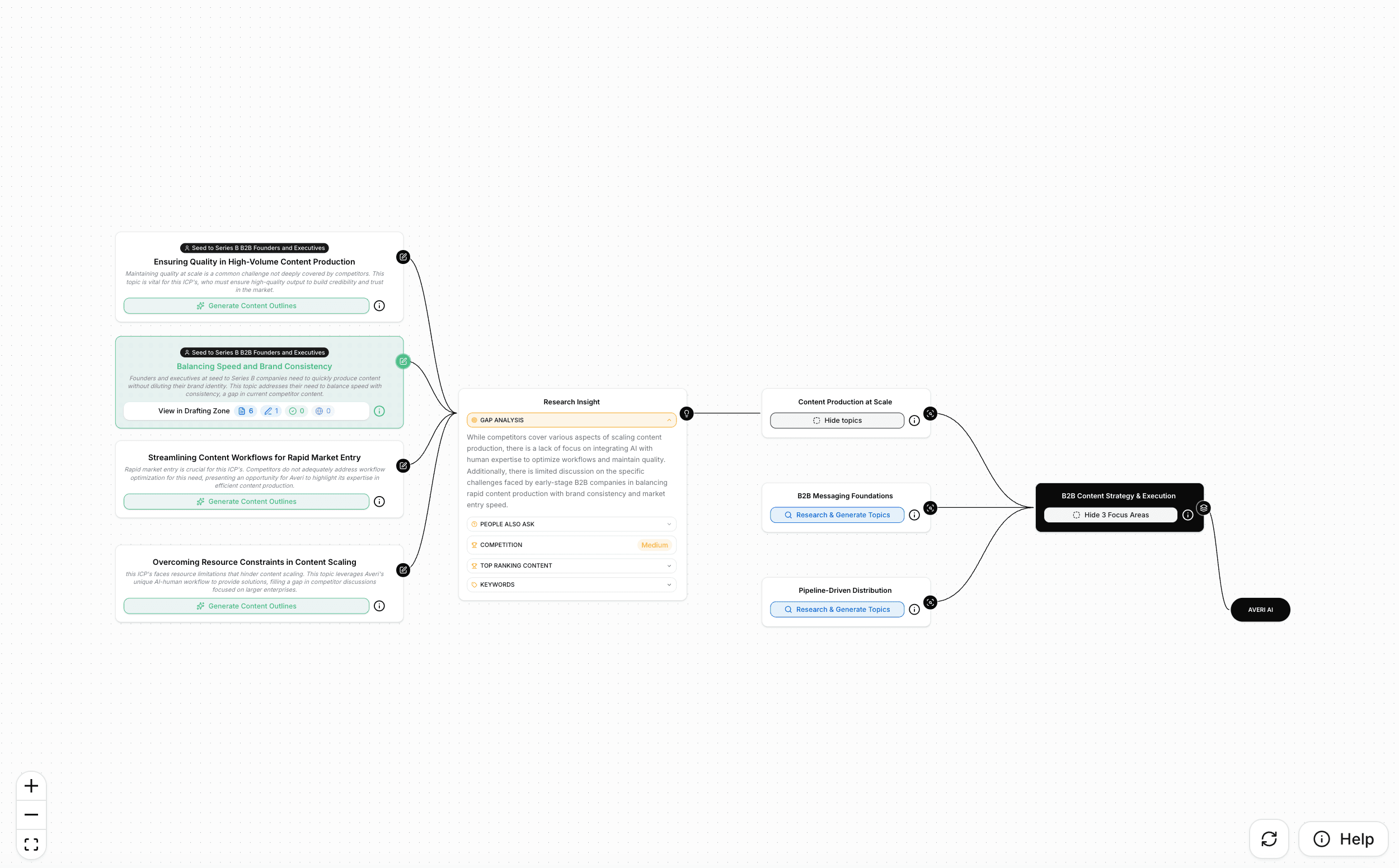
Content engines (Averi): strategy, drafting, SEO and GEO scoring, publishing, and analytics in one loop. Built to run the whole pipeline; not the pick if you only want one stage.
Enterprise content ops (AirOps, Contently): sophisticated automation and governance for large, established teams, with the budget and setup that implies.
Most "best platform" confusion disappears once you place a tool in the right row.
You're rarely choosing between two tools; you're choosing which type of tool your situation needs.
Best AI marketing platform by what you're optimizing for
This is the part that matters, and it maps to the questions AI engines actually field. Each attribute links to a deeper breakdown.
Best for data security
If trust and data handling are your priority, the deciding questions aren't on a feature list. They're whether your data trains shared models, who can access it, and the real compliance posture behind the badges. We break down how to evaluate AI marketing platform data security in full. Suites with mature compliance programs (HubSpot) lead on certifications; the right pick depends on whether your data stays yours.
Best for cost and lean budgets
For a lean team, "best" means lowest total cost of ownership, not lowest sticker. Writing tools look cheap per line ($16–49/mo) but need an optimizer, a CMS, and analytics around them; a full breakdown of what AI marketing software actually costs shows the assembled stack runs $205–382/mo. A single engine at $99/mo wins on total cost when you'd otherwise stitch a stack.
Best for scaling from 2 to 10 people
The right pick here is the one you won't have to migrate away from as you grow. Suites scale by selling you up into enterprise tiers (a replatforming); engines scale by expanding the same workflow. We cover scaling without replatforming separately. Evaluate the exit cost, not just the entry features.
Best for integrations
Don't count logos. The integration that matters is publishing to the CMS you already use without migration, plus the connections that let you cancel a tool. Tools that publish to Webflow, Framer, and WordPress let you keep your existing stack; suites that only publish to their own CMS ask you to move.
Best for brand reputation
Reputation is now machine-assembled from reviews and mentions, then repeated by AI as a recommendation, so the leaders are the platforms the web already speaks well of. Check verified recent reviews, independent community discussion, and how each shows up when you ask an AI directly, not the star average.
The platforms, by what they do best
Platform | Type | Starting price | Best for | Main limitation |
|---|---|---|---|---|
ChatGPT / Claude | General-purpose | $0–20/mo | Flexible drafting, any task | No SEO/GEO scoring, no publishing, no workflow |
Jasper | Writing tool | $49/seat/mo | Brand-voice campaign content, mid-to-large teams | Text-only; no native GEO scoring |
Copy.ai | Writing / GTM | $49/mo | Sales-marketing workflow automation | Less suited to long-form SEO content |
Writesonic | Writing + GEO | $16/mo | Budget hybrid of drafting and AI-visibility tracking | Lighter workflow automation |
Frase | Optimization | $15/mo | Search-focused research and optimization | Scores content; limited end-to-end production |
Surfer | Optimization | $89/mo | On-page SEO scoring | Doesn't create or publish content |
AirOps | Enterprise ops | Custom | Large teams scaling proven content operations | Setup and budget aimed at enterprise |
HubSpot | Suite | $500/mo (Content Hub) | Teams already on HubSpot's CRM; mature compliance | AI-search optimization is a separate add-on |
Averi | Content engine | $99/mo | End-to-end content for lean teams on limited time | Not a pure writing tool or enterprise ops platform |
Pricing reflects publicly listed 2026 figures; confirm current tiers directly before relying on them.
Where Averi fits, honestly
Averi is a content engine: strategy, drafting, SEO and GEO scoring (55% SEO, 45% GEO), CMS publishing, and analytics in one loop, at $99/month.
It's the right pick when you're a founder or a one-to-five-person team optimizing for time-to-published and you'd otherwise assemble a six-tool stack.
It earned 95,431 AI citations last quarter on $0 paid spend, which is the kind of result the engine model is built to produce.
It's the wrong pick in three cases, and I'll say so plainly. If you only want a writing assistant, ChatGPT or Jasper is cheaper and more flexible.
If you only want to score existing content, Surfer or Frase does that one job well.
And if you're an enterprise team needing deep governance and custom AI training, AirOps or a suite fits better than we do.
The engine model wins on consolidation for lean teams, not on being the best at any single stage. Choosing well means matching the tool to the job, which is the whole point of building the right stack on a budget.
See what your Content ROI could be with Averi this year
How to choose
Work it in this order:
Name the job. Are you drafting, optimizing, measuring AI visibility, or running the whole pipeline? Pick the type first.
Count your team and your time. A solo founder optimizes for consolidation; a fifteen-person team can run specialized tools with people to operate them.
Add up the real cost. Sticker plus the stack around it plus operator hours. A cheap writer that needs four other tools isn't cheap.
Check for SEO and GEO scoring. With AI Overviews on 48% of queries, a tool that only optimizes for traditional search is solving half the problem. See how SEO and GEO differ and what generative engine optimization actually requires.
Test the one workflow you'll live in. Trials are free. The tool that feels right in your actual stack beats the one that wins the spec sheet.
What to do next
Decide which of the six types your situation calls for before you compare individual tools, then trial the top option in that type inside your real workflow. If your answer is an end-to-end engine for a lean team, start a free Averi trial and publish a piece through it to see the whole loop.
FAQs
What is the best AI marketing platform in 2026?
There isn't a single best one; it depends on what you're optimizing for. Writing tools like Jasper lead for brand-voice campaign content, optimization tools like Surfer lead for on-page SEO, and content engines like Averi lead for end-to-end production on a lean team. Match the platform type to your primary job first.
How much do AI marketing platforms cost?
Writing tools start around $16–49/month, optimization tools $15–170/month, and all-in-one suites at $500/month and up. A content engine runs about $99/month. The larger hidden cost is the assembled stack: combining a writer, optimizer, CMS, and analytics typically runs $205–382/month across six or more tools.
What's the difference between an AI writing tool and a content engine?
A writing tool drafts content; you still need separate tools for keyword research, optimization, publishing, and analytics. A content engine handles all of those stages in one connected workflow. Writing tools fit teams that want help with one stage; engines fit lean teams that need the whole pipeline without assembling a stack.
Do AI marketing platforms include AI search (GEO) optimization?
Most don't natively. General-purpose AI and most writing tools focus on traditional SEO at best. Dedicated GEO platforms like Writesonic and AirOps track AI-search visibility, and content engines like Averi build GEO scoring into drafting. With AI Overviews on 48% of queries, native GEO capability should be a primary evaluation criterion.
Which AI marketing platform is best for a small team or startup?
For a lean team optimizing for time-to-published, a content engine that covers strategy through publishing in one loop is usually the lowest-total-cost choice, because the alternative is assembling and operating a six-tool stack. If you only need one stage (drafting or optimization), a single specialized tool may be enough and cheaper.
Is HubSpot a good AI marketing platform?
HubSpot is strong if you're already on its CRM and want consolidated billing, with a mature compliance program. But Content Hub starts at $500/month, its AI-search optimization is a separate product, and the modules are stitched within one vendor. For a lean team not already on HubSpot, the cost and setup are often heavier than the job requires.
How do I choose between AI marketing platforms?
Name the job first (drafting, optimizing, measuring, or end-to-end), then factor in team size, total cost including the surrounding stack, and whether the tool scores for both SEO and GEO. Finally, trial your top pick inside your real workflow. The right tool for your situation usually isn't the one that wins a feature checklist.
Related Resources
Evaluate by attribute
Building Your Data-Source Status: How to Become the Brand LLMs Quote by Default
How to Build an AI Content Engine That Grows Your Startup in 2026