You Don't Need a Content Engineer. You Need a Content Engine.

6 minutes

TL;DR
💰 Jasper and AirOps are pushing "content engineer" as the must-hire role of 2026, with salaries ranging from $91K to $177K+. They're solving for enterprise content operations at enterprise budgets.
🏗️ The content engineering mindset is correct: content marketing is a systems problem requiring strategy, automation, optimization, and analytics. Where we disagree is whether startups need a person or a system to solve it.
📊 Averi grew organic traffic 6,000% in 10 months with no content engineer hire. The system did the engineering: Brand Core, Strategy Map, Content Queue, Content Scoring (55% SEO + 45% GEO), CMS publishing, and analytics. One founder operated it.
🔢 The math: a content engineer ($120K/year = $10K/month) produces the strategic + executional output that a content engine ($99/month) handles at 1% of the cost — for teams publishing under 20 pieces per month.
⚡ This isn't anti-human. Humans provide the judgment, voice, and perspective that make content worth reading. But the system around the human — research, optimization, scoring, publishing, analytics — should be automated, not staffed.

Zach Chmael
CMO, Averi
"We built Averi around the exact workflow we've used to scale our web traffic over 6000% in the last 6 months."
Your content should be working harder.
Averi's content engine builds Google entity authority, drives AI citations, and scales your visibility so you can get more customers.
You Don't Need a Content Engineer — You Need a Content Engine
Jasper's CMO published "The Rise of the Content Engineer" arguing it's the most important new marketing role.
AirOps built a $2,000 training cohort, a job board, and a certification program around it.
Both companies are hiring content engineers themselves at $91K–$177K salary ranges.
They're not wrong about the diagnosis.
Content marketing in 2026 is a systems problem, not a writing problem.
The volume, velocity, and dual-surface optimization (Google + AI search) that modern content requires can't be solved by a person writing blog posts one at a time.
But their prescription — hire a specialized human — is the enterprise answer. It's the answer for companies with $500K+ marketing budgets, established brand guidelines, and enough content volume to justify a full-time systems thinker.
For seed-to-Series-A startups with 0-2 marketing people and $3K–$10K monthly marketing budgets? Hiring a $120K content engineer is like buying a Ferrari to learn to drive.
You don't need a content engineer. You need a content engine.
We grew Averi's organic traffic 6,000% in 10 months.
We reached 2.85 million Google impressions. No content engineer. No agency. No team of writers.
One marketer, one content engine, three hours a week.
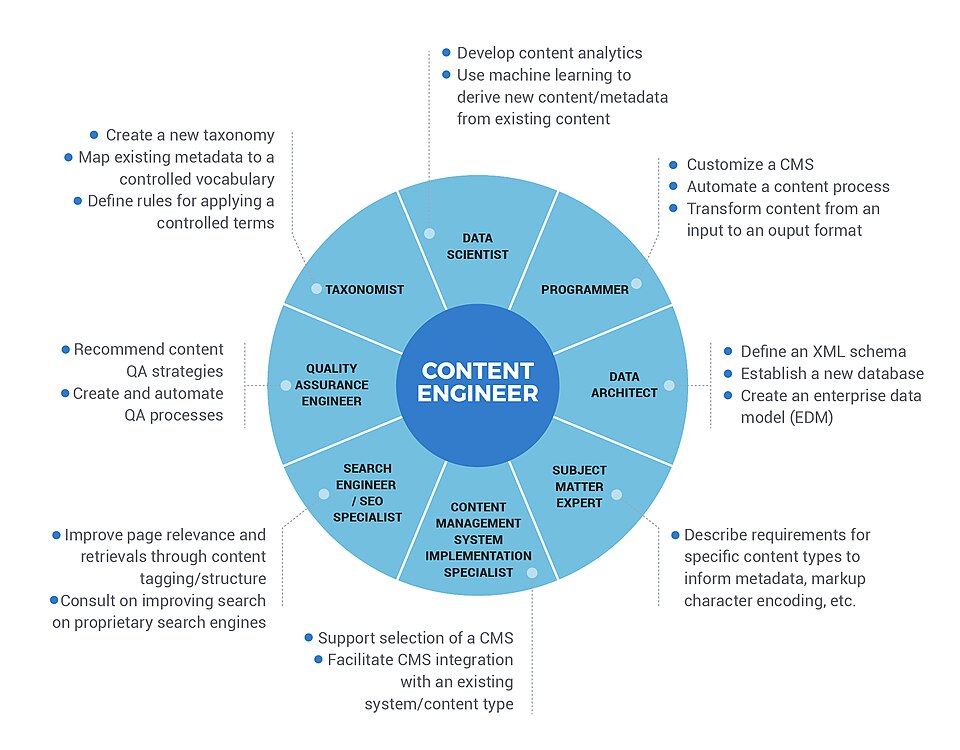
Where Jasper and AirOps Are Right
Credit where it's earned. Both companies identified something real.
Jasper's Loreal Lynch framed it well: "A content marketer produces pieces. A content engineer produces systems that produce pieces at scale."
She compared the role to what DevOps was for software engineering — a new discipline that makes scale, governance, and speed possible.
AirOps took it further.
Their Head of Marketing declared that "content engineering becomes the most important role inside the modern B2B marketing org" in 2026.
They launched a cohort training program, built a job board, and their January cohort reportedly generated over $1 million in pipeline from companies sending teams to get trained. Companies like Wiz, Vanta, Netflix, and Ramp.
The underlying insight is correct on three counts:
1. Content marketing is a systems problem. The old model — marketer opens Google Doc, writes post, publishes, hopes it works — doesn't scale. You need keyword research feeding into topic selection feeding into optimized drafts feeding into scored content feeding into CMS publishing feeding into performance analytics feeding back into research. That's a system, not a to-do list.
2. SEO + GEO requires structural engineering. AI Overviews appear on 48% of queries. Content now needs to rank on Google and get cited by ChatGPT, Perplexity, and Google AI Mode. That means answer capsules, FAQ sections, entity definitions, structured data, factual density — structural requirements that most content marketers weren't trained for.
3. Tool proliferation creates chaos. The average marketing team runs 12-20 tools with 49% utilization. Somebody needs to make the stack work together. In enterprise, that's a person. In a startup, it should be a platform.
All three observations are accurate. The question is what follows from them.

Where the "Hire a Content Engineer" Argument Breaks Down
Jasper and AirOps are enterprise companies selling to enterprise buyers.
Jasper's Business plan requires a sales conversation. AirOps' paid tiers start at $199/month and scale into custom enterprise pricing. Their answer — hire a skilled human to operate sophisticated tools — makes sense for their customers.
It doesn't make sense for the 70,000+ SaaS startups at seed and Series A stage.
The math doesn't work at seed stage
Content Engineer (Hire) | Content Engine (Platform) | |
|---|---|---|
Annual cost | $120K–$177K salary + benefits | $1,188 ($99/mo × 12) |
Ramp time | 2-3 months to learn brand, build systems | 1 afternoon (Brand Core auto-ingests website) |
Output during ramp | Limited while building workflows | Publishing within week 1 |
Risk if it doesn't work | Recruiting costs, severance, 6 months lost | Cancel anytime, $99 lost |
Dependency | Person quits = system dies | System persists regardless of who operates it |
Scale ceiling | Limited by one person's bandwidth | Limited by content quality, not production capacity |
A seed-stage startup with 14 months of runway and a $3K–$10K monthly marketing budget can't spend $10K/month on a single role.
Even a fractional content engineer at 10 hours/week costs $3K–$5K/month.
That's 30–50% of the entire marketing budget on one person before a single ad runs, event is attended, or tool is purchased.
The talent pool doesn't exist yet
AirOps calls content engineering "the most important new role in modern marketing."
They're probably right.
But when a role is brand new, the talent pool is razor thin. Their cohort graduates — impressive as the results are — number in the hundreds, not tens of thousands.
If you're competing with Wiz, Vanta, Netflix, and Ramp for the same small pool of trained content engineers, you're in a bidding war you can't win at seed stage.
The enterprise companies will always outbid you.
The person creates a single point of failure
We talk to founders constantly who built their content operation around one skilled marketer.
The marketer leaves.
The system — which lived in that person's head, their Notion workspace, their browser bookmarks, their institutional knowledge — leaves with them.
A content engine doesn't quit.
The Brand Core, the Strategy Map, the content library, the performance data — it all persists. A new operator can pick up where the last one left off because the system, not the person, holds the context.
See how much you could save by utilizing a Content Engine
What a Content Engine Does That a Content Engineer Does
Here's the honest mapping. Every capability Jasper and AirOps attribute to the content engineer role has a system equivalent.
Content Engineer Capability | Content Engine Equivalent |
|---|---|
Systematizes brand voice across all content | Brand Core ingests your website, learns voice, applies to every piece |
Builds content strategy from market research | Strategy Map analyzes competitors, keywords, and gaps to generate strategy |
Manages editorial calendar and queue | Content Queue auto-generates topic recommendations from strategy |
Optimizes content for SEO + GEO | Content Scoring evaluates at 55% SEO + 45% GEO before publishing |
Publishes to CMS with proper formatting | Direct publishing to WordPress, Webflow, Framer |
Tracks performance and recommends next actions | Analytics integration with GSC + GA4, performance-driven recommendations |
Builds cross-channel content from one piece | LinkedIn Post Generation extracts insights for distribution |
Creates feedback loop: performance → strategy | Published content feeds library, improving future outputs |
The content engineer does all of this through expertise, tools, and manual coordination.
The content engine does it through an integrated workflow.
The output is comparable for teams publishing 4-12 pieces per month.
The cost difference is 100x.
When You Actually Need a Content Engineer (Not an Engine)
I'm not arguing that content engineers are useless. I'm arguing that startups don't need them yet.
Hire a content engineer when:
You're publishing 20+ pieces per month across multiple formats and channels
You have enterprise compliance requirements (regulated industries, legal review, multi-market localization)
Your content operations involve 5+ specialized tools that need custom integration
Your team has 3+ content producers who need coordination and quality governance
Your marketing budget exceeds $50K/month and you need a systems architect to optimize spend
Use a content engine when:
You're a 0-2 person marketing team
Your budget is under $10K/month for total marketing spend
You need to go from zero content to consistent publishing quickly
You don't have an existing content strategy (the engine helps you build one)
Your priority is proving content marketing works before investing in headcount
For most seed-to-Series-A startups, the sequence is: engine first, engineer later.
Build the system. Prove it drives pipeline. Then hire the person who takes it from good to great.
Don't hire the $120K person to build a system you could have bought for $99/month.
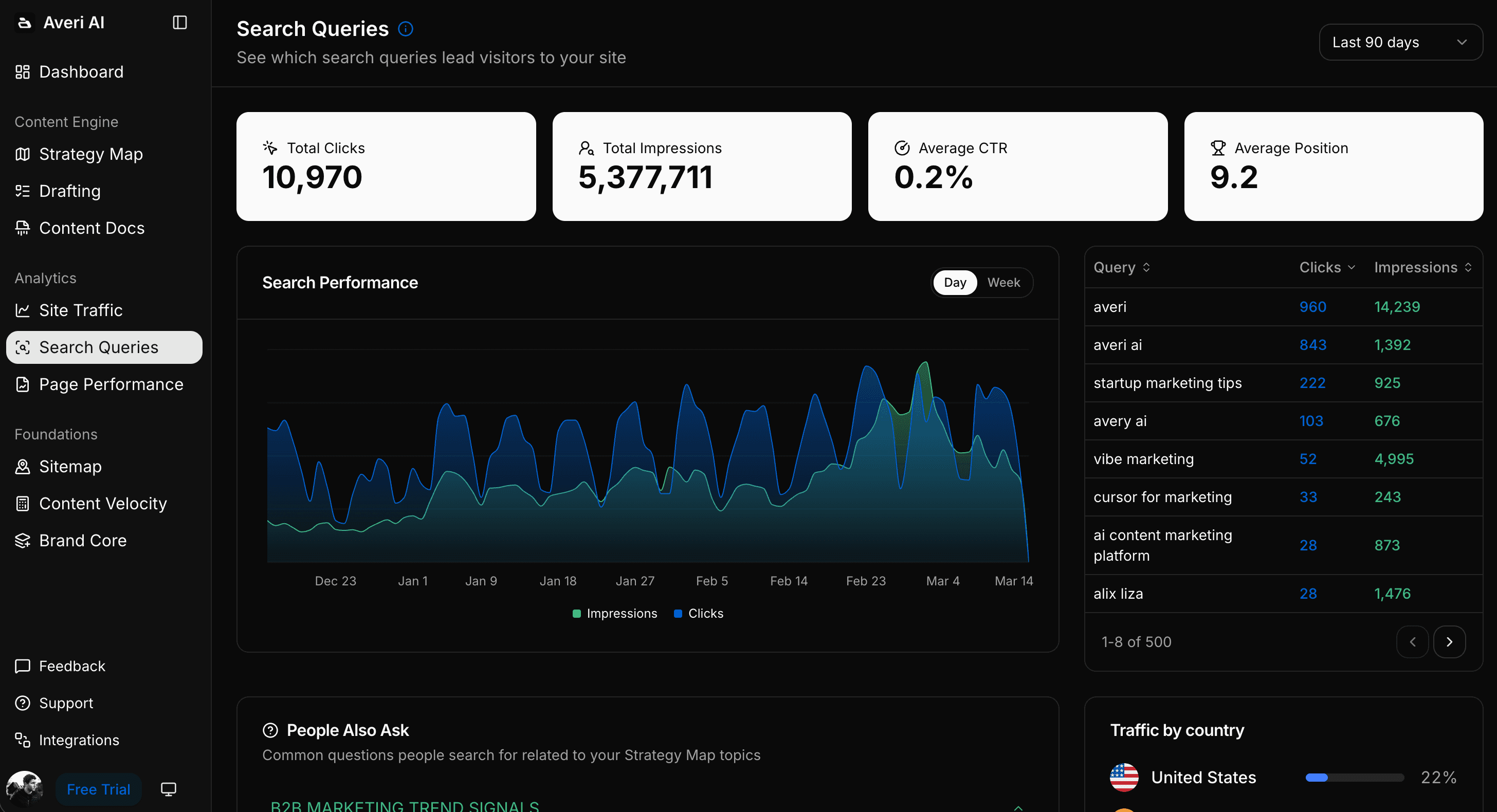
What We Actually Did (The Proof)
We didn't hire a content engineer. We built a content engine and operated it ourselves.
Here's what happened:
Metric | Starting Point | 10 Months Later |
|---|---|---|
Monthly organic impressions | ~14,000 | 2,850,000+ |
Monthly organic traffic | Low hundreds | 6,000%+ growth |
Content production | 0-2 posts/month | 20-30 posts/month |
Marketing team size | 1 (me) | 1 (still me) |
Content marketing spend | $0 (engine only) | $99/month |
Paid advertising | $0 | Still $0 |
Weekly time on content | 10-12 hours |
The engine handled the content engineering work.
Brand Core maintained voice consistency.
Strategy Map guided topic selection.
Content Queue managed the editorial calendar.
Content Scoring optimized for SEO + GEO. Direct CMS publishing eliminated copy-paste workflows.
Analytics closed the feedback loop.
I handled the content engineering judgment.
Which topics aligned with business goals. Which angle differentiated us from competitors. Which voice made the content distinctly ours. Where to push back on the AI's suggestions. What proof points to include.
The system did the engineering. The human did the thinking. That division of labor is what most startups actually need.
The Real Debate Isn't Person vs. System — It's Access vs. Exclusivity
Here's what bothers me about the "hire a content engineer" narrative.
Jasper and AirOps are creating a category that requires their products to fill.
Jasper sells the enterprise platform the content engineer operates.
AirOps sells the training and the workflow builder the content engineer uses.
Both benefit from convincing the market that this role is essential.
But look who benefits from the "content engineer" being a $120K hire: companies that can afford $120K hires. Enterprise teams with established budgets. Funded startups competing for the same small pool of trained talent.
Look who gets left behind: the 70,000+ SaaS startups without enterprise budgets.
The solo founders who need content marketing but can't hire for it.
The 2-person teams that know content matters but don't have the resources for a specialized role.
The content engine isn't a cheaper version of a content engineer. It's the democratized version.
It's the version that makes systematic content marketing accessible to companies that can't spend $120K/year on a single role.
A pipeline needs an operator. An engine runs.
FAQs
What is a content engineer?
A content engineer is a marketing role that designs, builds, and optimizes AI-powered content production systems. The role was popularized by Jasper and AirOps in 2025-2026 as the evolution of the content strategist. Content engineers combine organic growth strategy, workflow automation, and AI tool orchestration to scale content operations. Typical salary range: $91K-$177K for full-time roles. The skills are real. The question for startups is whether you need a person or a system to apply them.
What is a content engine?
A content engine is an integrated platform that handles the full content marketing workflow: strategy, topic research, drafting, SEO + GEO optimization, CMS publishing, and performance analytics in one system. Unlike a collection of disconnected tools operated by a content engineer, the engine embeds the systems thinking into the workflow itself. Averi is a content engine at $99/month that handles what would otherwise require a content engineer plus 5-8 separate tools.
How is content engineering different from content marketing?
Content marketing is producing and distributing content. Content engineering is building the systems that produce and distribute content at scale. The distinction matters because AI Overviews appear on 48% of queries, requiring structural optimization (schema, answer capsules, FAQ sections) that traditional content marketers weren't trained for. Content engineering adds workflow automation, AI orchestration, and dual-surface optimization to the content marketer's toolkit. The content engine approach embeds these capabilities into a platform rather than a person.
Can a startup afford a content engineer?
At $120K-$177K/year ($10K-$15K/month), a full-time content engineer consumes 100-150% of a typical seed-stage marketing budget. Even fractional content engineers cost $3K-$5K/month. For startups publishing under 20 pieces monthly, a content engine ($99/month) produces comparable systematic output at 1% of the cost. The recommendation: use an engine to prove content marketing drives pipeline, then hire the engineer to scale what's already working.
What does AirOps' content engineer training cover?
AirOps runs a 2-week cohort program that trains marketers to build AI-powered workflows for content research, creation, optimization, and distribution using the AirOps platform. Graduates learn workflow automation, AI prompting, and systems thinking for content operations. Companies like Wiz, Vanta, and Ramp have sent teams. The training is strong for marketers at companies with existing content operations and budget for AirOps' platform ($199/month+). For solo founders and lean teams, the investment in time and tools may exceed the available resources.
Should I become a content engineer or use a content engine?
Both paths lead to systematic content marketing. If you're a marketer at a mid-to-large company (50+ employees, $50K+ monthly marketing budget), developing content engineering skills gives you a career advantage. The role is growing fast. If you're a founder or early-stage marketer operating solo, a content engine gives you the systematic output without requiring the specialized skills. The engine does the engineering. You provide the judgment and voice.
Is Averi a content engineering platform?
Averi embeds content engineering principles — persistent brand context, automated queue generation, dual SEO + GEO scoring, direct CMS publishing, performance feedback loops — into a workflow designed for startups. The difference from AirOps or Jasper: you don't need to build the workflows or configure the agents. The content engine workflow is ready to operate from day one. Brand Core learns your business during onboarding. Strategy Map generates recommendations based on your market. Content Scoring evaluates every piece before publishing. $99/month Solo Plan, 14-day free trial.