How to Create AI-Assisted Content Workflows for Real Estate

Averi Academy
Averi Team
8 minutes

In This Article
Learn how AI tools streamline real estate workflows, enhance personalization, and provide data-driven insights for effective marketing strategies.
Updated:
Trusted by 1,000+ teams
Startups use Averi to build
content engines that rank.
AI-assisted workflows are reshaping real estate marketing by automating repetitive tasks like drafting property descriptions, personalizing client communication, and analyzing market data. These tools save time, reduce costs, and improve efficiency while maintaining your brand's voice. Key benefits include:
Faster Content Creation: AI generates property listings, market reports, and emails in seconds.
Personalized Outreach: Tailored messages based on client preferences and behavior.
Data-Driven Insights: AI analyzes trends and content performance to refine strategies.
Popular tools like Averi AI, Jasper, and ChatGPT streamline these processes, while CRM integrations enhance lead management. To implement AI workflows, identify tasks to automate, choose suitable tools, integrate them into your systems, and monitor performance for continuous improvement. AI helps you focus on building relationships and closing sales while handling the heavy lifting of content creation and strategy.
9 Jaw-Dropping AI Tools for Real Estate Agents | This Week in Marketing
Key Benefits of AI in Real Estate Content Workflows
AI is reshaping how real estate professionals approach marketing and communication. With tools that quickly adapt to business needs and deliver precise results, AI offers a faster, smarter way to create, communicate, and strategize. Let’s dive into how it enhances content creation, personalizes outreach, and supports better decision-making.
Streamlining Content Creation
One of AI’s most noticeable advantages in real estate is speed. Tasks that once required weeks, like drafting property listings or creating market reports, can now be completed in seconds. AI automates these processes by pulling from a centralized database, ensuring all content reflects the latest market data.
But AI doesn’t just churn out generic text - it learns and integrates your established workflows and best practices. This means you can automate repetitive tasks while maintaining a consistent tone and style across your team. Whether it’s weekly updates or rewriting hundreds of property descriptions, AI takes care of the time-consuming work, leaving you free to focus on strategy and client relationships.
Another game-changer is AI’s ability to maintain brand voice. It ensures that every piece of content aligns with your market identity. Luxury property listings, for example, will always sound polished and elegant, while communications for first-time buyers remain approachable and informative - all without requiring manual tweaks.
Improving Personalization
AI doesn’t stop at speeding up content creation - it also helps craft communications that feel tailored to each client. By analyzing client data, interaction history, and market trends, AI creates messages that resonate on a personal level. Instead of sending out generic recommendations, you can deliver property suggestions and updates that align with individual preferences, budgets, and timelines.
For instance, AI can differentiate between crafting messages for a busy executive searching for a downtown condo and a young family exploring suburban homes. This level of customization strengthens client relationships and improves conversion rates by ensuring every interaction feels relevant and timely.
In a relationship-driven industry like real estate, this personalized approach can be a game-changer. Clients receive property updates and market insights that are not only useful but also timed to match their buying journey, making their experience more seamless and engaging.
Data-Driven Decision Making
AI tools don’t just create content - they provide insights that shape your marketing strategy. By analyzing trends, client engagement, and content performance, AI helps you identify what works and what doesn’t. This data removes much of the guesswork from your decision-making process.
For example, AI can reveal which property features attract the most interest, the best times to list properties, and which content topics align with seasonal trends. It also tracks how different messaging styles perform. You might discover that your luxury audience prefers detailed architectural descriptions, while another segment responds better to lifestyle-focused narratives. These insights allow you to fine-tune your approach over time.
Ashley Levesque, VP of Marketing at Banzai, highlighted how AI opened doors she didn’t realize existed:
"I didn't even know AI workflows were something that I was lacking until someone said, 'Did you know you could do all of this with Copy.ai?'" [1]
For many professionals, AI goes beyond just writing - it transforms how they communicate with clients and analyze market opportunities, setting the stage for smarter, more effective strategies.
AI Tools for Real Estate Professionals
AI tools can revolutionize how real estate professionals manage everything from crafting property descriptions to maintaining client relationships. Instead of juggling multiple platforms or relying on generic solutions, today’s tools offer tailored features designed to streamline your marketing efforts. Below, we’ll explore some standout options and how they fit into your daily workflow.
Averi AI: The AI Marketing Workspace
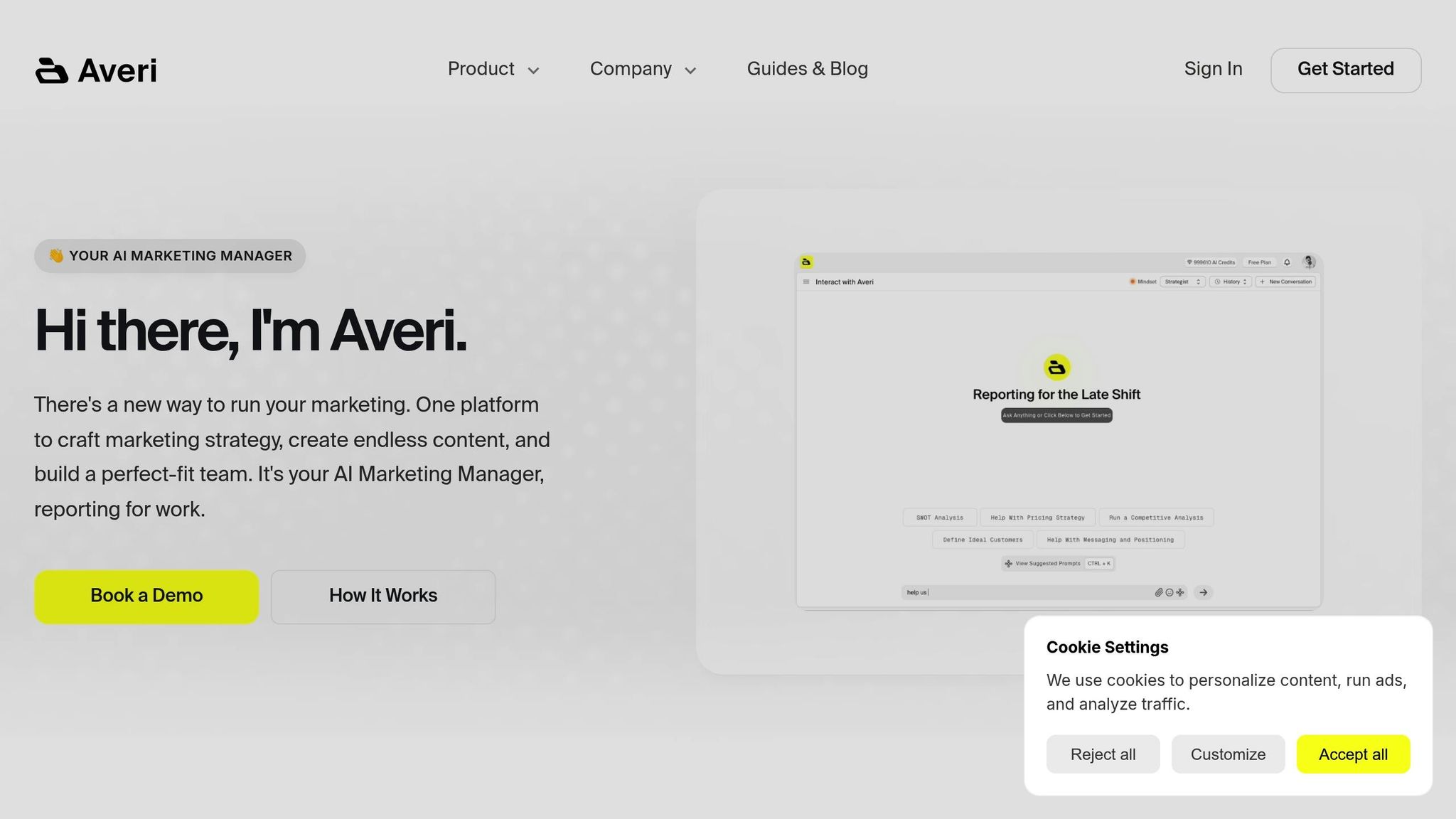
Averi positions itself as The AI Marketing Workspace, catering to professionals who need more than basic content generation. Unlike tools that provide repetitive outputs, Averi operates like a full-fledged marketing team - without the overhead.
At the core of Averi is Synapse, an advanced AI architecture designed to think strategically. Synapse doesn’t just respond to requests; it orchestrates tasks, adjusts complexity, and even integrates human expertise when necessary. This ensures that outputs are aligned with your brand and require minimal tweaking on your end.
Real estate professionals benefit significantly from AGM-2, Averi’s proprietary marketing-trained model. Whether you’re drafting descriptions for high-end properties or creating communications for first-time buyers, AGM-2 ensures the content reflects your unique voice and market positioning.
The platform’s Adaptive Reasoning feature automatically selects the best approach for each task. Simple updates are handled in "Express" mode, while more complex projects, like market positioning strategies, are tackled in "Deep" mode. You don’t need to fiddle with settings - Averi makes these decisions for you.
For teams, the Human Cortex feature is a game-changer. When AI alone isn’t enough, this tool brings vetted specialists into your workflow to assist with tasks like market analysis or campaign planning. This eliminates the need to hire external freelancers for expert input.
Averi offers a Free plan for basic features, while the Plus plan ($45/month) unlocks advanced tools like enhanced insights and security options for larger teams.
Jasper and ChatGPT for Content Generation

Both Jasper and ChatGPT are excellent options for creating specific types of real estate content. Whether you need property descriptions, email templates, or social media posts, these tools can deliver quick results.
Jasper stands out for its ability to maintain a consistent brand voice across large volumes of content. By setting brand guidelines and tone preferences, you can ensure that all your messaging aligns with your professional image. This is especially helpful when managing numerous property listings or tailoring messages for different audience segments.
ChatGPT, on the other hand, excels in conversational content creation. Real estate agents often use it to draft personalized emails, FAQ responses, or even brainstorm creative marketing ideas for challenging properties. Its adaptability to various writing styles and contexts makes it a versatile tool.
However, both tools require a hands-on approach. You’ll need to provide detailed prompts, carefully review the outputs, and make edits to ensure the content meets professional standards. These tools are best used as part of a broader workflow rather than standalone solutions.
AI Integration with Real Estate CRMs
Integrating AI with your CRM system can create a seamless, efficient workflow. Platforms like Chime, LionDesk, and Top Producer now include AI-powered features that automate lead management and client communication without requiring you to switch between tools.
One standout feature is automated, behavior-based follow-ups. For example, if a potential buyer views several properties within a specific price range, the AI can automatically send personalized recommendations for similar listings. This happens behind the scenes, allowing you to focus on active clients and property showings.
AI also enhances lead scoring by analyzing communication patterns, property views, and response times. Instead of manually identifying promising leads, the system highlights the most likely prospects, helping you prioritize your efforts effectively.
Additionally, AI-powered CRMs personalize content at scale. Rather than sending generic updates to your entire contact list, the AI can segment your database and create tailored messages based on buyer personas, price ranges, or geographic preferences. What would be impossible to manage manually becomes effortless with AI.
When choosing a CRM integration, prioritize solutions that fit seamlessly into your existing workflow. The best integrations enhance your current processes without requiring a steep learning curve or major adjustments.
How to Build an AI-Assisted Content Workflow
Creating an AI-assisted content workflow involves blending automation with the personal touch your real estate clients expect. By streamlining repetitive tasks, you can focus on delivering value where it matters most. Let’s break down the steps to design an efficient workflow.
Step 1: Identify Tasks for Automation
Start by analyzing your current marketing efforts to determine where AI can save time and effort. Focus on automating tasks that are repetitive and time-consuming. Key areas to consider include:
Content Creation: AI can handle tasks like writing property listings, market reports, social media posts, newsletters, and ad copy. These activities often follow predictable patterns, making them ideal for automation.
Prospecting and Outreach: Researching potential buyers and sellers, qualifying leads, and drafting personalized messages can be streamlined. Instead of spending time manually researching prospects, AI can analyze preferences and create tailored communications in minutes.
Inbound Lead Processing: AI can enrich lead data, research backgrounds, and send initial engagement messages, reducing response times - a critical factor in real estate.
Jean English, former CMO at Juniper Networks, highlighted the impact of AI on outreach:
Thanks to Copy.ai, we're generating 5x more meetings with our personalized, AI-powered GTM strategy. [1]
Step 2: Choose the Right AI Tools
Once you’ve identified tasks for automation, select tools that align with your goals. Avoid overloading your workflow with numerous single-purpose tools that complicate processes. Instead, focus on platforms offering broad functionality to simplify operations.
For example:
Averi's AI Marketing Workspace is ideal for complex scenarios, as it uses Synapse orchestration to manage tasks and determine when human input is needed.
Jasper excels in producing consistent, on-brand content for high-volume needs.
ChatGPT is excellent for crafting conversational content, such as emails or client messages.
When choosing tools, prioritize those that integrate seamlessly with your existing systems like CRMs, websites, and social media platforms. This ensures you can enhance workflows without overhauling them.
Step 3: Integrate AI into Your Systems
Integrating AI tools into your existing setup is crucial for smooth operations. Start by consolidating data from your CRM, MLS, and market research into a unified source. This ensures consistent and accurate automation.
Establish a central repository for essential company information, such as brand guidelines, market positioning, and successful campaign examples. This "Infobase" ensures AI-generated content aligns with your brand’s voice and standards.
Define your brand voice clearly within the AI tools by setting tone preferences, messaging points, and compliance guidelines. This makes AI-generated content feel professional and authentic.
Set up workflow triggers to automate processes. For instance:
When a new lead enters your CRM, AI can research their background, suggest relevant properties, and draft a personalized email.
Adding a new property listing could trigger AI to create social media posts, email announcements, and ad copy automatically.
Test these integrations thoroughly, starting with low-risk tasks like internal communications or social media updates. Gradually expand to client-facing content as confidence in the system grows.
Step 4: Monitor and Refine Workflows
Regularly monitor your AI workflows to ensure they remain effective. Track metrics like content creation time, lead response speed, engagement rates, and conversion rates to measure the impact of automation.
Conduct weekly reviews to identify bottlenecks or areas needing improvement. Look for patterns where manual edits are frequently required or where delays occur. Gather feedback from team members who use the tools daily - they often notice inefficiencies that metrics might miss.
Experiment with A/B testing to refine your approach. Test variations in email subject lines, social media formats, or property descriptions to see what resonates best. Many AI platforms include built-in analytics to simplify this process.
Keep your AI tools updated by incorporating data from successful campaigns, client feedback, and changing market trends. This ensures your AI continues to evolve alongside your business, supporting everything from basic content creation to advanced campaign management and market analysis.
Best Practices for Maintaining Quality and Consistency
Ensuring quality and consistency in AI-generated content is essential to upholding your brand's reputation at every stage of your automated workflow. AI can revolutionize your real estate marketing, but only if the content it produces aligns with your brand's identity. To achieve this, it's crucial to integrate quality controls into your processes.
Establishing a Clear Brand Voice
Your brand voice is what distinguishes your real estate business from the competition. Whether your style is friendly and local, sophisticated and luxurious, or data-focused and analytical, AI tools need clear instructions to replicate it accurately. Use the built-in brand voice settings of your AI tools to define tone, style, and vocabulary. For instance, you might choose to use the term "home" when addressing first-time buyers or highlight market expertise when discussing investment opportunities. By configuring your AI tools to follow these specific guidelines, you can ensure that the content remains consistent and resonates with your audience. These brand guidelines also serve as a foundation for quality checks, helping you validate every piece of AI-generated content.
Implementing Quality Control Measures
Even the most advanced AI systems require human oversight to maintain high standards. Start by embedding guardrails into your AI configurations - these are predefined rules that limit the scope of AI outputs. For example, you might mandate that all client-facing materials include compliance disclaimers or that any factual claims are verified against reliable sources. Creating a centralized Infobase - a single, authoritative resource containing brand guidelines, compliance requirements, successful campaign examples, and up-to-date market data - ensures that your AI works with consistent and accurate information.
Set up review protocols based on the importance of the content. High-stakes materials intended for clients may require thorough reviews, while internal documents might only need quick checks for accuracy, tone, and compliance with local market standards. This layered approach helps balance efficiency with precision.
Continuous Improvement Through Feedback
Once your protocols are in place, focus on refining them through ongoing feedback and performance analysis. Regularly track key metrics to evaluate how AI-generated content performs compared to manually created materials. For example, examine engagement rates on social media posts, response rates to email campaigns, or the success of AI-written property listings. Update your centralized Infobase with insights from these metrics, client feedback, and market trends. If certain phrases or strategies consistently yield better results, integrate them into your AI's operational guidelines.
Feedback from your team is equally valuable. Those who interact with the AI daily can often identify subtle inefficiencies or patterns that metrics might overlook. Incorporate their observations into your guidelines. Scheduling regular reviews - such as monthly evaluations - can help you assess performance, make necessary updates, and ensure your AI remains a reliable and effective tool for your real estate marketing efforts.
Conclusion: Transforming Real Estate Marketing with AI
AI-powered workflows are transforming how real estate professionals handle traditionally time-consuming tasks, replacing manual efforts with efficient automation. Companies adopting these strategies are seeing impressive outcomes - some report achieving five times more client meetings through personalized, AI-driven methods[1].
The value goes beyond just saving time and money. AI tools enable agents to act quickly on market opportunities, provide tailored experiences for clients, and maintain consistent branding across every interaction. These capabilities translate into tangible advantages: property listings created in seconds, bespoke market insights, and dynamic lead nurturing campaigns. Tools like Averi AI stand out as ideal solutions for achieving these goals.
Averi AI offers more than just automation - it combines strategic efficiency with expert-driven adaptability. Unlike basic tools that require constant input, Averi AI integrates seamlessly into your existing processes, evolving to reflect your brand's tone and market priorities. The strategies outlined earlier show how these workflows can be implemented step by step to maximize results.
In today’s fast-paced real estate landscape, where clients expect quick and relevant responses, AI-assisted workflows can provide a clear advantage over traditional methods. Whether you’re an independent agent looking to scale your efforts or part of a brokerage seeking better operational efficiency, now is the time to embrace these tools.
Pinpoint your most tedious tasks and let Averi AI handle them - freeing you up to focus on what truly matters: building connections and closing deals.
FAQs
How can AI tools help automate real estate content creation while keeping my brand's voice consistent?
AI tools have the potential to simplify real estate content creation by automating tasks such as drafting property listings, conducting market analyses, and managing client communications - all while preserving your brand's distinct voice. Thanks to advanced natural language processing, these tools can align with your preferred tone, style, and overall messaging.
To maintain a cohesive brand identity, you can train AI models using examples of your previous content, establish clear guidelines, and leverage solutions like Averi AI. This tool combines the speed of AI with human oversight, ensuring the content meets your expectations while saving time and improving productivity.
What are the best ways to integrate AI tools into your real estate CRM system?
Integrating AI tools into your real estate CRM system can simplify processes, improve communication with clients, and make decisions more data-focused. Here's how to approach it:
Check for compatibility: Confirm that the AI tool works smoothly with your CRM. Look for features like APIs or built-in integrations that enable tasks such as automated data entry or lead scoring.
Set clear objectives: Decide which tasks you want to automate. This could include creating property listings, analyzing market trends, or tailoring client outreach.
Start small and refine: Begin with a limited rollout, track the outcomes, and tweak the settings or workflows to improve performance.
By carefully integrating AI, you can save time, cut down on errors, and dedicate more energy to nurturing client relationships.
How can AI insights improve my real estate marketing strategies?
AI-powered tools are reshaping real estate marketing by enabling smarter decisions and simplifying routine tasks. Platforms like Averi AI offer capabilities to analyze market trends, automate property descriptions, and tailor client communications, helping you save time and improve precision.
For instance, AI can pinpoint buyer preferences, forecast market changes, and recommend pricing strategies, allowing you to design campaigns that truly connect with your audience. By incorporating AI into your processes, you can dedicate more energy to nurturing relationships and closing deals, while the technology takes care of tasks like content creation and data analysis.
Related Blog Posts

Zach Chmael
CMO, Averi
"We built Averi around the exact workflow we've used to scale our web traffic over 6000% in the last 6 months."
Your content should be working harder.
Averi's content engine builds Google entity authority, drives AI citations, and scales your visibility so you can get more customers.