How to Scale Your Marketing Without Hiring a Full Team for Nonprofits

Averi Academy
Averi Team
8 minutes

In This Article
Learn how nonprofits can leverage AI tools to enhance marketing efficiency and effectiveness without expanding their teams or budgets.
Updated:
Trusted by 1,000+ teams
Startups use Averi to build
content engines that rank.
Nonprofits often struggle to expand their marketing efforts due to limited budgets and small teams. Hiring a full marketing staff or outsourcing services can be costly, but modern AI tools now offer a way to scale marketing without draining resources. By automating tasks like content creation, donor segmentation, and campaign planning, nonprofits can achieve professional results without additional hires. Tools like Averi AI act as all-in-one solutions, handling everything from strategy to execution for as little as $45/month.
Key Takeaways:
AI Tools Save Time:Automate repetitive tasks like email scheduling, social media posts, and donor outreach.
Cost-Effective Solutions: Platforms like Averi AI replace the need for large teams or expensive agencies.
Improved Campaigns: AI analyzes donor data to optimize timing, messaging, and channels for outreach.
Streamlined Workflows:Integrate AI with CRMs and email tools to simplify processes and reduce manual effort.
Nonprofits can now focus more on their mission while AI handles the heavy lifting of marketing execution.
5 Ways Nonprofits Can Use AI to Get More Done (Without Losing Your Voice)
Using AI and Automation to Scale Marketing
Nonprofits can supercharge their marketing efforts by using AI tools and automated workflows. This approach empowers small teams to operate like robust marketing engines, simplifying tasks while keeping pace with organizational growth.
How AI Transforms Nonprofit Marketing
AI is reshaping how nonprofits handle marketing by taking over time-intensive tasks that once required specialized skills. For example, content creation, which could take weeks, now happens in minutes. AI platforms can craft social media posts, email campaigns, and website copy while staying true to your organization’s voice and mission.
When it comes to campaign planning, AI steps in to analyze donor data, offering insights on the best timing, messaging, and channels for outreach. It identifies patterns in supporter behavior, enabling nonprofits to fine-tune their strategies.
Another standout feature is donor segmentation. AI categorizes supporters based on factors like giving history, engagement levels, and demographics, allowing for personalized communication at scale.
Modern tools, such as Averi, take it a step further by remembering past campaigns and maintaining brand consistency. This means nonprofits don’t need to start from scratch every time they launch a new initiative, saving both time and effort.
These advancements bring tangible results, making marketing not just easier, but far more effective.
Key Benefits of Automation for Nonprofits
The advantages of marketing automation go well beyond saving time. Here’s how it can make a difference:
Improved Accuracy: Automated systems reduce human error by managing repetitive tasks like data entry, email scheduling, and social media posting. These processes run on pre-set rules, ensuring precision.
Enhanced Scale: Small teams can manage large-scale campaigns that would otherwise require a much larger staff. Jean English, Former Chief Marketing Officer at Juniper Networks, highlighted the potential of AI-driven strategies:
"Thanks to Copy.ai, we're generating 5x more meetings with our personalized, AI-powered GTM strategy." [1]
Better Resource Allocation: With automation handling routine tasks, staff can focus on relationship-building, strategic planning, and program development. This shift allows nonprofits to approach marketing with a broader, more impactful perspective.
Consistent Messaging: AI ensures that all marketing materials align with brand guidelines, creating a unified experience across social media, email, and websites. This consistency strengthens your organization’s identity and message.
Cost Savings: By automating processes that once required expensive agency work or manual labor, nonprofits can significantly reduce operational costs.
By leveraging these benefits, nonprofits can achieve more with less, freeing up time and resources to focus on their mission.
Connecting Tools for Smooth Execution
The real magic happens when tools work together seamlessly. Integration turns individual systems into a cohesive marketing powerhouse.
Unified Workflows: AI platforms that connect with CRMs, email marketing tools, and website management systems create smooth, automated processes. For instance, when someone subscribes to your newsletter, their information can automatically update donor records, trigger a personalized welcome email, and inform future campaigns - all without manual effort.
Data Synchronization: Integration ensures supporter data flows effortlessly between systems. This eliminates the need for duplicate entries and keeps records up to date.
Centralized Management: Integrated platforms allow marketing teams to oversee multiple channels from a single dashboard. Instead of juggling separate tools for email, social media, and website updates, everything is managed in one place.
The key to success lies in choosing platforms that prioritize integration. Modern AI marketing workspaces are designed to act as central hubs, connecting with your existing systems to streamline workflows and boost efficiency - without requiring a complete overhaul of your current setup.
Top AI-Powered Marketing Tools for Nonprofits
AI tools have become game-changers for nonprofits, enabling small teams to tackle marketing challenges with the efficiency of a full-scale department. These platforms allow organizations to stretch their resources further, achieving maximum impact without the need for large, dedicated teams. Among these tools, Averi AI shines as an example of how nonprofits can handle comprehensive marketing efforts without expanding their workforce.
Averi AI: A Complete Marketing Solution
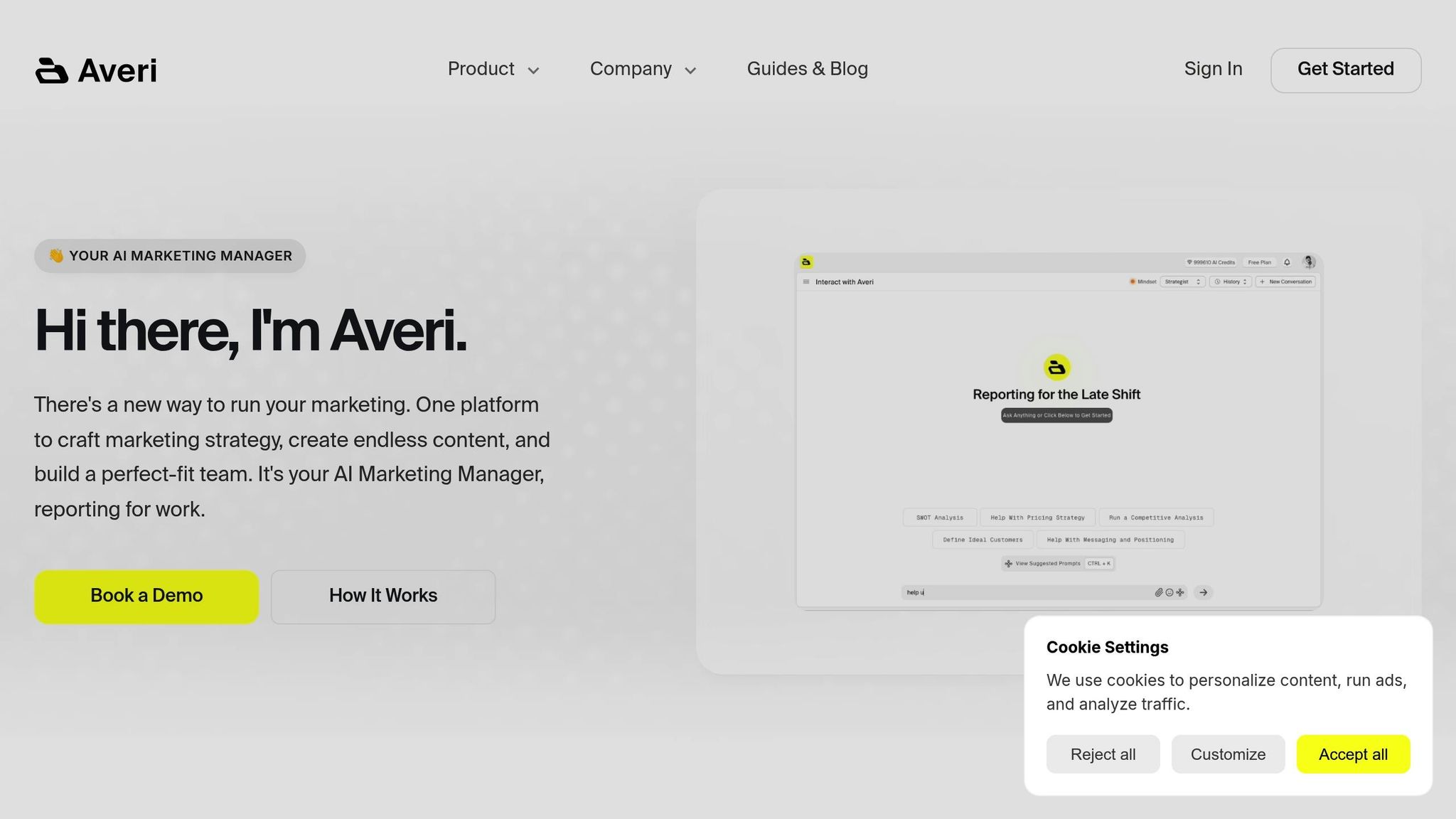
Averi AI offers a fully integrated marketing workspace designed to provide the capabilities of an entire team - without the cost of additional hires. Unlike many AI tools that simply respond to user prompts, Averi acts more like a smart marketing partner, delivering strategic, on-brand results with minimal effort.
At the heart of Averi is its Synapse orchestration system, which streamlines task management, adjusts the depth of analysis as needed, and incorporates human expertise seamlessly. This ensures nonprofits receive high-quality outputs without constant tweaking or the need to juggle multiple tools.
Averi’s AGM-2, a marketing-focused AI model, works alongside advanced AI technologies to create brand-consistent, strategy-driven content that requires little editing. Its Adaptive Reasoning feature customizes responses based on the task at hand - providing quick answers for straightforward tasks and diving deeper when strategic insights are required.
The platform also includes a Command Bar that learns from your workflow patterns, anticipating your next steps to simplify processes and reduce decision fatigue. For tasks that require a human touch, Averi’s Human Cortex connects users to a network of over 2,500 vetted marketing professionals, offering expert support without the commitment of long-term hires.
With a free plan for basic features and a Plus plan priced at $45/month, Averi is an accessible option for nonprofits of all sizes. Its pricing structure makes it possible for organizations to access advanced marketing tools while staying within budget constraints, proving that effective marketing doesn’t have to break the bank.
Picking the Right Approach: Workspace vs. Marketplace vs. Point Tool
Nonprofits aiming to scale their marketing efforts can choose between three main options: an AI workspace, a talent marketplace, or a specialized point tool. Each approach offers unique advantages depending on your organization’s needs. AI workspaces serve as all-in-one marketing partners, combining AI-driven strategies, creative execution, and human expertise. Talent marketplaces connect you with freelancers for specific projects, while point tools focus on singular tasks like content generation. The right choice depends on how your nonprofit plans to integrate AI for efficient, scalable marketing.
Comparison of Marketing Solutions
Factor | AI Workspace (Averi) | Point Tool (Jasper/Copy.ai) | |
|---|---|---|---|
Monthly Cost | Predictable subscription (e.g., $45/month for the Plus plan) | Variable; typically charged per project | Varies by tool subscription |
Time to Results | Fast - automation delivers outputs in minutes to hours | Dependent on freelancer availability and project scope | Quick outputs, though setup may take time |
Quality Control | Ensures brand consistency with expert oversight | Quality varies based on freelancer | Requires manual review for brand alignment |
Workflow | End-to-end automation with integrated routing | Requires independent project management | Self-serve setup with manual integration |
Human Expertise | Relies on hiring and managing freelancers | Lacks built-in human support | |
Learning Curve | Minimal setup with user-friendly automation | Involves vetting and managing contractors | Requires familiarity with prompt engineering |
Scalability | Automatically scales with your needs | Scaling depends on hiring freelancers repeatedly | Limited to the tool’s specific functions |
This table highlights how these solutions differ, helping nonprofits make informed decisions without the hassle of juggling multiple vendors.
When to Use Each Solution
For nonprofits facing tight budgets and limited staff, AI workspaces are a strong choice. They provide comprehensive marketing support, making them ideal for organizations that need consistent messaging across campaigns and channels. These platforms excel when managing complex campaigns involving content creation, social media, email marketing, and donor communications. Instead of coordinating multiple tools or freelancers, an AI workspace offers a streamlined, unified solution.
Talent marketplaces are better suited for nonprofits with specific, well-defined projects requiring specialized skills. If your organization has strong project management capabilities and clear creative briefs, hiring freelancers through platforms like Fiverr or Upwork can be effective. However, this approach does require time for vetting and overseeing contractors.
Point tools work best for nonprofits with established marketing workflows and teams already skilled in execution. These tools can boost efficiency in specific areas, such as content creation or email marketing. If your team is comfortable managing multiple tools, you can create a tailored solution for your needs.
The choice ultimately comes down to your nonprofit’s resources and goals. For organizations with limited staff and time, an AI workspace offers an all-in-one solution that handles both strategy and execution. On the other hand, nonprofits with in-house expertise may find marketplaces or point tools more cost-effective for specific projects.
Step-by-Step Guide to Automating a Marketing Campaign
You don't need a technical background or a big team to automate your marketing campaign. By setting clear goals and crafting your messaging, you can create an efficient workflow that saves time and effort. Using the tools and strategies outlined earlier, here’s how to get started.
Campaign Workflow Example
To illustrate, let’s look at how Averi AI can streamline an automated campaign:
Step 1: Defining Your Campaign Goals
Begin by entering your objectives and messaging into Averi’s Synapse orchestration. For example, input a goal like, “Raise $50,000 by December 31st for our literacy program targeting parents aged 35-55.” The system processes this information to define the campaign’s scope and priorities.
Step 2: Planning and Content Creation
Averi’s AGM-2 marketing-trained model generates a detailed campaign plan tailored to your goals. It includes email sequences, social media posts, and donor communications while addressing challenges like donor fatigue or seasonal giving trends. The Adaptive Reasoning feature selects the best strategies, balancing in-depth planning with quick content creation.
Step 3: Expert Review for Precision
Content flagged for review is sent to Averi’s network of 2,500+ vetted experts via the Human Cortex feature. These specialists refine the messaging to align with donor psychology, eliminating the need for manual hiring or outsourcing.
Step 4: Automated Distribution Across Channels
Once approved, content is automatically published. The Command Bar simplifies this process, ensuring email sequences are sent to your donor management system, social posts are scheduled, and website content is prepped for launch.
Step 5: Monitoring and Adjustments
Real-time tracking tools evaluate campaign performance, offering actionable insights. Through Adventure Cards, the system recommends next steps - whether it’s refining messaging, shifting strategies, or amplifying successful elements.
Adapting the Workflow with Other Tools
You don’t have to rely solely on Averi AI. There are plenty of other tools that can help you build similar workflows. The key is ensuring smooth transitions between each phase of the process.
Specialized Nonprofit Tools
Platforms like HubSpot’s nonprofit program offer discounted automation tools. Use them to create donor personas and trigger automated email workflows based on specific actions. Pair this with Givebutter’s fundraising platform, connecting donation activities to email marketing via Zapier. For instance, you can automate thank-you emails and donor segmentation once a donation is made.
Zapier for Seamless Integrations
Zapier allows you to connect multiple platforms effortlessly. Set up workflows - or “Zaps” - to handle tasks like adding new donors to your email list, creating CRM records, or sending team notifications. Multi-step workflows can even manage donor segmentation based on giving history.
Visual Content and Social Media Tools
For consistent branding, use Canva’s nonprofit templates to design campaign visuals. Then, connect Canva to Buffer for automated social media scheduling. Create templates for different needs - fundraising appeals, volunteer recruitment, or program updates - and use scheduling tools to maintain a steady posting rhythm.
The key to a successful automated workflow is a clear setup and regular monitoring. Start small, focusing on simple automations, and gradually expand as your team gains confidence. While automation handles repetitive tasks, keep the human touch alive in your messaging to ensure genuine connections with your audience.
Pros and Cons of AI-Powered Marketing for Nonprofits
AI-powered marketing presents a mix of opportunities and challenges for nonprofits. On one hand, it offers cost savings and efficiency that can be game-changers for organizations with tight budgets and limited staff. On the other, it comes with trade-offs that require thoughtful consideration. Striking the right balance between leveraging AI and maintaining human oversight is key to making the most of these tools.
One of the biggest advantages is the potential for cost savings. For nonprofits, even small reductions in expenses can make a big difference - sometimes enabling the launch of a new campaign. AI platforms can draft content in seconds, drastically cutting down the time and labor traditionally required, which often spans weeks.
However, while AI-generated content can meet technical needs, it often falls short in emotional depth and brand-specific nuances. These are critical elements when it comes to engaging donors on a deeper level, and they often require human refinement to truly resonate.
Scalability is another major benefit. AI allows smaller teams to reach donor segments that might have been out of reach before. It can also handle translation and localization tasks, making it easier to connect with diverse communities quickly and affordably compared to traditional methods.
That said, adopting AI does come with its own set of challenges. Staff need time to learn how to use these tools effectively, including figuring out the best prompts and integrating AI outputs into existing workflows. Some team members may even feel that the technology is impersonal or disruptive to their roles.
Data privacy is another critical consideration, especially when dealing with sensitive donor information. While platforms like Averi AI are equipped with enterprise-grade encryption and comply with GDPR, it’s essential to thoroughly review data-handling policies to ensure they align with your organization’s standards.
AI also proves invaluable in urgent scenarios. For instance, when sudden funding needs arise, it can launch coordinated campaigns in a matter of hours, enabling nonprofits to act quickly and capitalize on timely giving opportunities or news cycles.
The key is to use AI as a tool for routine tasks while reserving human input for strategic and relationship-driven efforts. AI excels at automating repetitive tasks, creating initial drafts, and maintaining a consistent posting schedule. However, it’s less effective at crafting emotionally nuanced donor messages or handling crisis communications, which require human judgment and sensitivity. Combining AI’s efficiency with human oversight ensures that nonprofits can maximize their resources without compromising on quality.
Comparison Table of Two Marketing Approaches
Tool/Approach | Pros | Cons | Best For |
|---|---|---|---|
Averi AI | Fast content creation; remembers brand voice; supports complex strategies | $45/month; requires initial setup | Nonprofits ready to invest in AI-driven marketing automation |
Traditional Agencies | Personalized support tailored to unique needs | High costs; longer turnaround | Organizations with larger budgets and complex marketing needs |
Conclusion: Scalable Marketing Without the Overhead
Nonprofits can now aim high with their marketing efforts without stretching their budgets too thin. The way forward lies in leveraging integrated AI platforms that handle multiple marketing tasks from a single, centralized hub - eliminating the inefficiencies of juggling multiple disconnected systems.
This streamlined approach has already shown impressive results. Many organizations have saved significant time and money by automating workflows that would traditionally require weeks of effort and hefty agency fees. Additionally, personalized, AI-powered strategies have proven to boost engagement rates and generate more meaningful interactions.
The real takeaway here is the ability to shift routine tasks - like content creation, lead management, and campaign coordination - into the hands of AI. This frees up valuable resources for more critical initiatives. For nonprofits, which often operate under tighter constraints, this approach highlights how AI can help them achieve more with less. The key is choosing platforms that embed proven best practices into their automated workflows, ensuring smooth and consistent execution without constant manual input.
This aligns with the broader strategy of prioritizing integration over managing a patchwork of separate tools. Whether your organization opts for workspace solutions like Averi AI, marketplace platforms, or specific point tools, the decision should reflect your unique needs and growth plans. By adopting AI-driven workflows that incorporate best practices, nonprofits can enhance engagement while keeping operations lean - focusing on unified data, connected teams, and simplified processes.
Ultimately, your donors and beneficiaries deserve marketing that amplifies the impact of your mission. With the right AI tools, you can achieve meaningful engagement and reach without the burden of complex, resource-heavy systems. The technology is here - are you ready to make it work for you?
FAQs
How can nonprofits use AI tools like Averi AI to automate marketing while staying true to their brand voice?
Nonprofits can now simplify their marketing efforts with tools like Averi AI, which handle repetitive tasks while keeping the organization’s brand voice consistent. These tools use advanced algorithms to ensure that all content reflects the nonprofit’s tone, style, and messaging guidelines seamlessly.
With features such as customizable templates, dynamic workflows, and AI-driven content generation, nonprofits can save valuable time and direct their attention toward more impactful initiatives. Averi AI also incorporates a layer of human oversight, allowing teams to review and fine-tune content to maintain authenticity and high standards throughout every campaign.
What challenges might nonprofits face when using AI for marketing, and how can they address them?
Using AI in marketing can open up new possibilities for nonprofits, but it’s not without its hurdles. A key challenge lies in making sure the AI reflects your organization’s values and voice. Generic outputs often lack the warmth and authenticity that nonprofits aim to convey. To tackle this, provide the AI with examples of your tone and style, and establish clear rules for creating content that aligns with your mission.
Another significant concern is safeguarding data privacy and security, particularly when dealing with sensitive donor or beneficiary information. Choosing AI tools with strong data protection measures and ensuring compliance with relevant privacy regulations can help address these risks.
Adopting AI tools can also feel overwhelming at first, especially for teams unfamiliar with the technology. To ease into it, begin with straightforward tasks like automating email campaigns or scheduling social media posts. As your team gains confidence, you can gradually explore more advanced applications.
How can integrating AI with tools like CRMs and email platforms improve marketing for nonprofits?
Integrating AI with platforms like CRMs and email tools can greatly enhance how nonprofits manage their marketing efforts. By automating repetitive tasks, tailoring outreach, and simplifying workflows, AI helps organizations work smarter, not harder. For instance, AI-driven systems can analyze donor data, segment audiences, and craft personalized email campaigns, making it easier to foster meaningful connections with supporters.
On top of that, these integrations take care of time-consuming tasks like scheduling emails, tracking engagement metrics, and keeping records up to date. With these routine processes handled, nonprofit teams can shift their focus to strategic planning and creating a bigger impact, even when resources are tight.
Related Blog Posts

Zach Chmael
CMO, Averi
"We built Averi around the exact workflow we've used to scale our web traffic over 6000% in the last 6 months."
Your content should be working harder.
Averi's content engine builds Google entity authority, drives AI citations, and scales your visibility so you can get more customers.