The Founder-Led Content Marketing Playbook for 2026
10 minutes

TL;DR
🎯 Founder-led content marketing is the practice of founders personally producing the content that drives their company's organic growth — LinkedIn posts, blog articles, newsletter editions, and category-defining frameworks. It's distinct from "founder-led sales" because the goal is compounding organic distribution, not direct closes.
⚡ Why now: AI-mediated buyer journeys reward distinctive perspective over volume. Founders have the perspective. The buyer trusts founder voice 4x more than corporate voice. And early-stage startups can't afford traditional content teams anyway.
⏱️ The 5-hour-per-week model: 60 min strategic input on weekly themes, 90 min LinkedIn posting (3 posts), 60 min newsletter writing, 60 min blog input/editing, 30 min engagement. Anything beyond 5 hours and the founder burns out.
📈 Compounding effect: Months 1-3 produce no measurable results. Months 4-6 show LinkedIn pipeline contribution. Months 6-12 show organic search growth. Months 12-24 produce the moat — competitors can't replicate distinctive founder voice retroactively.
🤝 The handoff moment: When founder-led content reaches the limit of what one person can sustain (typically 6-9 months in), pair the founder's voice and judgment with a content engine for production scale. The founder still drives angles and approves; the engine handles structural execution.

Zach Chmael
CMO, Averi
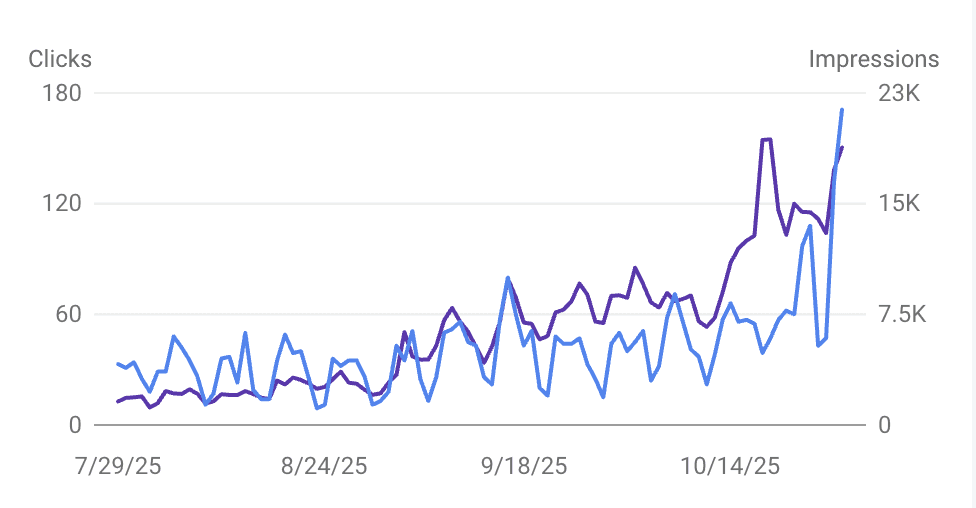
"We built Averi around the exact workflow we've used to scale our web traffic over 6000% in the last 6 months."
Your content should be working harder.
Averi's content engine builds Google entity authority, drives AI citations, and scales your visibility so you can get more customers.
The Founder-Led Content Marketing Playbook: How Seed-to-Series A Founders Build Compounding Organic Growth in 2026
Most marketing advice assumes you have a team. Founder-led content marketing assumes you don't.
If you're a seed-to-Series A founder, you probably have one of three setups: nobody doing marketing, a part-time generalist who's also doing sales ops and customer support, or a freshly-hired marketing lead who's still figuring out the category.
None of those setups can produce the volume of content needed to win in 2026's AI-mediated buyer journey.
76% of B2B buyers now use AI tools in their research process. 60% of Google searches end without a click. The buyer is researching your category through ChatGPT, Perplexity, and LinkedIn before they ever land on a sales call.
The brands they consider are the brands AI engines cite and the brands their network has surfaced through founder posts. If you're not in those two streams, you're invisible.
Founder-led content marketing is the answer most early-stage startups are reaching for, but most are doing it badly.
Posting twice a week to LinkedIn for two months and stopping.
Writing one company blog post the founder kind of edited. Starting a newsletter and abandoning it after issue 4.
The execution is inconsistent because there's no system underneath the effort.
This playbook is the system. What founder-led content marketing actually is. Why it's the highest-ROI growth channel for early-stage B2B SaaS in 2026. The 5-hour-per-week operating model that makes it sustainable. Voice, cadence, and channel choices that work for founders who aren't writers. The specific moment when founder-led production should hand off to a content engine. And how the work compounds over 12-24 months into a moat competitors can't replicate.
Every section links into a cluster piece for tactical depth. Treat this as the strategic map; follow the links for specific playbooks.
See what your Content ROI could be
What Founder-Led Content Marketing Actually Is
Founder-led content marketing is the practice of founders personally producing the strategic content that drives their company's organic growth — LinkedIn posts, founder newsletters, blog articles with original frameworks, podcast appearances, and category-defining commentary.
The goal is compounding organic distribution and category authority, not direct sales closes.
It's distinct from founder-led sales (closing customers personally) and from CEO-as-figurehead marketing (where the founder's name appears on content the team actually wrote).
True founder-led content has the founder making the strategic and voice-level decisions on every piece, even when production gets supported by a team or content engine.
Three things distinguish founder-led content from regular company content marketing:
Voice ownership. The founder's perspective, opinions, and language shape every piece. Not "approved by the CEO" — written or directed by them with their actual point of view embedded. Buyers can tell the difference within the first paragraph.
Strategic agenda. The content advances a thesis the founder personally holds, not just keyword-driven topics. This typically means strong claims, opinionated category framing, and willingness to disagree with industry consensus. Distinctive perspective is the asset that compounds.
Distribution by relationship. Founder content reaches buyers through the founder's network — personal connections, conference talks, podcast appearances, comment-thread engagement. The reach starts smaller than corporate content but converts at 5-10x the rate because trust is pre-loaded into the relationship.
For more on the personal-brand-vs-company-brand decision that sits underneath this, see Personal Brand vs. Company Brand: What Founders Should Prioritize First.
Why Founder-Led Is the Right Move for Early-Stage B2B SaaS in 2026
Three converging trends make founder-led content the highest-ROI growth move for seed-to-Series A startups specifically.
Trend 1: AI-mediated buyer journeys reward distinctive perspective
60% of zero-click searches and 76% of buyers using AI for research means generic content gets compressed into AI summaries that don't drive traffic to your site. The content that breaks through is content with a distinctive thesis — opinionated framing, original frameworks, contrarian arguments. AI engines surface category-defining perspectives because they're more useful to summarize than commodity content.
Founders are the people most likely to have that distinctive perspective. They've been in the trenches of the problem. They've made specific bets the broader industry hasn't validated yet. They have the conviction that produces strong claims worth citing.
Trend 2: The buyer trusts founder voice over corporate voice
Buyer trust in corporate marketing has been declining for a decade. Buyer trust in founder voice — direct, personal, willing to share what's working and what isn't — has been climbing. Multiple founder communities (build-in-public, indie hackers, B2B SaaS founders on LinkedIn) have demonstrated that founder posts outperform company posts on the same topics by 4-10x in engagement and pipeline.
The asymmetry is structural. A company post says "we believe content engines are the future." A founder post says "I bet $4M of seed funding on this thesis and here's what's working/breaking after 18 months." Same topic, completely different credibility weight.
Trend 3: Early-stage budget reality
The brutal truth: a 12-person seed-stage B2B SaaS company can't afford a 4-person content team. The math doesn't work. A founder spending 5 hours per week on content is a feasible budget. A $400K/year content team is not.
Founder-led content marketing isn't a stylistic choice — it's the only feasible way to produce sustained, high-quality content at the seed and Series A stage. The companies that figure this out compound while their better-funded competitors flail trying to hire content teams that won't produce ROI for 18 months.
For the broader founder-marketing context including how founder content fits with other channels, see The Founder's Guide to Content Marketing in 5 Hours a Week.
The Founder-Led Content Operating System
Sustainable founder-led content needs a system. Without one, the work happens in bursts (founder writes 4 posts in one weekend, then nothing for 3 weeks) and the compounding effect never starts.
The 5-hour-per-week operating model that works:
Activity | Time | When | What Happens |
|---|---|---|---|
Weekly strategic input | 60 min | Monday morning | Founder picks 1 thesis to develop this week, identifies 3-5 angles, names what wants to be said |
LinkedIn posting | 90 min | Mon/Wed/Fri | 3 posts at 30 min each — written by founder or drafted from voice notes |
Newsletter writing | 60 min | Thursday | One newsletter edition extending the week's thesis (alternating weeks if monthly) |
Blog input/editing | 60 min | Tuesday/Thursday | Founder gives 20 min input on a planned blog post + 40 min editing the draft |
Engagement | 30 min | Daily 5 min | Replying to comments, engaging with relevant founder posts, building network through participation |
5 hours total. The discipline is keeping each block focused — Monday's strategic input shapes the entire week's output. Without it, every block becomes unstructured creation that takes 3x longer.
For the full breakdown of the operating system including the specific Monday morning ritual and tools, see The Founder's Content Operating System: 5 Hours a Week, 10x Output.
What gets cut when 5 hours isn't enough
Two failure modes:
Failure 1: Founder tries to do 10+ hours of content per week. Sustainable for 6-8 weeks, then burnout. The founder reverts to 0 hours and the compounding effect resets.
Failure 2: Founder skips strategic input on Monday and tries to produce content reactively. Each post takes 60 min instead of 30 min because there's no thesis driving it. Quality drops. Engagement drops. Founder loses motivation.
The 5-hour discipline isn't a budget you should beat. It's the maximum sustainable level. If you need more output than 5 hours produces, you need a content engine handoff, not more founder time.
The Channels That Matter for Founder-Led Content
Most founder-led content advice tells you to do everything (LinkedIn + Twitter + YouTube + podcast + newsletter + blog + Reddit).
That's how 5 hours becomes 25.
Pick the 3 channels that compound for your category.
Channel 1: LinkedIn (mandatory for B2B SaaS founders)
LinkedIn is now the #2 cited source in AI search results for B2B research queries. Posts compound differently than other channels — strong posts continue earning impressions for weeks because LinkedIn's algorithm surfaces them in fresh feeds long after publishing.
For B2B SaaS founders, LinkedIn isn't optional. It's where your buyers spend professional time, where ChatGPT and Perplexity pull citations, and where founder voice has the highest signal-to-noise ratio compared to corporate brand pages.
The cadence and content patterns that work specifically for founders are covered in Founder-Led LinkedIn: The Content Cadence That Actually Builds Pipeline.
Channel 2: Founder newsletter (the owned-audience compounder)
Newsletters compound differently than social channels because the audience is owned. No algorithm decides who sees the email. Your subscribers chose to give you direct access to their inbox. Newsletter conversion rates run 5-10x higher than social channels for B2B SaaS pipeline.
The founder newsletter — written personally, even at small subscriber counts — is the highest-ROI owned-audience asset most early-stage startups should build. The build mechanics, content patterns, and growth strategy are covered in Founder Newsletters: The Owned-Audience Asset Every Startup Should Build.
Channel 3: Company blog (with founder voice baked in)
The company blog is where AI-mediated organic search demand gets captured. Without a blog producing 4-12 long-form pieces per month, your AI visibility stays flat regardless of how strong founder voice is on LinkedIn.
The founder's role on the blog is strategic and editorial — not as the writer for every piece, but as the voice-shaper for every piece. Founder picks angles, gives 20 min of strategic input per article, edits the draft for voice. Without that input, the blog becomes generic content that doesn't differentiate.
Optional channels (only after the first three are running)
Build-in-public content (Twitter/X, Indie Hackers, Reddit) — for founders whose category benefits from radical transparency. Covered in Build-in-Public Content: Turning Product Development Into Organic Growth.
Podcast appearances — high-trust distribution but doesn't compound in search. Best as a 1x/month commitment, not a primary channel.
YouTube — only for founders who are naturally comfortable on camera. Otherwise the production overhead crushes the 5-hour budget.
The mistake most founders make is trying to run all 6 channels simultaneously from day one.
The discipline is starting with LinkedIn + newsletter + blog and adding others only after the first three are sustainable.
Founder Voice: The Asset That Can't Be Outsourced
The single most important asset in founder-led content is the founder's voice.
Distinctive, opinionated, recognizable.
The thing that makes a buyer think "this person actually knows what they're talking about" rather than "this is the same content the other 30 SaaS companies in this space publish."
Voice has three components founders need to develop:
Component 1: Specific point of view
Generic content positions itself as objective. "Here are 5 things to consider when choosing a content marketing platform."
Founder voice positions itself as opinionated. "Most content marketing platforms ship features no one uses. Here's what actually matters and why."
The shift is from broad coverage to specific argument. Buyers don't need another generic overview — they can get those from any AI engine. They need someone with a strong opinion grounded in actual experience.
Component 2: Distinctive language
Most company content reads like it was edited by a committee. Founder voice has specific word choices, sentence rhythms, and turns of phrase that come from one person's actual speech patterns. The specificity is what makes content recognizable.
This doesn't mean profanity or aggressive opinions. It means avoiding the generic vocabulary of B2B marketing — "robust solutions," "best-in-class frameworks," "synergies." Founder voice uses words founders actually say in conversation.
Component 3: Stakes-aware honesty
The most powerful founder content shares stakes. "We tried X and lost $200K." "I bet our Series A on this thesis." "Here's what's not working." This honesty is impossible to fake — committee-written content can't produce it because no individual on the committee bears the consequences of being wrong.
Founders have stakes built in. Sharing them is what builds the asymmetric trust that founder voice produces.
For the practical question of what to actually write about when developing this voice, see Founder Thought Leadership: What to Write About When You're Not a Writer.
The 12-24 Month Compounding Timeline
Founder-led content marketing produces no measurable results in months 1-3. This is the part that breaks most founders. They publish for 8 weeks, see flat traffic, and conclude "content doesn't work for us."
It's not that content doesn't work. It's that the compounding hasn't started yet. Here's the actual timeline.
Months 1-3: Building the muscle
Founder learns the operating model. Voice starts emerging. First 30-50 LinkedIn posts. First 6-12 newsletter editions. First 8-15 blog posts published. Engagement is small (5-20 likes per LinkedIn post, 50-200 newsletter opens, 50-200 blog visits per piece).
What's working: the founder is building the production muscle. What isn't: measurable pipeline contribution.
This is the discouraging period. Founders who quit here never see the compounding. Founders who push through start seeing returns by month 4.
Months 4-6: LinkedIn pipeline emerges
LinkedIn posts start producing inbound — DMs from prospects, demo requests, network introductions. First measurable founder-led content pipeline contribution. Newsletter subscriber count starts compounding (50 → 250 → 600).
The blog still hasn't compounded yet — SEO timelines are longer. But LinkedIn and newsletter are showing real signal.
Months 6-12: Organic search begins compounding
Blog content from months 1-6 starts ranking and earning AI citations. Pages typically need 6-12 months of indexing and refresh cycles to reach citation maturity. AI-referred traffic begins showing in analytics.
LinkedIn pipeline scales. Newsletter open rates climb (better subscriber quality from organic growth). The founder's voice is now distinctive enough that prospects reference it in sales calls — "I've been reading your stuff for six months."
Months 12-24: The moat forms
12-24 months of consistent founder-led content produces a moat competitors can't replicate. Distinctive voice can't be hired. Two years of compounding LinkedIn engagement can't be bought. Newsletter subscribers won't transfer to a competitor's list. Blog content with consistent voice and original frameworks dominates AI citations in your category.
This is what most early-stage founders never see because they stop at month 3 or 4. The compounding is real but the discipline required is brutal.
When to Hand Off (And to What)
Founder-led content has limits. The ceiling is roughly 5 hours per week of founder time, which produces 3 LinkedIn posts + 1 newsletter + 1 blog input + ongoing engagement. That's enough to build the early compounding but not enough to scale beyond Series A.
Three signals it's time to add production support:
Signal 1: Founder is consistently exceeding 5 hours and quality is dropping
If you're at 7-10 hours per week and posts feel rushed, you've hit the founder-only ceiling. Adding hours degrades quality. Adding production support preserves quality while expanding output.
Signal 2: Strategic content gets crowded out by tactical content
If your blog is publishing only "how to" posts and not the original frameworks/category-defining pieces that compound hardest, the founder is producing reactive content instead of strategic content. Production support frees the founder to focus on the highest-impact strategic pieces.
Signal 3: Pipeline contribution from content is real but not scaling
If founder-led content produces 10-20% of pipeline at month 9, scaling that to 30-40% by month 18 requires more production volume than 5 hours can sustain. The handoff is what unlocks the next compounding step.
The question isn't whether to add support — every successful founder-led content program reaches this inflection point. The question is what to add support with.
The right answer for most B2B SaaS startups isn't a content team (too expensive, slow to onboard, requires founder management). It's a content engine that pairs the founder's voice and judgment with structural production capacity.
For the full handoff playbook including how to preserve voice when scaling production, see The Founder-to-Content-Engine Handoff: When to Stop Writing Yourself.
How a Content Engine Extends Founder-Led Content
The mistake founders make at the handoff: they hire a content team or freelancer and lose voice control.
Six months later the blog reads like generic SaaS content and the founder has stopped reviewing it because nothing feels worth their input.
A content engine preserves the founder's role while removing the production bottleneck:
Voice preservation: The engine learns the founder's specific patterns from existing content and applies them across new production
Strategic input only: The founder gives 20-30 min of input per piece (angle, key argument, voice notes) instead of writing or heavy editing
AI visibility built in: Every piece ships with answer capsules, fact density, and schema that produce citations rather than generic content
5-hour discipline maintained: Founder time stays at 5 hours per week even as production volume grows from 4 pieces per month to 12-16
LinkedIn and newsletter integration: Blog content systematically gets repurposed for LinkedIn and newsletter, multiplying the impact of each strategic piece
The result: founder-led content marketing scales past the 5-hour ceiling without losing what made it work in the first place. The voice stays distinctive. The strategic input stays founder-driven. The production capacity grows 3-5x.
FAQs
What is founder-led content marketing?
Founder-led content marketing is the practice of founders personally producing the strategic content that drives their company's organic growth — LinkedIn posts, newsletters, blog articles with original frameworks, and category-defining commentary. The founder makes the strategic and voice-level decisions on every piece, even when production gets supported by a team or content engine. It's distinct from founder-led sales (closing customers personally) and from CEO-as-figurehead marketing (where the founder's name appears on content the team actually wrote without input).
Why is founder-led content marketing important in 2026?
Three converging trends. AI-mediated buyer journeys reward distinctive perspective over volume — generic content gets compressed into AI summaries that don't drive traffic. The buyer trusts founder voice 4-10x more than corporate voice for B2B research. And early-stage startups can't afford traditional content teams, making founder-led the only feasible production model at seed and Series A stage. The companies that figure this out compound while their better-funded competitors flail trying to hire content teams that won't produce ROI for 18 months.
How many hours per week should a founder spend on content?
5 hours per week is the sustainable maximum. The breakdown: 60 min strategic input on weekly themes, 90 min LinkedIn posting, 60 min newsletter writing, 60 min blog input/editing, 30 min engagement. Founders who push to 8-10+ hours per week burn out within 6-8 weeks and revert to 0 hours, which resets the compounding. The 5-hour discipline is the ceiling — if you need more output than 5 hours produces, the answer is a content engine handoff rather than more founder time.
Which channels matter most for founder-led content marketing?
For B2B SaaS founders specifically: LinkedIn (mandatory — #2 cited source in AI search results), founder newsletter (the owned-audience compounder), and company blog with founder voice baked in. These three channels cover AI visibility, owned-audience compounding, and direct buyer engagement. Optional channels (build-in-public, podcasts, YouTube) come only after the first three are sustainable. Most founders fail by trying to run all 6 channels from day one.
How long until founder-led content produces measurable results?
Months 1-3 produce no measurable results — this is the discouraging period that breaks most founders. Months 4-6 show LinkedIn pipeline contribution (DMs, demo requests). Months 6-12 show organic search and AI citation compounding. Months 12-24 produce the moat — distinctive voice that competitors can't replicate retroactively. The brutal honest version: if you don't commit to 12 months minimum, don't start.
When should founders stop writing content themselves?
Three signals indicate the handoff moment. (1) Founder consistently exceeds 5 hours per week and quality is dropping. (2) Strategic content gets crowded out by tactical/reactive content. (3) Pipeline contribution from content is real but not scaling beyond what 5 founder hours can sustain. Most successful founder-led content programs reach this inflection point at 6-9 months. The right handoff isn't to a content team or freelancer — it's to a content engine that preserves the founder's voice and strategic role while removing the production bottleneck.
How is founder-led content different from CEO thought leadership?
CEO thought leadership traditionally means content with the CEO's name on it that the team actually wrote — speech-writing, ghost-writing, "edited by the CEO." Founder-led content marketing requires the founder making strategic and voice-level decisions on every piece. The buyer can tell the difference within the first paragraph: ghost-written content reads like committee output (generic vocabulary, hedged claims, no specific stakes), while founder-written or founder-directed content has distinctive language, specific points of view, and stakes-aware honesty that committee content can't produce.
Related Resources
Cluster Pieces (Tactical Deep-Dives)
Founder-Led LinkedIn: The Content Cadence That Actually Builds Pipeline
Founder Thought Leadership: What to Write About When You're Not a Writer
Personal Brand vs. Company Brand: What Founders Should Prioritize First
The Founder-to-Content-Engine Handoff: When to Stop Writing Yourself
Build-in-Public Content: Turning Product Development Into Organic Growth
Founder Newsletters: The Owned-Audience Asset Every Startup Should Build
The Founder's Content Operating System: 5 Hours a Week, 10x Output