Can You Use Flodesk for Content Writing? Capabilities, Limits, and Better Options

Zach Chmael

Head of Marketing

6 minutes

In This Article

Flodesk can help you write beautiful emails. It cannot help you write content that gets found on Google, cited by AI platforms, or published on a blog that drives subscribers while you sleep.

Updated

Trusted by 1,000+ teams

★★★★★ 4.9/5

Startups use Averi to build
content engines that rank.

TL;DR

📧 Flodesk creates beautiful emails. It does not create blog content, SEO articles, or any content Google can find.

🚫 No blog/CMS publishing, no keyword research, no SEO tools, no AI content drafting, no content strategy, no search analytics

🔍 Organic search drives 53% of web traffic. Content marketing generates 3x more leads at 62% lower cost. Flodesk doesn't participate in either.

📊 The gap: Flodesk is distribution (reaching existing subscribers). Content marketing is discovery (attracting new ones). You need both.

🔧 Three options: manual stack ($274–$437/mo, 15–20 hrs/week), AI drafting tool ($25–$59/mo, limited optimization), or Averi ($99/mo, ~2 hrs/week, full workflow)

🔄 Flodesk + Averi = complete stack. Averi creates content people find on Google. Flodesk sends emails that build the relationship. $129–$192/month total.

Start free with Averi. 14-day trial. No credit card. First blog post by midweek.

Zach Chmael

CMO, Averi

"We built Averi around the exact workflow we've used to scale our web traffic over 6000% in the last 6 months."

Your content should be working harder.

Averi's content engine builds Google entity authority, drives AI citations, and scales your visibility so you can get more customers.

Can You Use Flodesk for Content Writing? Capabilities, Limits, and Better Options

Short answer: Flodesk can help you write beautiful emails. It cannot help you write content that gets found on Google, cited by AI platforms, or published on a blog that drives subscribers while you sleep.

If you're asking "can I use Flodesk for content writing?" the answer depends entirely on what you mean by content.

If you mean email newsletters, yes. Flodesk's editor is one of the most visually polished in the industry, and reviewers consistently praise its design-forward approach.

If you mean blog posts, SEO articles, thought leadership content, or any writing that lives outside an inbox, Flodesk doesn't do that.

Not partially. Not with workarounds. It's simply not what the tool was built for.

This matters because the line between "content writing" and "email writing" is the line between discovery and distribution. One attracts new people. The other nurtures existing subscribers. If you're only doing the second, you're leaving the largest growth channel in digital marketing untouched.

Here's exactly what Flodesk can and can't do for content, and what to use alongside it if you want the full picture.

What Flodesk Actually Does for Content Creation

Flodesk is an email marketing platform built for small businesses and creatives who prioritize design. It's popular with photographers, coaches, designers, and creative entrepreneurs who want their emails to look like their brand without hiring a designer.

Here's what the platform gives you for content creation:

Email Editor

Flodesk's block-based editor lets you build emails using pre-designed layouts, images, text blocks, buttons, countdown timers, polls, and Instagram embeds. The templates are stunning and the interface is intuitive. You can upload custom fonts, match your brand palette, and create professional-looking newsletters in minutes.

For email content, this is legitimately excellent. If your definition of "content writing" stops at email newsletters, Flodesk handles it well.

Landing Pages and Forms

Flodesk includes a landing page builder and opt-in form tools. You can create signup pages, lead magnet delivery pages, and embedded forms for your website. These are design-focused and functional for list building.

Basic Automation

Flodesk supports welcome sequences, lead nurture workflows, and follow-up emails triggered by subscriber actions. The automation is straightforward but limited compared to advanced platforms: no branching logic, no multi-channel triggers, no conditional paths based on complex behaviors.

Checkout Pages

Flodesk's checkout feature lets you sell digital products and newsletter subscriptions with no platform commission (just Stripe processing fees). This is a monetization feature, not a content creation feature, but it's worth noting as part of the platform's scope.

What Flodesk Cannot Do for Content Writing

This is the list that matters if you searched "Flodesk for content writing" hoping the platform could serve as your content creation system.

No Blog or CMS Publishing

Flodesk does not have a blog.

It does not publish content to the web in a format Google can crawl and rank.

It does not integrate with WordPress, Webflow, Framer, or any external CMS for content publishing purposes.

Your Flodesk emails live in inboxes. They don't live on the internet where search engines can find them.

Companies with active blogs have 434% more indexed pages and 97% more inbound links than those without. Flodesk doesn't contribute to either of those numbers.

No SEO Tools

Flodesk has no keyword research capabilities.

No meta title or description fields.

No sitemap generation.

No Google Search Console integration.

No URL optimization. No internal linking tools. No schema markup support.

If you want your content to appear in search results, Flodesk offers zero infrastructure for that.

Organic search drives 53% of all website traffic. Flodesk can't touch it.

No AI Content Drafting for Blog or Long-Form Content

Flodesk doesn't include AI writing tools for generating blog posts, SEO articles, or long-form content.

The platform's content creation capabilities are limited to composing emails within its editor. There's no research functionality, no sourced statistics, no content strategy features.

83% of marketers now use AI tools for content creation, primarily to produce the blog and web content that drives organic traffic. Flodesk sits entirely outside that workflow.

No Content Strategy or Keyword Research

Flodesk doesn't analyze your competitors' content.

It doesn't identify keyword opportunities.

It doesn't generate topic clusters or map content to search intent.

It doesn't recommend what to write based on what your audience is searching for.

Businesses that prioritize blogging are 13x more likely to see positive ROI. That ROI comes from strategically targeted content. Flodesk has no mechanism for producing it.

No Content Performance Tracking Beyond Email

Flodesk's analytics are basic and email-focused: sent emails, deliverability, bounces, unsubscribes, click-through rates.

There's no organic traffic tracking. No keyword ranking data. No page-level search performance. No conversion path from search impression to email subscription.

Only 29% of marketers effectively measure content marketing ROI. Flodesk's analytics don't even attempt to address content marketing measurement.

No Advanced Personalization or Segmentation for Content Delivery

Flodesk offers basic segmentation by subscription source and engagement level, with simple merge tags for personalization.

There's no behavioral targeting, no multi-channel automation, and no A/B testing capabilities (a limitation multiple reviewers flag).

For creators who want to deliver different content to different audience segments based on their interests or behavior, Flodesk's tools are surface-level.

The Gap: Email Writing vs. Content Marketing

Here's why this distinction matters beyond platform features.

Flodesk helps you write emails that reach your existing subscribers. That's valuable. Your email list is your most owned, most controllable audience channel. Email marketing delivers $36–$42 for every $1 spent. Flodesk serves that channel well.

But email is distribution. It reaches people who already found you.

Content marketing is discovery. It reaches people who haven't found you yet. Content marketing generates $3 for every $1 invested and costs 62% less than traditional marketing while producing 3x more leads. SEO delivers 748% ROI for B2B companies. Compound blog posts generate 38% of traffic from just 10% of posts.

Those returns come from content published on blogs and websites where Google indexes it, AI platforms cite it, and strangers find it.

Flodesk doesn't participate in any of that. It's not a limitation of Flodesk. It's the boundary of what an email platform is.

The question isn't whether Flodesk is good at what it does. It is. The question is whether what it does is enough.

If your only content output is email, you're reaching your existing audience and nobody else. That's a ceiling.
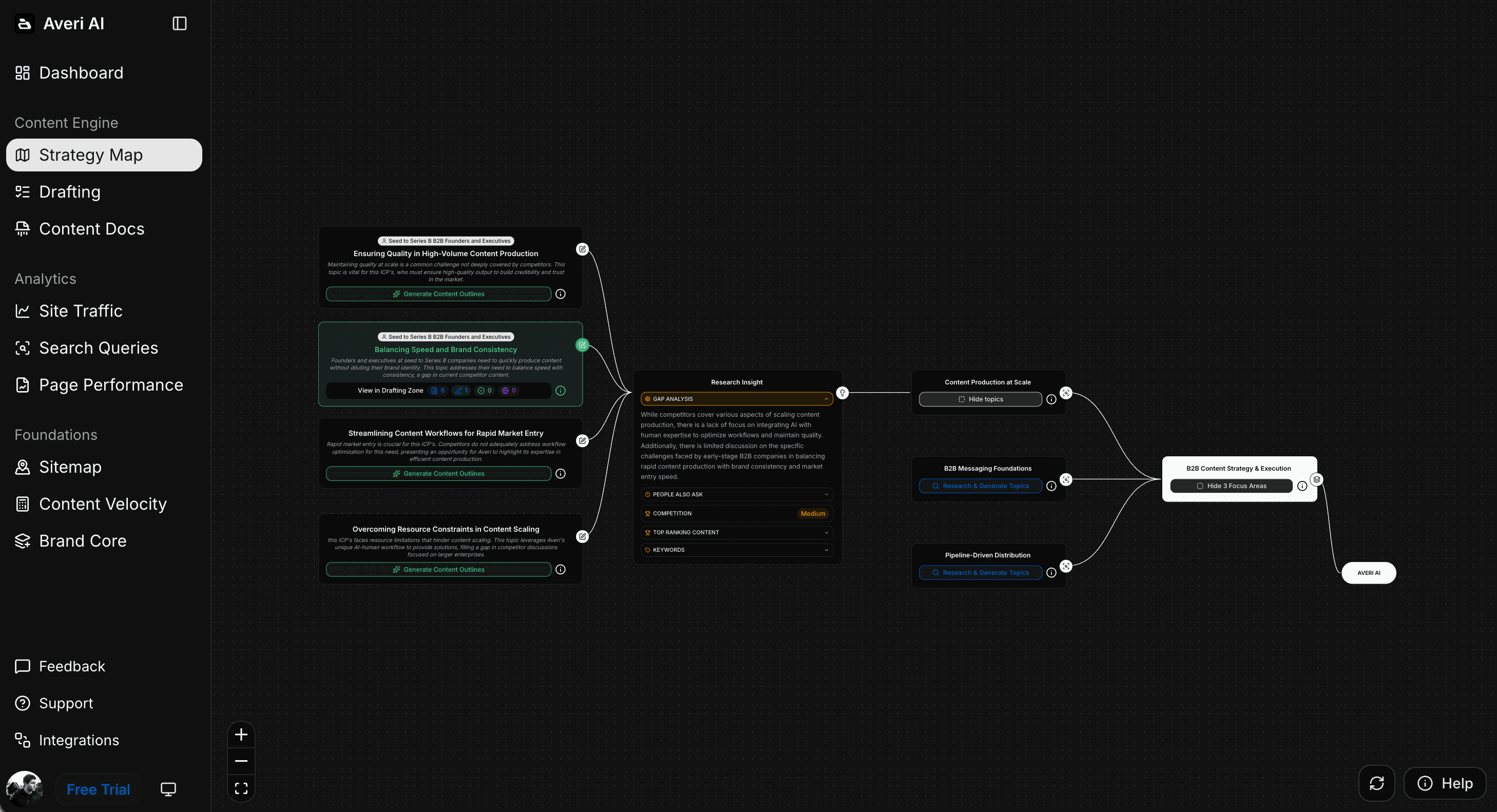
What a Real Content Writing Workflow Looks Like

If you want content that does both jobs, sending to subscribers and attracting new ones, you need a workflow that goes beyond Flodesk's scope.

The Content That Feeds Your Flodesk List

A functioning content marketing engine produces blog content optimized for search keywords your target audience types into Google and AI platforms. That content:

  • Targets specific keywords with proven search demand

  • Runs 1,500–2,500 words with sourced, hyperlinked statistics

  • Includes FAQ sections structured for Featured Snippets and AI citations (4.3x more snippets for pages with FAQ sections)

  • Contains internal links connecting to related content on your site

  • Embeds email subscribe forms that push new subscribers into your Flodesk list

  • Gets published to a blog on your own domain (WordPress, Webflow, or Framer)

That blog post ranks on Google. A stranger searching for the topic finds it. They read it. They subscribe through the embedded form.

They enter your Flodesk welcome sequence. They become a subscriber. Eventually, they become a customer.

The blog does the discovery. Flodesk does the nurture. Both are necessary. Neither replaces the other.

The Workflow That Produces Both

Here's the practical rhythm for Flodesk users who want to add content marketing:

Write your Flodesk emails as normal. Your newsletter voice, your design, your cadence. Nothing changes on the email side.

Produce 1 blog post per week on your own domain. Target a keyword your audience searches. Expand a topic you covered in a recent email. Add data, structure, and FAQ sections. Companies publishing weekly see up to 200% more organic traffic than sporadic publishers.

Connect the two channels. Link to your blog post from your Flodesk email ("I went deeper on this topic on the blog this week"). Embed Flodesk subscribe forms on every blog page. The blog drives new subscribers into Flodesk. Flodesk drives engaged readers back to the blog. The flywheel spins.

Track performance. Use Google Search Console for keyword data and Google Analytics for site behavior. Use Flodesk's email analytics for engagement. Compare subscriber growth from organic search versus other channels.

Better Options for Content Writing Alongside Flodesk

If Flodesk handles your email and you need a tool that handles content writing, strategy, and publishing, here are your options ranked by how much of the workflow they cover.

Option 1: Manual Stack (Multiple Tools)

What you assemble:

  • Ahrefs or SEMrush for keyword research ($99–$199/month)

  • Google Docs or Notion for drafting (free)

  • Clearscope or Surfer SEO for optimization ($170–$199/month)

  • WordPress, Webflow, or Framer for publishing ($5–$39/month)

  • Google Analytics + Search Console for tracking (free)

Total cost: $274–$437/month + 15–20 hours/week of your time

Pros: Full control over every step. Flexibility to customize.

Cons: Five separate tools. No integration between them. Significant time investment. The manual coordination is where most solo creators stall.

Option 2: AI Writing Tool + Manual Publishing

What you use:

  • ChatGPT or Claude for drafting ($20/month)

  • WordPress/Webflow/Framer for publishing ($5–$39/month)

  • Google Search Console for basic tracking (free)

Total cost: $25–$59/month + 8–12 hours/week

Pros: Cheap. Fast first drafts.

Cons: No keyword research. No content strategy. No SEO optimization. No sourced statistics. Generic output that needs heavy editing. No internal linking. No performance tracking beyond basics. You're saving money but producing content that likely won't rank.

Option 3: Averi (One Platform)

What it covers:

  • Content strategy and keyword research (generated during 10-minute onboarding)

  • Content queue with keyword-backed topic recommendations

  • AI-assisted drafting with your brand voice, sourced statistics, and internal links

  • Dual SEO + GEO optimization (content scoring: 55% SEO, 45% AI citation readiness)

  • FAQ generation and meta tag optimization

  • Direct CMS publishing to WordPress, Webflow, and Framer

  • Performance analytics with Google Analytics and Search Console integration

Total cost: $99/month (Solo plan) + $5–$39/month hosting = $104–$138/month

Time investment: ~2 hours/week (review topics, edit drafts, approve publishing)

Pros: One platform handling the entire content writing workflow Flodesk doesn't cover. Strategy through analytics in a single tool. Your Brand Core ensures every piece sounds like you, not generic AI. Content built for both Google and AI citation platforms from day one.

Cons: You're adding a second tool to your stack. (That said, the alternative is adding five.)

The Flodesk + Averi Stack: How They Fit Together

Flodesk and Averi don't overlap. They cover different halves of the content business.


Flodesk

Averi

Primary job

Email design, sending, nurture

Content strategy, creation, publishing

Content type

Email newsletters

Blog posts, SEO articles, editorials

Where content lives

Subscriber inboxes

Your blog (indexed by Google)

Growth mechanism

Forms, landing pages, checkout

Organic search, AI citations

Analytics focus

Email opens, clicks, revenue

Keyword rankings, traffic, search performance

Audience reached

Existing subscribers

Strangers searching for your topics

Flodesk sends the emails that build relationships and drive revenue. Averi creates the content that makes strangers discover you in the first place. Together, they form a complete system: discovery + distribution + monetization.

The weekly rhythm for the combined stack:

  • Monday: Write and send your Flodesk email as normal

  • Tuesday: Review Averi's content queue, approve 1–2 topics (30 min)

  • Wednesday: Edit Averi's draft in the collaborative canvas (30–45 min)

  • Thursday: Approve and publish to your blog CMS (5 min)

  • Friday: Reference the blog post in your next Flodesk email with a link back

Combined monthly cost: Flodesk ($25–$54/month depending on plan and list size) + Averi ($99/month) + hosting ($5–$39/month) = $129–$192/month.

That's the complete content writing stack: Flodesk for the emails people love to read, Averi for the content people find when they search. Both running. Both growing your business. Neither trying to do the other's job.

Averi grew its own organic traffic 6,000% in 10 months using the content engine Flodesk users can now pair with their email workflow. Start a free 14-day trial. No credit card. Setup takes one afternoon. First blog post in review by midweek.

Related Resources

FAQs

Can Flodesk be used for content writing?

Flodesk can be used for writing email newsletters. Its block-based editor produces visually polished emails with custom fonts, brand colors, and professional layouts. It cannot be used for blog content writing, SEO article creation, or any content published on the open web. Flodesk has no blog, no CMS publishing, no keyword research, and no SEO tools. If "content writing" means email only, Flodesk works. If it means content that ranks on Google and drives organic traffic, you need a separate tool like a content engine alongside Flodesk.

Does Flodesk have a blog feature?

No. Flodesk has no keyword research, no meta tag fields for web content, no sitemap generation, no Google Search Console integration, no URL optimization, and no internal linking tools. The platform is built for email marketing, not search engine optimization. For Flodesk users who want SEO capabilities, the options are standalone SEO tools (Ahrefs, SEMrush at $99–$199/month), free tools like Google Keyword Planner, or an integrated content engine like Averi that handles keyword research, content strategy, and SEO optimization in one workflow.

What content writing tools should Flodesk users pair with it?

Flodesk handles email creation. For content that drives organic traffic, Flodesk users need tools covering content strategy, blog writing, SEO optimization, and web publishing. A manual stack (Ahrefs + Google Docs + Surfer SEO + WordPress) costs $274–$437/month and takes 15–20 hours weekly. An integrated content engine like Averi ($99/month) handles the full workflow in about 2 hours per week: keyword research, AI-assisted drafting with brand voice, dual SEO + GEO optimization, CMS publishing, and performance analytics. The Flodesk + Averi combination covers both email and content for $129–$192/month total.

How do I create blog content that grows my Flodesk email list?

Publish keyword-targeted blog posts on your own domain with Flodesk subscribe forms embedded throughout each article. Target keywords your ideal subscribers search for, write 1,500–2,500 word posts with sourced statistics and FAQ sections, and include 2–3 contextual CTAs matching the content topic. Reference blog posts in your Flodesk emails to create a flywheel where each channel drives traffic to the other. Companies publishing weekly see up to 200% more organic traffic. Use Google Search Console to track which content drives subscribers and double down on what works.

Is Flodesk good for content marketing?

Flodesk is good for the email distribution component of content marketing. It creates beautiful emails, automates welcome sequences, and manages subscriber relationships. It is not a content marketing platform. Content marketing requires keyword research, strategic content planning, SEO-optimized blog publishing, and search performance analytics. Flodesk provides none of these. For Flodesk users, the content marketing layer comes from pairing the platform with a content engine that handles discovery. Flodesk nurtures and monetizes the audience. The content engine builds it.

How does Averi compare to Flodesk for content creation?

Averi and Flodesk solve different problems. Flodesk creates email newsletters. Averi creates SEO and GEO-optimized blog content that ranks on Google and gets cited by AI platforms. Averi handles content strategy, keyword research, AI-assisted drafting, CMS publishing, and analytics. Flodesk handles email design, sending, automation, and subscriber management. They don't compete. They complement. The combined stack gives Flodesk users both the discovery engine (Averi) and the distribution engine (Flodesk) that a content business needs to grow.


Continue Reading

The latest handpicked blog articles

Experience The AI Content Engine

Already have an account?

Join 30,000+ Founders, Marketers & Builders

Don't Feed the Algorithm

“Top 3 tech + AI newsletters in the country. Always sharp, always actionable.”

"Genuinely my favorite newsletter in tech. No fluff, no cheesy ads, just great content."

“Clear, practical, and on-point. Helps me keep up without drowning in noise.”

User-Generated Content & Authenticity in the Age of AI

Zach Chmael

Head of Marketing

6 minutes

In This Article

Flodesk can help you write beautiful emails. It cannot help you write content that gets found on Google, cited by AI platforms, or published on a blog that drives subscribers while you sleep.

Don’t Feed the Algorithm

The algorithm never sleeps, but you don’t have to feed it — Join our weekly newsletter for real insights on AI, human creativity & marketing execution.

TL;DR

📧 Flodesk creates beautiful emails. It does not create blog content, SEO articles, or any content Google can find.

🚫 No blog/CMS publishing, no keyword research, no SEO tools, no AI content drafting, no content strategy, no search analytics

🔍 Organic search drives 53% of web traffic. Content marketing generates 3x more leads at 62% lower cost. Flodesk doesn't participate in either.

📊 The gap: Flodesk is distribution (reaching existing subscribers). Content marketing is discovery (attracting new ones). You need both.

🔧 Three options: manual stack ($274–$437/mo, 15–20 hrs/week), AI drafting tool ($25–$59/mo, limited optimization), or Averi ($99/mo, ~2 hrs/week, full workflow)

🔄 Flodesk + Averi = complete stack. Averi creates content people find on Google. Flodesk sends emails that build the relationship. $129–$192/month total.

Start free with Averi. 14-day trial. No credit card. First blog post by midweek.

"We built Averi around the exact workflow we've used to scale our web traffic over 6000% in the last 6 months."

founder-image
founder-image
Your content should be working harder.

Averi's content engine builds Google entity authority, drives AI citations, and scales your visibility so you can get more customers.

Can You Use Flodesk for Content Writing? Capabilities, Limits, and Better Options

Short answer: Flodesk can help you write beautiful emails. It cannot help you write content that gets found on Google, cited by AI platforms, or published on a blog that drives subscribers while you sleep.

If you're asking "can I use Flodesk for content writing?" the answer depends entirely on what you mean by content.

If you mean email newsletters, yes. Flodesk's editor is one of the most visually polished in the industry, and reviewers consistently praise its design-forward approach.

If you mean blog posts, SEO articles, thought leadership content, or any writing that lives outside an inbox, Flodesk doesn't do that.

Not partially. Not with workarounds. It's simply not what the tool was built for.

This matters because the line between "content writing" and "email writing" is the line between discovery and distribution. One attracts new people. The other nurtures existing subscribers. If you're only doing the second, you're leaving the largest growth channel in digital marketing untouched.

Here's exactly what Flodesk can and can't do for content, and what to use alongside it if you want the full picture.

What Flodesk Actually Does for Content Creation

Flodesk is an email marketing platform built for small businesses and creatives who prioritize design. It's popular with photographers, coaches, designers, and creative entrepreneurs who want their emails to look like their brand without hiring a designer.

Here's what the platform gives you for content creation:

Email Editor

Flodesk's block-based editor lets you build emails using pre-designed layouts, images, text blocks, buttons, countdown timers, polls, and Instagram embeds. The templates are stunning and the interface is intuitive. You can upload custom fonts, match your brand palette, and create professional-looking newsletters in minutes.

For email content, this is legitimately excellent. If your definition of "content writing" stops at email newsletters, Flodesk handles it well.

Landing Pages and Forms

Flodesk includes a landing page builder and opt-in form tools. You can create signup pages, lead magnet delivery pages, and embedded forms for your website. These are design-focused and functional for list building.

Basic Automation

Flodesk supports welcome sequences, lead nurture workflows, and follow-up emails triggered by subscriber actions. The automation is straightforward but limited compared to advanced platforms: no branching logic, no multi-channel triggers, no conditional paths based on complex behaviors.

Checkout Pages

Flodesk's checkout feature lets you sell digital products and newsletter subscriptions with no platform commission (just Stripe processing fees). This is a monetization feature, not a content creation feature, but it's worth noting as part of the platform's scope.

What Flodesk Cannot Do for Content Writing

This is the list that matters if you searched "Flodesk for content writing" hoping the platform could serve as your content creation system.

No Blog or CMS Publishing

Flodesk does not have a blog.

It does not publish content to the web in a format Google can crawl and rank.

It does not integrate with WordPress, Webflow, Framer, or any external CMS for content publishing purposes.

Your Flodesk emails live in inboxes. They don't live on the internet where search engines can find them.

Companies with active blogs have 434% more indexed pages and 97% more inbound links than those without. Flodesk doesn't contribute to either of those numbers.

No SEO Tools

Flodesk has no keyword research capabilities.

No meta title or description fields.

No sitemap generation.

No Google Search Console integration.

No URL optimization. No internal linking tools. No schema markup support.

If you want your content to appear in search results, Flodesk offers zero infrastructure for that.

Organic search drives 53% of all website traffic. Flodesk can't touch it.

No AI Content Drafting for Blog or Long-Form Content

Flodesk doesn't include AI writing tools for generating blog posts, SEO articles, or long-form content.

The platform's content creation capabilities are limited to composing emails within its editor. There's no research functionality, no sourced statistics, no content strategy features.

83% of marketers now use AI tools for content creation, primarily to produce the blog and web content that drives organic traffic. Flodesk sits entirely outside that workflow.

No Content Strategy or Keyword Research

Flodesk doesn't analyze your competitors' content.

It doesn't identify keyword opportunities.

It doesn't generate topic clusters or map content to search intent.

It doesn't recommend what to write based on what your audience is searching for.

Businesses that prioritize blogging are 13x more likely to see positive ROI. That ROI comes from strategically targeted content. Flodesk has no mechanism for producing it.

No Content Performance Tracking Beyond Email

Flodesk's analytics are basic and email-focused: sent emails, deliverability, bounces, unsubscribes, click-through rates.

There's no organic traffic tracking. No keyword ranking data. No page-level search performance. No conversion path from search impression to email subscription.

Only 29% of marketers effectively measure content marketing ROI. Flodesk's analytics don't even attempt to address content marketing measurement.

No Advanced Personalization or Segmentation for Content Delivery

Flodesk offers basic segmentation by subscription source and engagement level, with simple merge tags for personalization.

There's no behavioral targeting, no multi-channel automation, and no A/B testing capabilities (a limitation multiple reviewers flag).

For creators who want to deliver different content to different audience segments based on their interests or behavior, Flodesk's tools are surface-level.

The Gap: Email Writing vs. Content Marketing

Here's why this distinction matters beyond platform features.

Flodesk helps you write emails that reach your existing subscribers. That's valuable. Your email list is your most owned, most controllable audience channel. Email marketing delivers $36–$42 for every $1 spent. Flodesk serves that channel well.

But email is distribution. It reaches people who already found you.

Content marketing is discovery. It reaches people who haven't found you yet. Content marketing generates $3 for every $1 invested and costs 62% less than traditional marketing while producing 3x more leads. SEO delivers 748% ROI for B2B companies. Compound blog posts generate 38% of traffic from just 10% of posts.

Those returns come from content published on blogs and websites where Google indexes it, AI platforms cite it, and strangers find it.

Flodesk doesn't participate in any of that. It's not a limitation of Flodesk. It's the boundary of what an email platform is.

The question isn't whether Flodesk is good at what it does. It is. The question is whether what it does is enough.

If your only content output is email, you're reaching your existing audience and nobody else. That's a ceiling.

What a Real Content Writing Workflow Looks Like

If you want content that does both jobs, sending to subscribers and attracting new ones, you need a workflow that goes beyond Flodesk's scope.

The Content That Feeds Your Flodesk List

A functioning content marketing engine produces blog content optimized for search keywords your target audience types into Google and AI platforms. That content:

  • Targets specific keywords with proven search demand

  • Runs 1,500–2,500 words with sourced, hyperlinked statistics

  • Includes FAQ sections structured for Featured Snippets and AI citations (4.3x more snippets for pages with FAQ sections)

  • Contains internal links connecting to related content on your site

  • Embeds email subscribe forms that push new subscribers into your Flodesk list

  • Gets published to a blog on your own domain (WordPress, Webflow, or Framer)

That blog post ranks on Google. A stranger searching for the topic finds it. They read it. They subscribe through the embedded form.

They enter your Flodesk welcome sequence. They become a subscriber. Eventually, they become a customer.

The blog does the discovery. Flodesk does the nurture. Both are necessary. Neither replaces the other.

The Workflow That Produces Both

Here's the practical rhythm for Flodesk users who want to add content marketing:

Write your Flodesk emails as normal. Your newsletter voice, your design, your cadence. Nothing changes on the email side.

Produce 1 blog post per week on your own domain. Target a keyword your audience searches. Expand a topic you covered in a recent email. Add data, structure, and FAQ sections. Companies publishing weekly see up to 200% more organic traffic than sporadic publishers.

Connect the two channels. Link to your blog post from your Flodesk email ("I went deeper on this topic on the blog this week"). Embed Flodesk subscribe forms on every blog page. The blog drives new subscribers into Flodesk. Flodesk drives engaged readers back to the blog. The flywheel spins.

Track performance. Use Google Search Console for keyword data and Google Analytics for site behavior. Use Flodesk's email analytics for engagement. Compare subscriber growth from organic search versus other channels.

Better Options for Content Writing Alongside Flodesk

If Flodesk handles your email and you need a tool that handles content writing, strategy, and publishing, here are your options ranked by how much of the workflow they cover.

Option 1: Manual Stack (Multiple Tools)

What you assemble:

  • Ahrefs or SEMrush for keyword research ($99–$199/month)

  • Google Docs or Notion for drafting (free)

  • Clearscope or Surfer SEO for optimization ($170–$199/month)

  • WordPress, Webflow, or Framer for publishing ($5–$39/month)

  • Google Analytics + Search Console for tracking (free)

Total cost: $274–$437/month + 15–20 hours/week of your time

Pros: Full control over every step. Flexibility to customize.

Cons: Five separate tools. No integration between them. Significant time investment. The manual coordination is where most solo creators stall.

Option 2: AI Writing Tool + Manual Publishing

What you use:

  • ChatGPT or Claude for drafting ($20/month)

  • WordPress/Webflow/Framer for publishing ($5–$39/month)

  • Google Search Console for basic tracking (free)

Total cost: $25–$59/month + 8–12 hours/week

Pros: Cheap. Fast first drafts.

Cons: No keyword research. No content strategy. No SEO optimization. No sourced statistics. Generic output that needs heavy editing. No internal linking. No performance tracking beyond basics. You're saving money but producing content that likely won't rank.

Option 3: Averi (One Platform)

What it covers:

  • Content strategy and keyword research (generated during 10-minute onboarding)

  • Content queue with keyword-backed topic recommendations

  • AI-assisted drafting with your brand voice, sourced statistics, and internal links

  • Dual SEO + GEO optimization (content scoring: 55% SEO, 45% AI citation readiness)

  • FAQ generation and meta tag optimization

  • Direct CMS publishing to WordPress, Webflow, and Framer

  • Performance analytics with Google Analytics and Search Console integration

Total cost: $99/month (Solo plan) + $5–$39/month hosting = $104–$138/month

Time investment: ~2 hours/week (review topics, edit drafts, approve publishing)

Pros: One platform handling the entire content writing workflow Flodesk doesn't cover. Strategy through analytics in a single tool. Your Brand Core ensures every piece sounds like you, not generic AI. Content built for both Google and AI citation platforms from day one.

Cons: You're adding a second tool to your stack. (That said, the alternative is adding five.)

The Flodesk + Averi Stack: How They Fit Together

Flodesk and Averi don't overlap. They cover different halves of the content business.


Flodesk

Averi

Primary job

Email design, sending, nurture

Content strategy, creation, publishing

Content type

Email newsletters

Blog posts, SEO articles, editorials

Where content lives

Subscriber inboxes

Your blog (indexed by Google)

Growth mechanism

Forms, landing pages, checkout

Organic search, AI citations

Analytics focus

Email opens, clicks, revenue

Keyword rankings, traffic, search performance

Audience reached

Existing subscribers

Strangers searching for your topics

Flodesk sends the emails that build relationships and drive revenue. Averi creates the content that makes strangers discover you in the first place. Together, they form a complete system: discovery + distribution + monetization.

The weekly rhythm for the combined stack:

  • Monday: Write and send your Flodesk email as normal

  • Tuesday: Review Averi's content queue, approve 1–2 topics (30 min)

  • Wednesday: Edit Averi's draft in the collaborative canvas (30–45 min)

  • Thursday: Approve and publish to your blog CMS (5 min)

  • Friday: Reference the blog post in your next Flodesk email with a link back

Combined monthly cost: Flodesk ($25–$54/month depending on plan and list size) + Averi ($99/month) + hosting ($5–$39/month) = $129–$192/month.

That's the complete content writing stack: Flodesk for the emails people love to read, Averi for the content people find when they search. Both running. Both growing your business. Neither trying to do the other's job.

Averi grew its own organic traffic 6,000% in 10 months using the content engine Flodesk users can now pair with their email workflow. Start a free 14-day trial. No credit card. Setup takes one afternoon. First blog post in review by midweek.

Related Resources

Continue Reading

The latest handpicked blog articles

Join 30,000+ Founders, Marketers & Builders

Don't Feed the Algorithm

“Top 3 tech + AI newsletters in the country. Always sharp, always actionable.”

"Genuinely my favorite newsletter in tech. No fluff, no cheesy ads, just great content."

“Clear, practical, and on-point. Helps me keep up without drowning in noise.”

User-Generated Content & Authenticity in the Age of AI

Zach Chmael

Head of Marketing

6 minutes

In This Article

Flodesk can help you write beautiful emails. It cannot help you write content that gets found on Google, cited by AI platforms, or published on a blog that drives subscribers while you sleep.

Don’t Feed the Algorithm

The algorithm never sleeps, but you don’t have to feed it — Join our weekly newsletter for real insights on AI, human creativity & marketing execution.

Trusted by 1,000+ teams

★★★★★ 4.9/5

Startups use Averi to build
content engines that rank.

Can You Use Flodesk for Content Writing? Capabilities, Limits, and Better Options

Short answer: Flodesk can help you write beautiful emails. It cannot help you write content that gets found on Google, cited by AI platforms, or published on a blog that drives subscribers while you sleep.

If you're asking "can I use Flodesk for content writing?" the answer depends entirely on what you mean by content.

If you mean email newsletters, yes. Flodesk's editor is one of the most visually polished in the industry, and reviewers consistently praise its design-forward approach.

If you mean blog posts, SEO articles, thought leadership content, or any writing that lives outside an inbox, Flodesk doesn't do that.

Not partially. Not with workarounds. It's simply not what the tool was built for.

This matters because the line between "content writing" and "email writing" is the line between discovery and distribution. One attracts new people. The other nurtures existing subscribers. If you're only doing the second, you're leaving the largest growth channel in digital marketing untouched.

Here's exactly what Flodesk can and can't do for content, and what to use alongside it if you want the full picture.

What Flodesk Actually Does for Content Creation

Flodesk is an email marketing platform built for small businesses and creatives who prioritize design. It's popular with photographers, coaches, designers, and creative entrepreneurs who want their emails to look like their brand without hiring a designer.

Here's what the platform gives you for content creation:

Email Editor

Flodesk's block-based editor lets you build emails using pre-designed layouts, images, text blocks, buttons, countdown timers, polls, and Instagram embeds. The templates are stunning and the interface is intuitive. You can upload custom fonts, match your brand palette, and create professional-looking newsletters in minutes.

For email content, this is legitimately excellent. If your definition of "content writing" stops at email newsletters, Flodesk handles it well.

Landing Pages and Forms

Flodesk includes a landing page builder and opt-in form tools. You can create signup pages, lead magnet delivery pages, and embedded forms for your website. These are design-focused and functional for list building.

Basic Automation

Flodesk supports welcome sequences, lead nurture workflows, and follow-up emails triggered by subscriber actions. The automation is straightforward but limited compared to advanced platforms: no branching logic, no multi-channel triggers, no conditional paths based on complex behaviors.

Checkout Pages

Flodesk's checkout feature lets you sell digital products and newsletter subscriptions with no platform commission (just Stripe processing fees). This is a monetization feature, not a content creation feature, but it's worth noting as part of the platform's scope.

What Flodesk Cannot Do for Content Writing

This is the list that matters if you searched "Flodesk for content writing" hoping the platform could serve as your content creation system.

No Blog or CMS Publishing

Flodesk does not have a blog.

It does not publish content to the web in a format Google can crawl and rank.

It does not integrate with WordPress, Webflow, Framer, or any external CMS for content publishing purposes.

Your Flodesk emails live in inboxes. They don't live on the internet where search engines can find them.

Companies with active blogs have 434% more indexed pages and 97% more inbound links than those without. Flodesk doesn't contribute to either of those numbers.

No SEO Tools

Flodesk has no keyword research capabilities.

No meta title or description fields.

No sitemap generation.

No Google Search Console integration.

No URL optimization. No internal linking tools. No schema markup support.

If you want your content to appear in search results, Flodesk offers zero infrastructure for that.

Organic search drives 53% of all website traffic. Flodesk can't touch it.

No AI Content Drafting for Blog or Long-Form Content

Flodesk doesn't include AI writing tools for generating blog posts, SEO articles, or long-form content.

The platform's content creation capabilities are limited to composing emails within its editor. There's no research functionality, no sourced statistics, no content strategy features.

83% of marketers now use AI tools for content creation, primarily to produce the blog and web content that drives organic traffic. Flodesk sits entirely outside that workflow.

No Content Strategy or Keyword Research

Flodesk doesn't analyze your competitors' content.

It doesn't identify keyword opportunities.

It doesn't generate topic clusters or map content to search intent.

It doesn't recommend what to write based on what your audience is searching for.

Businesses that prioritize blogging are 13x more likely to see positive ROI. That ROI comes from strategically targeted content. Flodesk has no mechanism for producing it.

No Content Performance Tracking Beyond Email

Flodesk's analytics are basic and email-focused: sent emails, deliverability, bounces, unsubscribes, click-through rates.

There's no organic traffic tracking. No keyword ranking data. No page-level search performance. No conversion path from search impression to email subscription.

Only 29% of marketers effectively measure content marketing ROI. Flodesk's analytics don't even attempt to address content marketing measurement.

No Advanced Personalization or Segmentation for Content Delivery

Flodesk offers basic segmentation by subscription source and engagement level, with simple merge tags for personalization.

There's no behavioral targeting, no multi-channel automation, and no A/B testing capabilities (a limitation multiple reviewers flag).

For creators who want to deliver different content to different audience segments based on their interests or behavior, Flodesk's tools are surface-level.

The Gap: Email Writing vs. Content Marketing

Here's why this distinction matters beyond platform features.

Flodesk helps you write emails that reach your existing subscribers. That's valuable. Your email list is your most owned, most controllable audience channel. Email marketing delivers $36–$42 for every $1 spent. Flodesk serves that channel well.

But email is distribution. It reaches people who already found you.

Content marketing is discovery. It reaches people who haven't found you yet. Content marketing generates $3 for every $1 invested and costs 62% less than traditional marketing while producing 3x more leads. SEO delivers 748% ROI for B2B companies. Compound blog posts generate 38% of traffic from just 10% of posts.

Those returns come from content published on blogs and websites where Google indexes it, AI platforms cite it, and strangers find it.

Flodesk doesn't participate in any of that. It's not a limitation of Flodesk. It's the boundary of what an email platform is.

The question isn't whether Flodesk is good at what it does. It is. The question is whether what it does is enough.

If your only content output is email, you're reaching your existing audience and nobody else. That's a ceiling.

What a Real Content Writing Workflow Looks Like

If you want content that does both jobs, sending to subscribers and attracting new ones, you need a workflow that goes beyond Flodesk's scope.

The Content That Feeds Your Flodesk List

A functioning content marketing engine produces blog content optimized for search keywords your target audience types into Google and AI platforms. That content:

  • Targets specific keywords with proven search demand

  • Runs 1,500–2,500 words with sourced, hyperlinked statistics

  • Includes FAQ sections structured for Featured Snippets and AI citations (4.3x more snippets for pages with FAQ sections)

  • Contains internal links connecting to related content on your site

  • Embeds email subscribe forms that push new subscribers into your Flodesk list

  • Gets published to a blog on your own domain (WordPress, Webflow, or Framer)

That blog post ranks on Google. A stranger searching for the topic finds it. They read it. They subscribe through the embedded form.

They enter your Flodesk welcome sequence. They become a subscriber. Eventually, they become a customer.

The blog does the discovery. Flodesk does the nurture. Both are necessary. Neither replaces the other.

The Workflow That Produces Both

Here's the practical rhythm for Flodesk users who want to add content marketing:

Write your Flodesk emails as normal. Your newsletter voice, your design, your cadence. Nothing changes on the email side.

Produce 1 blog post per week on your own domain. Target a keyword your audience searches. Expand a topic you covered in a recent email. Add data, structure, and FAQ sections. Companies publishing weekly see up to 200% more organic traffic than sporadic publishers.

Connect the two channels. Link to your blog post from your Flodesk email ("I went deeper on this topic on the blog this week"). Embed Flodesk subscribe forms on every blog page. The blog drives new subscribers into Flodesk. Flodesk drives engaged readers back to the blog. The flywheel spins.

Track performance. Use Google Search Console for keyword data and Google Analytics for site behavior. Use Flodesk's email analytics for engagement. Compare subscriber growth from organic search versus other channels.

Better Options for Content Writing Alongside Flodesk

If Flodesk handles your email and you need a tool that handles content writing, strategy, and publishing, here are your options ranked by how much of the workflow they cover.

Option 1: Manual Stack (Multiple Tools)

What you assemble:

  • Ahrefs or SEMrush for keyword research ($99–$199/month)

  • Google Docs or Notion for drafting (free)

  • Clearscope or Surfer SEO for optimization ($170–$199/month)

  • WordPress, Webflow, or Framer for publishing ($5–$39/month)

  • Google Analytics + Search Console for tracking (free)

Total cost: $274–$437/month + 15–20 hours/week of your time

Pros: Full control over every step. Flexibility to customize.

Cons: Five separate tools. No integration between them. Significant time investment. The manual coordination is where most solo creators stall.

Option 2: AI Writing Tool + Manual Publishing

What you use:

  • ChatGPT or Claude for drafting ($20/month)

  • WordPress/Webflow/Framer for publishing ($5–$39/month)

  • Google Search Console for basic tracking (free)

Total cost: $25–$59/month + 8–12 hours/week

Pros: Cheap. Fast first drafts.

Cons: No keyword research. No content strategy. No SEO optimization. No sourced statistics. Generic output that needs heavy editing. No internal linking. No performance tracking beyond basics. You're saving money but producing content that likely won't rank.

Option 3: Averi (One Platform)

What it covers:

  • Content strategy and keyword research (generated during 10-minute onboarding)

  • Content queue with keyword-backed topic recommendations

  • AI-assisted drafting with your brand voice, sourced statistics, and internal links

  • Dual SEO + GEO optimization (content scoring: 55% SEO, 45% AI citation readiness)

  • FAQ generation and meta tag optimization

  • Direct CMS publishing to WordPress, Webflow, and Framer

  • Performance analytics with Google Analytics and Search Console integration

Total cost: $99/month (Solo plan) + $5–$39/month hosting = $104–$138/month

Time investment: ~2 hours/week (review topics, edit drafts, approve publishing)

Pros: One platform handling the entire content writing workflow Flodesk doesn't cover. Strategy through analytics in a single tool. Your Brand Core ensures every piece sounds like you, not generic AI. Content built for both Google and AI citation platforms from day one.

Cons: You're adding a second tool to your stack. (That said, the alternative is adding five.)

The Flodesk + Averi Stack: How They Fit Together

Flodesk and Averi don't overlap. They cover different halves of the content business.


Flodesk

Averi

Primary job

Email design, sending, nurture

Content strategy, creation, publishing

Content type

Email newsletters

Blog posts, SEO articles, editorials

Where content lives

Subscriber inboxes

Your blog (indexed by Google)

Growth mechanism

Forms, landing pages, checkout

Organic search, AI citations

Analytics focus

Email opens, clicks, revenue

Keyword rankings, traffic, search performance

Audience reached

Existing subscribers

Strangers searching for your topics

Flodesk sends the emails that build relationships and drive revenue. Averi creates the content that makes strangers discover you in the first place. Together, they form a complete system: discovery + distribution + monetization.

The weekly rhythm for the combined stack:

  • Monday: Write and send your Flodesk email as normal

  • Tuesday: Review Averi's content queue, approve 1–2 topics (30 min)

  • Wednesday: Edit Averi's draft in the collaborative canvas (30–45 min)

  • Thursday: Approve and publish to your blog CMS (5 min)

  • Friday: Reference the blog post in your next Flodesk email with a link back

Combined monthly cost: Flodesk ($25–$54/month depending on plan and list size) + Averi ($99/month) + hosting ($5–$39/month) = $129–$192/month.

That's the complete content writing stack: Flodesk for the emails people love to read, Averi for the content people find when they search. Both running. Both growing your business. Neither trying to do the other's job.

Averi grew its own organic traffic 6,000% in 10 months using the content engine Flodesk users can now pair with their email workflow. Start a free 14-day trial. No credit card. Setup takes one afternoon. First blog post in review by midweek.

Related Resources

"We built Averi around the exact workflow we've used to scale our web traffic over 6000% in the last 6 months."

founder-image
founder-image
Your content should be working harder.

Averi's content engine builds Google entity authority, drives AI citations, and scales your visibility so you can get more customers.

FAQs

Averi and Flodesk solve different problems. Flodesk creates email newsletters. Averi creates SEO and GEO-optimized blog content that ranks on Google and gets cited by AI platforms. Averi handles content strategy, keyword research, AI-assisted drafting, CMS publishing, and analytics. Flodesk handles email design, sending, automation, and subscriber management. They don't compete. They complement. The combined stack gives Flodesk users both the discovery engine (Averi) and the distribution engine (Flodesk) that a content business needs to grow.

How does Averi compare to Flodesk for content creation?

Flodesk is good for the email distribution component of content marketing. It creates beautiful emails, automates welcome sequences, and manages subscriber relationships. It is not a content marketing platform. Content marketing requires keyword research, strategic content planning, SEO-optimized blog publishing, and search performance analytics. Flodesk provides none of these. For Flodesk users, the content marketing layer comes from pairing the platform with a content engine that handles discovery. Flodesk nurtures and monetizes the audience. The content engine builds it.

Is Flodesk good for content marketing?

Publish keyword-targeted blog posts on your own domain with Flodesk subscribe forms embedded throughout each article. Target keywords your ideal subscribers search for, write 1,500–2,500 word posts with sourced statistics and FAQ sections, and include 2–3 contextual CTAs matching the content topic. Reference blog posts in your Flodesk emails to create a flywheel where each channel drives traffic to the other. Companies publishing weekly see up to 200% more organic traffic. Use Google Search Console to track which content drives subscribers and double down on what works.

How do I create blog content that grows my Flodesk email list?

Flodesk handles email creation. For content that drives organic traffic, Flodesk users need tools covering content strategy, blog writing, SEO optimization, and web publishing. A manual stack (Ahrefs + Google Docs + Surfer SEO + WordPress) costs $274–$437/month and takes 15–20 hours weekly. An integrated content engine like Averi ($99/month) handles the full workflow in about 2 hours per week: keyword research, AI-assisted drafting with brand voice, dual SEO + GEO optimization, CMS publishing, and performance analytics. The Flodesk + Averi combination covers both email and content for $129–$192/month total.

What content writing tools should Flodesk users pair with it?

No. Flodesk has no keyword research, no meta tag fields for web content, no sitemap generation, no Google Search Console integration, no URL optimization, and no internal linking tools. The platform is built for email marketing, not search engine optimization. For Flodesk users who want SEO capabilities, the options are standalone SEO tools (Ahrefs, SEMrush at $99–$199/month), free tools like Google Keyword Planner, or an integrated content engine like Averi that handles keyword research, content strategy, and SEO optimization in one workflow.

Does Flodesk have a blog feature?

Flodesk can be used for writing email newsletters. Its block-based editor produces visually polished emails with custom fonts, brand colors, and professional layouts. It cannot be used for blog content writing, SEO article creation, or any content published on the open web. Flodesk has no blog, no CMS publishing, no keyword research, and no SEO tools. If "content writing" means email only, Flodesk works. If it means content that ranks on Google and drives organic traffic, you need a separate tool like a content engine alongside Flodesk.

Can Flodesk be used for content writing?

FAQs

How long does it take to see SEO results for B2B SaaS?

Expect 7 months to break-even on average, with meaningful traffic improvements typically appearing within 3-6 months. Link building results appear within 1-6 months. The key is consistency—companies that stop and start lose ground to those who execute continuously.

Is AI-generated content actually good for SEO?

62% of marketers report higher SERP rankings for AI-generated content—but only when properly edited and enhanced with human expertise. Pure AI content without human refinement often lacks the originality and depth that both readers and algorithms prefer.

Is AI-generated content actually good for SEO?

62% of marketers report higher SERP rankings for AI-generated content—but only when properly edited and enhanced with human expertise. Pure AI content without human refinement often lacks the originality and depth that both readers and algorithms prefer.

Is AI-generated content actually good for SEO?

62% of marketers report higher SERP rankings for AI-generated content—but only when properly edited and enhanced with human expertise. Pure AI content without human refinement often lacks the originality and depth that both readers and algorithms prefer.

Is AI-generated content actually good for SEO?

62% of marketers report higher SERP rankings for AI-generated content—but only when properly edited and enhanced with human expertise. Pure AI content without human refinement often lacks the originality and depth that both readers and algorithms prefer.

Is AI-generated content actually good for SEO?

62% of marketers report higher SERP rankings for AI-generated content—but only when properly edited and enhanced with human expertise. Pure AI content without human refinement often lacks the originality and depth that both readers and algorithms prefer.

Is AI-generated content actually good for SEO?

62% of marketers report higher SERP rankings for AI-generated content—but only when properly edited and enhanced with human expertise. Pure AI content without human refinement often lacks the originality and depth that both readers and algorithms prefer.

Is AI-generated content actually good for SEO?

62% of marketers report higher SERP rankings for AI-generated content—but only when properly edited and enhanced with human expertise. Pure AI content without human refinement often lacks the originality and depth that both readers and algorithms prefer.

TL;DR

📧 Flodesk creates beautiful emails. It does not create blog content, SEO articles, or any content Google can find.

🚫 No blog/CMS publishing, no keyword research, no SEO tools, no AI content drafting, no content strategy, no search analytics

🔍 Organic search drives 53% of web traffic. Content marketing generates 3x more leads at 62% lower cost. Flodesk doesn't participate in either.

📊 The gap: Flodesk is distribution (reaching existing subscribers). Content marketing is discovery (attracting new ones). You need both.

🔧 Three options: manual stack ($274–$437/mo, 15–20 hrs/week), AI drafting tool ($25–$59/mo, limited optimization), or Averi ($99/mo, ~2 hrs/week, full workflow)

🔄 Flodesk + Averi = complete stack. Averi creates content people find on Google. Flodesk sends emails that build the relationship. $129–$192/month total.

Start free with Averi. 14-day trial. No credit card. First blog post by midweek.

Continue Reading

The latest handpicked blog articles

Join 30,000+ Founders, Marketers & Builders

Don't Feed the Algorithm

“Top 3 tech + AI newsletters in the country. Always sharp, always actionable.”

"Genuinely my favorite newsletter in tech. No fluff, no cheesy ads, just great content."

“Clear, practical, and on-point. Helps me keep up without drowning in noise.”

How strong is your content engine? Find out in 30 seconds.

Maybe later